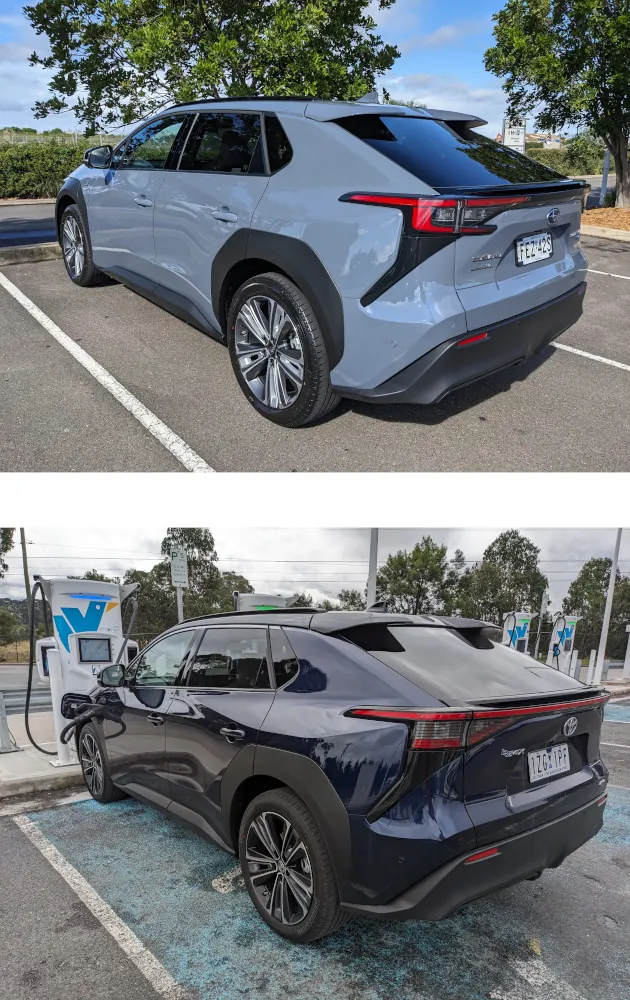
In the small, crowded world of mainstream electric SUVs, there’s a peculiar kind of drama: not the kind that erupts from wildly different philosophies, but the kind that comes from two vehicles stepping out of the same shadow. Subaru Solterra and Toyota bZ4X are often spoken about as “twins,” and the phrase isn’t mere marketing poetry. They share an architectural lineage, they chase similar design goals, and they target the same drivers who want AWD confidence without surrendering everyday practicality. Yet “twin” doesn’t mean identical. The differences—some subtle, some surprisingly tangible—shape the character of each EV. And once you’ve lived with their quirks, you’ll understand why the question isn’t simply which one is better, but which one feels more like your road companion.
This article unpacks the Subaru Solterra vs Toyota bZ4X matchup through a lens that goes beyond specs sheets. Expect a guided comparison: how they look, how they drive, what daily life feels like, where charging becomes a real-world variable, and why ownership often hinges on details that never fit neatly into a brochure.
Sibling origins: shared platform, different personalities
When two EVs share the same underlying platform, you can expect the fundamentals to rhyme: the general proportions, the core engineering approach, and the AWD strategy. In practice, this means the Solterra and bZ4X will feel more similar at the “bones” level than they do to unrelated competitors.
But personalities emerge from tuning, packaging, and the human interface—the way each cabin reads to your eyes and hands. Subaru typically leans into a rugged, outdoorsy tone. Toyota tends to emphasize mainstream usability and calm predictability. The result is that both vehicles can satisfy the same mission—commuting, weekend escapes, family errands—yet they can do it with distinct emotional flavors. One may feel more adventurer; the other may feel more chauffeur-like.
Design and stance: rugged poise vs tidy restraint
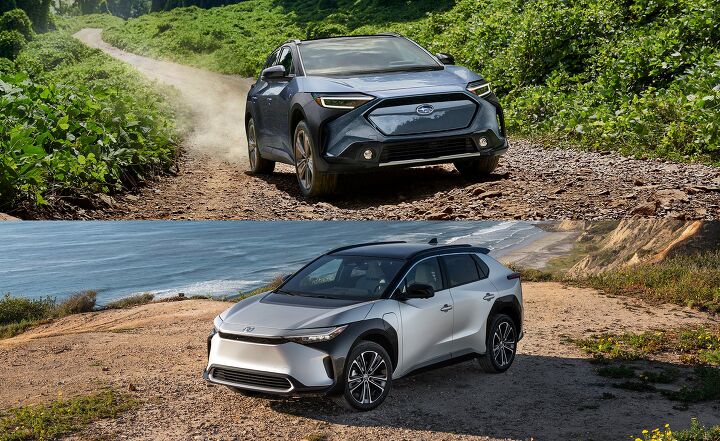
Design is not superficial when you’re choosing an AWD EV. It affects visibility, perceived safety, and how the vehicle occupies space in parking bays. Subaru’s Solterra often projects a sturdier presence. Its surfacing tends to suggest readiness for grit, and the overall silhouette reads as more “trail-prepared.” The stance feels purposeful, like it was sketched with gravel roads in mind.
The Toyota bZ4X, by contrast, usually communicates a more restrained confidence. The lines are more disciplined, and the visual story tends to prioritize aerodynamic smoothness. It can look less like a rugged tool and more like a premium appliance—still capable, but styled for a broader range of daily scenarios.
Powertrain and AWD behavior: instant torque meets traction logic
Both twins chase the same EV promise: instant torque and predictable AWD traction. Electric drivetrains deliver acceleration that feels immediate, even when you’re gentle. Yet acceleration is only half the story. The crucial part is how torque is managed across surfaces—wet roads, loose gravel, and the occasional unexpected patch of sand.
AWD in these vehicles is designed to distribute drive to maintain composure when grip is inconsistent. That composure often translates into a steadier steering feel during real-world maneuvers: roundabouts in rain, merges where lane markings fade, and off-the-line launches at traffic lights where other cars hesitate.
Where the experience diverges is in throttle mapping and drive calibration. Even with similar hardware, the way the pedal communicates—whether it feels slightly more abrupt or more linear—can change your driving rhythm. Some drivers prefer the quickness that makes the vehicle feel like it’s responding instantly to intent. Others want a smoother ramp that encourages calm, efficient driving. Your preference will determine which twin feels more “right” on day one.
Ride comfort and steering feel: stiffness, compliance, and confidence
Suspension tuning is where twinhood becomes less relevant. EVs carry heavy batteries low in the chassis, which generally improves stability. But stiffness choices still shape ride texture. One of these SUVs may feel slightly more taut over sharp edges; the other may feel marginally more forgiving on broken pavement.
Steering also plays a role. Some drivers love a direct response that makes the vehicle feel connected to the road. Others want a calmer, less talkative steering setup—especially on long drives. If you frequently commute on imperfect urban roads, ride comfort will matter more than peak performance. If you often travel on twisting highways, steering feedback may outweigh everything else.
Cabin design and usability: where daily life is won or lost
A good EV isn’t only about how it moves; it’s about how it behaves when you’re tired, rushing, or managing family logistics. The Solterra and bZ4X both aim to deliver an easy-to-live-with cabin, but the experience can still feel different.
Pay attention to sightlines. Higher beltlines can reduce visibility at corners, while good hood framing and mirror placement can erase that concern. Consider the dashboard ergonomics: where screens sit, how intuitive the controls feel at night, and whether frequently used functions are reachable without contortions.
Storage also matters. You’ll want thoughtful compartments for cables, sunglasses, takeaway coffee, and daily essentials. The shape of cupholders, the usability of door bins, and how the centre console integrates with your habits—these are the small things that accumulate into either convenience or annoyance.
Infotainment and connectivity: clarity over complexity
Modern EV ownership is inseparable from software. Navigation accuracy, user interface responsiveness, and the reliability of connectivity influence how stressful a trip feels. When you’re planning charging stops, you don’t want a system that dithers or requires extra taps. You want it to be immediate.
The twins typically offer contemporary screens and digital instrument clusters, but the real test is usability under pressure. Try imagining a rainy evening drive home, a low battery warning looming, and the need to select a nearby charger quickly. A well-designed system reduces mental friction. A poorly designed one turns simple tasks into mini expeditions.
Charging reality: fast-charging optimism vs everyday constraints
Charging is where EV theory meets the calendar. While both SUVs are designed for practical everyday use, your experience depends on charging access: home chargers, workplace options, and public fast-charging availability along your routes.
Think about the cadence of your life. Do you return home daily and plug in overnight? Then charging becomes routine, and efficiency matters most. Do you travel frequently or rely on public charging? Then the vehicle’s charging curve, compatibility, and real-world throughput become critical. Some drivers prioritize maximizing fast-charging sessions. Others prefer fewer stops and a more conservative driving approach.
Also consider cable convenience, charge-port placement, and the way charging schedules integrate with navigation. Charging should feel like a natural extension of the trip, not an interruption with paperwork-level complexity.
Range, efficiency, and the art of arriving gracefully
Range claims can be persuasive, but the real world is influenced by speed, temperature, road grade, and driving style. AWD adds capability, but it can also influence consumption, especially in colder climates or on prolonged highway driving.
Efficient driving—moderate acceleration, steady speeds, and early deceleration—extends range and reduces charging frequency. Yet the best twin for you may depend on your tolerance for planning. If you prefer to drive without obsessively checking projected arrival percentages, a vehicle that delivers consistent efficiency under your typical conditions will feel superior—even if published numbers look close.
Safety and driver-assistance: the calm of assistance, the responsibility of attention
Both Solterra and bZ4X aim to deliver robust safety suites and driver-assistance features. These systems can help with lane centering, collision avoidance logic, and adaptive cruise behavior. The most valuable benefit is often stress reduction: fewer micro-corrections, smoother following distance, and greater situational awareness.
However, assistance technology is not a replacement for attention. Treat it as a supportive co-pilot. Evaluate how the vehicle communicates its intentions—when it brakes, when it alerts you, and how gracefully it handles edge cases like faded lane lines.
Practicality for families and adventurers
These twins are designed for the real tasks of life: car seats, grocery runs, weekend gear, and the occasional detour to a trailhead. Cargo volume matters, but so does cargo shape. A flat load floor, wide opening, and sensible tie-down points can make packing less of a puzzle.
Rear-seat comfort—legroom, seat cushion support, and headroom—determines whether longer drives feel easy. If you regularly transport passengers, test the entry and exit experience. An SUV can be roomy but still awkward if doors don’t open wide enough or if roofline height makes head positioning uncomfortable.
Ownership costs and long-term expectations
Ownership is not only about the purchase price. It’s about servicing, tire choices, insurance considerations, and how warranty coverage aligns with your expectations. EVs often reduce some maintenance categories, but tires can wear differently due to torque delivery and AWD traction habits.
Charging behavior affects your operating cost too. If you can use off-peak home charging, your monthly expense may feel pleasantly predictable. If you depend on public charging, costs can fluctuate. In the twins’ comparison, your lifestyle becomes the deciding factor more than any single specification.
Which twin should you choose? A decision framework
Choosing between Subaru Solterra and Toyota bZ4X isn’t about declaring one universally “winner.” Instead, map the decision to your priorities:
Choose the Subaru Solterra if you value a more rugged, outdoor-leaning character, want the AWD feel to match that adventurous attitude, and prefer a cabin that reads like it’s built for journeys that might include rougher roads.
Choose the Toyota bZ4X if you prioritize calm usability, a more restrained design identity, and a “straightforward premium” driving experience that supports daily routines with minimal friction.
Then, do the most powerful comparison step: test-drive both on the same route. Feel the pedal response. Listen to road noise at highway speed. Check visibility, comfort, and ease of using the infotainment while moving. The winner is the twin that matches your habits.
Final thoughts: twins, yes—yet not the same
Subaru Solterra vs Toyota bZ4X is the rare EV face-off where the headline similarity is genuine, but the conclusion remains personal. They are cousins in engineering, but they diverge in character—from exterior stance and cabin ergonomics to the subtle calibration of how they respond to your inputs. In a market where many EVs blur into sameness, these twins still manage to offer distinct emotional cues.
Pick the one that feels intuitive when you’re in a hurry, confident when the weather turns, and comfortable when your route stretches longer than expected. In the end, the best AWD EV twin is the one you’ll want to drive tomorrow.