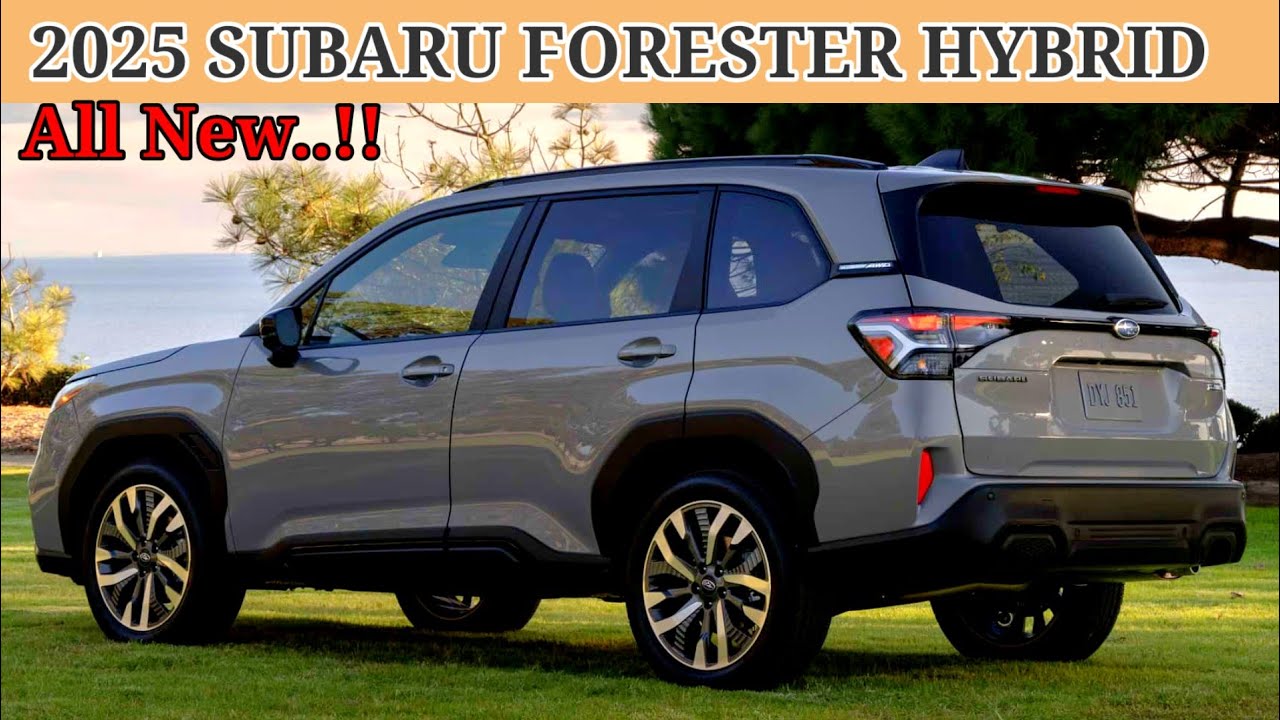
What happens when two automotive titans share the same blueprint—yet still insist on their own personality at the wheel? That question hangs in the air as the conversation turns toward a Subaru Forester EV and, more intriguingly, the possibility of a partnership with Toyota. The storyline isn’t just about batteries and branding. It’s about ecosystems, platform strategy, and the delicate choreography of engineering philosophies coming to life on the road.
Now picture this: a trail-ready crossover with Subaru’s signature traction instincts, energized by EV technology designed for modern efficiency. Sounds promising—until you reach the part where the “what” collides with the “how.” Can a collaboration deliver seamless integration without compromising the character that drivers expect? And what if the biggest challenge isn’t the hardware, but the software harmony behind it?
Below is a detailed look at how a Subaru Forester EV—shaped by a Toyota-linked partnership—could unfold, what it could improve, and where the friction points may hide.
Why an EV Forester Makes Narrative Sense
The Forester name has always carried a particular emotional charge: everyday practicality wrapped in outdoor confidence. Its appeal is rarely abstract. It’s tangible—roof rails for weekend plans, cabin comfort for long drives, visibility that makes parking feel less like a negotiation.
So an EV version doesn’t simply replace an engine. It reframes the mission. Electric torque changes the tempo of acceleration, and regenerative braking can convert “downhill inevitability” into energy recovery. That’s not a minor upgrade; it’s a reimagining of drive feel.
But electric vehicles also demand a different kind of attention. Charging logistics, thermal management, and route planning become part of daily life. The question then becomes: will the Forester remain Forester after electrification—still reassuring, still capable, still intuitively usable? Subaru’s design ethos suggests yes. Yet if Toyota’s participation influences the platform, the integration must feel cohesive, not stitched together.
Partnership Logic: Platforms, Scale, and Shared Learning
Partnerships in the auto industry often begin where individual companies would rather avoid expensive duplication. Platforms, battery supply chains, manufacturing know-how—these are the big engines behind EV success. Toyota, historically strong in hybrid systems and production efficiency, brings a mature perspective on lifecycle engineering.
Subaru, on the other hand, is associated with drivability under variable conditions. Its identity is partly mechanical, partly cultural: the expectation that traction should be predictable, and that the vehicle should behave responsibly when roads stop cooperating.
If the two firms align, the potential advantage is clear: a shared technical foundation could lower development time and reduce risk. It could also enable consistent component quality across models, not just in marketing brochures, but in day-to-day reliability.
However, partnerships come with an invisible tax: coordination overhead. Design reviews, supplier alignment, and software integration require constant negotiation. The synergy can be powerful—or it can slow momentum if communication stalls.
Toyota’s EV Influence: Efficiency and System Integration
Toyota’s EV trajectory has often emphasized efficiency, longevity, and pragmatic engineering. In a Subaru Forester EV scenario, those strengths could manifest in multiple ways: refined battery thermal strategies, optimized energy consumption, and a drive system tuned for real-world variability rather than test-cycle perfection.
Efficiency isn’t just about range numbers. It shapes how the vehicle behaves in cold weather, how it holds speed on grades, and how quickly it recovers after high-demand driving. In a Forester, that matters because the lifestyle expectation includes imperfect roads and imperfect timetables.
The trick is ensuring the EV system doesn’t flatten the Subaru driving feel. Electric propulsion can be tuned conservatively or aggressively. Pedal mapping, regen strength, steering assist calibration—each parameter affects the “personality” of the vehicle. A partnership could bring smart defaults, yet the final calibration should still feel unmistakably Subaru.
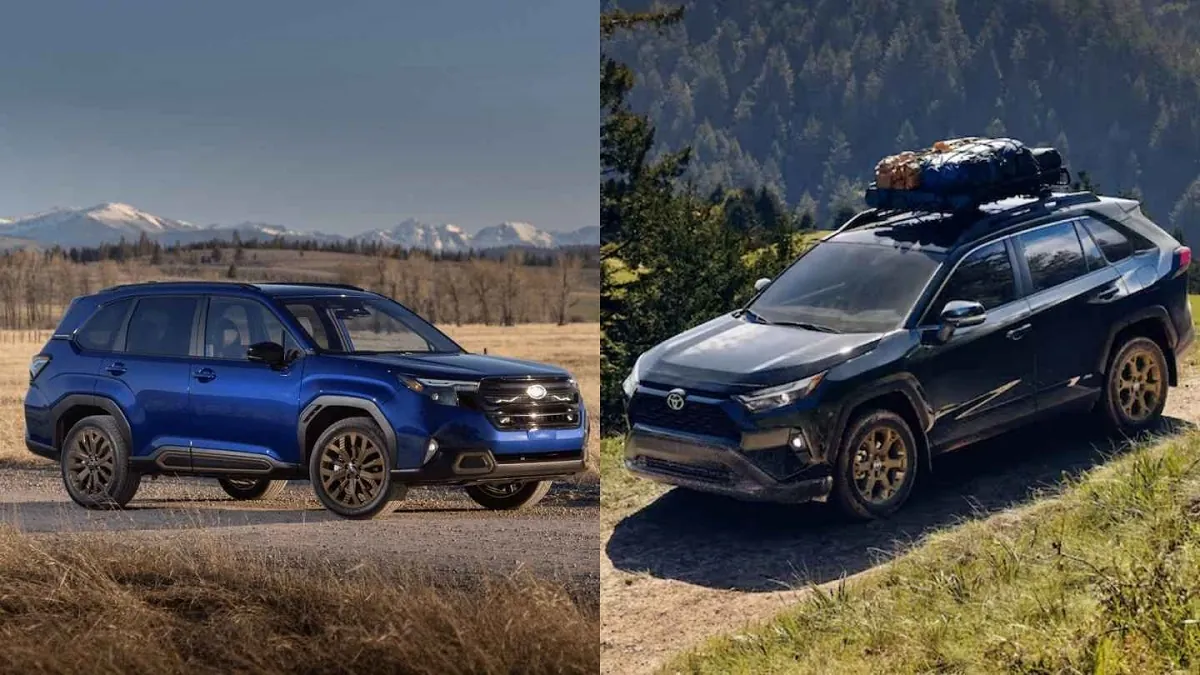
What Subaru Must Protect: The AWD Soul and Trail Confidence
Subaru’s brand isn’t merely about badges. It’s about AWD systems that behave with credibility. In the EV world, that challenge becomes more nuanced. With fewer moving parts, EV powertrains can feel smoother—but traction systems must still deliver predictable control when conditions turn unruly.
If the Forester EV inherits a Toyota-influenced architecture, Subaru’s responsibility is to preserve how torque is distributed and how stability systems intervene. The goal is not raw aggression. It’s composure.
Consider muddy driveways, slushy parking lots, gravel pull-offs. The Forester’s competence is often demonstrated in small moments: the first hint of wheelspin, the subtle correction, the calm after. Drivers remember those moments.
And here’s the playful challenge: can an EV Forester feel equally confident in the dark as it does in broad daylight? Visibility, brake blending, and traction logic all play a role. A partnership must be more than “build it together.” It must be “tune it together.”
Battery Strategy: Capacity, Charging Curve, and Thermal Resilience
A credible EV Forester depends on battery performance under stress. That means evaluating capacity and—and this is often overlooked—the charging curve. Fast charging isn’t simply about peak power. It’s about maintaining power long enough to be useful.
Toyota’s manufacturing and engineering maturity could support more consistent battery integration and thermal control. Thermal resilience is critical for real drivers: highway travel, stop-and-go, and seasonal swings in temperature.
Yet the partnership must still satisfy Subaru’s design priorities. Cargo space, drivetrain routing, and underbody protection can affect battery packaging. The battery layout has to work with the vehicle’s intended ground clearance and durability expectations.
Software: The Real Battleground for Cross-Brand Collaboration
Hardware can be shared. Software must be harmonized. That’s where the partnership’s complexity becomes most visible. Modern EVs depend on control algorithms that manage motor behavior, regen braking, driver-assist systems, and energy optimization.
Imagine the Forester EV’s regen blending feels just slightly off—too strong when you expect coasting, too weak when you need stability. In daily driving, that mismatch can become a persistent irritation. Software integration is the difference between “it works” and “it feels right.”
Additionally, driver-assistance systems must reflect Subaru’s approach to safety and usability. Interfaces, alerts, and steering interventions need consistent behavior across trims and model years. If a partnership creates conflicting design intents, the result could be a vehicle that’s technically capable but emotionally awkward to drive.
That’s the challenge hiding in plain sight: not whether the EV can move, but whether it can anticipate the driver’s rhythm.
Design and Practicality: Keeping the Forester’s Everyday Magic
The Forester has always been a practical stage for everyday life. EVs introduce new considerations—charging ports, cable management, and route planning interface design. Yet the interior experience should remain familiar: supportive seating, intuitive controls, and cargo flexibility that doesn’t feel like an afterthought.
Partnerships can accelerate development, but design taste still matters. Subaru’s interior ergonomics should remain coherent, not diluted by generalized platform standards. The vehicle should invite long drives without turning them into “maintenance sessions” of your own attention.
Even small details—door pocket placement, visibility over the hoodline, how the vehicle communicates its remaining energy—shape the feeling of trust. The Forester’s charm depends on those quiet choices.
Competitive Context: How It Might Stack Up Against Mainstream Rivals
The EV market is loud, crowded, and impatient. A Subaru Forester EV will likely be compared against popular electric crossovers and electrified equivalents. That’s where the partnership’s benefits could become marketing advantages: improved range estimation accuracy, stronger real-world charging behavior, and a balanced ride that doesn’t trade comfort for efficiency.
But competition also tests identity. Buyers might expect Subaru to deliver winter confidence and a rugged stance. If the Toyota-linked platform leans toward efficiency-first tuning, Subaru’s job is to offset that with real-world drivability—especially in weather extremes.
In other words: can the Forester EV be both a sensible commuter and a confident weekend companion? The answer will show up in reviews, but it will begin in the first quiet drive home.
Risks and Watch-Fors: Where Enthusiasm Could Meet Reality
Partnerships can succeed spectacularly, yet they also carry predictable risks. Misaligned timelines can stall feature delivery. Shared platforms might limit customization, forcing compromises in cabin space or AWD behavior. Software integration could require extended calibration and testing, particularly for advanced driver-assistance features.
There’s also the question of how trim diversity is handled. Drivers want choice—range variants, comfort packages, and technology levels that make sense. If the partnership standardizes too much, Subaru may lose some of the tailored character that long-time buyers expect.
So the ultimate challenge is less dramatic than it sounds: delivering consistency without becoming generic.
Outcome Scenarios: What a Successful Partnership Could Look Like
If the collaboration is executed well, the Subaru Forester EV could become a benchmark for balanced electrification—combining confident traction, comfortable daily usability, and efficient energy management. The vehicle could offer a charging experience that feels predictable. It could also deliver a software interface that behaves like it belongs in Subaru’s ecosystem, not an imported one.
A strong partnership would also translate into continuous improvement. Over-the-air updates, responsive service support, and well-integrated owner tools would help the Forester EV mature beyond its launch state. That’s often the difference between a good first impression and a lasting reputation.
Most importantly, success would mean the Forester keeps its promise: adventure-ready competence paired with family-friendly ease. Electric powertrain technology should enhance that promise, not reinterpret it into something less familiar.
Conclusion: A Forester EV That Feels Like Home
A Subaru Forester EV shaped by a Toyota partnership could be an intriguing synthesis: Subaru’s weatherproof confidence meeting Toyota’s disciplined approach to system engineering. The potential rewards are substantial—efficiency, scale, and smarter platform decisions. The risks are equally real—especially around software cohesion and the preservation of Subaru’s AWD soul.
So here’s the last question, the one that lingers like a good tune: if the Forester EV arrives and electrifies everything, will it still feel like a Forester at heart? If the engineering details align and the calibration feels intentional, it may do more than answer that question—it may redefine what an EV crossover can be.