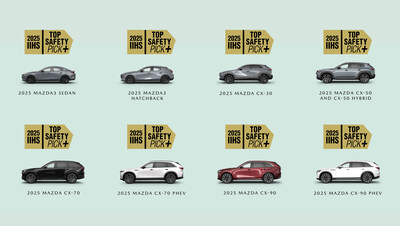
What if your next commute came with an invisible suit of armor—one that anticipates danger before it fully arrives? It’s a delightful thought, isn’t it? And yet, the roads don’t care how clever we feel. They demand evidence. That’s where the idea of the IIHS Top Safety Pick+ becomes more than a badge; it becomes a yardstick for real-world resilience. Now, here’s the playful twist: could a plug‑in hybrid actually satisfy the twin demands of electrified efficiency and near-impervious crashworthiness?
In this article, we’ll explore the Safest 2025 Plug‑In Hybrids—vehicles recognized as IIHS Top Safety Pick+. But we won’t treat safety like a checklist left on the counter. We’ll treat it like a living narrative: technology that watches, brakes that decide quickly, and engineering choices that hold the line when the unexpected shows up with muddy shoes.
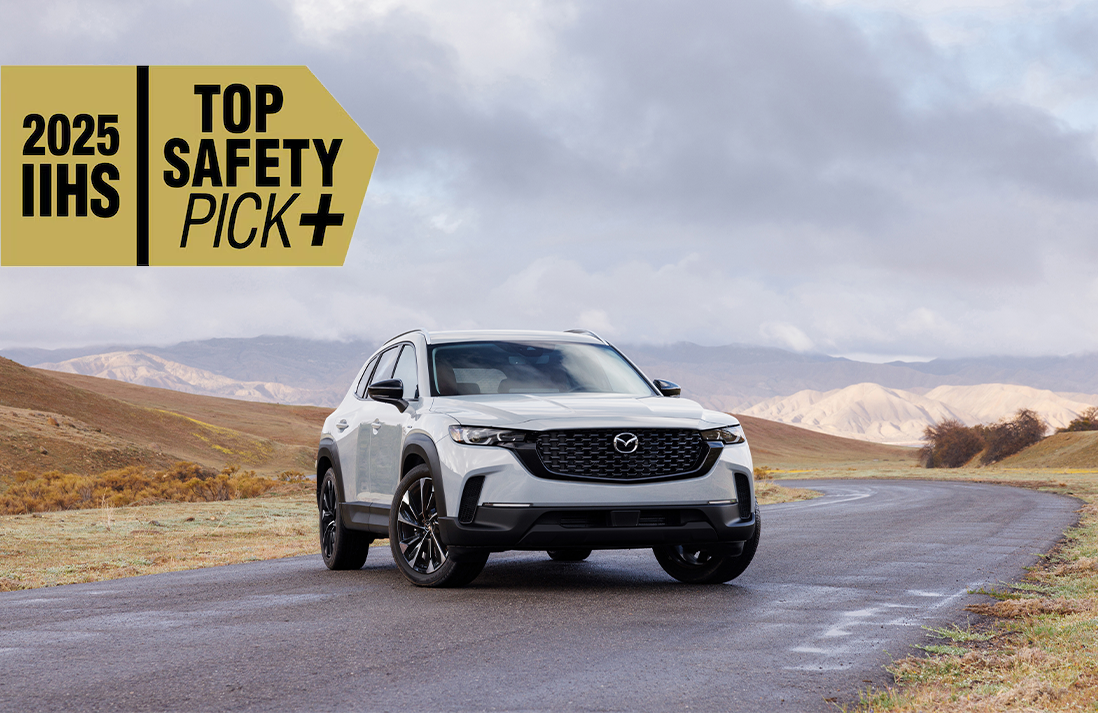
Why IIHS Top Safety Pick+ Matters (and Why It’s Not Just Marketing Glitter)
Safety awards can be persuasive, but the IIHS approach is more exacting than most. A vehicle can’t simply “seem” safe. It must demonstrate performance across multiple crash scenarios and include operational design features that improve outcomes day after day.
So what does “Top Safety Pick+” really signal? It generally indicates strong performance in crashworthiness categories—think front impact, side impact, and structural integrity—paired with advanced front crash prevention systems that help avoid collisions or reduce their severity.
Here’s the challenge hidden in that statement: many drivers focus on the dramatic moments—crashes that make headlines—while everyday safety lives in quieter milliseconds. IIHS evaluation nudges automakers to excel in both the obvious and the subtle.
The Plug‑In Hybrid Advantage: Efficiency Meets Vigilance
Plug‑in hybrids have a special kind of dual personality. They can glide on electricity for shorter trips, then switch to hybrid power when distance stretches the legs of the journey. That flexibility can reduce fuel consumption and tailpipe emissions, but it’s not automatically connected to safety.
To earn a Top Safety Pick+ recognition, the electrified system must coexist with a chassis engineered for protection, and the vehicle’s detection and braking technologies must operate confidently across driving contexts.
Picture it this way: the powertrain delivers calm motion, while the safety system provides sharper reactions. The best plug‑in hybrids don’t just minimize energy waste—they also minimize risk escalation.
Front Crash Prevention: The System That Tries to Negotiate with Physics
The most compelling safety story is often the one that never reaches the crash site. IIHS emphasizes front crash prevention—technologies designed to detect vehicles, brake for them, and, in certain cases, help mitigate collisions.
This typically involves a combination of sensors and sophisticated algorithms. Radar, cameras, and sometimes additional sensing approaches work together to interpret the road like an attentive cinematographer tracking distance, speed, and trajectory.
Here’s a practical mental experiment: imagine a pedestrian stepping off the curb unexpectedly. A good system doesn’t need to be clairvoyant, but it must be fast, accurate, and predictable enough to assist in the critical window.
When these technologies earn strong marks, they become less like a gadget and more like a co-pilot with disciplined reflexes.
How Crashworthiness Continues After Impact (Not Just During It)
Crashworthiness is where engineering becomes almost philosophical. The goal isn’t only to endure force; it’s to manage force—redirecting, absorbing, and distributing it so the passenger compartment remains as survivable as possible.
Vehicles evaluated for Top Safety Pick+ typically demonstrate robust performance in tests involving overlap front impacts and side impacts. Structural components, crumple zones, and restraint systems are calibrated as a coordinated ensemble.
Short sentences carry weight here: it’s not the car “surviving.” It’s the people inside being given a better chance. That difference is everything.
Lane Support and Driver Monitoring: The Subtle Guardians
Not every safety win happens at the moment of contact. Many of the most valuable systems help prevent drift, distraction, and loss of situational awareness.
Lane support technologies often provide gentle steering corrections or alerts when the vehicle senses unintended lane departures. Driver monitoring can track attention levels, adding friction to the idea of “I’ll be fine” when fatigue or inattention creeps in.
These features can feel like quiet choreography. They don’t shout; they nudge. And sometimes a nudge is the difference between a near miss and a collision with consequences.
Braking, Visibility, and the “Time to React” Advantage
Vision is a form of power. The easier it is to see clearly, the less the driver has to guess. Advanced lighting and driver-assistance integration can improve recognition of hazards sooner.
Braking performance also matters. Even with detection, the system must coordinate with vehicle dynamics—tires, stability control, and stopping behavior—to achieve effective deceleration. A system that detects a risk but can’t respond assertively isn’t truly safety-forward.
In a world of sudden shadows and unpredictable traffic flow, shaving seconds off reaction time is an achievement, not a luxury.
What to Look For When Choosing a 2025 Plug‑In Hybrid
Here’s the potential challenge: not every plug‑in hybrid is equipped the same way across trims, options, or regional configurations. A Top Safety Pick+ outcome may depend on specific equipment packages and sensor suites.
When shopping, ask questions that feel a bit like detective work:
1) Which safety technologies are included on the exact trim you’re considering?
2) Does it include advanced front crash prevention with strong performance characteristics?
3) Are lane support and driver-assistance features part of the standard bundle or an add-on?
4) What are the sensor configurations—are they complete and integrated, or limited by packaging?
Then take a final, human step: test the visibility and feel. Safety tech should integrate seamlessly with driving. If it nags constantly or behaves unpredictably, the system’s potential can be undermined by fatigue and annoyance.
Real-World Readiness: Where Safety Meets Daily Life
It’s easy to admire safety credentials in a static snapshot. Real life is messier. Rain, glare, construction zones, and changing traffic patterns turn the roadway into a moving puzzle.
The best plug‑in hybrids—especially those recognized as Top Safety Pick+—are engineered to handle variety: different speeds, different lighting conditions, and different hazard types. Their safety systems are designed to operate under constraints, not just ideal test conditions.
And because they’re plug‑in hybrids, they offer another daily advantage: more electric driving in regular commutes. That can make city driving smoother and quieter, while still keeping advanced safety technologies in the loop.
Putting It All Together: A Safety-Forward Choice for 2025
Safest 2025 plug‑in hybrids aren’t simply about being “electrified.” They’re about demonstrating that protection, prevention, and crash resilience can coexist with efficiency-minded design.
The IIHS Top Safety Pick+ standard acts like a lighthouse. It doesn’t guarantee every road moment will be effortless. But it does provide a credible signal that the vehicle was built with disciplined rigor—one that respects both the science of impact and the psychology of reaction.
So yes, let’s return to the opening question. Could your next plug‑in hybrid feel like an invisible suit of armor? The most honest answer is: it can, if it earns recognition for both structure and prevention—and if you select the configuration that actually delivers the required technology.
Outro: The Best Safety Is the Kind You Don’t Have to Think About
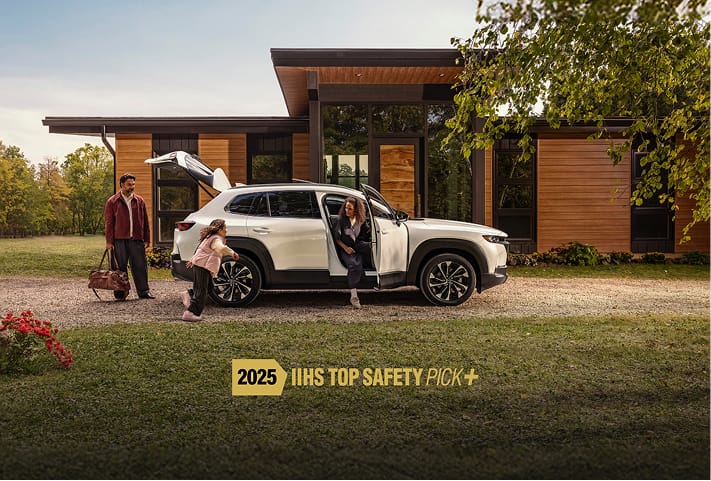
There’s a peculiar comfort in knowing you chose a vehicle engineered for high-stakes moments and calibrated for everyday risk. Great safety doesn’t demand constant attention. It quietly works while your mind stays on the drive.
As you consider the safest 2025 plug‑in hybrids with IIHS Top Safety Pick+ recognition, keep your curiosity playful but your selection precise. Ask the right questions, verify the exact equipment, and choose the model that earns confidence not only on paper, but in the real choreography of traffic.
Then—go ahead. Plug in, power up, and let the road meet you with something sturdier than optimism.