It’s a curious habit: people shop for compact cars as if size were the whole story. Then, somewhere between showroom gloss and a test-drive’s first hard stop, the conversation tilts. Safety becomes the axis. Not because anyone hopes to need protection, but because the modern road feels like a crowded negotiation—vehicles, weather, distractions, and the relentless unpredictability of human decisions all collude in the background. In 2025, the safest compact choices are also the most methodically engineered ones. The IIHS Top Safety Pick+ winners reveal a pattern: when a car earns top marks, it usually isn’t a single feature doing the heavy lifting. It’s a choreography of systems, materials, and testing-informed design priorities.
And yet a common observation persists: compact cars are sometimes assumed to be “safer in theory” but not consistently safer in practice. That skepticism is understandable. Compact vehicles can feel light, and lightness can be misread as vulnerability. But the fascination with IIHS results comes from deeper causes—how manufacturers translate crash dynamics into everyday confidence, how they tune driver-assistance behavior, and how they engineer structures to absorb energy rather than scatter it. The result is a kind of reassurance that doesn’t shout. It simply holds.
Why “Top Safety Pick+” Feels Different From Ordinary Safety Claims
Most safety headlines are written like slogans. The IIHS Top Safety Pick+ designation, however, is closer to a report card than a marketing poster. It suggests a vehicle has demonstrated excellence across multiple categories, which means it has been evaluated not only for how it survives impacts, but also for how it prevents certain kinds of collisions in the first place. This matters because safety is rarely a single moment. It’s a chain of seconds: the warning, the intervention, the restraint strategy, and the aftermath survivability.
Short version: a top-rated car is expected to protect you when things go wrong, and also to help reduce the odds that they do. Long version: it’s a systems-level promise—one that depends on sensors, software calibration, structural integrity, and restraint performance working in tandem.
Compact Doesn’t Mean Compromised—Design Philosophy Has Shifted
Compact cars once earned their reputation through efficiency and practicality. Today, that’s only half true. The other half is structural sophistication. Manufacturers have become more fluent in energy management: how to route crash forces through designated pathways, how to reinforce key load-bearing regions, and how to keep occupant space intact even when exterior deformation is unavoidable.
Here’s the paradox that draws people in: as cars get smaller, the tolerances for safety improvements become tighter. There is less “buffer” room to spare. So engineers lean harder on precise material selection—high-strength steels, optimized thickness distributions, and carefully tuned crumple zones. They also refine crash compatibility with other vehicles, not just the car in isolation. Fascination grows because safety becomes less about size and more about intent.
Crashworthiness: The Invisible Architecture That Makes Protection Real
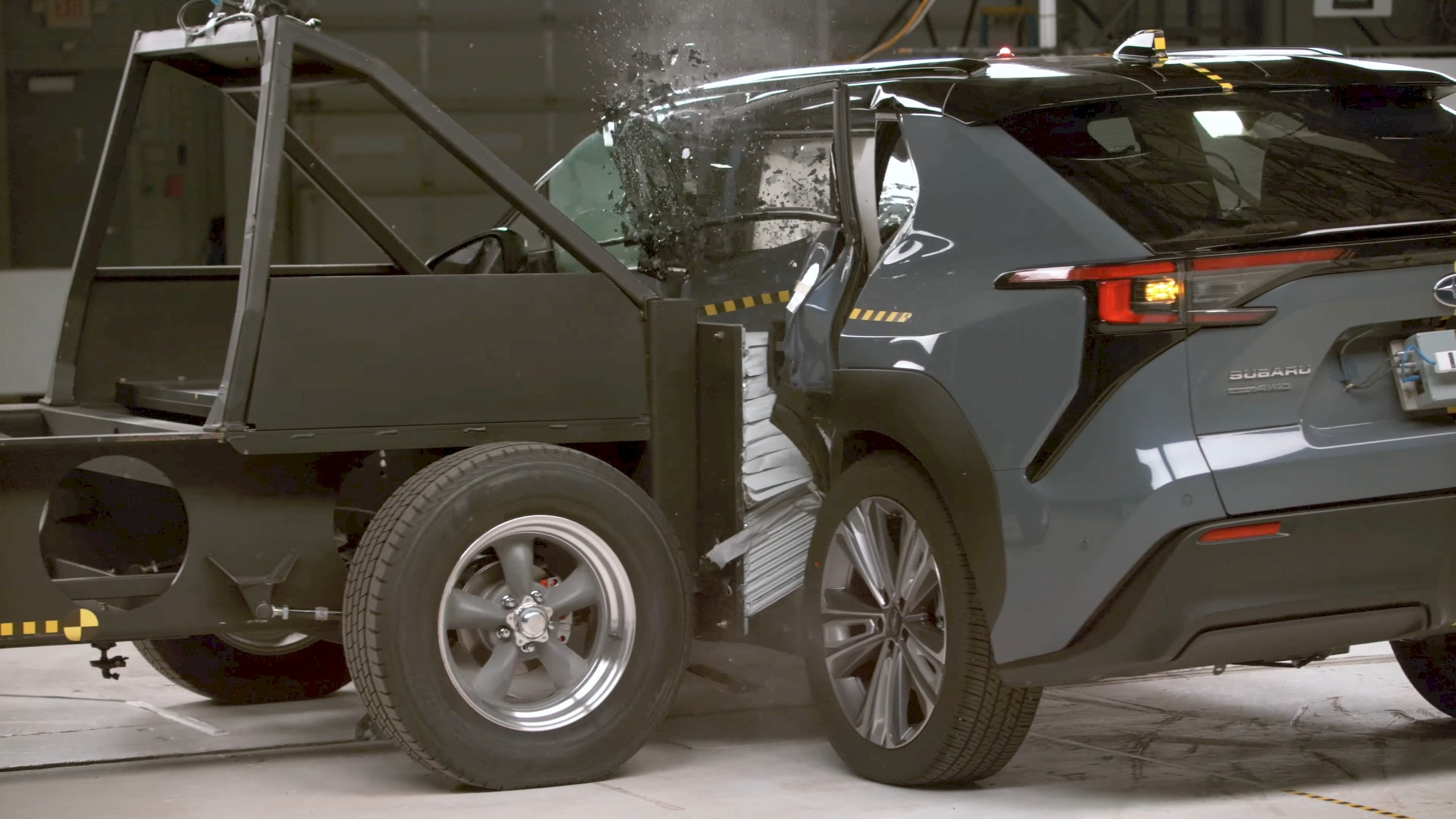
Crashworthiness is often treated like a static statistic, but it’s actually dynamic. When a collision happens, the body moves according to momentum and the vehicle’s engineered response. A Top Safety Pick+ compact car tends to excel at maintaining a predictable deceleration profile, limiting intrusion, and preserving the survival space around occupants.
Restraint systems are a critical part of that equation. Seatbelts, pretensioners, and airbags must coordinate timing precisely. Too early or too late, and the system may become less effective. The IIHS scoring logic rewards vehicles that demonstrate strong performance where human bodies actually travel during a crash scenario. In other words, the car is judged not only on whether it was “built strong,” but on whether that strength behaves well under stress.
Front Crash Prevention: When Safety Starts Before the Impact
Many drivers assume advanced safety features are purely optional conveniences. That assumption fades quickly when you experience collision avoidance behavior firsthand. Modern driver-assistance systems—especially those targeting front-end hazards—can detect vehicles and potential obstacles and then intervene with warnings, braking, or steering assistance depending on conditions.
What’s particularly compelling is that these systems don’t operate in a vacuum. They must interpret real-world complexities: lighting changes, traffic density, roadside reflections, and sensor occlusion. A Top Safety Pick+ compact car’s excellence typically suggests robust detection performance and a well-calibrated response that avoids unnecessary interventions while still reacting promptly when it matters.
Short sentence for emphasis: prevention is the most elegant form of protection.
Lane Support and Intersection Behavior: The Areas Everyone Underestimates
There’s a specific kind of road risk that doesn’t get enough attention: partial attention at intersections, the brief hesitation before crossing, and the unpredictable movement of vehicles merging into your lane. Lane support technologies can help manage lateral stability, while intersection-related systems may assist in identifying potential conflicts.
Even when a system doesn’t “take control,” it can reduce the consequences of human error. That reduction is subtle—like tightening a latch before the door swings open. IIHS evaluations consider how effectively assistance features support the driver during relevant scenarios, rewarding cars whose behavior is consistent rather than erratic.
Long sentence, because nuance matters: the fascination with these awards often comes from noticing how well the car’s prompts and corrections fit the rhythm of driving, rather than fighting against it.
Headlight Performance: The Night-Safety Factor
Night driving is where safety stops being abstract. Visibility shapes reaction time. Headlight performance influences how quickly you recognize hazards, pedestrians, and roadside obstacles. In many climates, darkness is not an occasional inconvenience—it’s a recurring condition that stretches the limits of human sight.
Top-rated compact cars frequently pair advanced lighting designs with adaptive capabilities where applicable. The result is a beam pattern that maintains brightness while controlling glare, helping other drivers and improving your own situational awareness. The most convincing feature is often the least dramatic: a wider, more stable field of view when you need it most.

Restraints, Airbags, and Child-Occupant Protection: A Different Kind of Confidence
Safety is not only about adults in front seats. It’s also about the fragile geometry of childhood bodies and the complexity of child-seat installation. A compact car can earn its safety reputation by providing strong crash protection for multiple occupant categories, supporting effective restraint performance, and facilitating child-occupant security.
This is where practical shoppers start reading spec sheets differently. They look for well-supported child-seat compatibility, clear anchoring systems, and consistent performance cues. Over time, confidence becomes cumulative. You feel it at home when choosing a seat. You feel it in the car when tightening straps. You feel it in a crash when engineering decisions finally show their value.
ADAS Calibration and Real-World Driver Experience
Even the best safety suite can disappoint if it’s poorly calibrated or if its behavior creates distraction. A Top Safety Pick+ winner typically reflects a careful tuning process. Systems are expected to detect hazards reliably and communicate in a way that doesn’t overwhelm.
There’s a deeper reason people become loyal to certain brands after receiving strong IIHS results: when assistance feels natural, drivers trust it. Trust transforms assistance from a gadget into a partner. And once you experience that partnership—smooth braking, intelligible alerts, stable lane guidance—you start to notice how often “safety” is really “interaction design.”
What to Look For When Choosing Among 2025 Compact Winners
Because Top Safety Pick+ achievements depend on specific trim and equipment, shopping responsibly requires attention. Begin by matching the exact configuration you plan to buy. Then prioritize the categories that matter most for your routes: front crash prevention if you commute through heavy traffic, nighttime lighting if you drive in rural darkness, and lane support if your roads encourage fast merging behavior.
Also consider long-term reliability of the safety systems. Calibration and sensor health depend on proper maintenance, clean cameras, and intact windshields or sensor covers. Many drivers forget this. The best approach is to treat ADAS readiness as part of routine care, not an afterthought.
Short sentence to keep it grounded: safety performance is not only designed—it must be sustained.
The Fascination: Why People Keep Returning to IIHS Results
It isn’t just the authority of the grading. It’s the clarity. In a market crowded with claims, IIHS outcomes act like a navigational star. They reduce ambiguity, helping shoppers compare vehicles with fewer marketing distortions.
Then there’s the emotional layer. People aren’t only buying transportation; they’re buying a feeling—control, protection, and the belief that technology can be harnessed for human benefit. Compact cars, in particular, create a compelling narrative because they challenge old assumptions. They show that safety excellence can live inside smaller packaging, and that engineering can counter the limits of physical dimensions.
Conclusion: The 2025 Compact Safety Story Is About Consistency
The safest 2025 compact cars earning IIHS Top Safety Pick+ recognition share a common trait: consistency across multiple safety domains. They don’t rely on a single hero feature. Instead, they offer a robust stack—crashworthiness, active prevention, lighting quality, restraint effectiveness, and intelligent assistance behavior. That blend is what turns a compact vehicle from “good enough” into genuinely reassuring.
Safety doesn’t have to be flashy. It has to be dependable. And when a compact car performs at the highest level across the scenarios that matter, the fascination is no longer a mystery. It’s simply evidence of disciplined design—built to protect you before, during, and after the unexpected.