There’s a particular moment many buyers recognize: you’re scrolling through trim levels, comparing range estimates, and then—like a plot twist—someone mentions that the PHEV tax credit may already be fading for the brand you’re considering. The observation is common. The answer, however, is rarely simple. Even when headlines declare “phase-out,” the lived reality is more intricate, shaped by eligibility rules, manufacturing constraints, and a bureaucratic clock that doesn’t tick the same way for every automaker.
That’s why the question “Which brands are still eligible?” feels irresistible. It isn’t merely about saving money. It’s about the feeling that timing matters, that the market’s choreography has patterns you can learn, and that your next purchase might align with a fleeting window of incentives. Beneath the fascination lies something deeper: the human desire to find certainty in policy—rules that are written like equations but experienced like weather.
What “Phase‑Out” Really Means for PHEVs
When people hear “phase‑out,” they often imagine a clean cutoff: eligible today, ineligible tomorrow. In practice, the decline tends to be staged. For many plug-in vehicles, the incentive is tied to federal limits that are reached when a manufacturer sells enough qualifying vehicles in the U.S. After a threshold is crossed, the credit generally transitions from full availability to reduced availability, and then eventually to elimination for that brand’s future sales.
This is where confusion can bloom. Buyers may see different dates, different percentages, and different stories online. The phase‑out is not a single event—it’s a sequence. The result is that two buyers can purchase the “same model year” but experience different credit outcomes depending on when the vehicle was placed in service and what tax rules applied at that time.
Also, PHEVs have their own qualifying logic. Some plug-in hybrids may qualify for the credit under federal guidelines; others might be ruled ineligible due to price caps, battery capacity thresholds, or manufacturer sourcing requirements. So even if a brand is still eligible, a specific trim might not be. And even if a trim is on paper, leasing versus purchasing can change how the credit is realized at checkout.

Why Eligibility Feels Brand‑Specific (Even When It Isn’t About Brand Values)
It’s tempting to treat “brand eligibility” as a reflection of corporate morality—some companies “deserve” the credit more than others. That’s a myth shaped by narrative convenience. The real driver is performance against statutory sales volume thresholds.
In other words, the credit often becomes unavailable not because a vehicle’s technology changed overnight, but because the manufacturer collectively approached a federal sales cap for qualifying plug-in vehicles. Think of it less like a moral verdict and more like a quota system. The automaker’s trajectory matters.
That’s why the question “Which brands are still eligible?” becomes almost compulsive. Buyers want a shortlist that feels stable. Yet the list can shift—not necessarily because the rules suddenly changed, but because production, certification timing, and dealership inventory turnover introduce variability.
And here’s the deeper fascination: policy acts like a living organism. It reacts to market behavior. The more a credit is used, the more likely the market triggers the conditions for the credit to retract. Buyers become observers of that feedback loop.
How to Tell If a PHEV Is Still Eligible (Beyond Looking at the Sticker)
Start with the VIN-level reality of the vehicle, not the romantic idea of “my model qualifies.” Tax eligibility can hinge on details that are not obvious in casual browsing. Trims differ. Battery configurations differ. Certification status differs. Even model names can conceal different underlying equipment.
Follow a practical checklist:
1) Confirm the exact trim and whether that specific configuration is on the current qualifying list.
2) Verify the battery-related specifications that tie to federal qualifying criteria.
3) Check the purchase timing—the phase‑out timeline can matter.
4) Ask the dealer for the charging profile and certification details associated with that VIN.
5) Plan for tax filing nuance: purchase credits and lease structures are handled differently, sometimes altering the “how you receive it” experience.
Short sentence, long consequence: eligibility is not a vibe. It’s a bureaucratic match between the vehicle and the rules currently in effect.
Common Misconceptions That Keep Buyers Up at Night
One misconception is that phase‑out means the credit is gone for everyone. It doesn’t work that way. Phase‑out typically applies to each manufacturer separately based on that manufacturer’s cumulative qualifying sales.
Another misconception is that “new model year” automatically resets eligibility. Sometimes it does; often it doesn’t. If a credit phase‑out is determined by manufacturer thresholds, the passage of time and model updates don’t necessarily restore the credit.
Finally, some buyers assume that all plug-in hybrids are treated equally. They aren’t. Eligibility may differ by electric range, battery capacity, vehicle type classification, and other technical factors. The result is a landscape where two PHEVs from different years—or even different trims—can behave as if they’re from different universes.
The fascination here is understandable. People want the tax credit to operate like a simple discount coupon. But it functions more like a set of gates with many locks.
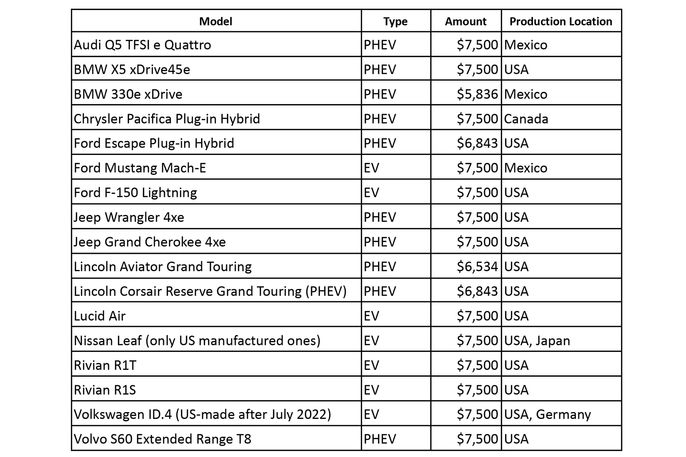
Which PHEV Brands Are Most Often Still Eligible?
There isn’t a single universal “yes.” The eligible brands depend on their individual status in the phase‑out cycle and the specific models being sold. However, certain brands tend to remain in the spotlight longer because their qualifying sales trajectory hit the federal thresholds later than others—or because the phase‑out hasn’t fully completed for their lineup.
When you’re narrowing the list, consider a two-layer approach: brand status and model certification status. Brand-level eligibility can be close to the edge, while a particular trim might still qualify if it meets requirements and is placed in service during an eligible period.
To get practical, focus on:
• Brands selling qualifying PHEVs that still appear on current eligibility resources
• Brands offering trims that meet the credit’s technical thresholds
• Dealerships with accurate VIN-level information so you’re not forced to gamble at tax time
Long sentence, crucial point: the smartest strategy is to verify the exact vehicle’s eligibility rather than relying on a brand’s reputation. Reputation is memory; eligibility is documentation.

Deeper Reasons Buyers Track the Phase‑Out So Closely
It’s not just financial. The phase‑out phenomenon creates a kind of policy theater, where every update feels like a clue. Buyers become amateur analysts, scanning announcements, cross-checking model availability, and chasing the feeling that they can outsmart timing.
There’s also a psychological undertone: incentives represent an acknowledgment that change can be accelerated. When those incentives retreat, the emotional horizon shifts. Some buyers worry they’re investing in a shrinking advantage. Others feel urgency—buy now, before the gate closes.
And yet, the story doesn’t end at tax credits. PHEVs can still be valuable for reasons unrelated to federal incentives: commuting patterns, charging convenience, and the flexibility of having electric power without committing fully to battery-only driving.
In that sense, the phase‑out isn’t just a countdown. It’s a reminder that incentives are temporary scaffolding, not permanent architecture.
How to Make the Most Informed Choice While the Credit Shifts
Think in scenarios. What happens if you find a PHEV that is eligible now, but the phase‑out could advance during your purchase window? What happens if the best trim is marginally excluded due to certification details? The answer might be to broaden your short list.
Practical steps:
• Compare total cost of ownership, not only the credit amount.
• Evaluate charging reality—home access, workplace charging, and travel patterns.
• Consider alternative powertrains if a PHEV trim is out of reach. Some buyers move to other eligible models while keeping the “plug-in flexibility” goal.
• Plan for documentation so your tax filing isn’t a scramble.
Short sentence: do not buy on optimism alone. Let eligibility be verified, then let your preference drive the rest.
Conclusion: The Eligible List Is a Map, Not a Destiny
The PHEV tax credit phase‑out is complicated, but not unknowable. “Which brands are still eligible?” is the right question because it forces clarity. Still, the most effective answer lives at the intersection of brand status, model certification, and purchase timing.
So the fascination makes sense. You’re not simply chasing a number. You’re trying to understand the cadence of policy—and to align your decision with it. Use verification as your compass. Use practicality as your engine. Then choose the vehicle that fits your life, not only the credit that might be available this quarter.