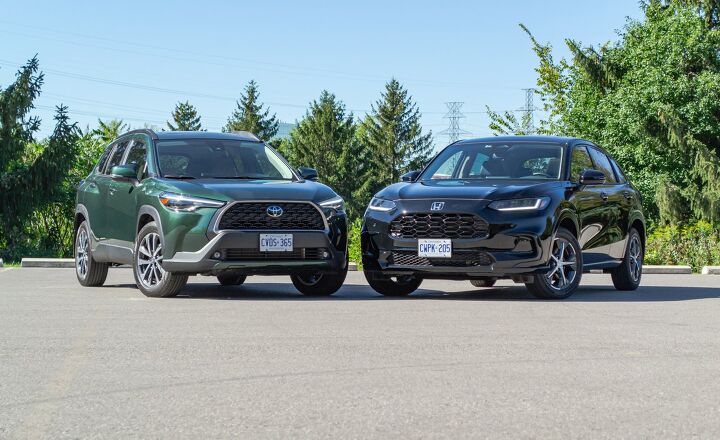
There’s a particular moment when a shopping trip stops being about specs and starts becoming about identity. You’re standing between two compact SUVs that both promise practicality, yet they do it with different philosophies. The Honda HR-V and the Toyota Corolla Cross may share the same postcode of the market—subcompact crossovers built for everyday life—but their personalities diverge as soon as you look closer. One feels composed and airy, like it’s designed to ease your day into motion. The other comes off crisp and efficient, as if it’s been engineered to keep your plans on schedule.
This comparison isn’t simply about which one wins. It’s about how your priorities might be gently nudged into a new alignment. Because when you’re choosing a subcompact, the “best” choice often depends on what you believe matters most: quiet confidence, flexible space, driving demeanor, or technology that stays just one step ahead.
Let’s open that mental door. Then—step by step—let the Honda HR-V and Toyota Corolla Cross reveal what they’re really offering.
First Impressions: The Shape of Everyday Confidence
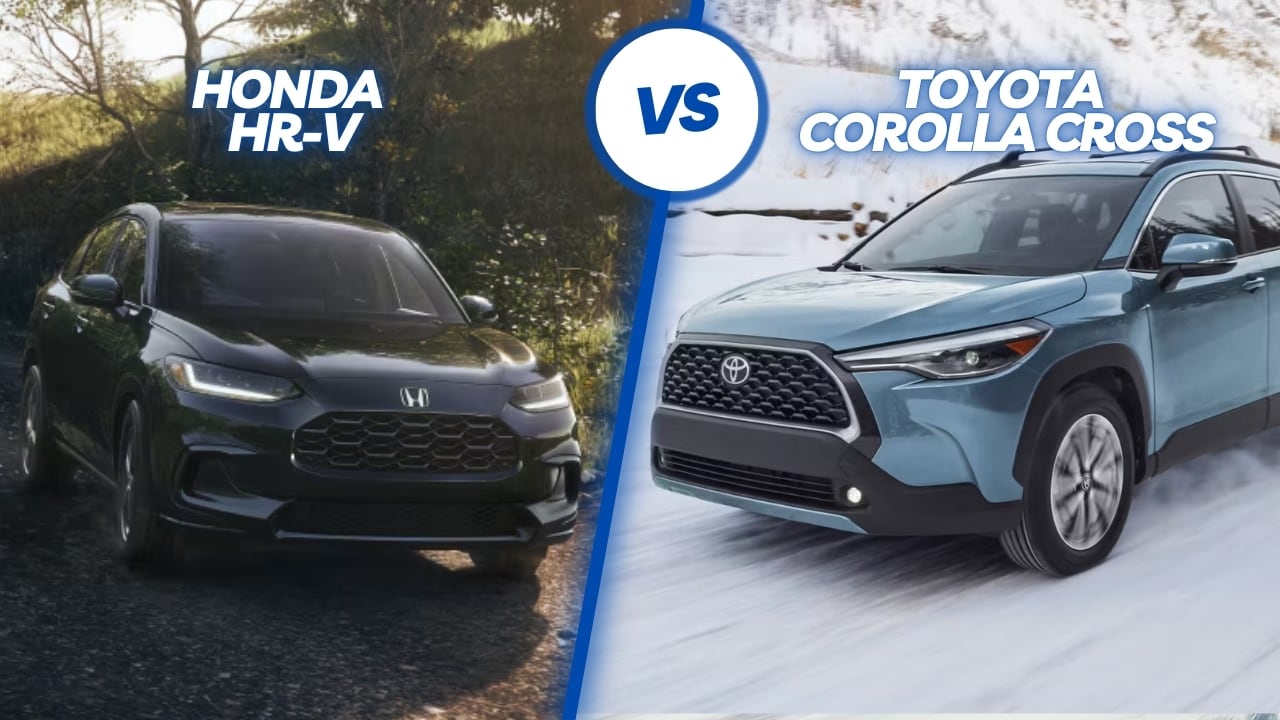
At a glance, both crossovers aim for approachable modern styling. Yet their proportions and design cues hint at different user experiences. The HR-V tends to feel more “human-scaled,” with surfaces that look designed to reduce visual noise. It’s the kind of presence that doesn’t demand attention; it earns it through consistency.
The Corolla Cross carries a more utilitarian clarity—compact, purposeful, and slightly more angular in its visual language. That aesthetic can translate into a sense of order: a vehicle that feels ready to accompany routines, commuting rhythms, and errands that multiply without warning.
It’s tempting to treat styling as superficial, but in practice it affects how you feel getting in and out every day. Comfort is sometimes a matter of posture and sometimes it’s a matter of perception.
Cabin Atmosphere: Space That Doesn’t Feel Like a Compromise
Subcompact crossovers live or die by their ability to turn limited dimensions into a feeling of abundance. Here, both vehicles aim to provide room without making the cabin feel cluttered. But the HR-V often leans into versatility—the kind that makes you rethink what “small” really means.
Inside the HR-V, the emphasis tends toward practical layout and ease of use. Cargo access is designed to be intuitive. Rear seating can be configured to adapt quickly—like when you go from “just groceries” to “sporting equipment and a weekend detour” before you’ve even finished loading the car.
The Corolla Cross also focuses on usable space, and it brings an orderly, straightforward approach to interior design. The key difference is emotional: the HR-V can feel a bit more nimble and flexible, while the Corolla Cross can feel more structured and efficient.
If you’re the type who rearranges plans at the last minute, flexibility becomes more than a feature—it becomes peace of mind.
Driving Demeanor: Calm Control vs Crisp Motion
Switching from “looks” to “drives like,” the contrast sharpens. The HR-V is frequently described in terms that suggest composure. It has a tendency to feel smooth over uneven pavement, and its steering character often communicates stability at everyday speeds.
In contrast, the Corolla Cross typically delivers a sense of briskness and straightforward responsiveness. It doesn’t necessarily aim to feel sporty, but it tends to support a quick, confident flow—especially when navigating city streets and changing lanes with routine intention.
This is where a shift in perspective pays off: the “right” choice is not the one with the most exciting behavior; it’s the one that matches your stress profile. Some drivers want calm certainty. Others prefer crisp, immediate feedback.
Powertrain Perspective: Efficient Performance with Different Flavors
Both vehicles prioritize efficiency and practicality, yet their power delivery can feel distinct. The HR-V’s character often comes across as gentle and well-mannered—adequate for daily driving with a focus on smoothness. It’s the kind of performance that blends into your day rather than interrupting it.
The Corolla Cross typically emphasizes efficiency and predictability. It’s less about dramatic surges and more about keeping momentum steady, especially during regular commutes. That predictability can be surprisingly comforting when you’re stuck in traffic or cruising suburban stretches.
If you frequently merge onto highways or drive routes with varying elevations, pay attention to how each vehicle maintains pace under real conditions—not just test-day acceleration numbers. The “feel” of effort matters more than it seems.
Technology and Infotainment: The Quiet Power of Everyday Usability
Modern SUVs are filled with screens, but the best systems don’t feel like technology—they feel like convenience. The HR-V’s infotainment experience often feels designed for intuitive interaction. Menu navigation tends to be straightforward, and the overall layout aims to reduce friction while driving.
The Corolla Cross also brings a user-friendly approach, commonly pairing practicality with tech that supports navigation, audio, and connectivity. When the system is easy to manage, your attention stays where it should: on the road, not the interface.
Curiosity should guide your test drive. Try changing a setting while parked, check how quickly you can find what you need, and see whether the system disappears into usability or constantly demands acknowledgment.
Safety Philosophy: Confidence That Spreads Across the Ride
Safety isn’t a single checkbox; it’s a system of habits, sensors, and driver-assistance features that work together to create margin. Both the HR-V and Corolla Cross prioritize protective measures appropriate for daily driving.
When evaluating safety tech, consider how it behaves rather than how it sounds. Does the lane support feel natural or intrusive? Does the collision-mitigation system alert with clarity without becoming a distraction? These are small moments that determine whether you trust the vehicle or second-guess it.
Safety, at its best, feels like an invisible seatbelt for your decision-making.
Fuel Economy and Cost of Ownership: Efficiency as a Long-Term Narrative
Subcompact crossovers often make the strongest case through ownership math. Fuel economy influences the story you tell yourself at the pump, and it can compound into real savings over time.
The HR-V and Corolla Cross both aim at efficiency, but the experience of saving money can also depend on your driving pattern—city stop-and-go versus steady highway stretches. Your route becomes the deciding variable, as much as the sticker numbers.
Beyond fuel, consider maintenance expectations, warranty coverage, and how easy it feels to live with the car. A “good deal” is not only a price—it’s the absence of future surprises.
Who Each One Fits Best: A Personal Match, Not a Competition
The HR-V tends to resonate with drivers who value adaptability, calm confidence, and a cabin that feels ready for changing needs. It’s a vehicle that quietly invites you to make everyday life a little smoother—whether that means reorganizing cargo midweek or enjoying a relaxed drive home.
The Corolla Cross often appeals to shoppers who prefer crisp efficiency, a straightforward driving feel, and an interior that emphasizes clarity. It’s a sensible choice for people who want performance that stays predictable and technology that supports routine without drama.
Ask yourself a more interesting question: Which vehicle would you choose on a chaotic day—one that reassures you, or one that keeps you moving?
Final Takeaway: The Better Choice Is the One That Reframes Your Priorities
The Honda HR-V and Toyota Corolla Cross both belong to the same compact universe, yet they tell different stories. The HR-V leans into flexible comfort and composed everyday driving. The Corolla Cross brings orderly efficiency and crisp motion that keeps plans intact.
When you test drive them, don’t focus only on what looks better at first glance. Focus on how the cabin feels after ten minutes, how the steering communicates over imperfect pavement, and how quickly you fall into a rhythm with the infotainment system.
Ultimately, the win belongs to the vehicle that best matches your life’s tempo. Choose the one that makes you feel—without effort—that the next errand, the next bend in the road, and the next unexpected detour were already accounted for.
In the subcompact battle between Honda HR-V and Toyota Corolla Cross, curiosity isn’t just a mindset—it’s the compass that points you toward the right kind of peace.