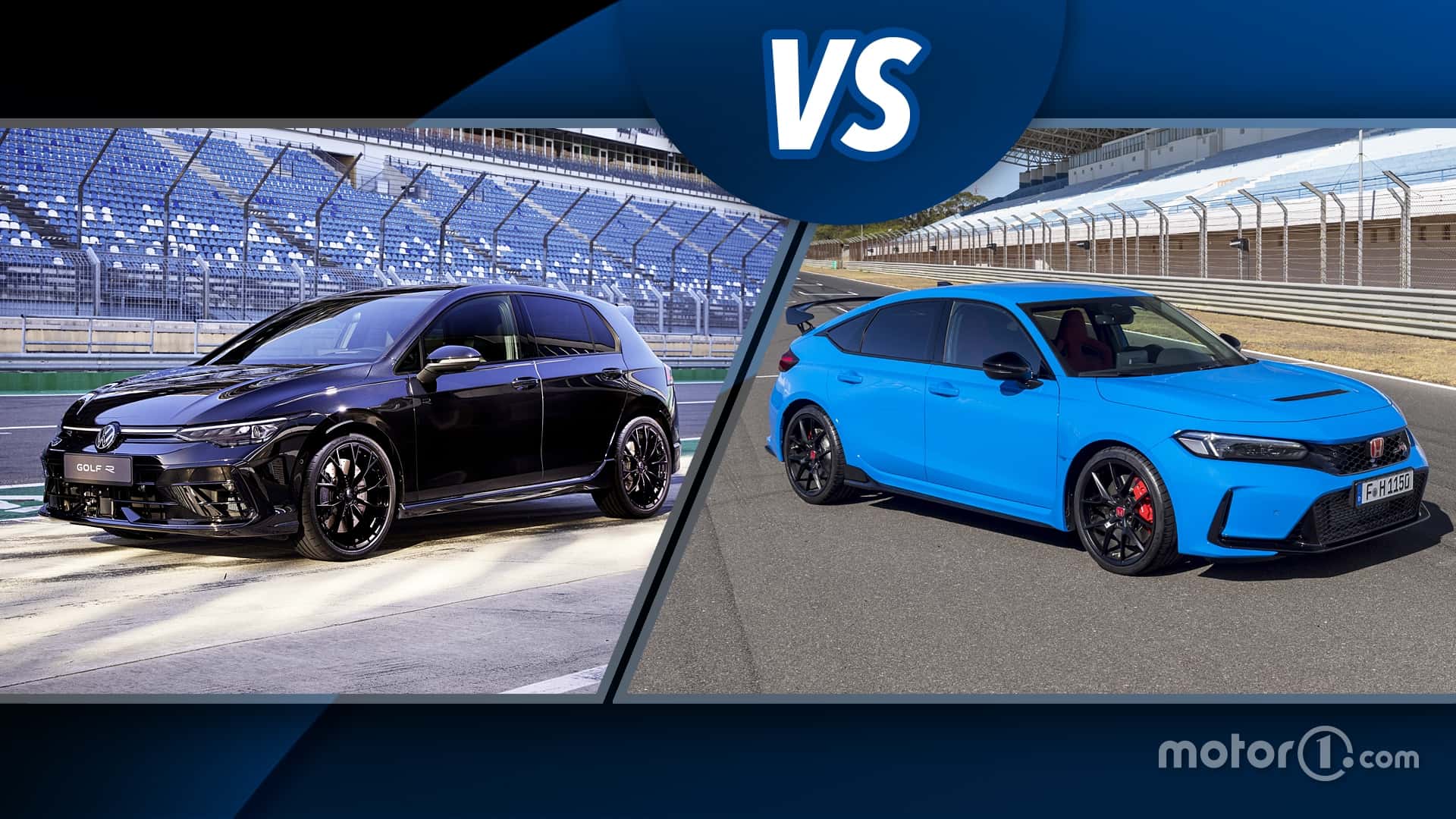
The Honda Civic Type R and the Volkswagen Golf R arrive wearing the same badge of intent—hot-hatch performance sharpened into a daily-drivable blade. Yet they feel like two different temperaments wearing nearly identical suits. One is all sinew and resolve, a track-first creature that treats pavement like a place to spar. The other glides in with poise, a confidence that seems engineered for rain-slick commutes and fast, unhurried confidence. In the end, the choice isn’t just about lap times or horsepower. It’s about the story you want your steering wheel to tell.
Think of the Type R as a metronome with teeth. It keeps time with ferocious precision, translating throttle input into forward momentum like a seasoned drummer driving the band. The Golf R, by contrast, is a Swiss watch with a turbocharger—measured, adaptable, and oddly comforting when conditions turn unruly. Track days can crown a king, but all-weather life can crown a legend.
Two Hot Hatches, Two Philosophies
Both models sit in the same weight class of ambition, but their design choices reveal distinct priorities. The Civic Type R leans hard into driver communication: steering feel, brake bite, and throttle response that arrive with minimal hesitation. It’s the kind of car that rewards committed inputs. Turn in decisively and it responds like it understood you before you finished thinking.
The Golf R, though equally serious, cultivates a different kind of magic. Its character is built around traction and composure, often feeling calmer in mixed conditions. Where the Type R can feel like a dare offered to your reflexes, the Golf R is more like an invitation to trust the chassis. It’s less about demanding perfection and more about remaining graceful under stress.
Track Character: How the Type R Hunts for Apexes
On a track, the Civic Type R reveals its most theatrical qualities. The front end is eager, the suspension poised, and the car’s balance encourages you to press closer to the limits. It has that special track sensation: the sense that the car is tightening its grip as speed rises, as if the chassis is learning your habits mid-corner.
Turn-in is communicative, not vague. Weight transfers feel deliberate rather than chaotic. Braking feels like a firm conversation—short, clear sentences—rather than a long debate. If you’re the sort of driver who loves to trail-brake and sculpt the car through a sequence of bends, the Type R’s personality can feel almost choreographed.
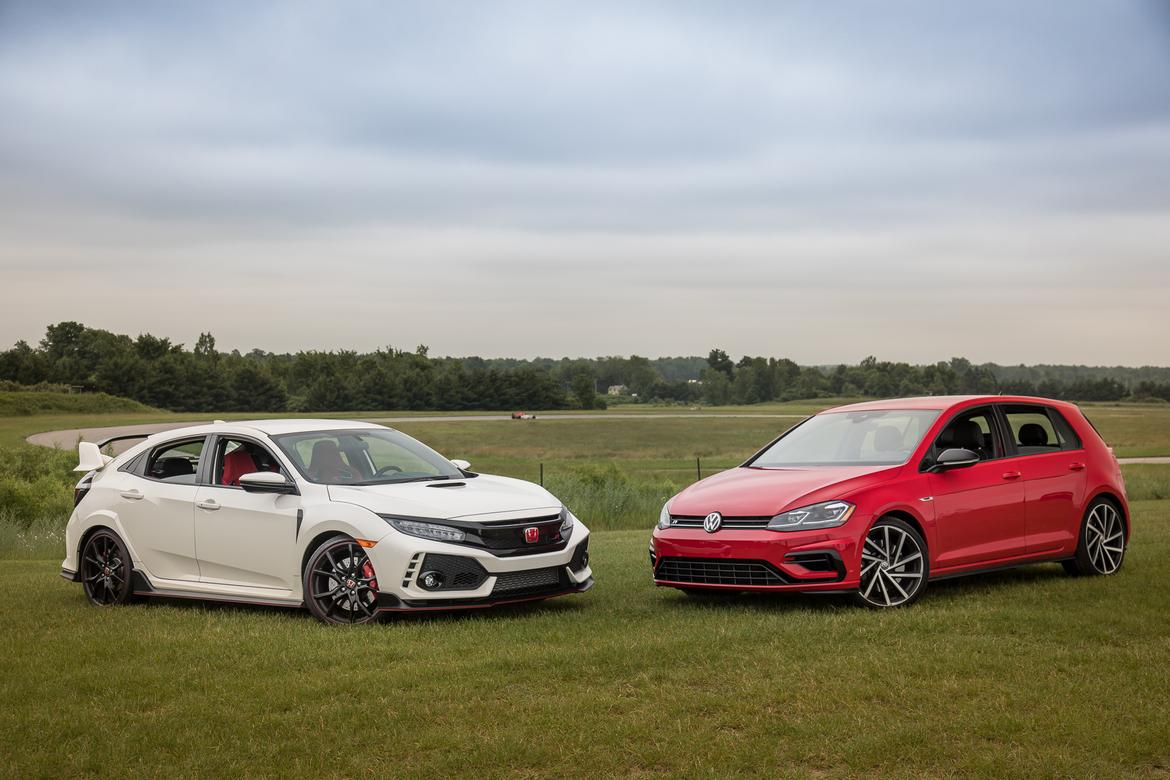
The Civic’s soundtrack also belongs to the track mythos. It can feel urgent at part throttle and exuberant when demanded. Even when you’re not chasing numbers, it encourages you to behave like you are.
All-Weather Confidence: The Golf R’s Traction Advantage
In everyday life, weather is the ultimate disruptor. Puddles appear without warning. Temperature swings soften grip. The road surface changes its personality mid-commute. Here, the Volkswagen Golf R’s appeal becomes clear: it’s built to keep you moving with minimal drama.
The Golf R’s all-weather temperament is more than a technical feature; it’s an emotional one. When conditions deteriorate, it tends to stay calm, holding traction like a steady hand guiding a skater across slick ice. You feel the car working with you instead of wrestling you.
That traction also changes the way you can drive. Instead of driving conservatively to avoid slip, you can often drive with a more confident rhythm. The car doesn’t demand absolute smoothness, but it rewards attentive throttle application and confident steering.

Where the Type R may feel like a thrilling tool for clear skies, the Golf R feels like a reliable weapon for uncertain ones.
Power Delivery: Urgency vs. Usability
Power is the headline, but delivery is the subtext. The Civic Type R tends to feel immediate and insistent. It pulls with a sense of involvement—like it expects you to be awake and engaged. The acceleration feels connected, and that connection can transform overtakes and short merges into small acts of theatre.
The Golf R, meanwhile, often feels ready across a broader range of situations. Even when the road is less cooperative, its responsiveness can feel more forgiving. It doesn’t necessarily demand the same level of finesse to feel quick; it can feel quick almost by default.
This is the difference between a car that celebrates your skill and a car that amplifies your confidence.
Braking and Steering: Precision Talk vs. Composed Guidance
On track, braking is where reputations are earned. The Type R typically feels like it wants to be pushed—its brakes can communicate well and resist fading with the kind of seriousness that encourages repeat laps. The pedal feel often supports strong modulation, letting you squeeze out consistency when the tires start to heat and grip begins to evolve.
Steering on the Civic can feel like a direct line between your hands and the car’s intentions. It gives enough feedback to help you correct mid-corner without second-guessing. The result is that “connected” sensation performance cars chase, the feeling that you are steering a living thing.
The Golf R’s steering and braking approach can feel more refined for long days. It can be less about raw aggression and more about stable repeatability—especially on wet or uneven surfaces. The chassis tends to keep its composure, which matters on real roads where camber changes and subtle bumps are constant interruptions.
Chassis Dynamics: Stiffness, Feedback, and the Meaning of Balance
The Type R often feels taut, eager to respond, and quick to change direction. Its balance encourages strong cornering lines, and its feedback can be a gift for drivers who love to interpret traction like a language. Push too far and it reminds you; find the rhythm and it rewards you with vivid precision.
The Golf R’s balance, conversely, feels more forgiving when the road is untidy. It may not always feel as razor-edged in the initial response, but it can feel remarkably steady over time. This steadiness is valuable: it reduces workload and helps maintain speed without forcing constant corrections.
In metaphor terms, the Civic is a violin—expressive and thrilling—but it asks for a skilled touch. The Golf R is a cello—warm and grounded—singing through uncertainty.
Interior Experience: Driver Focus vs. Everyday Elegance
Inside, both cars aim at driver involvement, but the emotional tone differs. The Civic Type R tends to feel more like a cockpit built for commitment. Controls and seating position encourage you to lean forward, mentally, even before you lean into the turn.
The Golf R offers a sense of refined practicality. The cabin can feel more like a command center for daily life—comfortable, composed, and ready to handle commutes, errands, and weather shifts without turning every drive into a mission.
The Verdict: Track Thrill or All-Weather Magnetism
If your weekends are track days—or your weekdays mimic them with spirited backroads and high-speed corners—the Civic Type R is the more intoxicating choice. It feels engineered for the moment right before the apex, when your inputs become a promise and the car answers with a decisive pull.
If your life involves unpredictable rainfall, slick mornings, and the desire for traction confidence without constant vigilance, the Golf R’s all-weather approach becomes compelling. It doesn’t just handle conditions; it persuades you to trust the journey.
So the decision becomes beautifully human. Choose the Civic Type R if you want a performance partner that rewards bravery and precision. Choose the Golf R if you want a performance companion that stays steady when the sky can’t decide what it wants.
Outro: A Choice Written in Rubber
Both hot hatches are capable, but they cultivate different forms of excitement. The Civic Type R thrills like a sprinting heartbeat, urging you to chase apexes and measure your skill. The Golf R moves like confident weatherproof poetry, blending speed with composure when the pavement turns unpredictable.
Ultimately, the “best” car is the one that matches your rhythm. One will make you feel like you’re driving a challenge. The other will make you feel like you’re driving a guarantee—especially when the road turns uncertain and the world asks for traction, not bravado.