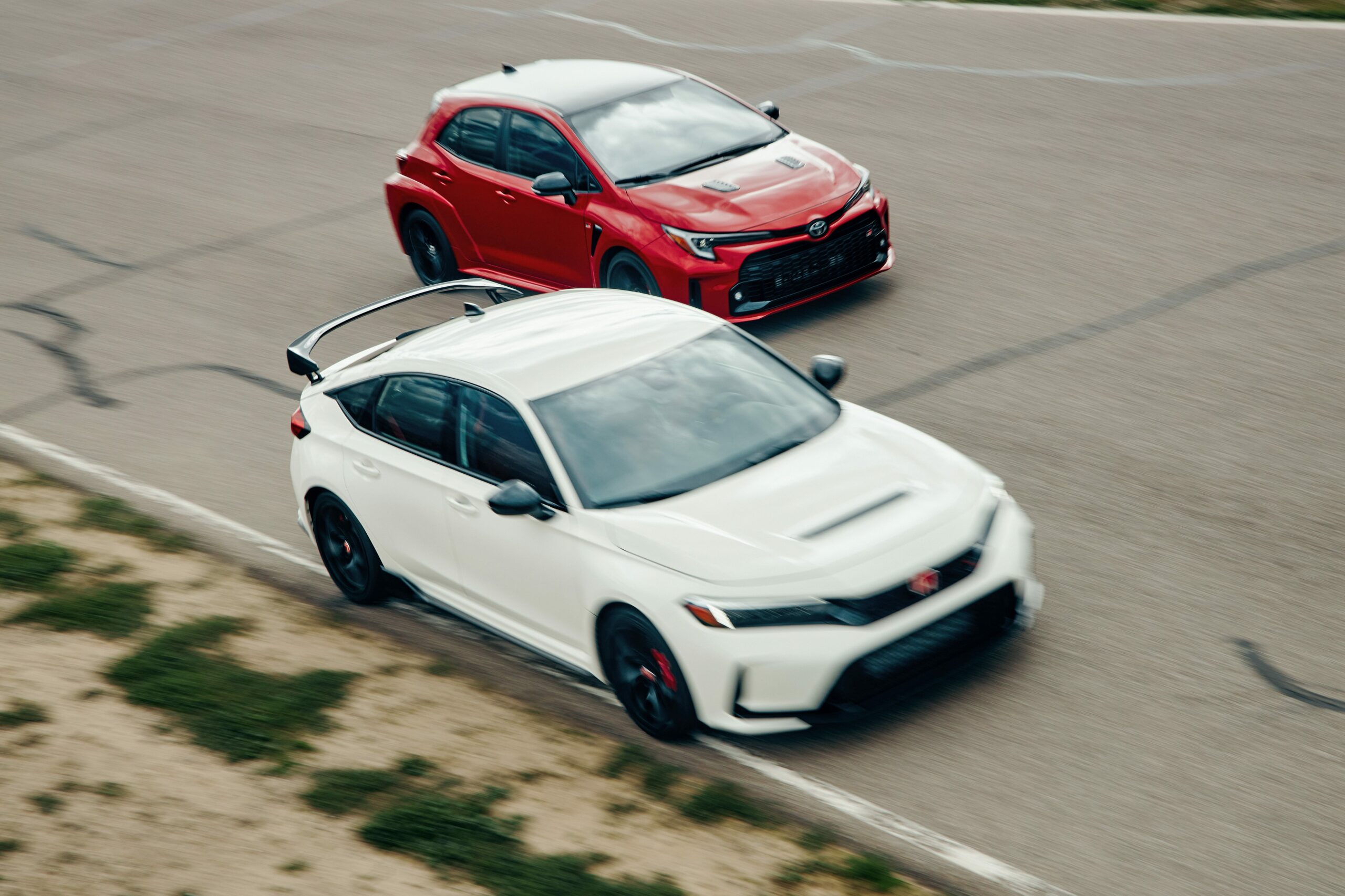
Picture a weekend with the radio low, the windows cracked, and the kind of anticipation that makes every turn of the key feel ceremonial. Two hot hatches—one razor-sharp and Honda-bred, the other swaggering with Toyota confidence—sit on the same metaphorical starting line. The question is almost mischievous: Which one truly owns the chaos? Not in a generic “which is faster” way. More like a playful dare—an invitation to pick your preferred flavor of aggression and then defend it.
Because the Honda Civic Type R and the Toyota GR Corolla aren’t merely machines. They’re philosophies with engines attached. And today’s duel is less about settling a score and more about exposing your driving personality under pressure. Are you the sort who thrives on precision and repeatable thrust? Or do you crave mechanical theatre—raw, loud, and slightly unruly in the best way?
First impressions: charisma in two different dialects
Approach the Civic Type R and it feels like it’s already mid-lap. The stance is purposeful, the bodywork looks sculpted rather than styled. Every line suggests that grip is a promise, not an aspiration. It’s the kind of hatchback that doesn’t ask permission to be noticed—it simply arrives.
Then there’s the GR Corolla—more rugged in attitude, more “storm-front” in presence. It wears its intent like a badge. The design leans into motorsport cues without drowning in them. The overall vibe is a little different: less manicured track weapon, more compact rally guardian with a mischievous grin.

So here’s the playful question that matters: Do you want your hot hatch to feel like a precision instrument, or a mischievous brawler? Answering it early will help you understand everything that comes next.
Power and personality: thrust delivery is the real difference
Both cars chase performance with intent, but their power delivery tells distinct stories. The Civic Type R is famously eager to build speed, often feeling like it has a tight coil of determination. The acceleration tends to be linear in its aggression—sharp and controlled, with a rhythm that encourages drivers to keep pressing forward.
The GR Corolla, meanwhile, tends to feel like it’s more willing to reveal its edges. Its response can come with a hint of urgency that feels closer to rally driving—less “follow the script,” more “read the road.” It may not always feel as mechanically polite. But it can be deeply satisfying once you learn its cadence.
Potential challenge: Take both cars on the same road with the same acceleration demand. Now ask yourself: which one makes your right foot feel like it’s collaborating with the car, rather than negotiating with it?
Handling and steering: confidence vs chaos management
Hot hatches live or die by how they translate intention into motion. The Civic Type R often provides a disciplined sort of confidence. The steering communication tends to feel direct, with the chassis willing to cooperate when you ask for commitment. In corners, it can feel like the car is reading your mind—planning traction before you fully finish the thought.
The GR Corolla brings a different flavor of competence. It can feel more like a system built for variable conditions. Where the Civic can be the steady metronome, the GR Corolla can feel like a drummer who thrives when the beat gets complicated. That doesn’t mean it’s careless—it means it’s willing to let the driver do some of the work of “stability by awareness.”
In practical terms: the Civic often rewards technique with calm predictability. The Toyota often rewards intuition with adaptable grip behavior.
All-wheel drive and traction strategy: who plays best in the rain?
This is where the duel gets genuinely spicy. The GR Corolla’s all-wheel-drive setup is engineered for traction, and it tends to make acceleration feel like it’s happening with fewer apologies. In slippery conditions, that can be a superpower—less wheelspin drama, more forward momentum as though the road surface is a suggestion rather than a limitation.
The Civic Type R, depending on configuration, leans into front-wheel-drive dynamics. That can be immensely fun—especially when you exploit the car’s response and keep your inputs smooth. Front-wheel-drive performance, when done well, can feel like an art form: quick rotation, decisive throttle, and an obsession with the last inch of available grip.
Playful dare: Try an identical corner sequence in damp conditions. Ask yourself which car makes you braver sooner—where you feel confident staying committed instead of easing off.
Braking and pedal feel: stopping is its own form of speed
Fast isn’t only about acceleration. A hot hatch earns respect when it can shed speed with certainty. The Civic Type R often presents a brake feel that can feel reassuringly firm, inviting late braking without turning the pedal into a guessing game. That consistency encourages bold entries, and it also makes repeated laps less fatiguing mentally.
The GR Corolla’s braking behavior can feel more “athletic” in character—capable, but with a more pronounced sense of mechanical involvement. The best part is that both cars can be tuned to a driver who wants feedback rather than silence.
Here’s the test that reveals character: which car makes you feel in control while trailing into a stoplight sprint, rather than simply feeling fast in a straight line?
Transmission and driving engagement: the cockpit argument
Both vehicles appeal to drivers who want involvement, but their transmissions and overall feel can shift the mood. The Civic Type R often emphasizes a driver’s ability to keep momentum, using its power and chassis to create a sense of continuous motion. It can feel like you’re threading acceleration through the drivetrain with intention.
The GR Corolla typically leans into a more rally-inspired engagement—less “telegraphed smoothness,” more feedback-rich control. That can be exhilarating for drivers who enjoy reading subtle changes through the wheel and pedals.
Challenge question: Are you the type who likes to stay perfectly composed, or the type who enjoys the car’s honesty—even when it’s slightly theatrical?
Interior and usability: hot hatch practicality, reimagined
Despite the performance rhetoric, a daily driver still needs to be lived with. The Civic Type R tends to provide an environment that feels driver-centric, with controls arranged for quick access. It’s designed for spirited use, but it also aims to be functional when the drive turns ordinary.
The GR Corolla’s interior often feels more rugged and purposeful. The layout can feel like it was built for frequent “hands-on” use, especially for drivers who anticipate hauling gear or tackling messy weather. It can be more about readiness than refined calm.
Ask yourself: do you want a cockpit that feels like a performance cockpit first? Or do you want one that feels like a capable utility space dressed in speed?
Sound and drama: how they soundtrack your decisions
Listen closely—because hot hatches rarely succeed purely on spreadsheets. The Civic Type R has a distinct sonic signature, often described as eager and aggressive, with an intensity that grows as the engine spins higher. It’s a sound that suggests confidence, like it’s constantly asking if you’re ready.
The GR Corolla’s tone can feel more textured, more rally-like in its character. It tends to come with an audible sense of mechanical involvement—like the car wants you to understand what it’s doing. That can be irresistible, especially on roads where you can hear every nuance of traction.
And yes, this matters. A car that sounds right can make you drive right. A car that sounds wrong can make even good dynamics feel tiresome.
Who wins the duel? It depends on what you’re chasing
The Civic Type R often wins the argument of predictable performance: sharp acceleration, composed handling, and a sense of engineered precision. It’s for drivers who prefer a clean line between intention and outcome.
The GR Corolla often wins the argument of tough-minded versatility: traction confidence, rally-inspired feedback, and a chassis strategy that can feel naturally confident when conditions aren’t ideal. It’s for drivers who like the road to stay a little unpredictable.
So the duel doesn’t end with a trophy. It ends with self-knowledge. Which car makes you feel like you’re mastering the drive rather than merely participating in it?
Outro: your next turn is the deciding factor
The Honda Civic Type R vs Toyota GR Corolla hot hatch duel is ultimately a personal challenge disguised as a comparison. The “winner” isn’t the one with the loudest claims—it’s the one that syncs with your driving instincts. Take them on a route with real texture: sweepers, slight elevation changes, and at least one moment where traction feels questionable. Then ask your playful question again, this time honestly: Which hot hatch feels like it’s inviting you to be brave?
Because when the road tightens and the throttle gets serious, your instincts will choose. And whichever you choose, the duel will already be worth it.