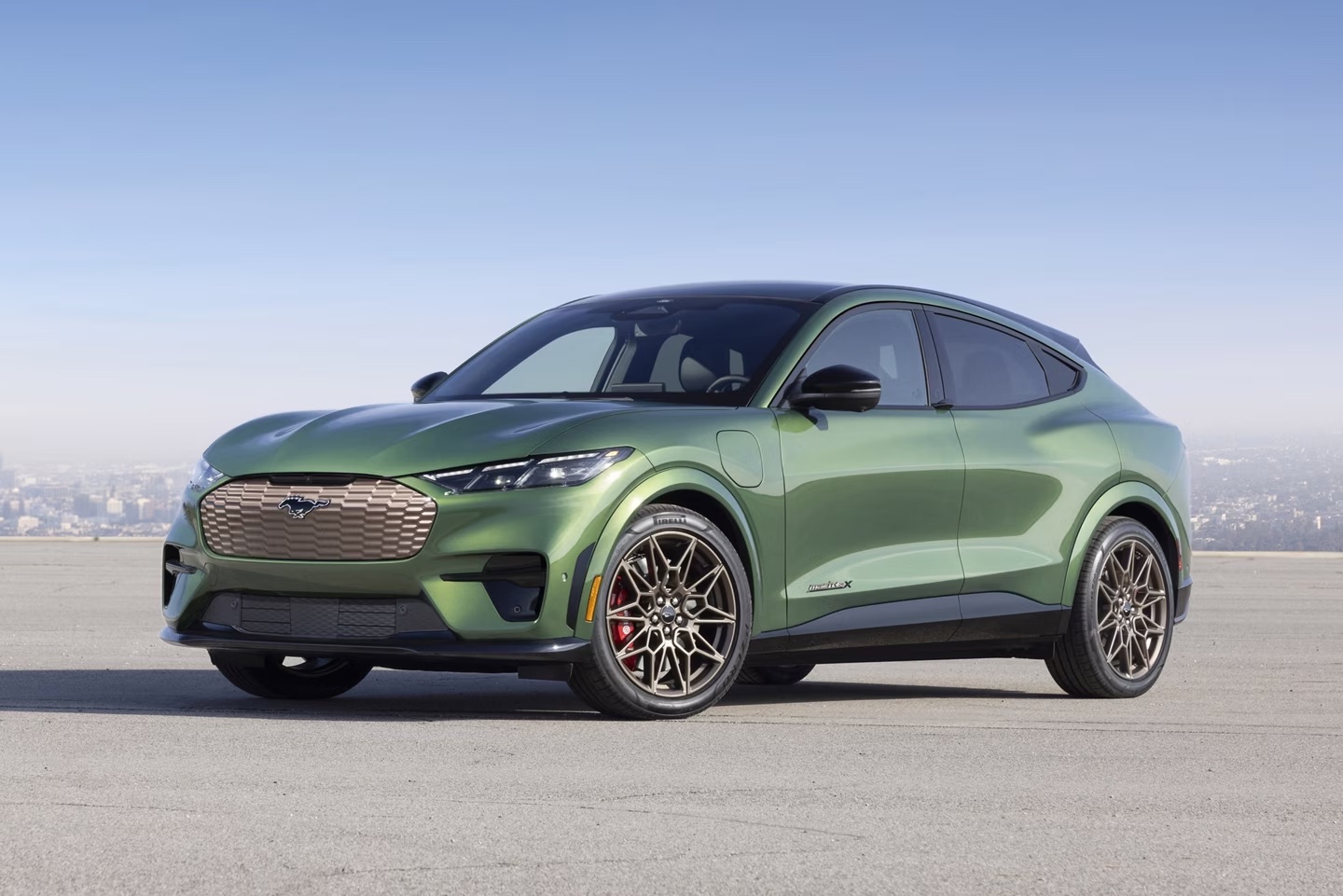
There’s a particular kind of skepticism that follows every electric crossover with sporty aspirations. It begins with a familiar question: can an EV really hustle on track, or will it simply perform a dutiful lap before reciting the same range anxiety mantra? The Ford Mustang Mach‑E GT has spent a lot of time living under that spotlight. And yet, when the tires begin to sing and the steering tightens into its confidence, the conversation shifts—almost against everyone’s expectations.
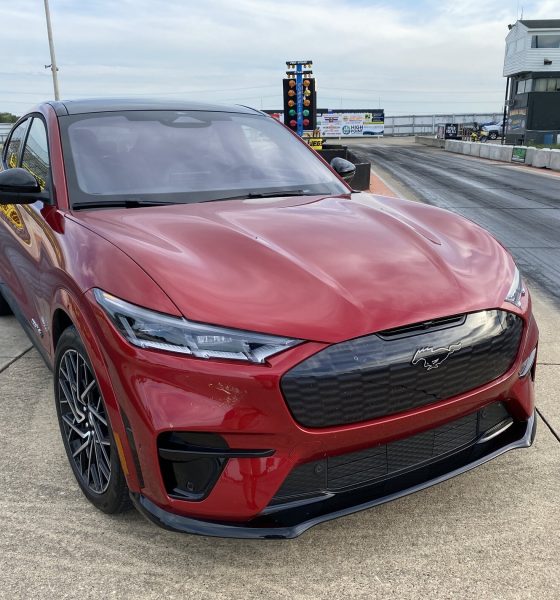
In a track test context, the Mach‑E GT doesn’t just chase a benchmark. It confronts a common observation: that performance and practicality rarely share the same stage. Then, with each acceleration surge and each carefully managed braking event, it hints at deeper reasons for the fascination it inspires—reasons that go beyond headlines, beyond numbers, and beyond the usual “EV vs. gas” theater.
Meet the Mach‑E GT: Not a Gimmick, a Platform
At first glance, the Mustang Mach‑E GT can look like it’s dressed for city streets—an aerodynamic silhouette, a poised stance, and a cabin designed to feel almost effortlessly usable. But under that familiar crossover posture is a performance architecture tuned for immediacy. The GT trim isn’t simply a matter of badges; it’s the culmination of calibration decisions and hardware choices that aim for predictable traction rather than flashy inconsistency.
On track, predictability becomes its own form of speed. The best cars don’t only accelerate quickly; they tell the driver what they’re going to do. With the Mach‑E GT, the response is direct enough to invite commitment, yet disciplined enough to avoid the “panic throttle” scenario that can ruin a lap.

The Myth of EV “Fragility” Meets Tire Reality
EV enthusiasts often speak about instantaneous torque as if it’s a cheat code. Skeptics hear the same claim and translate it into fragility—spinning wheels, traction limitations, and heat-soaked components that collapse into mediocrity after a few hard corners.
On track, that myth starts to fracture. Traction is not only about torque magnitude; it’s about torque delivery shape. The Mach‑E GT’s character can feel like a steady metronome rather than a sudden hammer blow. That nuance matters because it determines whether the car feels like it’s gripping or fighting. A driver can exploit the former. They can only survive the latter.
As speed builds, the tires become the narrative. You can sense when the chassis is extracting grip in the same way lap after lap—when the contact patch is treated as an asset rather than a casualty. That’s where fascination begins: not in perfection, but in the car’s ability to remain coherent under pressure.
Acceleration: The Instant Surge, Then the Composure
Let’s address the obvious: the Mach‑E GT is quick. The acceleration is immediate, and the feeling can be almost theatrical—like a bow wave of force that surges forward without the usual delay of gearing. But track testing reveals something more interesting than raw launch performance.
After the first sprint, the question becomes: Can it repeat that urgency without becoming unstable? EVs can deliver spectacular first moments and then falter as thermal management, battery behavior, and drivetrain efficiency come into play. The Mach‑E GT’s response is notable because it doesn’t treat each acceleration event as a one-time miracle. It manages the rhythm.
In practical terms, that means the car feels willing to stay engaged through a series of straights and exits. The driver isn’t left constantly recalibrating—mentally and physically—as conditions change. It’s a subtle difference, but it’s the kind that turns a “fast run” into a meaningful track session.
Braking Performance: Where Confidence Gets Paid
Every serious track test lives or dies by braking. Acceleration may sell the dream, but braking determines whether that dream is reachable lap after lap. The Mach‑E GT shows its maturity here by offering strong deceleration while maintaining pedal feel that doesn’t dissolve into ambiguity.
Regenerative braking contributes to the sensation, but the more important story is the integration. The car needs to blend energy recovery with friction braking in a way that feels linear—not just powerful. On a demanding circuit, the driver is constantly asking for precise modulation: trail braking just enough to settle weight, then releasing to avoid upsetting the chassis.
When the Mach‑E GT performs well, it doesn’t overwhelm the driver with suddenness. It rewards technique. That’s when the “crossover” label starts to feel limiting, almost quaint.
Handling and Steering: A Sporty Crossover’s Real Test
Steering feel is one of those qualities people debate endlessly, often without agreeing on what they’re actually feeling. Is it accuracy? Is it weighting? Is it feedback? On track, the answers align quickly.
The Mach‑E GT’s steering and chassis balance aim to help the driver maintain a consistent line. The best EV performance isn’t only about going fast; it’s about maintaining composure while torque shifts rapidly. Electric drivetrains change the usual cadence of weight transfer, because the acceleration sources aren’t constrained by gears in the same way. That can make handling feel alien—unless the vehicle is engineered to translate those changes into something the driver can predict.
During corner entry, you may notice how the car encourages commitment. During mid-corner, it becomes about maintaining grip without overdriving the front end. During exit, the car’s traction behavior becomes a conversation between the tires, the suspension, and the drivetrain’s response curves.
Thermal Management and Fade: The Hidden Plotline
There’s a reason track tests include repeated runs instead of a single hero lap. Thermal management is the invisible antagonist. Batteries, motors, inverters, and brakes all generate heat. If the car can’t shed it, performance becomes an act that collapses under its own intensity.
The Mach‑E GT’s fascination is partly rooted in how it approaches that challenge. It’s not immune to heat; nothing is. What matters is the strategy—how the vehicle throttles power, how it stabilizes drivetrain temperatures, and how it protects repeatability. A performance EV that can’t manage heat becomes a one-lap wonder. A performance EV that can manage it becomes a track weapon, even if it’s wearing a crossover costume.
In a well-designed system, thermal limits feel like a gradual conversation rather than an abrupt interruption. Drivers can adapt. They can adjust their braking points, pacing, and throttle application. That adaptability is not trivial—it’s the difference between a car that merely tests and one that teaches.
Interior and Driver Interface: The Practical Edge
Track testing might sound like a purely mechanical endeavor, but the driver’s interface often decides whether the car’s potential is reachable. A clear display, responsive controls, and predictable drive modes allow the driver to focus on lines and braking, not on fiddling with settings mid-session.
The Mach‑E GT’s cabin reinforces this by feeling like a command center rather than an afterthought. It’s the small things—how quickly you can access relevant information, how naturally you can shift between performance intentions and composure—that make a performance crossover feel serious.
It also helps that the car doesn’t punish the driver with a harshness that would turn learning into frustration. On track, comfort isn’t laziness; it’s fatigue management. You need your hands steady and your decision-making crisp.
Range Anxiety on Track: The Deeper Reason People Watch
Range is often dismissed as a street concern, but on track it becomes symbolic. It represents endurance—how far the car can go in the conditions where “normal driving” becomes irrelevant.
Here’s the deeper reason the public watches EV track tests so closely: people want reassurance that performance doesn’t erase practicality. They want the thrill without the countdown clock. The Mach‑E GT, by presenting track-capable behavior and by confronting the realities of heat and energy use, turns that anxiety into something more honest.
It doesn’t promise unlimited laps of hero driving. Instead, it invites a more mature question: How does the car remain capable, and how should a driver plan around limits? That framing is what makes the fascination endure. Performance becomes less about denial and more about mastery.
Final Verdict: A Crossover That Refuses to Stay in Its Lane
The Ford Mustang Mach‑E GT lands in a category that’s often misunderstood. It isn’t trying to be a track-only specialist. It’s proving something subtler: that modern EV engineering can deliver real performance without abandoning the everyday sensibility people buy a crossover for.
During a track test, the most persuasive evidence is consistency—how the car accelerates and brakes with intention, how it handles torque transitions, and how it resists fade long enough to matter. The Mach‑E GT becomes fascinating not because it escapes limitations, but because it manages them with enough coherence to keep the driver engaged.
In the end, the common observation is understandable: EVs are expected to be fast but uncertain, exciting but fragile. The Mach‑E GT answers with a different proposition. It says that a performance EV can be both visceral and disciplined. And once you experience that balance, the crossover label starts to feel less like a description and more like a challenge.