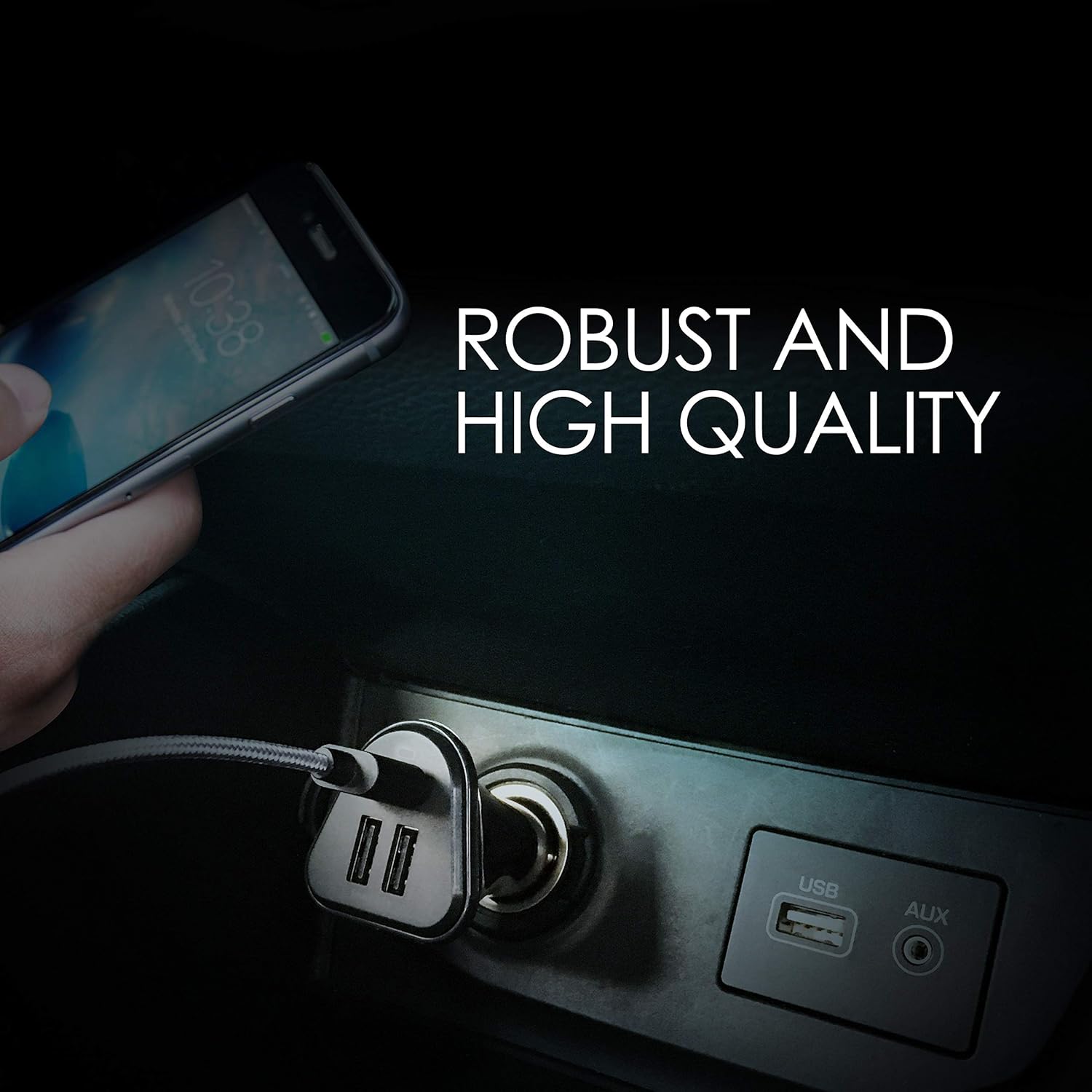
Picture a family road trip at golden hour: kids debating playlists, a spouse locating the next scenic pull-off, and everyone quietly performing the same ritual—plugging in, checking battery percentages, and hoping the car has “just one more” outlet. It’s never just one more. Phones need charging. Tablets crave power like little hearths. Navigation tablets, earbuds, portable game consoles, and smartwatches all begin to behave like needy houseplants the moment you leave the driveway.
Now flip the mental frame. Instead of asking, “Do we have enough USB ports?” ask, “Can this car keep the family’s devices in a calm, synchronized rhythm?” The most practical vehicles don’t merely offer convenience; they deliver a kind of infrastructural reassurance. The families who choose those cars often discover that power—properly distributed—changes moods. It reduces friction. It shrinks the number of charging negotiations. And, perhaps most surprisingly, it shifts the entire trip into a more relaxed tempo.
Why USB Ports Matter More Than Most Families Expect
USB ports are often treated like background features—something you notice only when you’re searching for a cable in the console. But the truth is more intricate. USB ports are the family’s power logistics. They determine who can stay online, who can continue streaming, and who can maintain access to maps when cellular reception gets moody.
When a car has limited ports, families respond by improvising: shared power banks, charging docks passed between seats, and the occasional “Wait, your turn is next.” Those workarounds can be functional, yet they carry a subtle tax—time, patience, and attention. More USB ports don’t remove the need for good charging habits, but they do reduce the emotional overhead of constant triage.
Consider the hidden ripple effects. A child’s device dying means fewer videos for the backseat calm. A parent’s phone losing power means navigation stutters or calls become unreliable. Even smart safety features can become indirectly affected when devices drain faster than expected. USB ports act as a stabilizing mechanism—small, silent, but consequential.
What “Most USB Ports” Actually Looks Like in Real Life
When people say a car has “many USB ports,” they might imagine a tidy cluster near the dash. In practice, the best family cars scatter connectivity strategically. Ports appear in multiple rows, some in convenient reach, others tucked where cables won’t tangle. The layout matters as much as the raw number.
A strong setup often includes a mixture of:
• Front-row ports for the driver’s navigation and the front passenger’s streaming.
• Rear-row ports for backseat entertainment and schoolwork continuity.
• Dedicated or high-output charging ports for faster replenishment—especially useful when a family forgets to charge before departure.
Then comes the subtle advantage: fewer cable crises. When ports are positioned with intention, families use longer cables less often. Cable management becomes almost automatic. That alone changes how a car feels during travel—less clutter, fewer interruptions, more “we’re actually enjoying this.”
USB-A vs USB-C: The Quiet Difference That Changes Everything
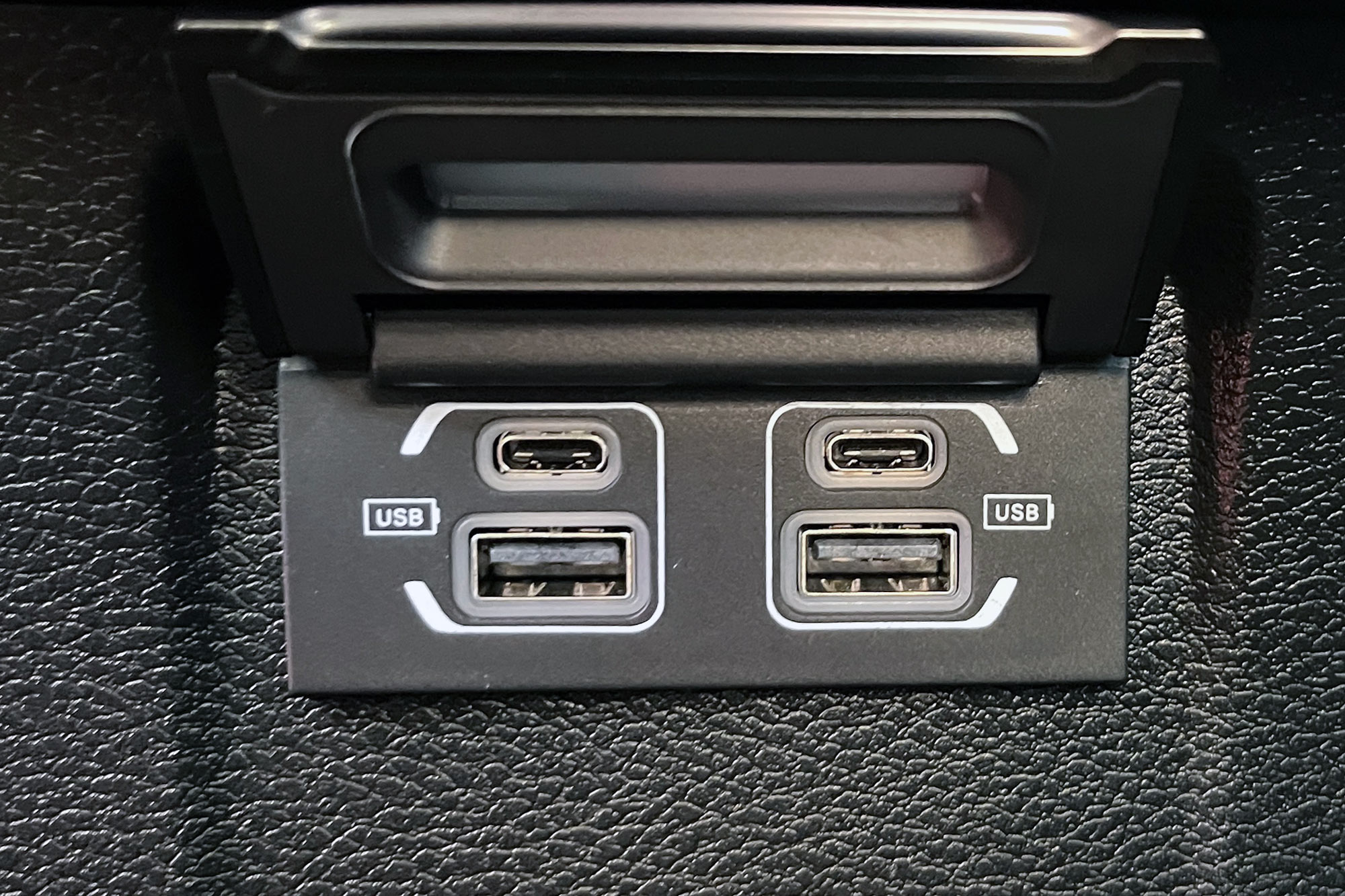
Families often learn about USB types the hard way, right when a favorite device refuses to charge. USB-A and USB-C are not interchangeable in the emotional sense, even if adapters exist. Each family ends up with its own “cable ecosystem,” and cars that support multiple modern standards tend to be the most future-proof.
USB-C typically offers broader compatibility for newer phones, tablets, and accessories. USB-A still appears frequently, powering older devices and legacy gear. The best family cars don’t force a single standard; they accommodate mixed households and mixed device lifecycles.
Here’s the perspective shift worth keeping: a car with more ports is beneficial, but a car with the right variety of ports feels like it anticipates needs. It reduces the probability of the dreaded scenario: one device works, the other doesn’t, and the entire seating row becomes a troubleshooting station.

Distribution Beats Concentration: Keeping Every Seat Powered
One charging point in the wrong place is like placing a snack bowl across the yard. It’s technically possible, but it will not be how humans behave under stress. Family cars shine when USB ports are distributed across seating positions.
Why does distribution matter? Because children are rarely stationary for long. One minute a device is used for a game, the next it’s used for a drawing app, then it’s passed to someone else after a question. When rear ports are within easy reach, the energy stays decentralized and the car remains orderly.
In a well-designed layout, each passenger’s charging becomes a private routine. The driver plugs in without reaching awkwardly. The front passenger doesn’t borrow cables. The backseat doesn’t host a daily conflict over who gets the only outlet. The result is a kind of “household harmony,” engineered through simple ports.
Charging Speed and Output: Faster Can Feel Like More
More ports don’t automatically mean faster charging. Families should also consider charging output—because speed changes behavior. If devices charge slowly, families treat the car like a temporary storage zone rather than a real charging environment. They’ll still rely on power banks, wall chargers, and frantic end-of-day tactics.
Cars with higher-output USB charging—especially for USB-C—reduce that dependency. When charging is meaningfully quick, families can trust the trip itself as part of the charging plan. That’s when road trips stop feeling like digital survival tests and start feeling like smooth logistics.
A useful mindset is to treat charging speed like emotional throughput. When devices replenish promptly, the family doesn’t have to constantly monitor battery health. Less checking means less distraction. More calm means more conversation. The car becomes a sanctuary rather than a charging depot.
Entertainment, Work, and School: USB Ports as a Daily Bridge
Family life isn’t only weekend travel. Weekdays include commutes, after-school activities, and last-minute homework sessions. Many households carry tablets for reading, laptops for projects, and phones for hotspot access. During the ride, USB ports act like a daily bridge between responsibilities.
When there are enough ports, adults can work without hovering. Kids can complete assignments without begging for extra time at the outlet. Even meal stops become different—less time searching for plugs, more time actually resting.
In a curious way, abundant USB connectivity can also encourage better habits. Families may stop overusing power banks and start planning chargers around the car’s built-in resources. It’s a subtle shift from emergency charging to routine charging. That shift turns a car feature into a lifestyle advantage.
Practical Tips for Charging All Devices Without Chaos
Even the most USB-rich vehicles benefit from smart behavior. A few strategies can convert “ports” into a smooth charging system.
• Use a cable strategy: keep a dedicated set of cables for each device type. Label them if needed. Short sentences help. “Tablet cable. Phone cable. Headphones cable.”
• Bring one multi-port adapter: for accessories that don’t need high speed, a single adapter can expand your options. Think of it as a small power “hub.”
• Prioritize fast charging: route USB-C or higher-output ports to devices that drain quickly—often the ones used most intensively in the backseat.
• Manage heat and airflow: cover-less cables and tidy placement help reduce stress on connections. Warm interiors are normal; damaged cables aren’t.
These habits turn abundance into efficiency. The car stops being a place where devices compete and becomes a place where they harmonize.
Choosing a Family Car for Connectivity: The Question to Ask
When shopping, don’t just count ports. Imagine a realistic family scene. Who sits where? Which devices travel every day? What cables already live in the drawer?
Then ask: Can this car support our pattern of power usage without constant negotiation? If the answer is yes, the vehicle becomes more than transportation. It becomes a quiet enabler of freedom—freedom from the “charging anxiety” that arrives before the destination.
The most USB-capable family cars offer more than convenience; they offer a reconfiguration of expectations. They promise that your devices will keep up with your life, not the other way around.
Final Thoughts: A Smoother Trip Starts With Better Power
Family cars with the most USB ports create a rare kind of peace: fewer interruptions, fewer arguments, and fewer moments where someone has to say, “Mine’s at 3%.” They make charging feel like background infrastructure rather than an event.
And once charging is handled confidently, something else happens. The family’s attention returns to the road, the people, the conversation. Curiosity grows. Stories last longer. Even silence becomes comfortable because it’s not filled with the hum of dying batteries.
In the end, the best feature isn’t only the number of outlets. It’s the promise of a calmer journey—where every device stays ready, every seat feels supported, and the trip unfolds with an ease that’s hard to unlearn.