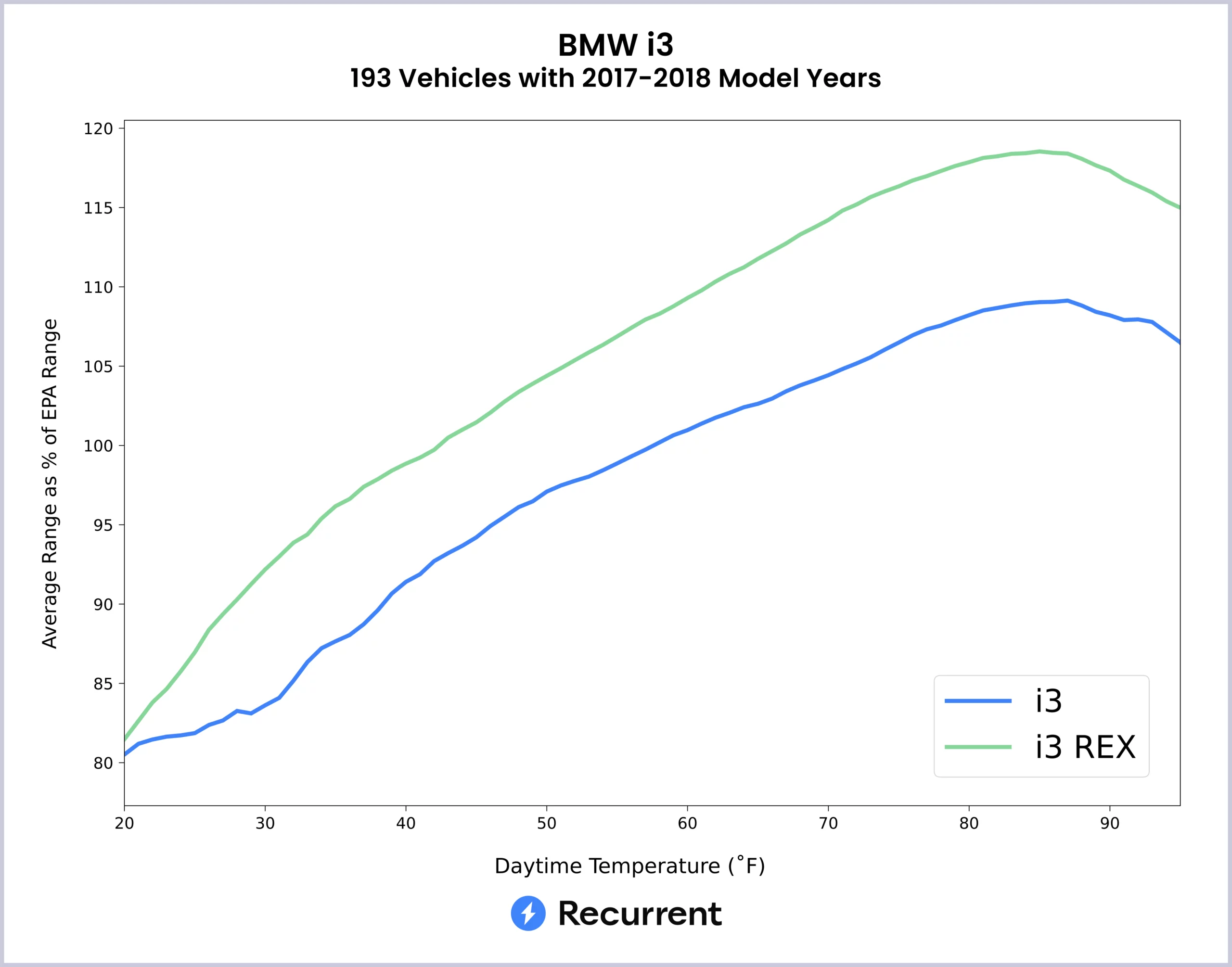
There’s a familiar moment in winter driving: the battery gauge seems to sag like a weary accordion, and suddenly the trip that felt effortless in October begins to look ambitious. It’s a common observation—EVs lose range in cold weather—but the experience often feels personal, almost theatrical. One commute evaporates faster than expected. Another driver swears their car behaves “fine.” And somewhere behind the confusion sits a more interesting question: which brands hold up better when temperatures drop, and why does that difference feel so uneven?
Cold weather range loss isn’t a single culprit. It’s a whole cast of factors acting at once: chemistry, thermal management, drivetrain efficiency, tire behavior, and even the psychology of preconditioning. The result is that “range loss” becomes less a number and more a story—one written differently across makes and models.
Cold Weather and the Range Trade: What Changes First?
When the temperature falls, the EV’s battery doesn’t simply “run out” faster. It becomes less cooperative. Lithium-ion cells deliver power differently when cold; internal resistance rises, and the car compensates by drawing more energy for the same output. The dashboard may show a smooth calculation, but the underlying physics can feel like tug-of-war.
Then there’s the matter of heating. In a gasoline car, waste heat is readily available. In an EV, heat must be manufactured—often using resistive heaters, heat pumps, or a combination. That heating load can be surprisingly persistent, especially in stop-and-go traffic or when cabin comfort is set aggressively. Short trips amplify this effect, because the vehicle may not reach thermal equilibrium before you arrive.
In other words, cold weather range loss is not only about “battery degradation for a day.” It’s about energy rerouted toward keeping systems functional and comfortable.
Deeper Than Numbers: Why Range Loss Feels So Dramatically Different
Two EVs can report different estimated ranges at the same temperature, yet the divergence may not be purely due to hardware. The driving environment matters. Wind chill, road grade, precipitation, and speed all influence consumption. Even tire pressure—often overlooked—changes rolling resistance, and rolling resistance becomes a silent multiplier in winter.
But the deeper fascination is this: manufacturers design thermal strategies that are both technical and behavioral. Some systems prioritize battery warmth, others prioritize cabin rapid comfort, and some try to do both elegantly. That choreography can produce a noticeable difference in real-world mileage, especially during the first part of your journey when components are most chilled.
What drivers interpret as “brand X holds up better” is often the result of multiple design decisions converging—then being revealed by winter’s harsh timing.
Thermal Management: The Heat-Pump Advantage (and Its Limits)
One of the most discussed differentiators is heat pump technology. Heat pumps can move heat rather than generate it from scratch. That approach usually reduces energy draw for cabin and sometimes battery conditioning, particularly when conditions are moderately cold.
However, heat pumps are not magic in every climate. In very low temperatures, they may become less efficient or require supplemental heating. Some vehicles adjust their strategy automatically, balancing performance and efficiency based on ambient temperature, battery state, and driving mode.
So when you hear that a certain brand “does better in winter,” it may be because its thermal system keeps the battery in a more favorable operating window longer—or because it relies more effectively on low-energy heating methods until the climate forces a different tactic.
Battery Chemistry, Preheating, and the Art of Arriving Ready
Batteries are not passive reservoirs; they’re living systems that respond to temperature. In cold weather, the vehicle may spend energy warming the pack to improve power delivery and reduce stress. If that warming happens while the car is plugged in, it can be far less costly in terms of “usable driving range.”
That’s where preconditioning comes in. Many vehicles can warm the cabin and battery before departure using grid power. When you leave with the battery already within an optimal temperature band, the first kilometers become less of a penalty. When you don’t—especially after long overnight sits—the car may have to spend energy immediately just to catch up.
Some brands handle preconditioning more consistently, others tie it to route planning and navigation data, and some respond differently depending on whether your charging schedule and timer settings are configured well. The result is that “brand performance” sometimes hides a “user workflow” advantage.
Drivetrain Efficiency and Winter-Mode Behavior
EV range in winter depends on how efficiently the drivetrain converts energy into motion. That includes traction control, regenerative braking behavior, and how power is limited when the battery is cold. In many vehicles, regeneration can be reduced until the battery warms enough to accept charge comfortably.
Less regeneration means less opportunity to recapture energy during deceleration. The driver may feel this as weaker one-pedal braking or a different coast-down sensation. Even slight changes in regen strength can affect overall consumption, especially in urban driving where braking cycles are frequent.
Manufacturers may tune winter operating modes differently—some prioritize stability and smoothness, others prioritize range retention. The differences are subtle, but winter turns subtlety into measurable outcomes.
Tires, Aerodynamics, and the Winter Physics You Can’t Ignore
Cold weather also interacts with mechanical factors. Tire rubber becomes stiffer in low temperatures, increasing rolling resistance. If the tires are underinflated, the penalty grows. If the winter tread increases drag, that too can translate into less range.
Speed magnifies everything. Aerodynamic drag rises with the square of speed, and winter often tempts drivers into higher highway speeds. Add wind, and the energy requirement grows relentlessly. A brand with strong thermal management can still be outpaced by physics if tires and driving habits stack penalties together.
Therefore, comparing brands fairly requires the same speed profile, tire pressure, and route type. Without that, comparisons can become a kind of mythmaking—entertaining, but not necessarily accurate.
Which Brands Hold Up Better? How to Think About the Winners
Rather than treating “brand” as a monolith, it helps to view it as a bundle of decisions. The best winter performers typically share a few traits: effective heat-pump systems (or robust low-temperature heating strategies), disciplined battery conditioning, predictive thermal scheduling, and software that avoids wasting energy early in the trip.
In practice, models designed around thermally efficient driving often feel more consistent across cold snaps. They may show smaller range swings, and their consumption estimates may stay steadier when the temperature changes quickly. That steadiness is not just comfort—it’s predictability, which reduces the urge to drive conservatively in a way that further changes the consumption pattern.
Yet there’s also brand personality. Some manufacturers lean into performance even in low temps, while others emphasize efficiency. Those choices can be felt in the way the car limits power or how aggressively it warms the battery to preserve responsiveness.
So the “winner” brand is not always the one with the headline range. It’s the one whose thermal and efficiency philosophy fits your winter reality: your commute length, your thermostat habits, your charging access, and whether you can precondition routinely.
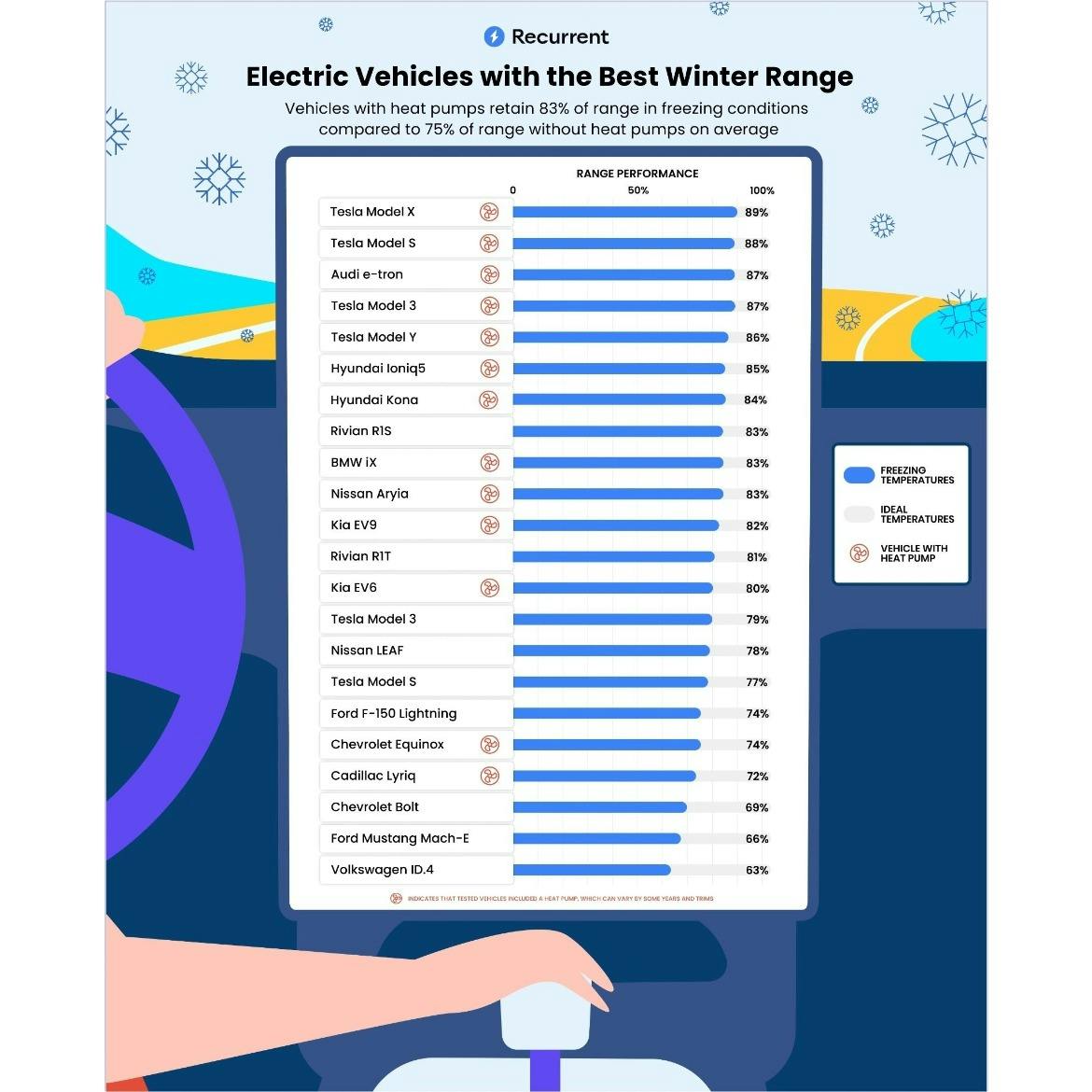
How Drivers Can Improve Winter Range Without Changing Brands
There are practical steps that can noticeably reduce the cold-weather “tax.” Use a schedule or navigation-based preconditioning if available. Start with the battery warmed when possible. Keep tire pressures within the recommended winter range. Consider moderate heating settings and reduce unnecessary interior loads.
Drive smoothly. Hard acceleration and frequent speed changes punish efficiency more harshly in winter. If your EV supports it, use energy-saving modes thoughtfully, not dogmatically. Some settings prioritize heat and others prioritize range; aligning your choices with your trip length can make the biggest difference.
Even small habits—like plugging in whenever you can and setting departure times—can convert winter from a mystery into a routine.
Why This Topic Keeps Pulling People In
It’s tempting to think the fascination is only about numbers. But it’s also about control. Winter turns infrastructure into a negotiation: chargers may be spaced differently, roads may be slick, and temperatures may fluctuate during the commute. Seeing a brand’s cold-weather strategy succeed or fail feels like watching a discipline under pressure.
Drivers want to believe there’s a dependable “winter personality” inside the vehicle—something engineered to remain calm when the world outside becomes obstreperous. And that longing is reasonable, because the best thermal systems do exactly that: they keep the EV prepared, not merely charged.
Conclusion: The Real Answer Is a Blend of Design and Method
EV cold weather range loss is real, but it’s also more complex than a single headline percentage. The brands that hold up best tend to excel at thermal management, heating efficiency, battery conditioning, and software that avoids wasting energy at the beginning of the trip. Still, comparisons only become meaningful when you consider your commute style, tire choices, and whether you can precondition while plugged in.
Winter may shrink the range window, but it doesn’t have to shrink confidence. Choose a vehicle with winter-ready thermals, drive with awareness, and let preconditioning do the heavy lifting. In the end, the most impressive cold-weather performance isn’t just about how far you can go—it’s about how predictably you can get there, even when the cold tries to steal the plot.