There’s a particular kind of electricity in the question: “How long will it take?” Not just because time is money, but because time is emotion. The 10–80% window is where most real road-trip decisions get made—long enough to matter, short enough to feel manageable. Yet the way charging time behaves across vehicles and charging stations can look deceptively simple from a distance. Step closer, and the choreography becomes intricate: battery temperatures, charge curves, throttling logic, charger handshake speed, and the quiet math of cell balancing all begin to steer the outcome.
This article ranks EVs by their real-world DC fast charging time from 10% to 80%—but with a twist. Instead of treating time-to-percentage like a single number, we’ll treat it like a story arc. You’ll come away with a shifted perspective: not “Which EV charges fastest?” but “How do fast-charging promises get earned—mechanically, thermally, and strategically?”
Why 10–80% became the EV charging “sweet spot”
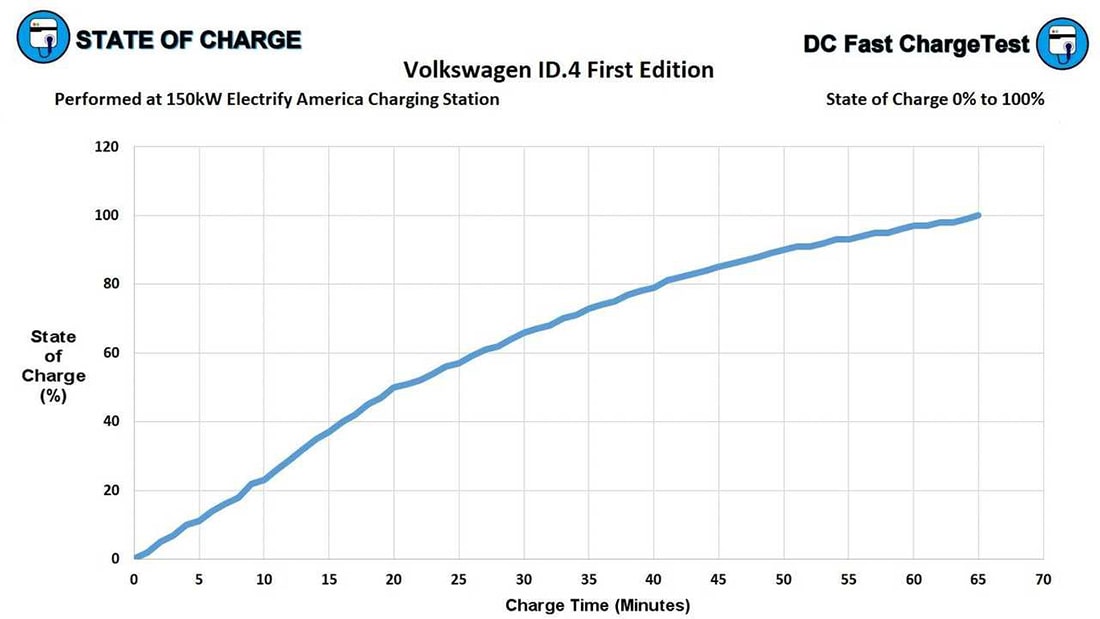
To understand the ranking, first understand the constraint. Going from 0–100% invites distortion: the earliest percent may be slower due to battery preconditioning, and the final percent often slows deliberately to protect longevity. Meanwhile, 10–80% typically bypasses the slowest warm-up phase while avoiding the steep end-of-charge taper.
That’s why 10–80% works like an impartial referee. It captures the practical middle ground where DC fast chargers demonstrate their authority, and where EVs show off the shape of their charging curves. Even so, the curve still isn’t universal. Two EVs may both accept “high kW,” but one may do it smoothly for longer, while another hits peak power briefly before internal systems dial things back.
The hidden conductor: charge curves and battery behavior
Imagine a highway with a strict speed limit that changes every mile. That’s close to what an EV does with power delivery. Manufacturers design battery systems to minimize stress, so the car modulates charging current as the battery fills. The result is a curvilinear descent: power starts strong, then gradually—or abruptly—throttles.
Battery chemistry influences the ceiling. Cell architecture influences how quickly heat moves to and from the cells. Thermal management determines whether the battery stays hungry for power or becomes cautious. When a vehicle maintains a higher average power within 10–80%, it usually earns a shorter total time even if it never touches the highest peak rating.
How DC fast chargers really matter (more than wattage alone)
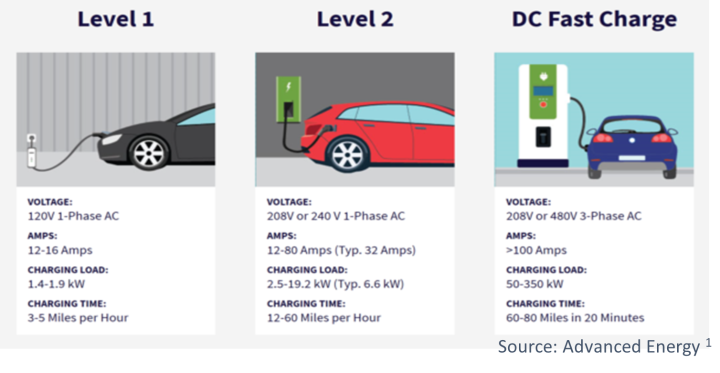
Wattage is the headline, but compatibility is the plot. DC fast charging performance depends on the charger’s output profile, cable capabilities, power-sharing behavior, and the negotiated parameters between vehicle and station.
Power sharing is a frequent culprit in “why did it suddenly slow down?” moments. If multiple bays are active, chargers may split their capacity. The EV’s response then becomes a negotiation: do internal limits kick in, or does the car adapt gracefully to reduced supply? That difference can be the gap between “I’ll be out in a flash” and “I’ll have time for a snack and a second thought.”
Then there’s the handshake: the vehicle and charger agree on voltage and current ranges, sometimes in stages. Efficient negotiation can reduce the time spent waiting for the battery to accept optimal power.
Ranking philosophy: average power, not just maximum power
To rank EVs meaningfully for 10–80%, maximum peak kW is insufficient. A vehicle that spikes to a huge number for a few minutes and then throttles hard might lose to a vehicle with a slightly lower peak but a higher average power over the full interval.
Think of it as pacing in a marathon. A fireworks burst at the start doesn’t win the race. Consistency does. The best performers typically keep the battery within a comfortable thermal envelope and sustain acceptance long enough to compress total charging time.
In practical terms, the ranking favors: (1) robust thermal management, (2) aggressive yet safe charge curve design, (3) stable DC acceptance in the mid-state around 40–70%, and (4) smooth power transitions without extended “limbo” where power falls faster than expected.
Top-tier performers: the “hurts to wait” category
At the top of the leaderboard are EVs engineered for fast acceptance—vehicles that treat DC fast charging as a routine behavior rather than an occasional event. Their charge curves often exhibit a broad plateau: strong power stays available deeper into the battery’s mid-range.
What that feels like behind the scenes is elegant thermal choreography. The battery stays neither too cold (which forces conservative current limits) nor too hot (which triggers protection throttling). These cars also tend to be less sensitive to the “recent driving context,” because their preconditioning logic prepares the pack for arrival.
If you want the shortest 10–80% times, this tier is where the math lines up. The time differences are often more noticeable in the middle—when many others are already slowing.
Mid-pack contenders: quick when conditions cooperate
Next come the fast, but conditional, performers. They can still be excellent—especially after moderate preconditioning—but their charge curves may dip earlier or respond more sharply to battery temperature changes.
Sometimes it’s a practical scenario: arriving at low ambient temperatures without preheating might force the car to spend part of the 10–80 window warming itself instead of charging. Other times it’s station behavior: if the charger is near capacity or sharing power with another vehicle, the car’s peak will never fully materialize.
Here’s the perspective shift: a mid-pack EV often becomes top-tier in the right moment. The ranking is not merely about the car—it’s about the meeting point between car and environment.
The “still good, but know the rhythm” group
Some EVs charge quickly but with a more pronounced taper. That doesn’t make them slow overall; it makes their charging rhythm different. If a vehicle aggressively throttles as it approaches the upper half of the battery, the 60–80% segment may feel longer than expected.
To make sense of this, stop thinking of charging as a single event and start thinking of it as two acts. Act one (10–50%) may feel swift and confident. Act two (50–80%) may require patience—because the car is protecting battery health and managing internal resistance as the pack fills.
These vehicles still have their strengths: efficiency at cruising speeds, range that reduces the number of charging stops, or charging availability where their preferred protocols thrive. But if your priority is time compression, you’ll want to choose routes and stations deliberately.
Arrival state: temperature and battery percentage are the real variables
The same EV at the same charger can produce different outcomes when the battery is treated differently. Ambient temperature affects how quickly the battery warms or cools. Recent driving intensity affects the starting thermal state. Even the time spent plugged in before charging begins can matter if preconditioning engages at the right moment.
In this context, 10% isn’t just a number—it’s a condition. A “10%” battery that has been sitting in cold weather may behave differently than a “10%” battery that arrived warm from highway driving. That’s why experienced drivers don’t chase the percentage; they chase the readiness.

Practical strategy: how to minimize 10–80% time on a real trip
Curiosity is useful only if it becomes action. Here are the behaviors that consistently shrink the 10–80% interval.
Choose arrival conditions intentionally. If the vehicle supports preconditioning, schedule it near the charger so the battery enters the charging session ready to accept power.
Pick stations with a stable power supply. Look for chargers with good utilization patterns and minimal power sharing. A calm charger is faster than a theoretically powerful one.
Optimize for the mid-range. The ranking’s differences often emerge around 40–70%. If your plan depends on being ready quickly, don’t assume every car slows at the same rate.
Plan around peak hours. Congestion can lead to reduced charger output or longer session negotiation times. Even a fast charger can feel slow when the system is busy.
What the ranking can—and cannot—promise
A ranked list can be a useful compass, but it isn’t destiny. Charging performance is probabilistic. Still, the strongest EVs tend to deliver consistently short 10–80% times because their charge curves and thermal management are designed for the mid-pack reality of road travel.
The most valuable takeaway isn’t which model holds the top spot in a chart; it’s what to look for when you’re evaluating your next stop. Average acceptance matters. Thermal control matters. The negotiation between vehicle and charger matters. And your arrival state matters most of all.
Final thought: the fastest EV is the one that makes time feel predictable
When you compress charging time, you don’t just save minutes—you reclaim attention. Predictability turns stops into brief interruptions instead of uncertainty. And once you start viewing DC fast charging through the lens of charge curves, thermal readiness, and station behavior, the ranking becomes more than a leaderboard. It becomes a map for planning, a framework for expectations, and a quiet invitation to test the boundaries of what “fast” really means.
So as you look at 10–80% times, let curiosity do what it should: push you beyond simple claims, toward a more confident, more intentional charging strategy. The shortest stop is rarely the one advertised. It’s the one engineered—by the vehicle, by the charger, and by the way you arrive.