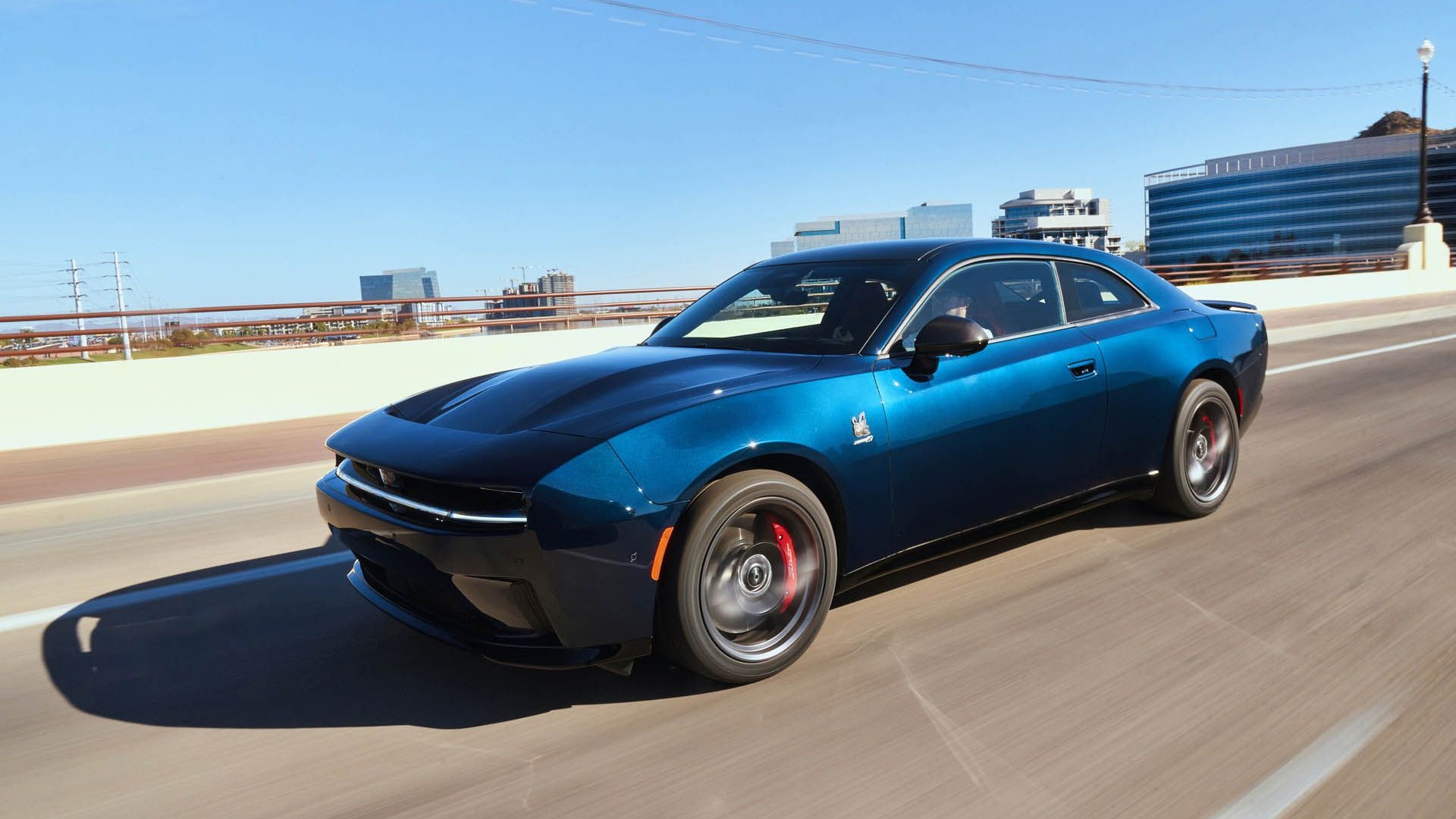
The first time you hear the phrase “electric muscle car,” it can sound like a contradiction dressed in modern tailoring. The stereotype is easy: a heavy battery, a muted soul, a powertrain that behaves like a spreadsheet. Yet the Dodge Charger Daytona EV arrives with a different intent. It doesn’t merely attempt to electrify an icon; it tries to preserve the emotional choreography that made the Charger such a cultural artifact in the first place. And the surprise is not just that it moves quickly—it’s that it feels like it understands why people cared in the first place.
This first drive is less about checking boxes and more about noticing the way fascination forms. A common observation is that EVs are “instant” and combustion cars are “dramatic.” The Charger Daytona complicates that binary. It’s instant, yes. But it’s also deliberate. It doesn’t abandon drama; it redesigns it.
First Impressions: The Charger Persona, Rewired
From the moment the Daytona comes into view, its presence reads like a continuation rather than a reinvention. The coupe-and-sedan silhouette carries that unmistakable Charger stance—low, wide, and intent. Even before you press anything, the shape seems to be speaking in the language of track days and late-night drives. The electric aspect waits patiently behind the sheet metal.
Then you settle into the cabin. The seating position is familiar enough to calm the nervous system, yet the interfaces feel like a clean break from the old rhythm. It’s a cockpit that wants you to focus on velocity as a sensation rather than a mechanical byproduct.

The Deeper Reason People Are Hooked: Torque as a Mood
Electric cars are often praised for their torque delivery, but fascination doesn’t come from raw numbers alone. It comes from how torque redefines intention. In a gasoline muscle car, your right foot has to negotiate throttle response, revs, and the personality of an engine. In the Daytona EV, power arrives like an accomplice that never hesitates.
It’s not only speed; it’s timing. The car seems to anticipate the moment you decide to move. That creates a feedback loop between driver and machine. You steer, you feed torque, you correct, and the sensation tightens. The result is a feeling many drivers describe instinctively: the car is “alive.” Electric drivetrains are sometimes dismissed as too smooth, but the Daytona uses that smoothness to heighten clarity rather than dull emotion.
Acceleration Without the Hangover
Launches are where expectations typically get tested. A Charger is supposed to surge. In the Daytona EV, the surge is immediate, but not chaotic. There’s a kind of composure to it, as if the power has been curated.
Here’s where a common observation often becomes the trap: “EVs are fast, but they’re boring.” The Daytona refuses that verdict. The acceleration is brisk enough to trigger that involuntary grin, yet it’s packaged with traction logic and control calibration that keeps the experience cohesive.
Instead of chasing drama through noise, the Daytona leans on progression—how power builds, how the vehicle plants itself, and how the chassis responds to your steering inputs. It feels like velocity with an editor’s cut.
Steering, Chassis Balance, and the Myth of “Heavy by Default”
Battery mass has earned a reputation for turning EVs into wallowing steeds. That’s a fair concern on paper. Yet the Charger Daytona challenges the assumption by emphasizing balance and stiffness management. The car tracks with an eagerness that undermines the expectation of bulk.
Turn-in feels purposeful. The front end doesn’t fight you with indecision. Mid-corner, the car holds its line with a stability that feels designed rather than accidental. And when you unwind the steering, it doesn’t wander; it resolves.
What’s fascinating is the way the EV architecture can support performance. When engineering teams have the freedom to place mass low and distribute it efficiently, handling can become a story of restraint—not compromise.
Braking and Regeneration: Learning a New Language
Regenerative braking is often summarized as “efficient deceleration.” That’s technically correct, but emotionally incomplete. The real skill is modulation—how the pedal and the friction brakes coordinate so the driver can predict stopping behavior with confidence.
In the Daytona EV, braking feels conventional enough to reduce cognitive friction. You don’t have to think like an EV. You just stop, slow, and set up the next move. And when regeneration contributes, the car’s slowing feels smooth rather than choppy.
There’s a subtle thrill to regaining momentum with restraint. You begin to anticipate traffic rhythm earlier. You time lights differently. The drive becomes an exercise in graceful engineering, not merely energy management.
Sound, Silence, and the Return of Character
Muscle cars are famous for noise, but noise is only one kind of identity. The Charger Daytona’s electric nature does change the audible texture. Yet character doesn’t vanish; it migrates.
Wind and tire notes become more prominent. The sensation of speed shifts from engine roar to aerodynamic glide. In some moments, you hear the car the way a musician hears resonance—through timbre and cadence. In other moments, the silence becomes a canvas where your inputs stand out sharply.
It’s an uncommon feeling: the absence of combustion doesn’t make the experience hollow. Instead, it heightens awareness. The car becomes a responsive instrument, not a noisy monument.
Interior Architecture: Technology as Muscle Memory
The cabin carries a familiar attitude—comfortable, intentional, and built for drives that stretch beyond the initial thrill. Yet the technology feels like it’s been integrated rather than simply appended.
Menus are quicker to reach than you’d expect, and the user experience supports the driver instead of distracting the driver. That matters. Muscle car culture isn’t about button pushing. It’s about instinct. When interfaces behave politely, you can focus on road texture, traffic flow, and the subtle physics of traction.
Materials and layout help preserve the Charger identity. You still sit in a space that feels made for motion. The digital layer adds information where it helps and stays quiet when it doesn’t.
Efficiency Without Sacrifice: Why Range Feels Less Scary
Range anxiety is often treated like a modern villain. But in practice, many drivers are more anxious about planning than distance itself. The Daytona EV helps by making energy use feel legible. You learn patterns quickly.
In city driving, the regenerative braking and smooth throttle mapping reduce wasted movement. On spirited stretches, energy consumption rises as expected, but it doesn’t turn chaotic. The car doesn’t punish you for enthusiasm; it simply documents the cost.
That transparency is part of the fascination. People aren’t only buying speed. They’re buying comprehension—an ability to understand what the car is doing and why.
Design Details That Hint at Motorsport DNA
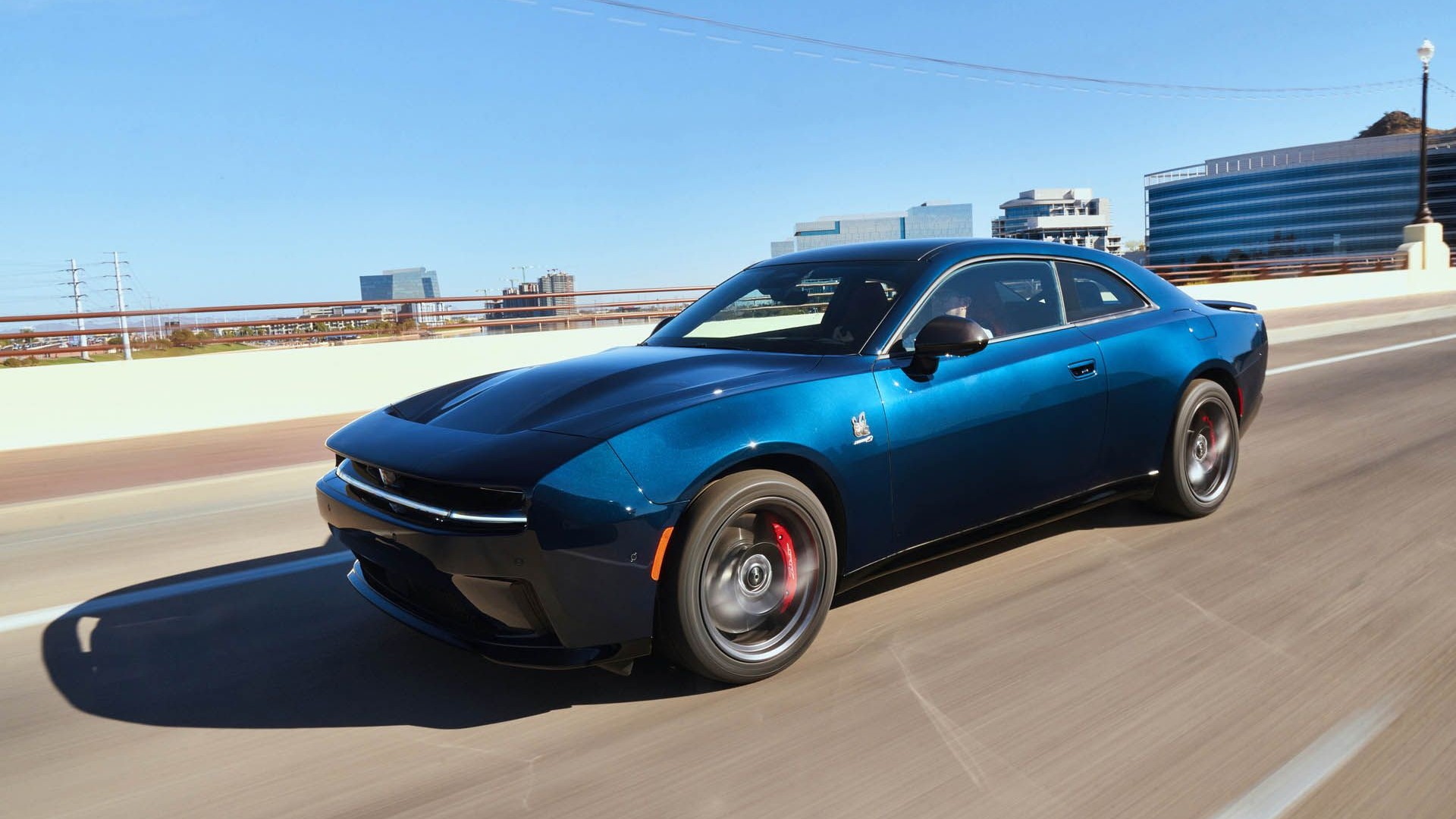
Daytona branding isn’t decorative in this context. The styling cues—where the airflow seems to be guided and how the body lines emphasize thrust—feel like they have intent. It’s the same principle that made classic racing cars so magnetic: you can often see the engineering philosophy in the shapes.
Every surface looks prepared for motion. Even when parked, the car suggests momentum. That’s not merely aesthetic confidence. It’s a reminder that performance culture is built on expectation. The Daytona EV seems ready to meet it.
The Emotional Shift: What “First Drive” Really Means
A first drive is where assumptions either harden or dissolve. The Daytona EV dissolves a few easy ones. It proves electric cars can have drama without exhaust theatrics. It proves muscle car handling can survive the battery transition. And it proves that instant torque can feel nuanced, not merely forceful.
More importantly, it addresses the deeper reason drivers get fascinated: the desire for a machine that feels like a partner. Electric propulsion can create that partnership when it’s tuned for trust—when power arrives with timing, braking feels predictable, and the chassis communicates through the steering wheel.
After leaving the driveway, you’ll notice something else. The experience lingers not as a spec-sheet memory but as a sensation you want to repeat. That’s the true metric of a first drive.
Outro: The Charger Daytona EV as a New Kind of Muscle
The Dodge Charger Daytona EV doesn’t chase perfection in the traditional sense. It chases something rarer: continuity of feeling. It takes the mythos of the Charger—its bold stance, its promise of acceleration, its emotional charge—and translates it into electric form.
In the end, the fascination isn’t only because it’s fast. It’s because it reframes what muscle means. Torque becomes mood. Silence becomes clarity. And the road becomes a conversation you can actually feel. That’s why the first drive doesn’t just impress—it persuades.