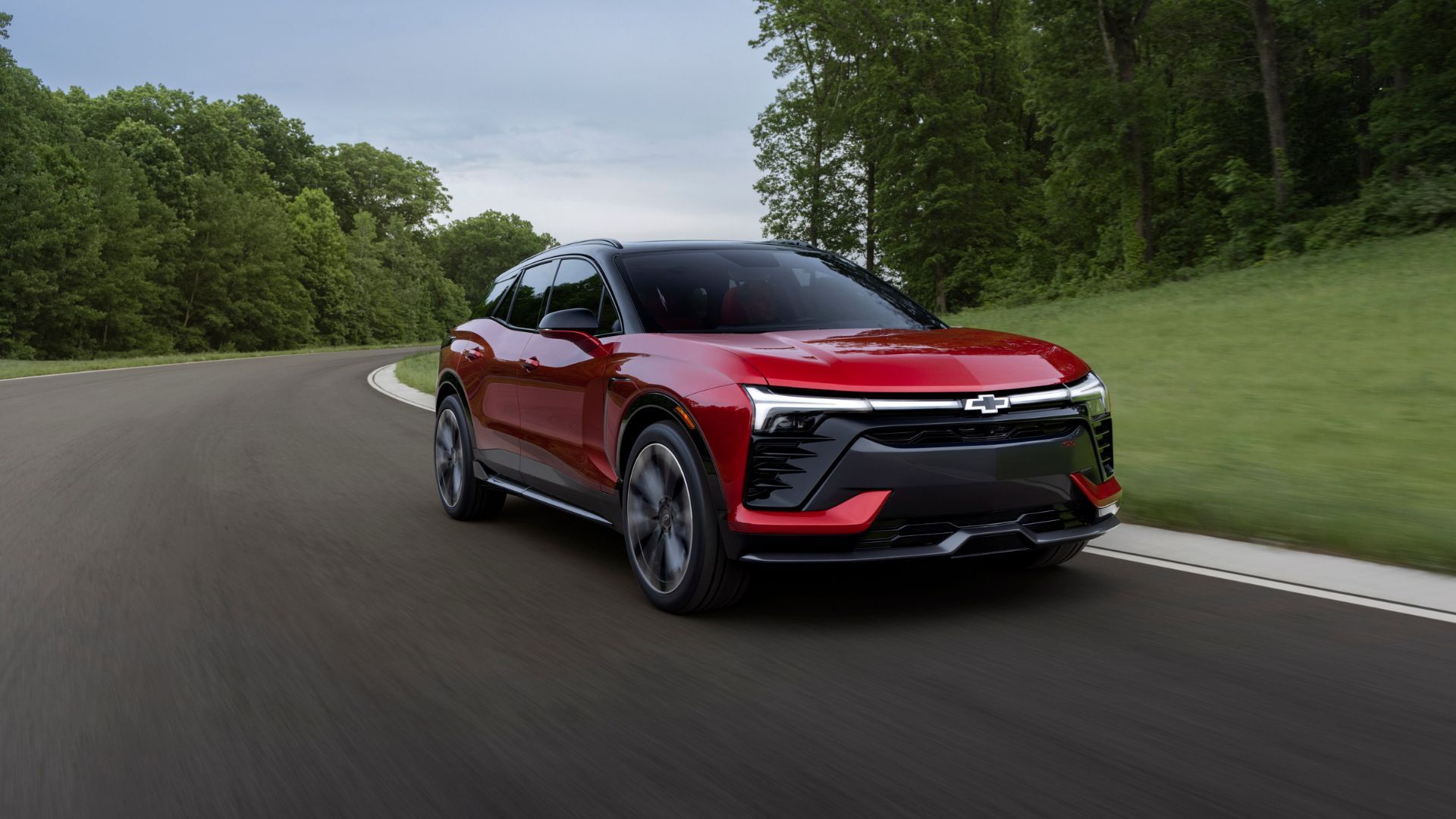
The first impression of the Chevrolet Blazer EV—especially when you’re peering at the SS Performance trim—is that it’s a departure from the usual electric-vehicle script. People expect smoothness, quiet acceleration, and a kind of serene anonymity. Instead, the SS arrives with sharper intent. It doesn’t just promise speed; it cultivates a mood. The kind you notice before you even press the accelerator: a tightened posture in the stance, a sense that the vehicle is less about blending into traffic and more about holding court within it.
And yet, a common observation follows quickly. “It’s an EV,” drivers say, as if that single label explains everything. But the fascination runs deeper. Electric propulsion removes some traditional constraints, yes—but the SS trim adds another layer: engineering decisions that treat performance as a system, not a slogan. Range, responsiveness, thermal management, chassis calibration, and driver interface all cohere. What looks like an attitude package is actually a carefully orchestrated personality.
Below is the full story behind the Blazer EV SS Performance trim—how it behaves, what makes it compelling, and why it draws people in beyond the obvious metrics.
Why the “Performance” label feels different in an EV
Performance in gasoline cars has a certain theater to it: engine revs, exhaust notes, and the tactile drama of combustion. Electric cars can feel different at first because their power delivery is immediate, almost too smooth for some expectations. The Blazer EV SS Performance trim, however, refuses to be merely “fast.” It is tuned to communicate. Not with noise—rather with timing, steering weight, pedal calibration, and how quickly the vehicle transitions from calm to urgent.
This matters because perception drives emotion. A driver may initially judge speed by reaction time, then later by stability under stress. The SS trim leans into that second layer. It’s designed so that when you press harder—whether entering a corner hot or overtaking with urgency—the vehicle doesn’t merely surge. It stays composed. That composure is a form of trust.
It’s also one reason the SS attracts attention from people who didn’t plan to shop for performance trims at all. They arrive expecting a novelty. They leave noticing nuance.
Exterior presence: confidence without chaos
On the outside, the Blazer EV SS Performance trim aims for an expressive silhouette rather than a flamboyant costume. The styling cues signal intent: more aggressive wheel design, sport-forward detailing, and a visual rhythm that reads well in motion. Even a static photo can feel like it’s vibrating—because the proportions and surfaces suggest airflow discipline and aerodynamic restraint.
Here, design isn’t just decoration. It’s part of how the car behaves at speed. Aerodynamics influence efficiency, and efficiency influences real-world performance. The SS, therefore, carries both swagger and practicality—an uncommon pairing that often defines vehicles worth spending time with.

Acceleration that feels engineered, not improvised
Instant torque is a headline for EVs, but instant torque doesn’t automatically translate into instant confidence. The trick is control. The Blazer EV SS Performance trim is where that control becomes visible.
Pedal mapping plays a huge role. A well-tuned electric powertrain doesn’t simply release maximum force; it meters it in a way that preserves traction and minimizes driveline shock. That’s especially relevant in high-performance driving, where tire grip is finite and the road’s mood can shift unexpectedly—wet patches, uneven surfaces, or a sudden change in elevation.
In everyday driving, this calibration makes the acceleration feel “intentional.” It responds without lunging. You feel propulsion as a cohesive line, not a jerky sequence of surges. In spirited driving, it behaves like a conductor’s baton—tight, rhythmic, and precise.
That’s the deeper reason fascination grows. It’s not that the SS is fast. It’s that it makes speed usable.
Handling and chassis tuning: the quiet work behind the drama
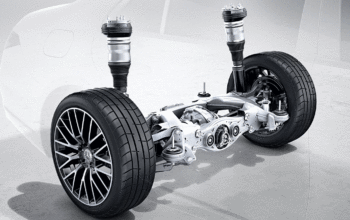
A performance trim lives or dies on its chassis. Steering response, body control, damping behavior, and brake modulation all shape the driving experience in ways many buyers underestimate. The Blazer EV SS Performance trim is built to address the uncomfortable truth that a heavy vehicle must be treated differently.
EVs often carry a lower center of gravity due to battery placement, which can help stability. But stability isn’t automatic; it has to be calibrated. The SS aims to convert that theoretical advantage into something you can feel. Cornering confidence emerges not only from grip, but from how predictably the vehicle communicates its limits.
You notice it in small moments: the way the car stays flat when you transition from braking to turning, the way it tracks through a curve without searching for balance, and the way suspension response seems to anticipate rather than react. These are subtle traits. They’re also the traits that keep people rethinking their expectations of EV “sport.”
Range and efficiency: performance doesn’t have to be wasteful
A frequent observation about performance EVs is that they trade away range for thrills. That’s a reasonable concern, because spirited driving draws energy quickly. Yet the SS Performance trim is engineered with an eye toward real-world practicality. Efficient thermal management and intelligent energy use are crucial, especially when you factor in repeated acceleration or longer routes with varying speeds.
There’s also a psychological aspect to range figures. When a vehicle offers a strong baseline of efficiency, drivers feel freer to explore its capabilities. They don’t have to drive timidly out of fear that the battery will turn into a ticking clock.
In other words, good range enlarges the performance experience. It turns occasional bursts into sustained confidence—less like borrowing power and more like spending it.
Battery and thermal management: the hidden boundary layer
Most people never see thermal management, but it’s a dominant force in how an EV performs over time. When batteries heat up, power delivery can be constrained to protect longevity. That can create a “fast, then fading” effect—something drivers remember because it breaks the spell of instant propulsion.
The SS trim’s deeper fascination lies in its ability to keep performance consistent. By managing temperature and distributing energy demands intelligently, the vehicle can sustain stronger acceleration behaviors longer than many casual expectations suggest.
This is where engineering maturity shows up. It’s not glamorous. It’s not headline-grabbing like peak power. But it’s the difference between a vehicle that feels exciting once and a vehicle that feels exciting repeatedly.
Braking feel and regenerative personality
Electric braking is often described as regenerative, but drivers experience it as personality. The transition between regen and friction braking must be smooth, predictable, and easy to modulate. If regeneration is too aggressive, it can unsettle passengers. If it’s too gentle, it can reduce the sense of control.
The SS Performance trim is tuned to give a confident braking rhythm. That matters not only for comfort, but for precision. When braking behavior is consistent, corner entry becomes less of a guessing game. You can approach a turn with intention, then execute with less hesitation.
That “less hesitation” is the quiet accelerator behind enjoyment.
Cabin experience: technology with a driver-first pulse
Performance trims shouldn’t feel like tech museums. They should feel like tools. The Blazer EV SS Performance trim leans into usability—so the driver isn’t forced to translate the vehicle’s behavior through menus and overlays.
Driver-focused feedback helps connect the sensation of motion to the car’s internal state. You get a sense of how the powertrain is responding, how drive modes alter behavior, and how the vehicle is preparing the next moment. In spirited driving, that feedback becomes almost hypnotic: you’re not just controlling the car—you’re reading it.
And for the passenger, it’s equally compelling. Acceleration feels purposeful. Cabin composure makes the ride feel calmer than expected given the performance intent outside.
Who the Blazer EV SS Performance trim is really for
The SS trim isn’t strictly for track enthusiasts. It’s for people who want performance that integrates with daily life. Those drivers notice everything: steering feel, brake modulation, how the vehicle handles in real traffic, and whether power delivery feels stable or chaotic.
They also tend to challenge assumptions. They’re curious about why an EV can feel sporty without the classic combustion theatrics. The SS provides an answer through engineering coherence: the sensation of speed is matched by the confidence of control.
It’s a trim that turns skepticism into curiosity—then curiosity into admiration.
Common questions: does performance compromise practicality?
This is the question that shadows almost every performance EV conversation. The immediate worry is that “more performance” means “more compromise.” But the Blazer EV SS Performance trim addresses that trade-off by treating practicality as part of the performance goal.
That means consistent driving feel, thoughtful energy use, and a driving experience designed to remain predictable even when you ask for more. The deeper answer is that performance isn’t merely speed; it’s how smoothly speed arrives and how safely it stays.
When you experience the SS trim over varied conditions—stop-and-go streets, open highways, and curvy secondary roads—the practicality becomes visible. The vehicle doesn’t just chase adrenaline. It coordinates it.
Final thoughts: the fascination is the whole system
The Chevrolet Blazer EV SS Performance trim earns attention because it disrupts the typical EV stereotype. It feels engineered for real driving, not just for spec-sheet excitement. Acceleration becomes usable rather than chaotic. Handling becomes confident rather than vague. And range becomes less of a constraint and more of an enabler.
The deeper fascination, though, is something harder to quantify: the sense that every component is tuned to work with the others. Performance, in this context, isn’t a single dramatic moment. It’s a sustained, coherent experience—one that stays intriguing even after the novelty of instant torque wears off.
In the end, the Blazer EV SS Performance trim doesn’t just ask, “How fast can you go?” It quietly asks, “How well can you control the feeling of going fast?” And for many drivers, that question becomes irresistible.