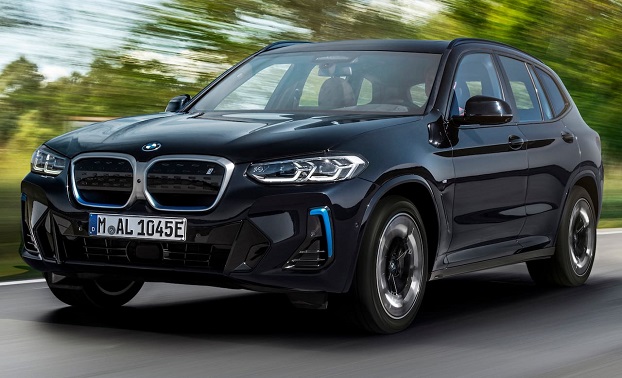
Picture this: you’re standing at the edge of a perfectly clean stretch of road, the sun is doing that cinematic thing on the hood, and the air smells faintly like warm brakes and ambition. Now ask yourself a playful question—what if your BMW M3 could feel like two different personalities in one garage? One is all razor-edged involvement with a manual gearbox. The other is the composed, confidence-fueled xDrive setup that seems to say, “Try to lose traction. I dare you.” But here’s the challenge: choosing between them isn’t just about specs. It’s about your driving temperament, your patience for nuance, and how you want your car to answer when you press the throttle.
In this review, we’ll walk through the heart of the BMW M3 debate—manual vs xDrive—with a focus on how each version changes the mood of every drive. Short trips become different stories. Corner exits become different promises. Even the sound, the cadence, the tiny pauses between inputs… they all tell a tale. Let’s get into it.
First Impressions: Two Moods, One Nameplate
The BMW M3 has always been about character, not just performance. Yet the transmission choice can dramatically alter that character. A manual M3 feels like a conversation: you speak, it listens, and you both learn the rhythm together. Every shift is a deliberate punctuation mark.
The xDrive version, on the other hand, brings a more synchronized sensation. The car seems to anticipate rather than merely respond. It’s not robotic—far from it—but it carries a certain calm that lets you push with fewer “what if” moments.
Here’s a practical framing: if your ideal drive includes the choreography of heel-toe moments and lever-based intimacy, manual will likely keep smiling. If you want repeatable traction, confident launches, and less drama on imperfect roads, xDrive tends to steal the spotlight.
Engine and Power Delivery: Where Feel Begins
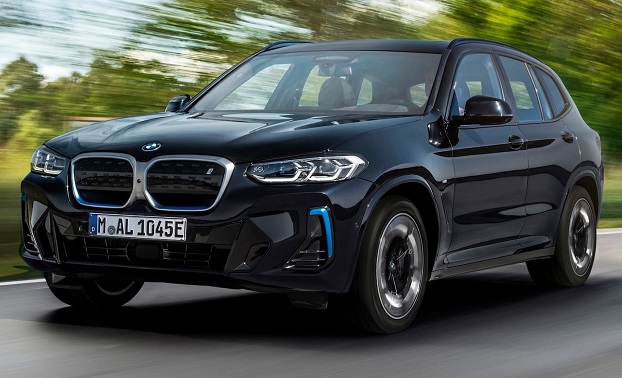
Both configurations carry the thrilling idea of instant torque and strong acceleration, but the “how” changes. With a manual, power delivery often feels more theatrical. The engine note rises, the lever moves, and the car surges with a sense of earned momentum. You can almost predict the exact moment traction will bloom—if you’re attentive enough.
With xDrive, that bloom is usually more consistent. The all-wheel-drive system manages grip with a degree of speed that the human eye can’t quite track. That doesn’t remove fun—it changes the flavor of it. The car becomes less sensitive to your micro-errors. That can be a gift, especially during rain, cooler temperatures, or those mornings when the road surface feels slightly slick and mischievous.
Manual Transmission: The Art of Involvement
Let’s address the romance first. A manual BMW M3 isn’t merely a transmission choice. It’s a philosophy. You’re tethered to the mechanical process. The shift gate is not just a tool—it’s a tactile interface. When you downshift, you don’t just change gears; you actively reshape the car’s future behavior.
And yes, there’s an occasional challenge. Traffic can test your enthusiasm. Frequent clutch engagement can feel like an uninvited metronome. But when the road opens up, the manual setup turns into a playground of precision. You can modulate acceleration like a musician controls dynamics—soft crescendos, sharp staccatos, and long, dramatic holds.
Common manual benefits include:
- Direct driver involvement—you feel more connected to traction and engine response.
- Skill-based performance—perfect downshifts can yield sharper, smoother acceleration.
- Enhanced feedback—you sense the car’s temperament through clutch and shift feel.
The potential drawback is equally real: the manual experience demands attention and practice. If your lifestyle includes stop-and-go commuting daily, you may find yourself yearning for effortless motion.
xDrive: Traction as a Superpower
Now for the other protagonist: xDrive. This system is often misunderstood as merely “safety.” But in an M3 context, it becomes a performance enabler. It helps translate torque into forward motion with fewer interruptions from wheel slip.
On spirited drives, xDrive tends to reward decisive throttle application. You can be more aggressive earlier in the corner exit without the same nervousness you might feel in a rear-wheel-drive-only scenario. The car can feel slightly less dramatic at the limit—but more consistent in reaching that limit.
Consider how this affects your daily life. Roads are rarely perfect. Cold mornings. Dusty patches. Uneven grip. In many regions, the surface can be unpredictable in a way that makes “just send it” a risky strategy. xDrive reduces the penalty of improvisation. It turns daring into repeatability.
- Improved traction for quicker, smoother launches.
- Confidence on variable surfaces—wet, slushy, or uneven grip.
- Less workload during fast, flowing driving sequences.
Still, there’s a playful truth: some drivers feel that a manual’s involvement is irreplaceable. xDrive can make the car feel slightly more “managed,” which certain purists interpret as less raw. But “managed” doesn’t automatically mean “less fun.” It can mean “more accessible performance.”
Cornering and Handling: Balance, Not Just Speed
Handling is where the debate becomes emotional. A manual M3 often feels more intimate because your inputs are less filtered. You time your shift, you adjust your torque delivery, and the rear dynamics respond with a kind of immediacy. If you’re the type who enjoys regulating the car through momentum, manual may feel like an extension of your instincts.
xDrive adds a layer of stability that can change how you attack corners. The car may feel planted when you apply power mid-exit. That planting can make the steering feel more communicative, because you aren’t constantly compensating for traction fluctuations. It can be like turning down the volume on uncertainty while keeping the excitement turned up.
Think of it this way: manual driving is like tasting spices while cooking—hands-on, direct, sometimes messy. xDrive is like using a precise recipe—repeatable flavor, fewer surprises. Both can be satisfying. The question is which style matches your taste.
Driving Feel and Sound: The Emotional Layer
Sound matters more than people admit. A manual M3 often delivers a more dramatic auditory arc—engine rising during upshifts, exhaust note changing with each gear, and the rhythmic cadence of lever work. It’s visceral. It’s almost theatrical.
xDrive changes the soundtrack too, but the emphasis shifts toward smoothness. The car tends to keep the engine in its optimal zone more effortlessly, which can make acceleration feel more continuous and less segmented by shift events.
Both are thrilling. Yet the “thrill” targets different parts of your brain: manual thrills the hands. xDrive thrills the confidence.
Daily Usability: Where Real Life Gets a Vote
Now comes the challenge you probably didn’t plan for: not every drive is a track day, and not every road is obedient. If your commute includes heavy traffic, the manual’s clutch work may feel like a tax. Conversely, if your routes include frequent wet patches, gravelly shoulders, or unpredictable seasonal grip, xDrive can make the car feel less like a gamble and more like a dependable tool.
Daily usability isn’t only comfort—it’s also ease of extracting performance. A manual might require more attention to remain in the “sweet spot.” xDrive might keep you in that sweet spot with fewer corrections. That difference can decide whether the car feels like a joy machine or a demanding companion.
The Ownership Question: Which One Fits Your Identity?
Choose based on identity, not marketing. Ask yourself: do you want to be the architect of every moment, or the conductor of a more automated symphony? Manual ownership invites a deeper bond. You’ll learn the car’s reactions and refine your inputs. xDrive ownership offers broad competence—less variance, more repeatability, and a confidence that can feel addictive.
If you crave spontaneity, manual can turn your driving into a living instrument. If you crave assurance, xDrive can help you keep pushing without constantly negotiating grip.
Final Verdict: Manual or xDrive—The Playful Answer
So, which BMW M3 should you pick? Here’s the playful conclusion: the manual is for drivers who enjoy the challenge of being fully responsible for every surge. The xDrive is for drivers who want the thrill of performance with a broader safety net against uncertainty.
If you’re willing to practice, if you love the ritual of shifting, and if you want your car to feel like a conversation—go manual. If you want quick confidence, consistent traction, and fewer drama-filled surprises—xDrive will feel like an instant upgrade to your adventurous side.
No matter what you choose, the BMW M3 remains an intoxicating benchmark of precision and power. The real victory is picking the variant that matches your rhythm—because the best performance car is the one that makes you want to drive again before you even reach home.