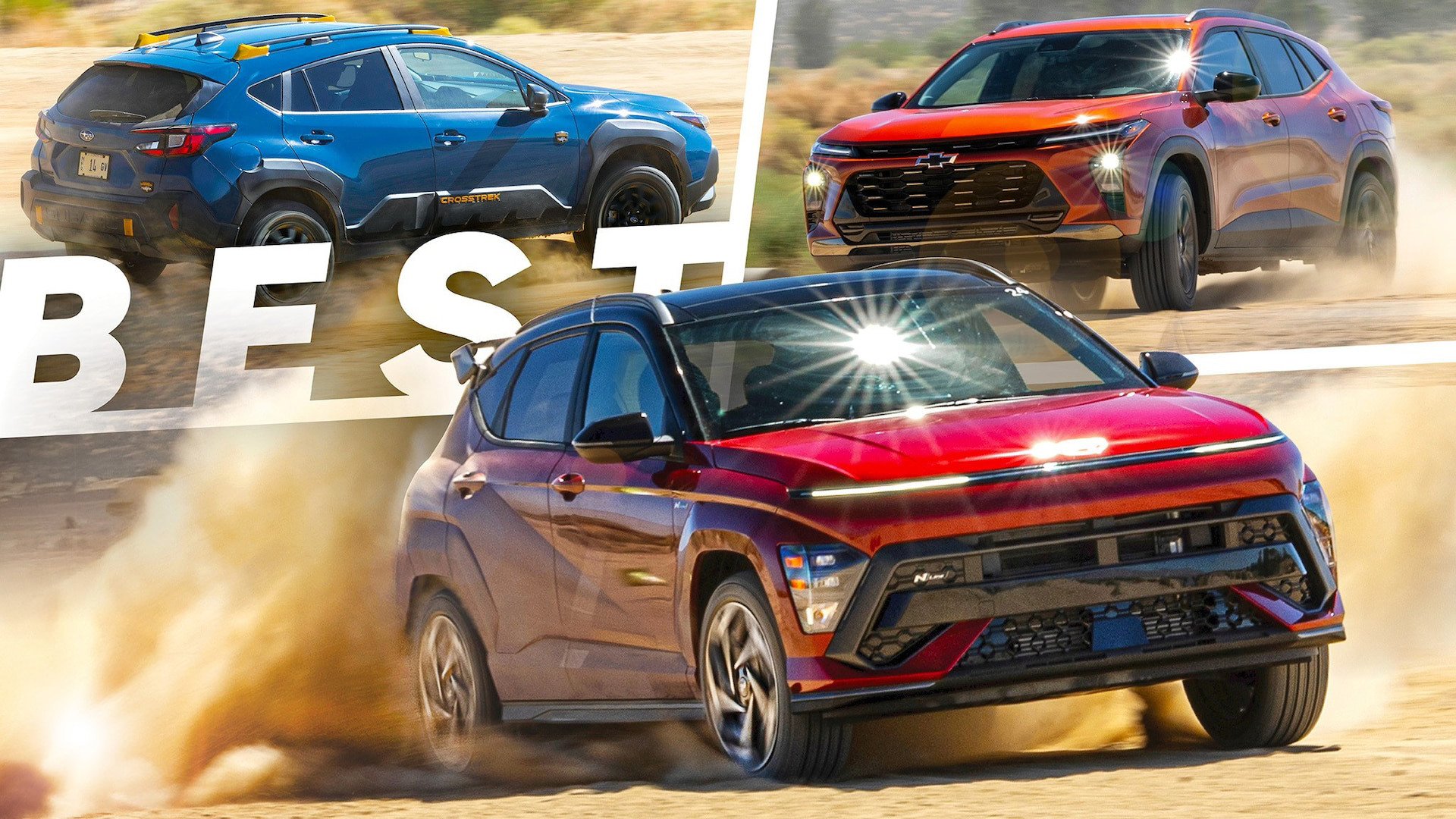
There’s a particular kind of moment that belongs to first-time buyers: the slow realization that “small” doesn’t have to mean “compromise.” Subcompact crossovers have become the modern handshake between practicality and aspiration. They slide into crowded parking lots with an ease that feels almost unfair. They wrap you in a sense of confidence, even before you’ve learned all the small details—visibility angles, turning radius, how the cabin swallows noise on the highway.
And yet, a common observation often follows: why do so many people fall for them so quickly? The answer isn’t just marketing gloss or price tags. It’s a deeper fascination with control—control over daily life, over budgets, over the boundary between “need” and “want.” A well-chosen 2025 subcompact crossover doesn’t merely transport you. It narrates your routine back to you with fewer frictions, more openings, and a surprisingly human kind of comfort.
Why 2025 Subcompact Crossovers Feel Tailor-Made for Beginners
First-time buyers tend to approach buying like a series of practical questions: reliability, cost, fuel economy, and whether the car will “fit” the lifestyle they’re still learning. Subcompact crossovers are unusually good at meeting those questions without sounding like a spreadsheet.
Their bodies are compact, but their intentions are broad. The driving stance is typically higher than a sedan, which can ease the anxiety of merging and lane changes. The seating position often feels natural right away—less “crowded” sensation, more horizon. Add standard or widely available driver-assistance features, and the car starts to feel like a quiet co-pilot rather than a mechanical burden.
There’s also the subtle psychological effect of versatility. People don’t just want to get from point A to B. They want the option to pivot—groceries today, a weekend errand tomorrow, a spontaneous detour next week. Subcompact crossovers frequently deliver that “permission” within a manageable footprint.

Choosing the Right Size: Compact Confidence Without the Squeeze
“Subcompact” can sound like a warning label. In reality, it’s a promise—smaller external dimensions, yet carefully packaged interiors. The trick lies in how these vehicles are engineered to use space efficiently. Door openings tend to be wide, seating ergonomics are designed for short and long drives alike, and cargo areas are shaped to accommodate irregular items without requiring acrobatics.
When you’re shopping for a first vehicle, look at three things during a test drive. First, check front visibility while turning—your mirrors should reduce guesswork. Second, evaluate seat comfort over bumps, not just on smooth roads. Third, notice how the trunk or cargo space behaves with real objects: a backpack, a gym bag, a set of groceries. That mundane realism is where “small” becomes “smart.”
At the same time, remember that deeper fascination often begins when the car’s proportions match your daily reality. Many buyers don’t fall for performance charts first. They fall for ease.
Fuel Economy and Powertrains: The Practical Thrill of Efficiency
2025 subcompact crossovers often come with a fascinating range of powertrain options. Some focus on mainstream fuel efficiency. Others lean into hybrid systems or other electrified strategies. For first-time buyers, the appeal is straightforward: fewer fuel stops, steadier costs, and an everyday feeling that your budget isn’t being quietly siphoned.
But there’s more to it than savings. Efficient powertrains can make driving feel calmer. Throttle response tends to be refined for city driving, and transmission behavior—when tuned well—reduces the jerky sensation that can make new drivers doubt themselves.
It’s worth reading fuel-economy estimates alongside your actual routine. City-heavy commuting rewards hybrids and electrified setups. Highway cruising places different demands on efficiency. The “best” crossover is often the one that fits the rhythm of your week, not the one that merely looks excellent on paper.
Safety and Driver Assistance: Learning the Road With Support
First-time drivers don’t just need brakes and tires. They need a system that helps them interpret traffic, lanes, and spacing. In 2025, many subcompact crossovers come equipped with advanced driver assistance features that act like a protective net—never replacing attention, but softening the edges of complexity.
Look for features such as adaptive cruise control, lane-keeping assistance, blind-spot monitoring, and automatic emergency braking. Even if you don’t rely on every feature, the presence of these safety technologies can shift the whole driving experience. The car begins to feel less like a task and more like a conversation.
There’s a subtle reason buyers become enamored: safety systems reduce the cognitive load. When the car helps interpret the environment, you have more mental bandwidth for decision-making—how to merge, when to accelerate, and how to read the flow ahead.
Technology and Connectivity: Entertainment That Doesn’t Distract
Modern interiors are increasingly designed around a question: how do you stay connected without losing your focus? Subcompact crossovers frequently offer intuitive infotainment systems, smartphone integration, and navigation that feels accessible rather than intimidating.
As a first-time buyer, prioritize usability over novelty. A responsive touchscreen, clear voice controls, and easily reachable climate settings matter more than flashy animations. Your daily life will demand repetition—commutes, errands, school drop-offs—and good design makes repetition feel effortless.
Also consider charging and connectivity. If you rely on your phone for navigation, music, and calls, ensure there are enough ports and that wireless features work reliably in your vehicle configuration.

Comfort, Ride Quality, and Everyday Usability
The fascination with subcompact crossovers often deepens once you experience how they move. Ride quality is where compact vehicles can either feel composed or oddly busy. Pay attention to how the suspension handles potholes, expansion joints, and side-street unevenness. Listen for cabin noise at speed. Notice whether the steering feels light in parking situations but stable when you’re building confidence on faster roads.
Comfort isn’t only about softness. It’s also about posture and ergonomics. Check whether your seating position lets you see the hood clearly, and whether your arms fall naturally on the steering wheel. For first-time buyers, a well-calibrated driving position reduces fatigue, which makes every trip feel more manageable.
Also evaluate practical details: cupholders, door storage, rear seat access, and the ease of using the cargo area. Small moments—loading groceries, buckling a child seat, retrieving items from the back—become part of your ownership narrative.
Owning Costs: More Than the Monthly Payment
Buying a first vehicle isn’t only about the purchase price. The true scoreboard includes insurance costs, maintenance expectations, tire replacement frequency, and real-world fuel consumption. Subcompact crossovers often strike a balance here because their components are widely supported and their designs tend toward mainstream practicality.
Before committing, request total cost estimates from insurers. Insurance can vary dramatically based on trim level and driving history. Maintenance plans, warranty coverage, and scheduled service intervals also matter. A “best” choice is often the one that protects your future self from surprise expenses.
Consider longevity, too. A crossover that feels straightforward to service and includes robust warranty coverage can reduce the mental noise of ownership.
Test-Drive Strategy: How to Confirm Fit in 30 Minutes
Test drives are where assumptions dissolve. Drive on a road that resembles your life: a mix of stop-and-go traffic, a controlled stretch for merging, and a route with a few imperfections. When you accelerate, notice how the car responds. When you brake, assess the pedal feel and stability. When you turn, evaluate visibility and steering behavior.
Bring your own routine items if possible. Place them in the cargo area and confirm that access feels easy. Check that rear-seat passengers can enter and exit without irritation—comfort is contagious, and the easiest car to use is often the one you’ll love most.
Finally, evaluate confidence. If you feel calm at the end of the drive—if the car doesn’t create little moments of doubt—then you’re likely looking at the right kind of crossover.
Top Picks for 2025: Matching Models to Buyer Priorities
Every first-time buyer carries a different emphasis. Some want hybrid efficiency. Others want a more distinctive aesthetic or a particularly refined cabin. Some prioritize safety tech availability. Others care most about straightforward controls and long-term cost stability.
When narrowing your shortlist, align each crossover with a primary priority and a secondary one. For example: choose the model that best supports daily commuting, then confirm that it also handles weekend spontaneity. If you’re torn between two options, consider ownership fit: which one makes you feel more relaxed, more capable, and more at home?
That’s where the fascination becomes rational. Subcompact crossovers are engineered to lower the learning curve while offering enough variety to keep life interesting. The best 2025 option isn’t simply the strongest on features—it’s the one that feels intuitively yours.
Conclusion: The First Car That Feels Like a Real Upgrade
The best 2025 subcompact crossovers for first-time buyers share a quiet talent: they reduce friction. They make everyday driving less stressful, make storage more usable, and make technology feel supportive rather than overwhelming. Their appeal is not just practical. It’s emotional, too—rooted in the relief of finding a machine that meets you where you are.
When you choose carefully, you don’t just buy transportation. You acquire momentum: the kind that turns routines into routes, commutes into confidence, and hesitation into ownership. In that sense, the fascination is simple. A great subcompact crossover doesn’t demand you become a different driver. It helps you become a better version of your current self—one smooth mile at a time.