Picture this: you’ve got three car seats lined up like a tiny parade—yet the rear bench suddenly feels like a narrow hallway with a stubborn door. Could your vehicle truly accommodate three car seats across in 2025, without turning every trip into an elaborate wrestling match?
Width is the usual culprit. But it’s not the whole story. Buckles, belt routing, seat architecture, and the way headrests intrude can all conspire to make “fits most cars” feel like a myth. So let’s tackle the real question: which 2025 cars are best for three car seats across, and what does “width tested” actually mean when you’re standing in your driveway with three bulky seats and an optimistic heart?
Why “Three Across” Is More Than Just Inches
When people say a car “fits three across,” they often mean the seats physically sit across the bench. But your daily experience depends on details that hide behind that simple phrase. A few millimeters here can force a headrest to collide. A buckle stalk can demand extra space that the car never had. Even the angle of a seatback can affect how tightly three harnessed children can coexist.
Width tested should consider multiple factors: usable cushion breadth, allowance for car-seat shells, and whether latch/seatbelt paths remain functional when all three positions are occupied. In 2025, the engineering trend is still mixed—some vehicles offer generous bench geometry, while others look wide on paper but tighten up where it matters.

What to Look For When Choosing a 2025 Family Car
Before you fall in love with a cabin’s aesthetic, run a practical checklist. It’s less glamorous than test driving, but far more revealing.
1) Rear bench shape: A flatter floor and more uniform cushion often outperform contoured designs.
2) Center seating position: Some center spots are narrower due to belt anchors or seatbelt hardware placement.
3) Headrest interference: Adjustable headrests can be a quiet hero—or an immediate antagonist.
4) Lock-off and belt routing clearance: Car seats with rigid bases or specific belt paths can require clearance around the edges.
5) Buckle receptacle accessibility: If you can’t buckle comfortably or at the right angle, “fits” becomes “almost fits.”
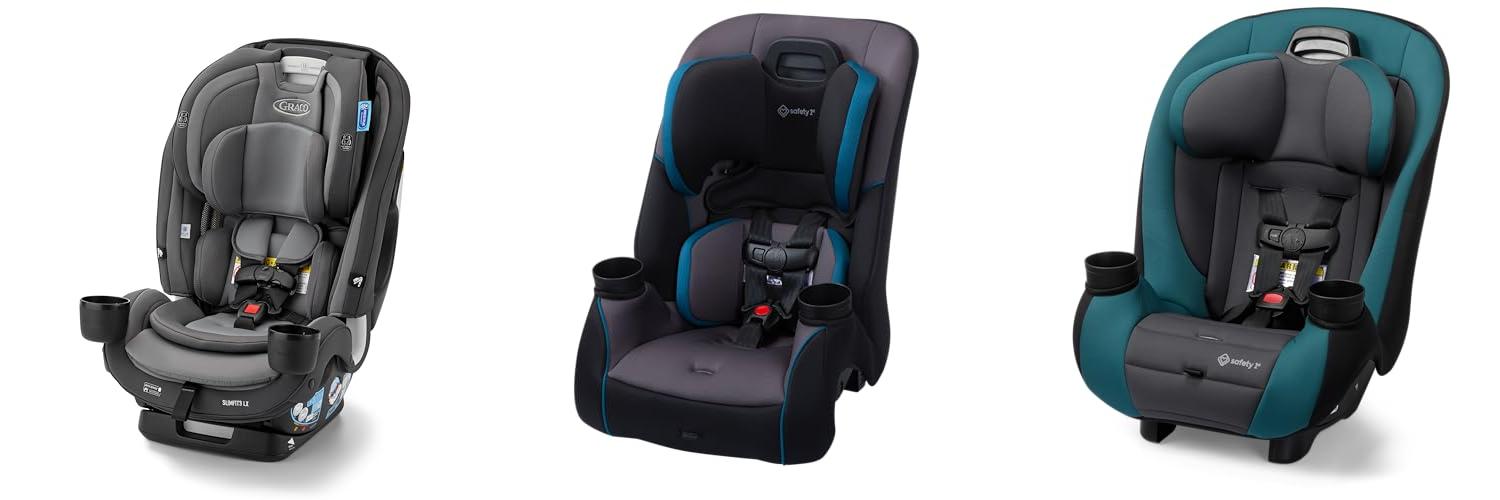
Consider bringing the actual car seats you own, not a hopeful substitute. Seats vary—an infant seat profile isn’t the same as a narrow-booster or a wide convertible.
2025 Sedan and Hatchback Options That Tend to Work for Three Across
Sedans and hatchbacks can surprise you here. Some have exceptionally accommodating rear bench widths, especially when the seat design prioritizes family ergonomics rather than sporty swoops.
Look for vehicles that provide a flat seating plane with minimal “hump” at the center. If the center floor bulges, it can force the middle seat to sit higher, which changes harness alignment and may reduce usable space for neighboring seats.
Hatchbacks sometimes shine because their rear cabins are shaped more like multipurpose lounges. Yet, sport trims can introduce thicker seat bolsters that steal space from the outer positions. The best results often come from trims that emphasize comfort over aggressive side bolstering.

2025 Minivans: The Playground Built for Spacing
Minivans remain the “low drama” choice for families. They’re engineered for people, strollers, groceries, and the occasional rolling chaos of daily life. When three car seats need to live together, minivans often deliver broad, forgiving bench geometry.
The advantage isn’t just width—it’s also access. Sliding doors, flexible seat adjustments, and a predictable rear layout can make installation and re-tightening less painful. Some minivans also offer seat configurations that allow you to optimize access to the center position.
That said, don’t assume all minivans are identical. Seat brands and car-seat designs still matter. Width tested outcomes are usually strongest when the car’s center position offers usable cushion breadth and the belt anchors don’t intrude into the seat’s base.
Compact SUVs and Crossovers: Smaller Footprint, Real Possibilities
Compact SUVs and crossovers are often the compromise families choose: more ground clearance, easier loading, and a modern cabin feel—without the full bulk of a minivan.
Here’s the potential challenge: some crossovers feel “almost wide enough.” The outer seats might be generous, yet the center position can be tighter due to belt anchor placement or slight floor contours. When you install the outer seats first, you might discover that the middle seat becomes a game of precision rather than placement.
Still, several 2025 models are known for better-than-average three-across potential. The best candidates typically feature more uniform seat width across the bench and adjustable rear headrests that can be managed cleanly with car-seat installations.
How to Perform a Practical Width Test at Home
You don’t need a lab. You need a method. This is where “width tested” becomes real.
Step 1: Start with the seats you actually own. Borrowed seats are unreliable. Use the exact models and configurations (base installed, harness height set, etc.).
Step 2: Measure the usable bench span. Focus on the cushion area, not just the metal door-to-door width. Find where the car-seat shell will sit.
Step 3: Check belt paths and buckle reach. Install two seats first, then attempt the third without removing the first two. If you must uproot everything to buckle the center, the “fit” may not be functional.
Step 4: Confirm headrest compatibility. If headrests prevent proper seating, adjust them or consider a car-seat option that accommodates the vehicle’s geometry.

Real-World Tips That Make Three Across Easier
Small tricks can transform a frustrating install into a workable arrangement. Try installing the center seat first if it has the strictest constraints. Center positioning is often the hardest; placing it early can prevent you from discovering too late that an outer seat blocks buckle access.
Another lifesaver: keep track of how you tighten each seat. Some car seats require specific angles at the base. If the vehicle’s seatback angle differs when all three seats are installed, you may need micro-adjustments.
Also, remember that weather changes matter. Winter coats can inflate space around the harness, making it feel “tight” even when the seats fit on installation day. The geometry may still be correct—your comfort might simply need a tuning.
A Playful Reality Check: What If It “Fits” but Feels Impossible?
So here’s the playful question: what if the car seats can all click into place, yet every exit and entry becomes a choreography problem? That’s a different kind of fail—one that doesn’t show up in raw width measurements.
In that scenario, consider alternative seat layouts, narrower car-seat models for one position, or vehicles with more accommodating rear entry space. Sometimes the best choice isn’t the widest bench; it’s the vehicle that still allows you to interact with your children without turning the rear cabin into a puzzle box.
Choosing Your Final 2025 Car: The Decisive Criteria
When narrowing down your shortlist, prioritize functional width. Look for consistent bench geometry, manageable center-seat belt routing, and real installation accessibility. Read reviews carefully, but trust the fit test more than the headline.
If your goal is three across with minimal compromises, the most reliable categories tend to be minivans and certain well-designed sedans or crossovers. But the “best” vehicle is the one that aligns with your specific car-seat widths and installation needs.
Conclusion: Find the Vehicle That Turns Chaos into Routine
Three car seats across isn’t merely a measurement challenge—it’s a family-life challenge. Width tested matters, but so do buckle access, headrest clearance, and whether installation remains feasible after you’ve done it dozens of times.
When you choose a 2025 car that genuinely supports three across, the reward is immediate: fewer compromises, calmer mornings, and that quiet confidence that your rear seat setup is more than a temporary victory. And isn’t that the real win?