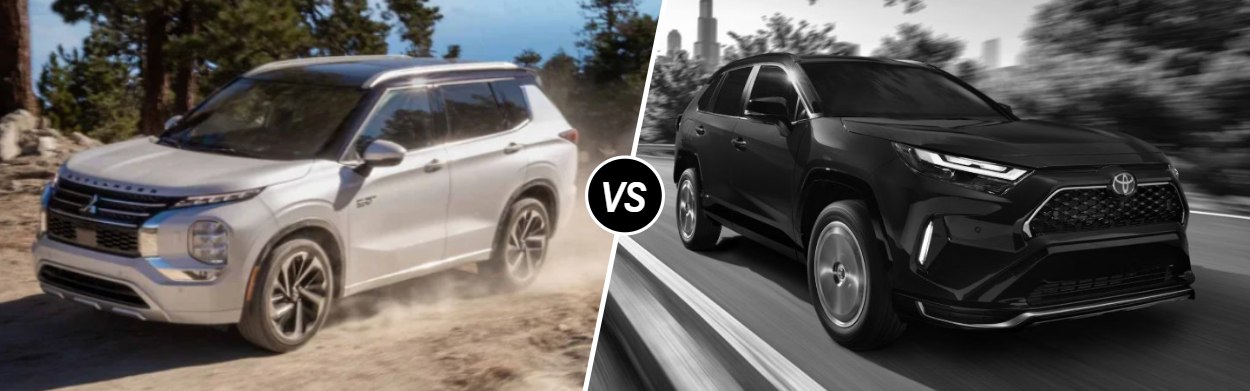
Picture this: you’re standing in a parking lot, thumbs hovering over your car keys, trying to decide which plug-in hybrid best fits your life. On one side, the 2025 Toyota RAV4 Prime—sprightly, compact, and famously efficient. On the other, the Mitsubishi Outlander PHEV—more spacious and inviting, with a silhouette that practically dares you to imagine road trips and family errands.
Now for the playful question: Who says “plug-in hybrid” has to be a single-size story? Because the real tension in this comparison isn’t just horsepower or battery tech—it’s what happens when the road trip includes extra people, extra bags, and the unmistakable chaos of “we’ll fit, right?”
That’s where a potential challenge enters: 3-row practicality vs 2-row flexibility. Choose wrong and you could end up reorganizing lives at every stoplight. Choose thoughtfully, and suddenly your car feels like it anticipated the day you’d have.
First, the posture: 3-row ambition vs 2-row agility
The most immediate difference between these two plug-in hybrids is the passenger layout philosophy. The Mitsubishi Outlander PHEV leans into 3-row convenience. That means more seats when you need them, more versatility when you don’t, and a cabin designed to accommodate groups without forcing everyone into a game of “scoot and squeeze.”
The Toyota RAV4 Prime, by contrast, is a 2-row specialist. It focuses on nimble maneuvering, a crisp driving feel, and a layout that prioritizes cargo utility and comfort for the first two seating rows. It’s not stingy—just intentionally compact. In other words, it’s built for a life that often runs with a smaller guest list.
So the question becomes: is your schedule populated by teams, or by two-row efficiency?
Cabin reality check: who sits where during real life?
When you say “family,” it rarely means a static number of people. It means shifting combinations: siblings and cousins, friends who “might as well come along,” and the occasional relative who arrives with luggage and a confident belief that the trunk is bigger than it looks.
The Outlander PHEV handles this choreography with a third row that can reduce reliance on cargo arrangements you’ll regret later. It’s especially useful for short-to-medium distance events—school runs, sports nights, holiday gatherings—where you want the group to travel together rather than splitting into separate vehicles like a logistics puzzle.
The RAV4 Prime often shines when your day is more fluid: two rows are more than adequate for many drivers, and the focus on front-seat comfort and cargo management can make the cabin feel more straightforward. If you frequently move with two passengers (or fewer), the 2-row layout can feel like a sweet spot—less compromise, more cohesiveness.
But if your household regularly needs a third seat, the absence of a 3-row arrangement can become a subtle friction point. Not every day. Yet sometimes, at exactly the wrong moment—when everyone decides to show up—you’ll wish the cabin had one more “yes.”
Comfort and space: the difference between “possible” and “pleasant”
Seat space isn’t just a number on a spec sheet. It’s the difference between “we made it work” and “this is honestly fine.” With 3-row vehicles, the engineering goal is to make secondary seating usable rather than symbolic. The Outlander PHEV aims for that usability, particularly for shorter trips where the third row can function as a genuine option.
The RAV4 Prime keeps things more streamlined. That can translate into a cabin that feels less crowded, with greater emphasis on first- and second-row comfort. If your routine is mostly commuter-driven with occasional weekend outings, that balance can be extremely satisfying.
However, consider how often “occasional” becomes “not occasional.” If you regularly carpool, attend gatherings with multiple relatives, or routinely travel with a growing circle of passengers, the 3-row advantage can feel like a permanent upgrade.
Cargo calculus: where do the bags go when the seats are full?
Every driver has lived the trunk paradox. You’re sure you’ve packed logically—then you open the hatch and realize you’ve created a Tetris board made of duffels, stroller components, snacks, and a cooler that insists on being placed “right here.”
With the Outlander PHEV, having additional seating means you can choose between carrying people and carrying luggage in a more flexible manner. Fold and reconfigure, and the third row can transform the cargo strategy depending on the day’s requirements.
With the RAV4 Prime, cargo planning is simpler: two rows create a clearer baseline for storage. When you don’t need the extra seating, you can devote more volume to gear. The result can be a less complicated packing experience—fewer seat-position decisions, fewer “wait, where does that go?” moments.
The trade-off is straightforward: if you often fill all seating options with passengers, the 3-row architecture can reduce the need to compromise cargo too early in the packing process.
Driving dynamics: does the size change the vibe?
One might assume that a larger 3-row vehicle feels sluggish. Yet the reality is more nuanced. The Outlander PHEV brings a more substantial presence, and that can create a calm, settled driving demeanor. It’s designed for family motion—steady progress with room to adapt.
The RAV4 Prime, being more compact and 2-row, often delivers the sharper sensation of nimbleness—like the car is eager to respond, not merely willing. It can feel especially satisfying in urban environments, where tight parking and quick turns are part of the everyday choreography.
So if your world is mostly city driving and short commutes, the RAV4 Prime’s nimble temperament may feel like a small advantage that adds up over time. If your world involves frequent group movement, the Outlander’s more expansive layout becomes the main event.
The plug-in question: efficiency meets family logistics
Both vehicles are plug-in hybrids, which means the electrified part of your day can be surprisingly influential. Imagine starting your drive with a charge and using electric propulsion for common distances—school zones, errands, neighborhood loops. That’s where plug-in ownership can feel like an everyday win.
But family logistics complicate the story. When you have more passengers, you also have more variables: HVAC usage, trunk load, and the rhythm of stops. A vehicle’s ability to accommodate those patterns without turning your day into a planning spreadsheet matters.
In that sense, the Outlander PHEV can be a strategic fit for households that need seats first and efficiency second. Meanwhile, the RAV4 Prime often appeals to drivers who want strong efficiency with fewer constraints—two rows, fewer “where do we put everyone?” moments.
Potential challenge: when one more seat decides the week
Here’s the playful sting in the tale: what if you choose the 2-row SUV and your calendar quietly changes?
Maybe it’s the new after-school schedule. Maybe it’s the friend who always “just needs a ride sometimes.” Maybe it’s a vacation that turns into a full-family caravan. The passenger count that was once a comfortable number becomes a recurring problem.
If your life frequently tips toward “we need three rows,” the Outlander PHEV reduces stress because it provides the option without negotiation. If your life rarely needs that extra seat, the RAV4 Prime avoids unnecessary bulk and keeps the cabin experience streamlined.
This isn’t about who wins on paper. It’s about who wins on the Tuesdays you didn’t predict.
Which one fits your life: a practical decision framework
To decide, ask a few honest questions. How often do you carry more than four passengers? Do you frequently carpool, host, or attend events where the passenger count is unpredictable? Do you pack gear that behaves like it has its own gravitational pull?
If the answer leans toward group travel and variable passenger loads, the Mitsubishi Outlander PHEV is compelling because its 3-row design aligns with that reality.
If the answer leans toward efficiency, compact convenience, and mostly two-row usage, the Toyota RAV4 Prime feels like a more focused match. It’s the car for drivers who want their plug-in hybrid life to be crisp, agile, and uncomplicated.
Final thought: the seat count is a promise, not a footnote
In the end, the comparison of 2025 Toyota RAV4 Prime vs Mitsubishi Outlander PHEV is less about who has the brighter headline and more about who makes your daily schedule easier. The 3-row advantage is a quiet confidence—you don’t have to gamble on whether everyone will fit. The 2-row advantage is clarity—you get a streamlined, efficient experience that suits smaller groups extremely well.
So keep the playful question in mind: Who are you really driving for—today, and next month? Because the best plug-in hybrid is the one that feels right on the day your car needs to do more than just get from point A to point B.