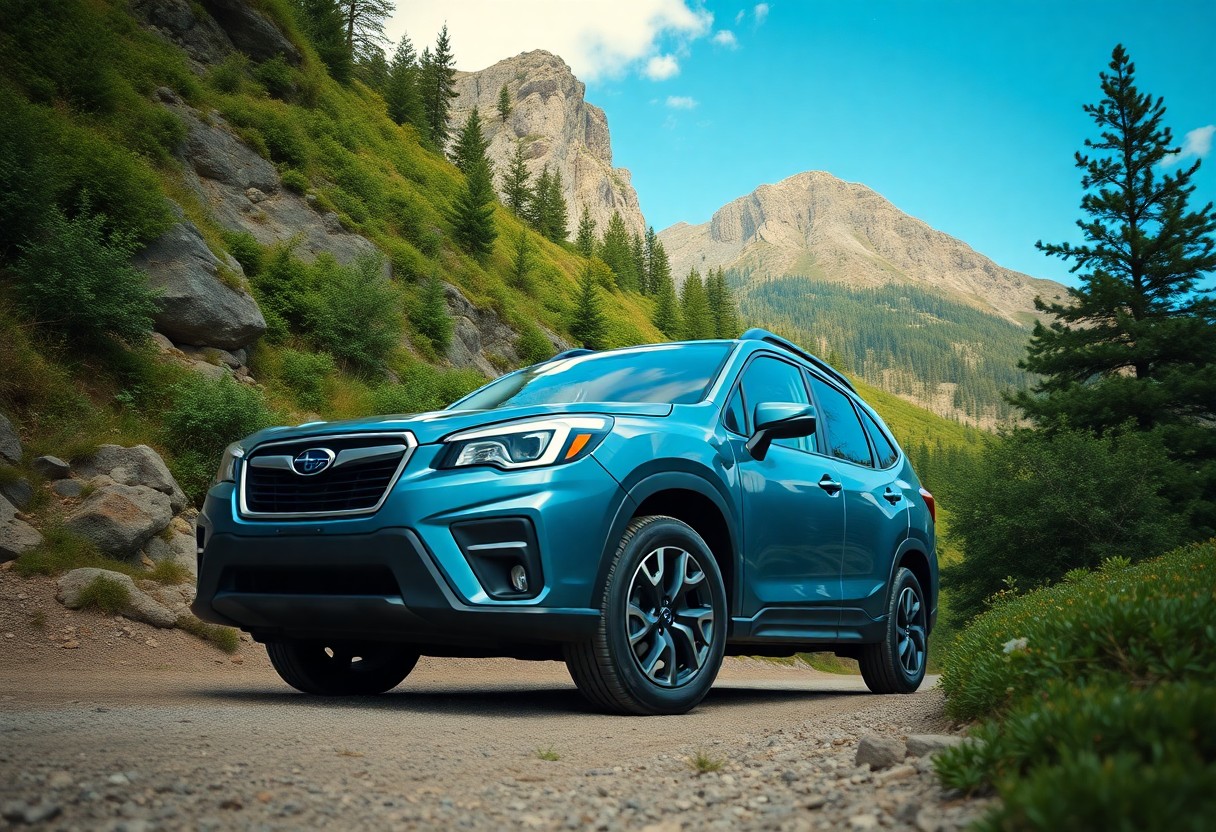
What happens when a family needs more than “good enough” from a vehicle—something dependable, capable, and quietly clever? The 2025 Subaru Forester arrives with a premise that feels almost mischievous: it brings standard AWD to the table like it’s no big deal, then dares you to find the one scenario where that confidence might wobble. Will it cruise through school runs and grocery detours with the same composure it shows on gravel pull-offs and slicked-up roads?
Yet here’s the potential challenge lurking in the background. Families rarely drive in straight lines—emotionally or literally. There are errand arcs, unexpected detours, and the occasional “We’ll just stop by” that turns into a minor odyssey. The question becomes: can the Forester keep its poise when the day gets unruly?
First Impressions: A Calm Presence With Real Purpose
The 2025 Subaru Forester doesn’t scream for attention. It doesn’t have to. Its design language leans toward utility with an easygoing confidence, like a well-worn jacket that still looks sharp. Think practical surfaces, family-friendly proportions, and a stance that suggests it’s comfortable both in suburban parking lots and on less-than-perfect roads.
From the outside, it reads as purposeful rather than flashy. Inside, that same philosophy continues. Materials and layout aim for day-to-day usability, and the overall atmosphere feels designed for the ongoing rhythm of family life—bags, sports gear, backpacks, and the occasional spilled seltzer that no one wants to become a “thing.”
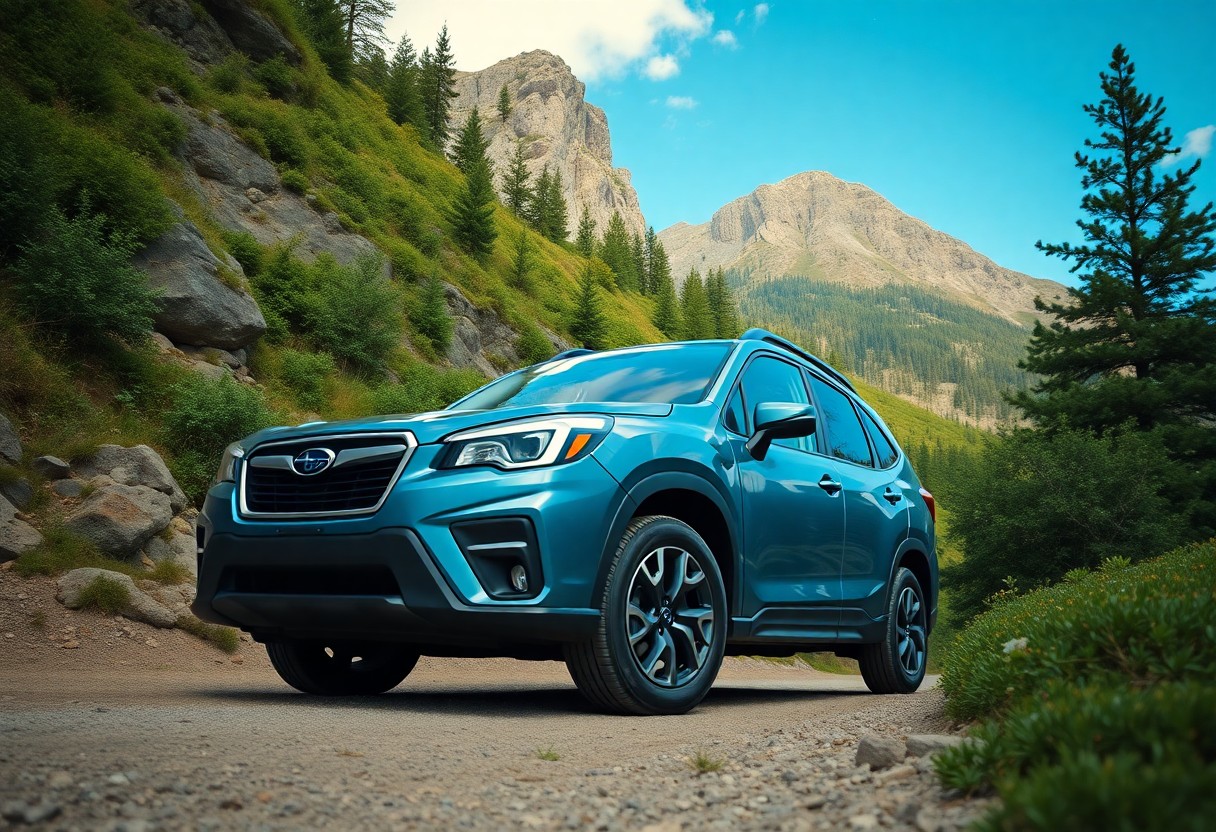
Standard AWD for Families: Not a Luxury, a Mindset
Let’s start with the core promise: standard AWD. In a family context, that matters because traction isn’t something you only appreciate when conditions are picturesque. It’s the reality of damp mornings, icy mornings, and those awkward moments when road surfaces transition faster than kids can find their shoes.
Subaru’s AWD approach is designed to distribute power in a way that supports predictable handling. The result is a driving feel that tends to stay composed when the road stops cooperating. Curvy back roads? The Forester behaves like it’s heard the rumors and doesn’t believe them. Slippery conditions? The AWD system adds a layer of security that helps reduce the need for constant micro-corrections.
Now, for the playful twist: AWD can’t erase physics. If you chase speed on a questionable surface, the vehicle won’t turn the laws of nature into a suggestion. But what it can do—and what families tend to value—is reduce the anxiety margin. You still drive smart. You just don’t feel like you’re gambling with every turn.
Comfort and Space: The “Life Happens” Cabin
Families don’t use cars the way car brochures do. Your vehicle becomes a rolling storage unit, a temporary office, and an occasional therapy space for minor meltdowns. The Forester’s cabin tries to accommodate that reality with generous practicality and a layout that feels intuitive at a glance.
Seating comfort aims for long-haul friendliness. The ride quality generally prioritizes steadiness over harshness, absorbing imperfections without turning every pothole into a percussion performance. In day-to-day driving, it’s the kind of calm that makes passengers feel less bounced around—especially children, whose joy can be momentarily fragile.
Storage is where family vehicles either shine or stumble. The Forester’s approach leans toward convenience: room for everyday items, thoughtful placements for smaller gear, and the kind of usability that reduces the constant shuffle of “Where did we put that?”
Powertrain and Driveability: Smooth Enough to Keep Up
The 2025 Forester’s character is best described as steady and approachable. It doesn’t aim to impress with wild acceleration; it aims to deliver confident, consistent performance. That means merging with intention, climbing ramps without drama, and maintaining a comfortable rhythm even when the vehicle is loaded for real life.
Throttle response tends to be easy to modulate. Steering and braking feel designed for everyday predictability, which is exactly what a family wants when the driver is navigating traffic, schedules, and the occasional unexpected obstacle.
Here’s the challenge again, dressed differently: if your family’s routine includes frequent steep grades or heavy loads, performance expectations need to be realistic. A capable vehicle still benefits from sensible driving habits—anticipation, smooth inputs, and respecting load-dependent dynamics.
Safety and Driver Assistance: Confidence Without Overstatement
Safety features and driver assistance technologies play an important role, not as a replacement for attention, but as an extra set of eyes when fatigue or distraction creeps in. The Forester’s suite is built to help manage common driving scenarios—like lane guidance, collision avoidance support, and monitoring that can reduce the likelihood of near-misses becoming real incidents.
The best safety tech feels unobtrusive. It should assist without becoming an overbearing narrator. In a family car, that balance matters. The system should help you maintain composure while the road throws its usual curveballs: sudden braking, unexpected merges, and the chaotic ballet of school-zone dynamics.
Handling on Real Roads: Predictable, Composed, and Willing
When you take the Forester beyond smooth asphalt, its AWD competence shows up as stability. It tracks with a sense of calm. You don’t feel like you’re fighting the vehicle. You feel like it’s cooperating.
On uneven surfaces, the suspension aims to absorb irregularities while preserving control. The steering doesn’t demand constant correction. That’s a subtle advantage for families, because the driver’s cognitive load matters. A less demanding car leaves more mental bandwidth for traffic, kids, and the rest of the day’s logistics.
Still, the playful question lingers: will the Forester make you forget you’re driving a family crossover? Not entirely. It’s not trying to become a sports car. It’s aiming to be the vehicle you can trust, which is a different kind of thrill—one that shows up when the weather turns or the route gets complicated.
Fuel Economy and Everyday Costs: The Practical Payoff
Fuel economy isn’t just about efficiency spreadsheets. For families, it’s about budgeting, predictability, and reducing the frequency of “Oh right—we should get gas.” The Forester’s fuel-sense approach is designed for everyday use, where steady driving and reasonable expectations tend to deliver respectable outcomes.
Maintenance costs and ownership experience also matter, especially when multiple drivers share the vehicle. The best family cars are those that don’t become “projects.” The Forester’s design philosophy emphasizes durability and mainstream practicality, helping owners stay focused on the calendar rather than the service bay.
Cabin Tech and Usability: Easy to Operate, Hard to Regret
Modern families live on connectivity, navigation, and media—sometimes all at once. The Forester’s infotainment experience aims to be approachable, with controls that don’t require a steering-wheel yoga pose to reach. Menus should be quick to understand, because passengers are rarely patient.
Smartphone integration and navigation support help reduce stress. The smoother your car’s ability to guide you, the fewer times you’ll hear, “Wait—what exit is that?” during the crucial seconds when you really don’t want ambiguity.
Who the 2025 Forester Fits Best
The 2025 Subaru Forester is a strong match for families who want standard AWD and everyday practicality without turning the vehicle into a complicated gadget. It suits drivers who value predictable handling, a comfortable cabin, and the confidence of traction when conditions shift.
If your household frequently travels on mixed road surfaces—rainy commutes, rural detours, weekend escapes—or if winter weather is part of your routine, the Forester’s AWD mindset becomes especially meaningful.
Final Thoughts: The Confidence Test
So, does the 2025 Subaru Forester earn the reputation of a family-friendly crossover with standard AWD? It does, largely because it approaches driving as something you do for real life—not just for perfect roads and perfect days. It’s steady, practical, and willing, with a calm temperament that helps families feel less frazzled.
And yet, the playful challenge remains: try to imagine your busiest day—sports gear, shifting weather, crowded roads, and the occasional detour that wasn’t on the plan. If the Forester can keep you composed through that swirl of normal chaos, then it’s not just a good SUV. It’s a dependable partner, one that makes “standard AWD” feel less like a feature and more like a thoughtful promise.