Choosing your next vehicle in 2025 feels less like a single decision and more like selecting a philosophy of mobility. Plug‑in hybrid vehicles (PHEVs), regular hybrids, and battery‑electric vehicles (EVs) all promise lower emissions than conventional petrol cars, yet they do so through radically different mechanisms. The result is that the “best” option is rarely universal. It’s contextual—shaped by your driving pattern, your charging reality, your tolerance for complexity, and even the cadence of your daily routes.
This guide is designed to walk you through what readers can realistically expect from each technology. You’ll find comparisons that prioritize lived experience over marketing gloss. You’ll also get practical purchasing considerations: battery and charging expectations, total cost signals, model‑year nuances, and the questions to ask before you sign. By the end, you should be able to identify which drivetrain aligns with your life rather than forcing your life to align with the drivetrain.
Understanding the three drivetrains: the “how” behind the “what”
Before shopping, it helps to demystify how each vehicle behaves. A regular hybrid blends a small internal combustion engine with an electric motor, but its battery is primarily charged by regenerative braking and the engine. In other words, it’s largely self‑sustaining.
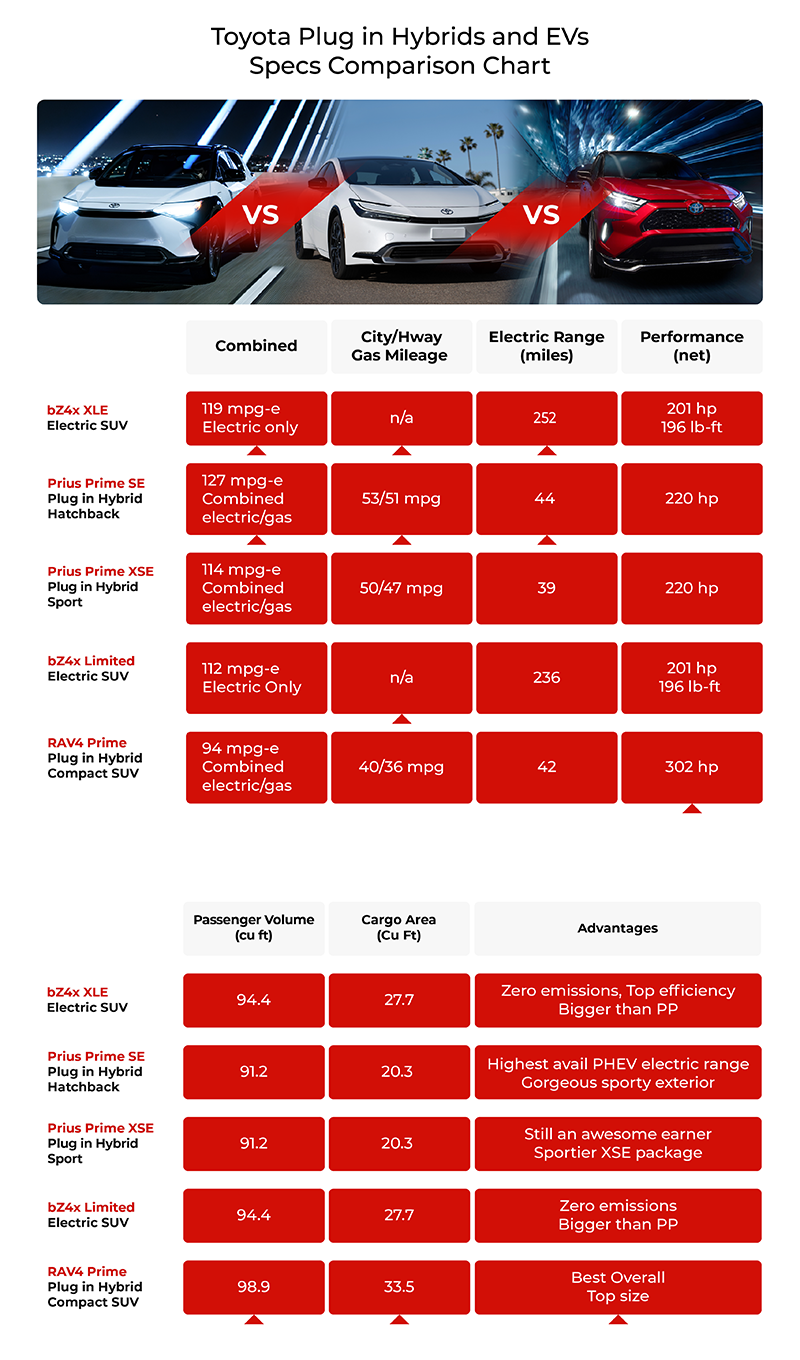
A PHEV is different: it carries a larger battery and can be charged from an external power source. Many PHEVs also support multiple operating modes—some prioritize electricity, others balance between battery and engine, and some automatically shift strategies as the battery depletes. The key purchasing implication is that a PHEV’s benefits are maximized when charging is convenient and consistent.
An EV removes the combustion engine entirely. Motion comes from an electric motor fed by a high‑capacity battery. That changes everything about refueling. Instead of petrol stops, you rely on home charging where possible and public charging where necessary. Range is no longer a vague specification; it becomes a planning tool shaped by weather, speed, and accessory load.

Where you drive decides the winner
The single most influential factor is your typical travel pattern. Think in terms of distance, repetition, and timing. If most of your trips are short—commutes, school runs, errands—an EV can be exceptionally efficient, especially if you can charge overnight. If you occasionally need longer journeys without guaranteed fast‑charging access, a PHEV can be a pragmatic bridge between worlds.
For regular hybrid buyers, the calculus is different. You’re often choosing an engine‑centric vehicle that simply spends less fuel than a traditional petrol car. It’s a “low drama” solution for drivers who don’t want to think about plugging in. Yet if you have predictable daily routes and easy charging at home or work, regular hybrids can underutilize their electrified potential compared with PHEVs and EVs.
Consider your worst‑case day, not your best day. Weather extremes, detours, and unexpected errands can stretch range projections. EVs can handle these scenarios, but the experience depends on charging availability. PHEVs can usually fall back on the engine, but fuel use may climb when battery charge is repeatedly exhausted.
Charging reality: convenience beats theory
When people compare PHEVs and EVs, they often focus on range numbers. The more important question is: how reliably can you refill your energy?
If you have off‑street parking and can install a home charger, EV ownership becomes dramatically easier. Long, steady charging times at home reduce dependence on public networks. A PHEV also benefits from home charging, but it’s inherently more forgiving if life gets busy. Even when you miss a plug‑in session, you still retain a combustion fallback.
If you can’t charge at home, your decision should shift toward vehicles that minimize charging dependency. Regular hybrids thrive in this environment because they don’t require external power. PHEVs can still be viable, but they may become an arrangement that feels half‑finished—electrons you hope to store at the time you need them are instead spent on the road.
Ask potential buyers pointed questions: Will installation require permits? How long is the average charge session? Are tariffs time‑of‑use and do they matter? A minor electrical upgrade can be the difference between a satisfying EV routine and an exhausting charging schedule.
Battery and lifetime: what to monitor in 2025
Battery health is one of the most common anxieties. Modern EV and PHEV batteries are engineered for durability, but usage patterns still influence longevity. Frequent fast charging for long stretches can be harder on cells than slower charging, depending on chemistry and thermal management. Hot climates and deep discharges can also stress batteries over time.
For EVs, the most buyer‑relevant guidance is operational: aim for moderate daily state of charge when practical, and consider using fast charging strategically rather than as a default habit. For PHEVs, the battery is typically smaller than EV packs, yet it can still benefit from regular charging and sensible cycling. If you rarely plug in, a PHEV may default to engine operation more often, which changes how the vehicle behaves day‑to‑day.
When evaluating specific models, pay attention to warranty terms. Warranties often define capacity retention after a given period or mileage. Also check whether the manufacturer offers battery‑health reporting or service documentation that makes ownership more transparent. Clarity is a form of protection.
Performance and drivability: how it feels in motion
Electrified vehicles are frequently described as smooth, but the nuance matters. EVs often deliver instant torque, which can make merging and hill climbs feel effortless. However, that sensation can be dulled by heavy wheels, regen tuning, and drive‑mode differences. Some EVs encourage one‑pedal driving, where regenerative braking manages deceleration with minimal brake pedal use. That can feel fluid—or unfamiliar—depending on your driving temperament.
PHEVs can feel like EVs when the battery is full and the system is in electric‑priority mode. As the charge dwindles, the experience may shift to a more conventional hybrid profile. You may notice changes in engine engagement frequency, and certain models handle the transition more elegantly than others.
Regular hybrids generally maintain a steady, low‑effort driving experience. They may not offer the same burst of acceleration as an EV, but they often deliver predictable performance. For buyers who value consistency over “electric immediacy,” that steadiness can be a virtue.
Total cost of ownership: beyond the sticker price
In 2025, cost isn’t just purchase price. It’s energy, maintenance, and the probability of expensive surprises. EVs can reduce fuel spending substantially, especially if you charge at home using favorable electricity rates. Yet they introduce their own variables: charging equipment costs, installation expenses, and public charging fees if you can’t charge overnight.
PHEVs can offer an intermediate cost structure. If you plug in regularly, fuel consumption can drop meaningfully. If you don’t, fuel use may become less competitive compared to EVs, while the added drivetrain complexity can make service considerations more relevant over time.
Regular hybrids often sit in the middle. They may not deliver the lowest operating costs possible, but they can provide stability without external charging infrastructure. Fewer charging logistics can mean fewer operational frustrations, which—while not measurable in spreadsheets—can be financially meaningful through reduced time costs and stress overhead.
When estimating costs, include: insurance implications, scheduled maintenance intervals, tire wear (which can vary with vehicle weight), and whether you’re eligible for incentives. Eligibility can change by region and can affect overall value more than minor efficiency differences.
Charging networks and road‑trip expectations
Every buyer asks about long trips. The truth is straightforward: EV road‑trips are doable, but they require deliberate planning. With faster charging options, time becomes more manageable. Still, you should anticipate variability—different stations have different reliability, throughput, and payment workflows.
PHEVs are comparatively forgiving. If a charging station is slow or unavailable, you’re not stranded in the same way—your internal combustion engine still supplies propulsion. This can convert a stressful road‑trip into a manageable one. However, repeated reliance on the engine reduces the economic advantage of electrification.
Regular hybrids are the most “refill‑like” experience, because they rely on liquid fuel. Yet if your goal is to minimize emissions and maximize efficiency, hybrids may not capture the same upside as plug‑in options when you can charge frequently.

How to shop smart in 2025: questions that matter
Instead of comparing raw specifications only, shift to experiential questions. How does the vehicle behave in daily electric mode? Is the electric range meaningful for your commute after typical heating or cooling use? Does the car provide energy consumption feedback in a way that helps you learn your habits?
For PHEVs, ask about charging time, onboard charger power, and whether the car supports efficient route‑aware charging. For EVs, evaluate charging curve behavior and whether the manufacturer’s range figures align with real‑world driving. Also check the vehicle’s regen settings—can you adjust them? Are there multiple drive modes that suit different road conditions?
Don’t ignore software. Many modern vehicles update features over time, affecting charging control, navigation behavior, and energy‑management strategy. A car with better software tools can feel more coherent and less unpredictable.
Choosing the right category: practical decision paths
If you want maximum electrification but need flexibility, a PHEV can be compelling—especially if you can charge regularly at home yet still value an engine fallback for irregular days. If your routine is reliably within daily electric range and home charging is feasible, an EV often becomes the most elegant solution: efficient, smooth, and quietly powerful.
If charging is not realistic and you prefer minimal friction, a regular hybrid may be the most sensible fit. It can reduce fuel use without requiring a new habit of plugging in. The trade‑off is that you may not capture the full efficiency and emissions savings available to plug‑in models.
Ultimately, the “best” drivetrain is the one that you will use as intended—charged when you can, driven in the way the engineers designed for, and maintained with confidence. Mobility should feel like empowerment, not paperwork.
Conclusion: a buying guide that matches your life
2025 is a year where electrified choices are more abundant, and the differences between PHEV, regular hybrid, and EV are clearer than ever. The decision shouldn’t be framed as a single headline comparison. Instead, treat it like a fit‑for‑purpose selection: your commute length, your charging access, your tolerance for planning, and your priorities for cost and convenience.
Pick the technology that matches your daily rhythm. If you can charge, lean into the benefits of plug‑in electrification. If you can’t, choose the category that minimizes friction. When the vehicle and the lifestyle align, the advantages stop being theoretical and start showing up every day—on the road, in the budget, and in the quiet confidence of knowing you made the right kind of choice.