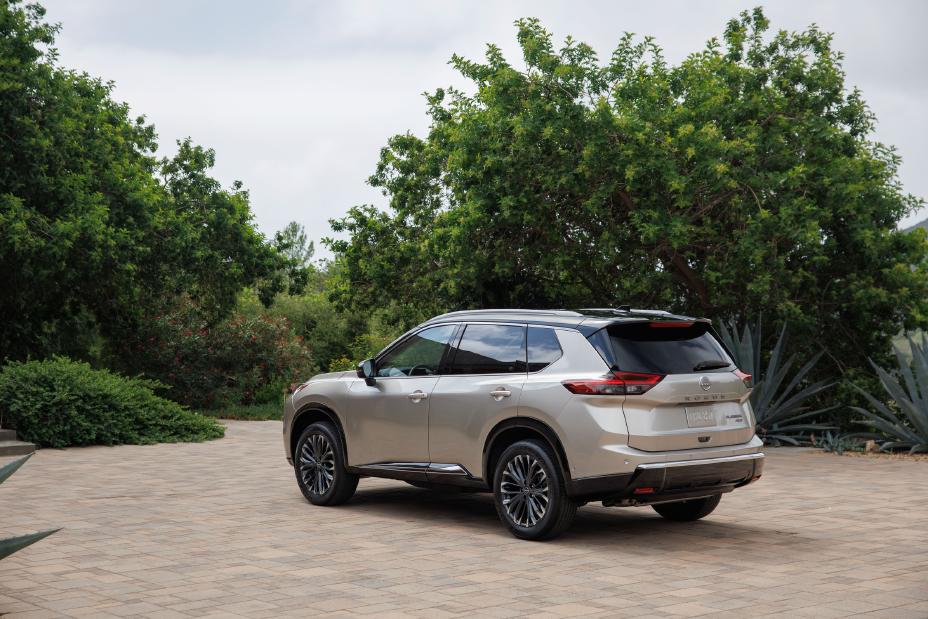
The first thing many drivers notice about the 2025 Nissan Rogue is how readily it seems to anticipate their next move. That impression isn’t merely marketing gloss—it’s the cumulative effect of driver-assistance technology that has matured into something closer to a quiet co-pilot. Yet there’s a common observation that surfaces quickly in real-world conversations: “ProPILOT Assist feels useful, but is it actually impressive enough to matter?” The question is reasonable. Most systems are better at being “there” than being “exceptional.” What makes the Rogue’s ProPILOT Assist 2.1 especially fascinating is how it aims for subtlety—then earns attention through consistency, timing, and the way it reshapes the rhythm of daily driving.
In this review, ProPILOT Assist is treated as more than a feature list item. It becomes a lens through which the Rogue’s character comes into focus: how it manages lane confidence, how it handles pace, and how it supports drivers without stealing agency. Because once you’ve lived with it for a while, you start to see deeper reasons for the fascination—reasons that go beyond “hands-free-ish” headlines and into driver fatigue, situational awareness, and the psychology of commuting.
Designing Confidence: Why ProPILOT Assist Feels Different
It’s easy to treat driver assistance as a binary proposition: either it works, or it doesn’t. The Rogue challenges that simplification. ProPILOT Assist doesn’t simply help with steering; it frames a calmer driving experience through a coordinated suite of functions. Short steering corrections arrive almost invisibly, and the vehicle’s sense of centering feels deliberate rather than jittery.
That “smoothness” can be hard to quantify, but it’s not imaginary. Many systems appear competent until the road becomes slightly unruly—faded lane markings, gentle curves, uneven traffic flow. With the Rogue, the fascination often begins in those in-between moments. The system seems to understand that driving is rarely a perfect lab simulation.

Lane Guidance and Steering Behavior: The Art of Staying in the Middle
Lane-centering is where many assistance systems either earn trust or lose it. ProPILOT Assist’s approach is notable because it behaves like it’s trying to preserve predictability. Instead of aggressively chasing a lane line, it works to maintain a steady trajectory. That reduces the cognitive load—those micro-decisions drivers constantly perform when traffic thickens or when lane geometry shifts.
Drivers frequently report an unexpectedly “human” cadence: correction inputs feel tempered, not theatrical. And when the system must disengage—such as in poor visibility—it does so with fewer surprises. The underlying reason for this confidence is calibration: sensor interpretation plus control logic that avoids overreacting to ambiguous markings.
Of course, the deeper fascination is psychological. When lane keeping feels stable, you don’t spend the commute anticipating the next adjustment. You’re more likely to notice the world ahead: brake lights, pedestrian behavior, and the small variations in traffic tempo that actually matter.
Adaptive Cruise Control: Pace Control Without the Spoofed Effort
Adaptive cruise control can sometimes feel like an overeager negotiator—closing too quickly, braking too late, then recovering with a delayed sigh. The Rogue’s ProPILOT Assist 2.1 aims to avoid that awkward rhythm. With proper driver input and suitable conditions, the system helps maintain a comfortable following distance, smoothing the transitions between acceleration and deceleration.
In practice, this means less “footwork fatigue.” Long drives become less about constantly modulating pedal pressure and more about supervising the traffic flow. That supervision is still required—this is assistance, not autonomy—but the effort is redistributed. The result is a calmer sensation: you’re steering and deciding, while the car quietly manages the cadence of distance.
There’s also an overlooked benefit: smoother pacing can reduce the stress spikes that often lead to abrupt lane changes or unnecessary braking. It doesn’t eliminate hazards—nothing does—but it can help keep your driving style from escalating into impatience.
Traffic Flow and Congestion: When Commuting Becomes a Choreography
Urban driving is less about speed and more about rhythm. Congestion turns highways into choreography, where gaps open and close like metronomes. Here, ProPILOT Assist’s usefulness becomes most apparent. It helps reduce the “ping-pong” effect of stop-and-go driving by maintaining an attentive relationship with the lead vehicle.
One common observation is that these systems can struggle when traffic is chaotic. That’s true for almost every platform on the market. However, the deeper fascination lies in how ProPILOT Assist handles ambiguity: not by pretending chaos is calm, but by making the experience less erratic when possible, then stepping back when it cannot reliably interpret the environment.
That step-back moment matters. Systems that cling too long to unreliable assumptions can feel unsettling. The Rogue’s behavior tends to feel measured, which helps keep driver trust intact.
Low-Speed Manners and Control Feel: Small Motions, Big Relief
At parking-lot speeds and near intersections, many drivers expect driver assistance to be timid. The Rogue’s advantage is that it doesn’t feel like it’s performing from behind a curtain. Instead, it remains coherent with the driver’s intent—making gentle interventions that align with typical expectations of lane centering and following distance.
Even if you never “turn it on and forget it,” you may notice how it reduces the mental tax. Fewer sudden corrections mean fewer bursts of frustration. That’s where the system’s real value hides: in the accumulation of small stressors, not in cinematic moments.

Real-World Limits: The Things ProPILOT Assist Can’t Pretend Away
To review ProPILOT Assist responsibly, it’s important to address the boundaries plainly. Poor lane markings, extreme weather, sharp construction zones, and sudden, unpredictable vehicle behavior can reduce performance. At times, the system may require more frequent driver correction or full disengagement.
There’s also a nuance: the Rogue is designed to assist reliable driving behavior, not to replace vigilance. Drivers who treat the system like a magic carpet often feel disillusioned. Drivers who treat it like a supportive instrument panel tend to walk away impressed.
That difference is deeper than skill—it’s philosophy. The most rewarding relationship with ProPILOT Assist is partnership: using it to reduce workload, while keeping a human grip on the moment-to-moment decisions that technology can’t truly own.
Beyond the Technology: What ProPILOT Assist Reveals About the Rogue
It’s tempting to evaluate ProPILOT Assist in isolation. Yet the technology’s impact spills into the entire ownership experience. When a car reduces fatigue, it indirectly affects how drivers interact with the cabin, how they plan trips, and how confidently they choose different routes.
That’s why the Rogue feels particularly compelling. Its tech doesn’t exist to impress in a showroom. It exists to make everyday life smoother—on long commutes, on family errands, and on those late departures when attention tends to thin out.
Even the design choices around the driving environment support this narrative: clarity of controls, intuitive feedback, and the sense that the vehicle is communicating rather than commanding. When those elements align, driver assistance becomes more than a tool—it becomes a temperament.
Who Should Consider It—and Who Might Find It Less Delightful
ProPILOT Assist is especially attractive to drivers who spend significant time on highways and mixed traffic routes. If you often handle monotonous stretches, traffic that alternates between flow and stoppage, or long drives where fatigue creeps in quietly, the system’s benefits become tangible.
Conversely, drivers who strongly prefer a purely manual feel, or who frequently navigate roads with inconsistent markings, may find the system less consistently helpful. That doesn’t make it worse—it just means expectations should be calibrated.
The best owners won’t treat the Rogue as a promise of self-driving. They’ll treat it as a mechanism for steadier commuting.
Final Verdict: ProPILOT Assist Tested—Impressive in the Ways That Matter
After putting the 2025 Nissan Rogue’s ProPILOT Assist 2.1 into context, the original observation—“useful, but not jaw-dropping”—starts to look incomplete. The system is not designed for spectacular moments. It’s designed for faithful assistance, the kind that keeps working after the novelty wears off.
That’s the deeper reason for fascination: it reduces fatigue without eliminating responsibility. It steadies lane behavior, improves pacing, and helps make congested travel less punishing. When you measure technology by how it changes your daily stress level, ProPILOT Assist becomes more than a feature. It becomes an atmosphere.
The 2025 Rogue earns its reputation not by shouting, but by smoothing the drive—turning supervision into something closer to calm attentiveness. And in a world where most commutes feel relentlessly loud, that quiet confidence is worth paying attention to.