What if your next family car could quietly shoulder errands, weekend escapes, and the daily commute—while still sipping electrons when the opportunity appears? That’s the promise hanging over the 2025 Mitsubishi Outlander PHEV, a three-row plug-in hybrid that tries to make “space” feel effortless and “efficiency” feel plausible. But here’s the playful twist: the real question isn’t whether it’s capable—it’s whether you can live with how it achieves that capability.
Three rows, a plug-in drivetrain, and long-haul comfort sounds like a fairy tale. Yet fairy tales rarely mention the dragons: charging habits, real-world fuel consumption swings, and the way a PHEV’s best behaviour depends on your routine. So, let’s take a narrative stroll through the 2025 Outlander PHEV and examine its value proposition—because in the end, value isn’t a slogan. It’s a pattern of days added up.
First Impressions: A Family SUV That Doesn’t Rush
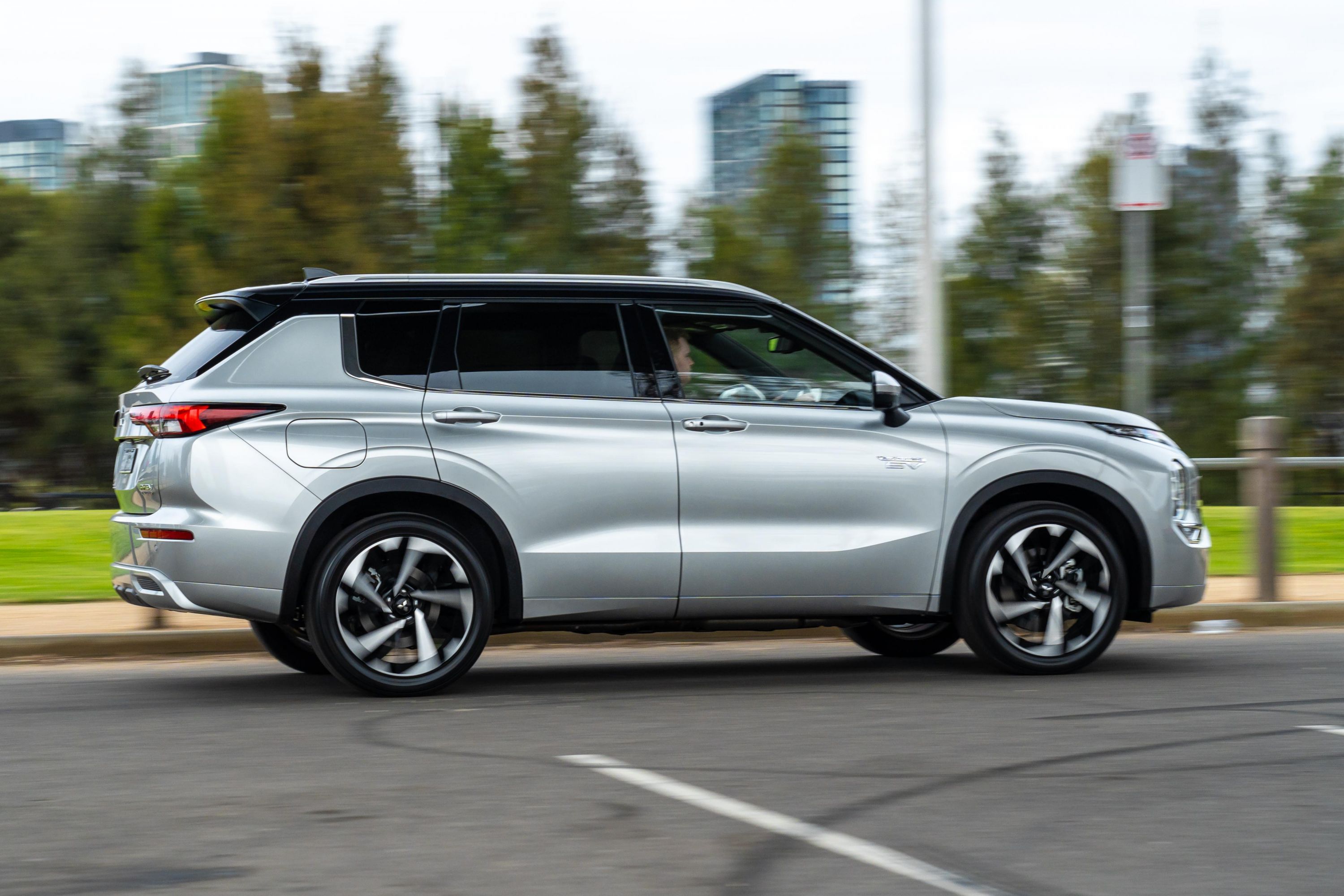
The Outlander has always aimed for calm confidence, and the 2025 PHEV continues that temperament. It looks purposeful rather than theatrical. There’s room for the story of your family—school runs, sports gear, and that one friend who always brings too much equipment.
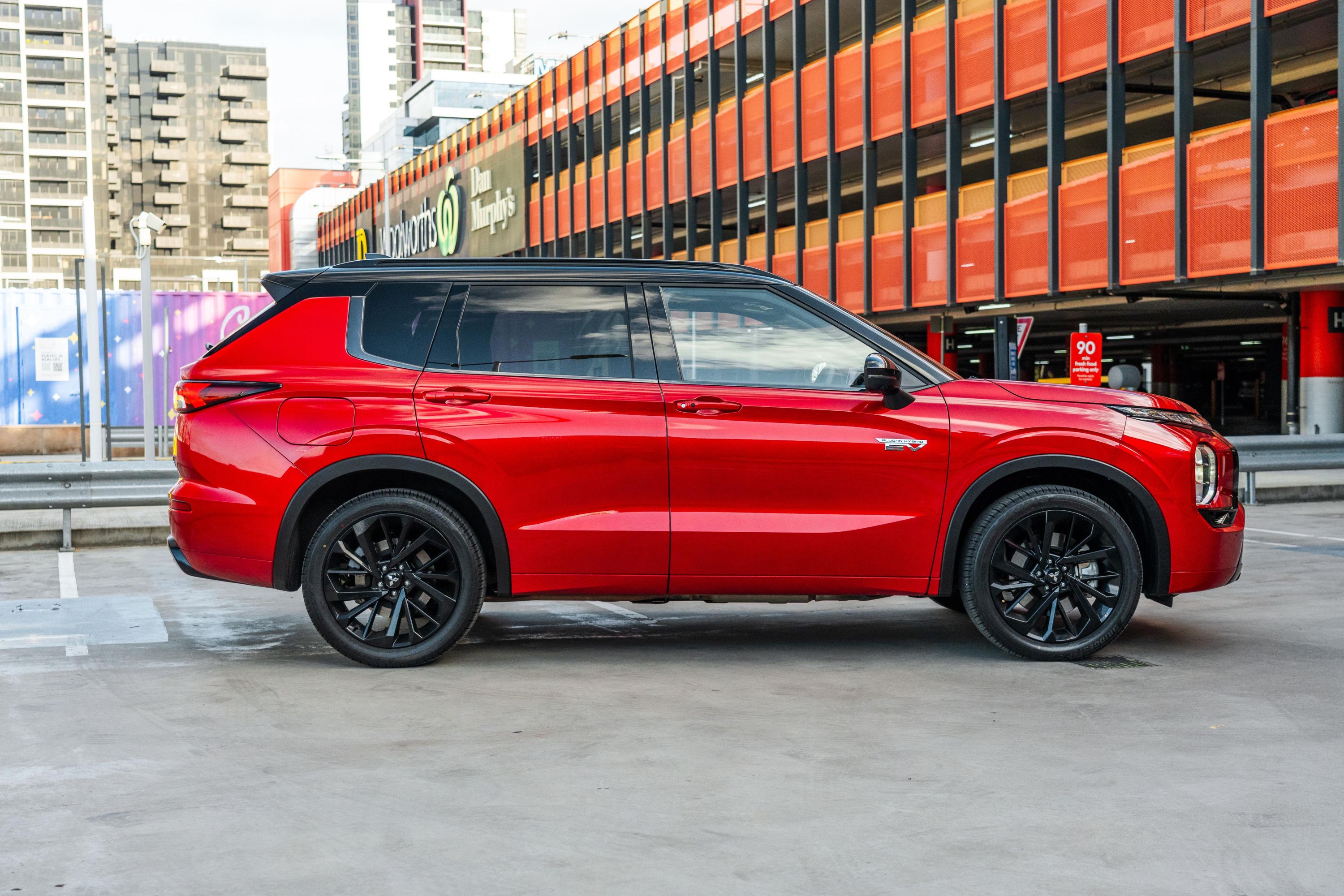
Step closer and you’ll notice how the PHEV identity is integrated without turning the car into an electrified gimmick. The overall design language stays cohesive. It’s the sort of styling that won’t feel dated by the next model year—and that matters when you’re planning to keep a vehicle for years, not months.
The Three-Row Promise: Space, Access, and the Reality Check
A three-row SUV is never just about seat count. It’s about access—how easily people move in and out, how comfortable third-row passengers feel during the “where are we going?” portion of a road trip, and how often you can actually use the rear space without turning it into a storage trench.
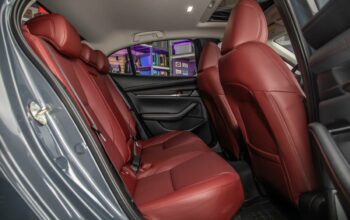
In the Outlander PHEV, the second and third rows are arranged with practicality in mind. The cabin is designed for everyday movement rather than showroom choreography. You’ll appreciate this if your life involves short transitions: loading a stroller, relocating a toolbox of snacks, then flattening into a quick exit from the car.
Still, the challenge lurks in physics. Three rows ask for compromise, particularly in cargo space and third-row legroom. If your household regularly includes adults in the back row for longer trips, you’ll want to test-fit the scenario. Shorter legs? Great. Tall passengers? Measure twice, then commit.
PHEV Powertrain: Smoothness Meets a Useful Degree of Control
The Outlander PHEV’s fundamental appeal is the blend of electric immediacy and hybrid endurance. When conditions align, the car can glide on electric power with a quiet confidence—press the accelerator and it responds without drama. It feels less like switching gears constantly and more like orchestrating traction through electronics.
In hybrid mode, it transitions into a more conventional rhythm. That flexibility is a strategic advantage for families who don’t want to obsess over battery percentages—yet still want the benefits of plugging in when it’s convenient.
The potential challenge is that not all “PHEV driving” is equal. If you never plug in, the Outlander still works, but the fuel savings won’t be as pronounced. If you do plug in regularly yet drive in a way that drains the battery quickly—high-speed commuting, frequent heavy loads, or short trips that don’t let the system reach optimal efficiency—you may notice the gap between expectation and outcome.
Driving Feel: Town Calm, Highway Assurance
In the city, the Outlander PHEV tends to feel composed and forgiving. Stop-start traffic becomes less of a chore because electric torque can soften the transitions. Parking manoeuvres are easier when the vehicle behaves predictably—an underrated quality in family life.
On the highway, the story becomes one of steadiness. The powertrain’s job is to keep progress smooth rather than sporty. The steering isn’t trying to be a race car; it’s trying to be a reliable partner for long drives where fatigue creeps in quietly.
Here’s the value question: does it feel satisfying enough to justify its hybrid complexity? For many drivers, the answer is yes—because “satisfying” in a family context often means stable, quiet, and uncomplicated. For those who crave sharpness above all, the Outlander may feel more pragmatic than playful.
Charging and Daily Habits: The Dragon You Can Tame
Charging is where the Outlander PHEV becomes either effortless or frustrating, depending on lifestyle. Plug-in capability can turn commuting into low-emission mileage—if you have access to home charging or consistent charging opportunities.
If you can charge overnight, the morning drive becomes a bit of a magic trick: electric propulsion available more often, engine start frequency reduced, and a calmer sense of control. If you can’t charge regularly, the PHEV behaves more like a conventional hybrid with an added layer of capability, but not the same level of cost efficiency.
So the playful question returns: will you treat charging as part of your routine, or will it remain a task you postpone? The latter isn’t catastrophic—it just limits the full value. The former can turn this SUV into a daily cost optimizer, particularly for families with predictable routes.
Comfort and Practicality: When Long Drives Become Short
The Outlander PHEV is built around comfort: supportive seating, a cabin designed to absorb road imperfections, and a layout that doesn’t fight you when multiple people are moving. On trips, the difference between “comfortable” and “merely tolerable” is massive.
Second-row passengers benefit from a sensible balance between space and usability. Third-row riders may still need the occasional “we’re almost there” encouragement, but the experience is generally more workable than in many three-row rivals where the rear seats feel like an afterthought.
Noise levels matter too. A quiet cabin helps conversations stay intact. That’s the kind of luxury that doesn’t announce itself, yet it changes how a family trip feels by the time you arrive.
Technology and Safety: Confidence Without Complexity
Modern driver-assistance features are increasingly expected, and the 2025 Outlander PHEV leans into practicality. The aim is to reduce stress, not overwhelm. Systems that support lane keeping, adaptive sensing, and collision avoidance can make highway driving feel less exhausting.
Infotainment usability also matters. A family vehicle must respond quickly to real-world needs—navigation that works, media that stays accessible, and controls that don’t require a contortionist’s attention span.
While tech features can be abundant, the best value is when they become invisible—present, helpful, and never a constant source of fiddling.
Value Snapshot: What “3-Row PHEV Value” Really Means
Value in a 3-row PHEV isn’t simply about the sticker price. It’s about total usability: the practicality of using the third row regularly, the likelihood you’ll plug in often, and the fuel-cost performance you’ll achieve in your actual routine.
If your family frequently makes short to medium trips within electric-friendly territory, the Outlander’s PHEV nature can shine—saving money while also reducing emissions. If your schedule is mostly long-distance with limited charging access, you’ll still get hybrid efficiency, but the “plug-in advantage” becomes less dramatic.
That’s the key nuance: the Outlander’s value is dynamic. It rewards drivers who integrate charging and route planning into everyday life, and it remains competent for those who can’t.
Who It Suits—and Who Should Think Twice
The 2025 Mitsubishi Outlander PHEV makes the most sense for families who need a real three-row layout and who have reasonable access to charging. It’s an attractive option for commuters who can charge at home, as well as for households that take weekend trips without turning fuel calculations into a second job.
It may be less ideal for drivers who rarely plug in, or for those expecting sports-car energy. This isn’t a performance fantasy—it’s a practical power strategy wrapped in an accommodating family body.
Final Thoughts: A Practical Fairy Tale, With a Condition
The Outlander PHEV earns its “3-row value” by combining family space with a drivetrain designed to reduce running costs when you let it. It’s an SUV that tries to make eco-friendly intentions feel livable—day after day.
But the challenge remains deliciously human: the PHEV rewards routines. If you embrace charging as casually as you embrace refuelling, the car’s benefits become tangible. If not, it will still be a capable three-row SUV, but the most compelling value may stay slightly out of reach.
So, is the 2025 Mitsubishi Outlander PHEV the right fit for your family? The answer depends less on the car’s technology and more on your own habits—because the best equipment in the world still needs a driver who wants to use it.