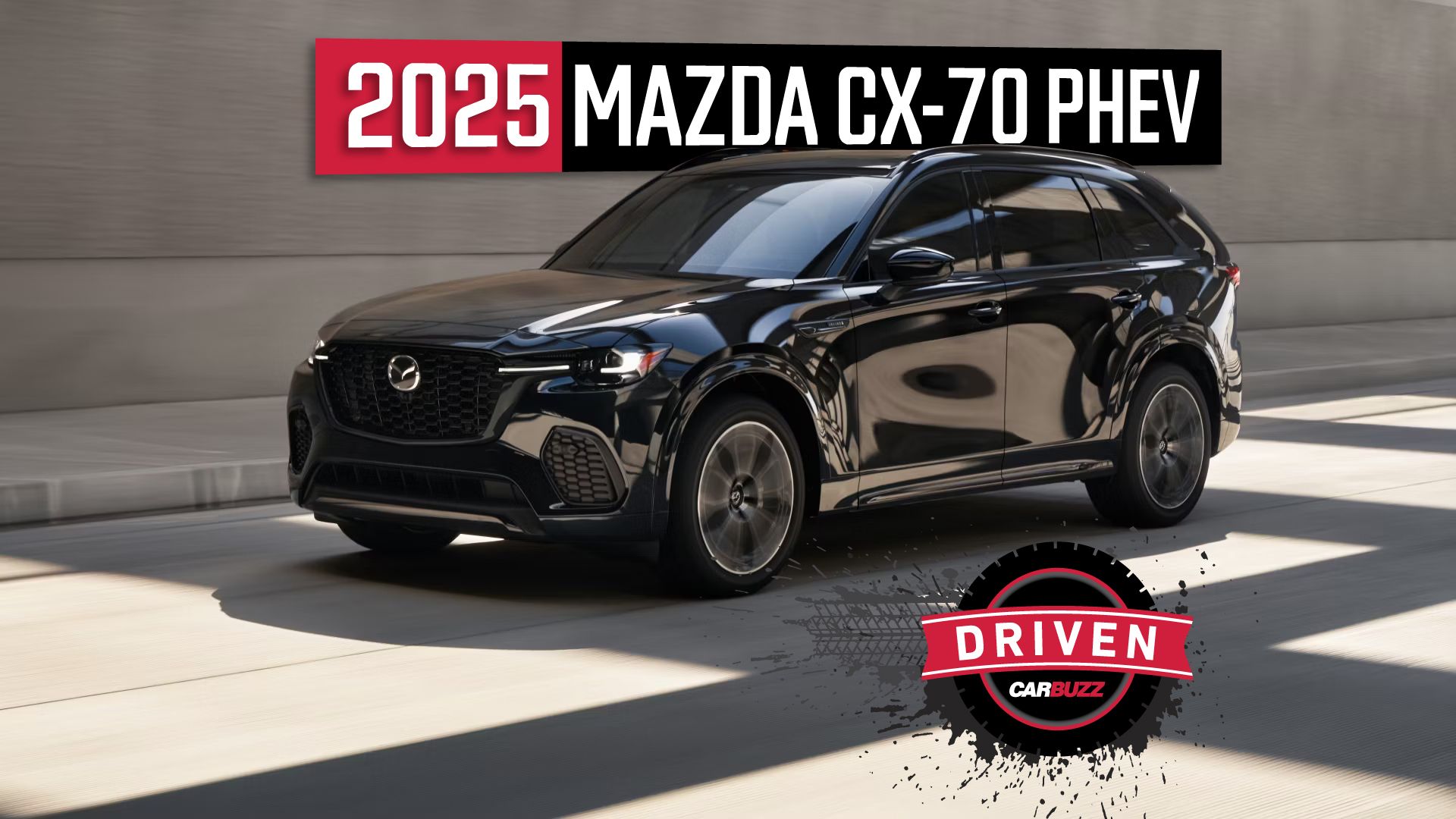
The first time a plug-in powertrain is asked to do honest work—moving weight, holding steady grades, and doing it repeatedly—its character stops being theoretical. It becomes a lived experience. The 2025 Mazda CX‑90 PHEV is built around that exact premise: a modern SUV that can navigate the day-to-day with electric poise, yet still carry the serious intention of towing. And that’s where the fascination begins. Many drivers look at a PHEV and expect either gimmickry or compromise. The towing test challenges that expectation, not with marketing language, but with traction, torque delivery, and the subtle choreography of how the system manages energy under load.
There is a common observation people make before they even hook up a trailer: “Electric can’t be made for towing.” The assumption is understandable. Battery capacity feels finite, and towing feels relentless. Still, the towing test shows something more nuanced. Electric assistance doesn’t just “help.” It changes the way acceleration and stability are experienced at the moment it matters most—when the vehicle is asking the most of itself.
Electric Power on Demand: What Towing Reveals
Towing is not a single task. It’s a sequence of moments: starting from a stop, merging, climbing, correcting for crosswinds, and then braking, sometimes more often than anyone planned. In those micro-moments, the CX‑90 PHEV’s electric capability becomes a kind of torque translator.
From a standstill, electric drive is immediate. That immediacy can feel almost deceptively calm, especially compared to the typical “lag” many associate with heavier loads. Under throttle, the powertrain can draw on electric torque to smooth the initial surge, which is often where trailers feel most intrusive. Instead of a lurching start, you get a steadier ramp of power.
There’s also an understated advantage: the energy you spend climbing isn’t merely “spent.” It’s managed. The vehicle’s strategy aims to preserve momentum when you want it, then reallocate demand when you don’t. In practice, that can translate into fewer moments where the drivetrain seems to search for the right gear or hunt for the right response.

The Common Myth: Battery Limits vs. Real-World Load
The battery-limit concern usually focuses on an imagined worst-case scenario: long, steep towing routes with minimal access to charging. But towing is rarely constant at maximum output. Even on a trip, speed varies. Stops happen. Grades alternate. Wind shifts. And that’s where PHEV systems often prove their mettle.
The “deep reason” fascination runs through this test is that PHEV towing isn’t about electric power pretending to be unlimited. It’s about electric power acting like a precise tool rather than a blunt instrument. Electric assist can be used for the most frequent and most noticeable demands—launching, passing, and maintaining rhythm—while the engine fills gaps that require sustained output.
In other words, the battery isn’t expected to perform miracles continuously. Instead, it participates in a partnership: electric for responsiveness, thermal and fuel energy for endurance. That partnership is what turns skepticism into a more grounded appreciation.
Acceleration Feel: Torque That Doesn’t Announce Itself
There is a particular kind of confidence that emerges when acceleration is both strong and coherent. The CX‑90 PHEV’s towing test highlights this coherence. Electric torque doesn’t merely add power; it shapes the sensation of power delivery.
With a trailer attached, drivers often anticipate a harsher throttle response—an abruptness that makes the whole rig feel busy. Instead, the experience can become more composed. The transition between electric contribution and the engine’s involvement is designed to be less dramatic than drivers expect.
Short bursts—like entering a highway lane—become less like a sprint and more like a controlled pull. That matters because towing stability isn’t just engineering on paper. It’s what you feel in your shoulders and hands as the vehicle keeps its line.
Grade Climbing: The Test of Thermal Balance
Climbing is where many towing myths are either confirmed or dissolved. When the road rises, energy demand becomes sustained rather than episodic. Under those conditions, the vehicle’s ability to manage heat and keep power consistent is crucial.
A PHEV system faces a double challenge: maintaining electric readiness while also coordinating engine output. The deeper fascination here lies in thermal restraint and strategic replenishment. The CX‑90 PHEV can maintain a towing posture that feels less frantic, with less “waiting” for power to arrive.
Drivers may notice that the engine’s involvement doesn’t always feel like a separate event. Instead, it can feel like a seamless continuation of the same intention: to keep the SUV moving with enough authority to reduce stress on acceleration and reduce the temptation to constantly modulate throttle.
Braking and Regeneration: Slowing With Intention
Towing changes braking behavior. The trailer adds mass, and mass turns every downhill into a negotiation. The CX‑90 PHEV’s regenerative capacity becomes a quiet ally, especially when paired with a stable braking feel.
Regeneration isn’t just about recapturing energy. It can also improve the rhythm of deceleration. If the brakes feel predictably blended—between friction braking and regenerative capture—the vehicle maintains composure, even when traffic prompts frequent slowdown.
That composure is the difference between “careful driving” and “confident driving.” When deceleration is smooth, the trailer feels less like a separate entity and more like an extension of the same chassis discipline.
Stability, Steering, and Crosswind Calm
Trailer behavior under wind and road irregularities often determines whether a towing test feels enjoyable or exhausting. While every setup differs—trailer weight, hitch type, tire condition—the CX‑90 PHEV’s towing test generally points toward a consistent stability profile.
Steering response is where drivers sense whether the system prioritizes balance or simply reacts. In a well-managed towing setup, adjustments feel intentional rather than twitchy. With electric assistance contributing during throttle changes, the vehicle can reduce the sharpness that sometimes creates trailer sway.
There’s a subtle elegance in that: a reduction in abrupt power transitions can help keep the whole rig aligned. It’s not a magic shield against physics, but it’s a meaningful reduction in the number of problems the driver has to solve in real time.
Energy Management: The Real Story Behind the “Wow”
Most people only notice when the powertrain is impressively fast. But towing fascination often comes from something less obvious: the management of energy across a trip segment.
When the system is intelligently using electric torque where it benefits drivability, it can preserve battery capacity for later moments rather than spending it all immediately. That means electric power isn’t just “on” or “off.” It’s modulated, like a conductor deciding when each instrument should speak.
The result can be fewer surprises. You might expect the SUV to feel progressively strained, then suddenly rebound. Instead, the overall experience can feel more consistent—less rollercoaster, more calibrated authority.
Who This Towing Personality Fits Best
The 2025 Mazda CX‑90 PHEV towing test doesn’t aim at only one driver type. But it does reveal a pattern of suitability.
It fits drivers who want towing capability without surrendering the benefits of electric driving—quiet starts, smoother low-speed response, and a sense of refinement that doesn’t disappear when the trailer arrives. It also suits people who treat towing as periodic rather than constant, especially when charging access or planned routes make it practical to keep electric assist available.
For those who assumed a PHEV SUV would feel like a “compromise tow vehicle,” the deeper lesson is that compromise is only one possible interpretation. Another interpretation is orchestration: electric and engine cooperation delivering drivability with fewer rough edges.
Safety Considerations and Practical Setup
Even the best powertrain can’t overcome poor setup. A towing test is also a reminder that proper hitch alignment, correct trailer load distribution, and appropriate tire pressures matter just as much as torque and regeneration.
Drivers should verify towing limits, ensure the trailer’s tongue weight is within recommended range, and confirm that all lighting and connections are secure. Then, during the first miles, adopt a smooth throttle and braking cadence. The goal is to let the system demonstrate its tuning rather than forcing harsh inputs that magnify instability.
In practice, when the vehicle is allowed to do what it was designed to do—smooth power delivery, controlled deceleration blending, and stable towing behavior—the experience becomes less like a test and more like a reliable routine.
Final Thoughts: A PHEV That Tows Like It Means It
The fascination with the 2025 Mazda CX‑90 PHEV towing test isn’t only about speed or numbers. It’s about the way confidence is manufactured: through immediate electric torque, disciplined energy management, calm braking behavior, and steadier stability under real-world conditions.
That common observation—“electric can’t tow”—starts to look incomplete once the trailer is attached and the road begins to demand effort. Electric power doesn’t have to be the lone hero. It can be the strategist, the smoother, the stabilizer. And when it works in concert with the engine, the CX‑90 PHEV becomes more than a plug-in SUV. It becomes a towing tool with an unusually refined personality.