Every so often, a vehicle arrives with an aura of certainty—like it’s not merely trying to compete, but to set the tempo. The 2025 Kia Telluride wears that confidence openly. Yet confidence alone doesn’t decide the long haul. Families demand composure on crowded interstates. Enthusiasts still notice how a steering wheel feels in a parking-lot shuffle. And value seekers scrutinize the details that never make it into glossy brochures. So the question lingers: Is the 2025 Kia Telluride still the benchmark?
Let’s walk through what owners feel day after day, what reviewers clock in controlled driving, and what real-world life demands—seats for everyone, cargo for everything, and technology that stays civilized when the road gets messy.
Design That Signals Confidence, Not Chaos
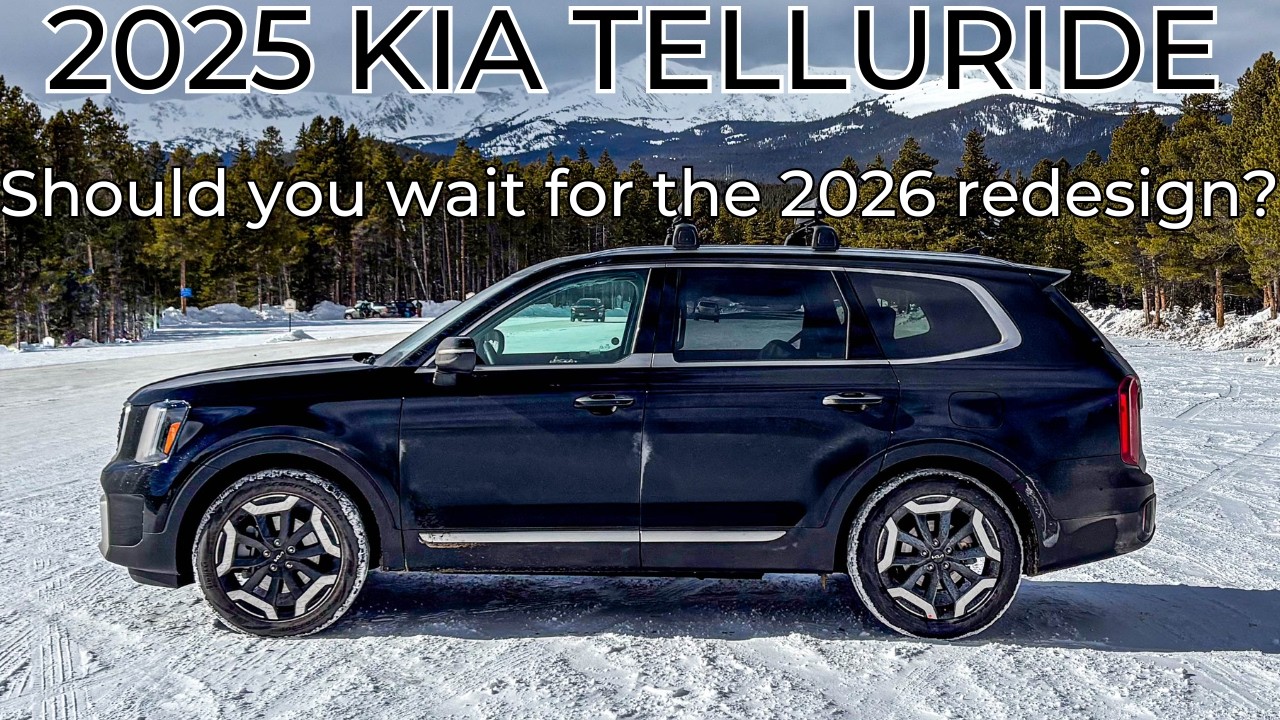
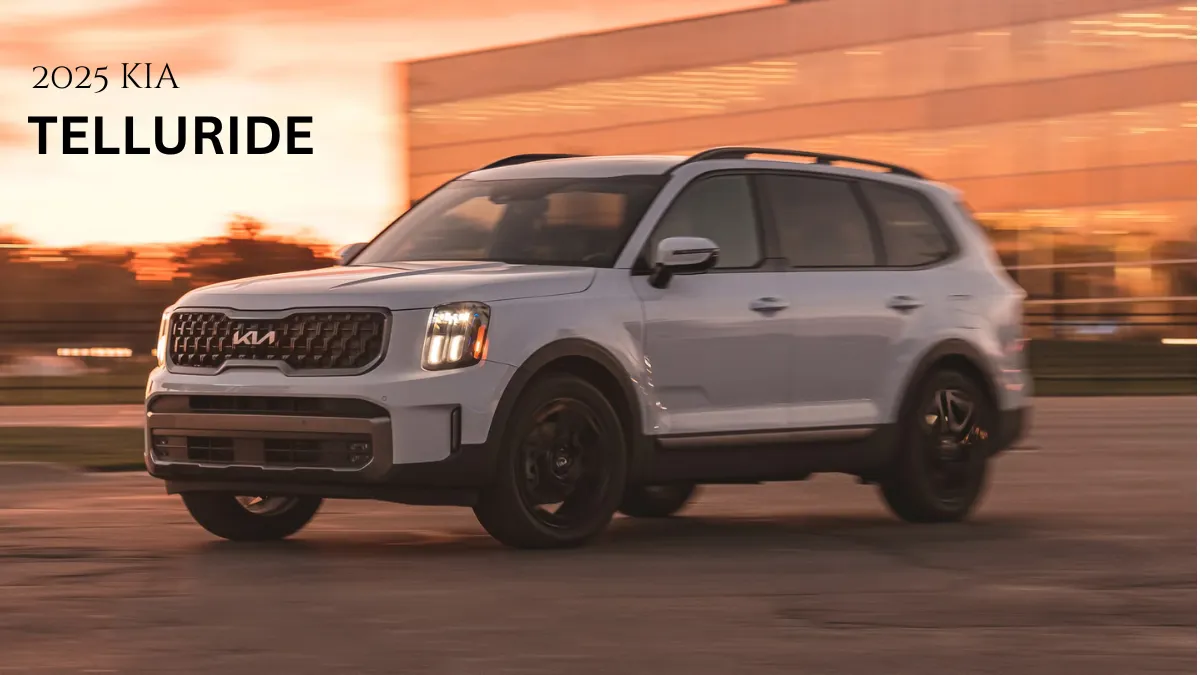
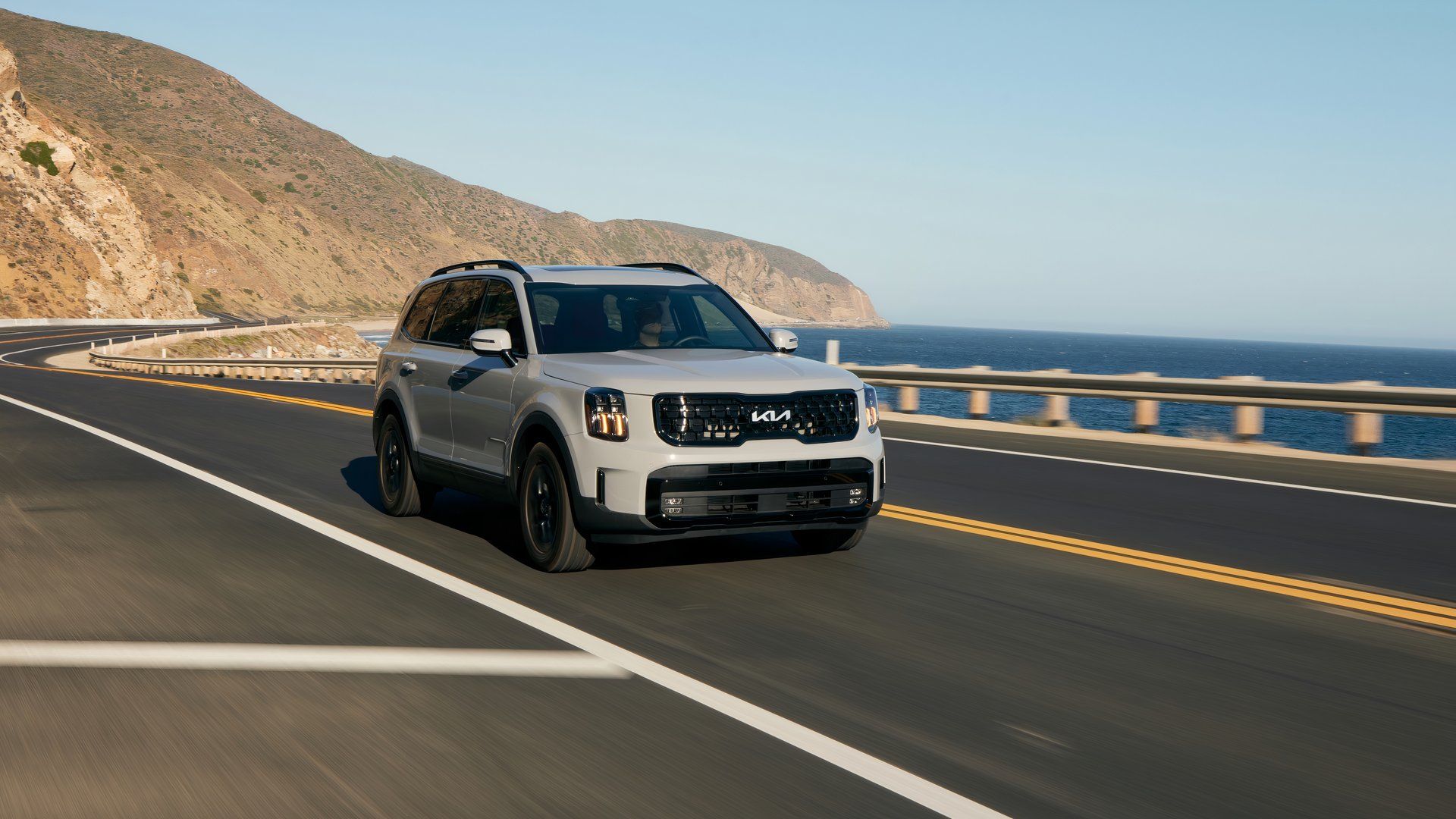
The 2025 Kia Telluride carries a bold exterior presence, with a stance that looks planted rather than exaggerated. Front-end design leans into strong geometry—crisp lighting signatures, confident grille composition, and a visual rhythm that doesn’t rely on gimmicks. It’s the kind of styling that photographs well, but more importantly, looks coherent under streetlights and in low morning visibility.
From the side, the proportions feel intentional: space forward for confident driver sightlines, and an overall cabin profile that reads as substantial without becoming cumbersome. It’s not trying to look sporty at the expense of practicality. Instead, it aims for a dignified, family-first kind of swagger.
In the rear, the Telluride’s design language continues with a similarly structured approach. Tail-light styling doesn’t just decorate; it improves discernibility. That matters more than people realize—especially when you’re navigating fog, rain, or fast-moving traffic where reaction time becomes a fragile commodity.
Cabin Comfort and the Art of Family-Friendly Ergonomics
Step inside and the Telluride’s calm confidence becomes tangible. The cabin feels designed for flow—a layout that reduces friction between driver tasks and passenger needs. Controls fall into intuitive zones. Surfaces feel durable rather than precious, a subtle but meaningful difference when kids, groceries, sports gear, and everyday messes share the same air.
Seat comfort is where the Telluride typically earns its reputation. Long trips don’t feel like chores. The seating posture strikes a balance between supportive cushioning and breathable stability. Even after hours, fatigue doesn’t creep in aggressively, and that’s the kind of quiet achievement that should be celebrated.
Depending on configuration, the Telluride can handle multiple passenger arrangements with surprising ease. Whether you’re shuffling kids, hosting friends, or accommodating unexpected guests, the cabin offers flexibility without making the process feel like an engineering exam.
Third-Row Reality: Usable Space, Not Wishful Thinking
Third rows are where many midsize SUVs quietly stumble. They become decorative seating—promising capacity but delivering discomfort. The 2025 Telluride attempts to avoid that trap by focusing on real usability. While no third row is going to feel identical to first-class front comfort, the Telluride generally makes space feel less like a compromise and more like an option.
Getting back there is straightforward. Once seated, passengers tend to benefit from thoughtful packaging—headroom and legroom that don’t feel performative. On family road trips, this translates into fewer grumbles, fewer “are we there yet?” shoulder slumps, and fewer stretches of restless shifting.
Bring your cargo ambitions too. The Telluride’s rear storage strategy aims to keep daily life seamless: school supplies, cooler bags, stroller folds, and weekend clutter. The difference between a practical SUV and a frustrating one is often hidden behind how easily you can change states—from “commuter mode” to “adventure mode.”
Engine and Performance: Confident, Not Theatre-Driven
Performance in a family SUV should be judged differently. It’s not about lap times. It’s about responsiveness when merging, passing, and climbing grades with a loaded cabin. In that context, the 2025 Kia Telluride demonstrates a temperament that feels steady and composed.
Acceleration is smooth enough for everyday driving, with enough vigor for highway entrances and overtakes. Throttle response doesn’t feel artificially softened. The vehicle manages power delivery with a sense of coherence, keeping the driver informed through tactile feedback rather than vague sensations.
Transmission behavior tends to prioritize smoothness, though it still provides enough intent when you ask for more. The result is a driving experience that feels less like wrestling and more like coordination.
Handling is tuned for real roads rather than magazine highways. The Telluride leans into predictable behavior: it tracks with confidence, resists excessive wandering, and handles lane changes without drama. It’s not built to become a canyon weapon. It’s built to remain composed when the world turns unpredictable.
Ride Quality and Noise Control: The Unseen Luxury
Ride quality is often overlooked in enthusiast conversations, yet it’s the defining metric for family satisfaction. The 2025 Kia Telluride delivers an impressively controlled ride across varied surfaces. Broken pavement doesn’t become chaos. Expansion joints don’t turn the cabin into a drumline.
Road noise is managed with a level of diligence that helps conversations stay effortless. Wind noise remains comparatively contained, so long highway stints don’t require raising voices. Suspension tuning suggests an intent to preserve calm—like the vehicle is quietly negotiating with the asphalt instead of merely absorbing impacts.
In short bursts on rough roads, the Telluride keeps motion composed. In longer stretches, it maintains rhythm, reducing the fatigue that comes from constant minor corrections.
Technology and Infotainment: Intuitive, Yet Powerfully Modern
Modern SUVs live and die by their interfaces. The 2025 Telluride feels engineered for clarity: menus that make sense, responsiveness that doesn’t feel delayed, and a driver-first approach to information.
Connectivity expectations are high, and the Telluride aims to meet them without turning the cabin into a cockpit of confusion. Navigation, media, and phone integration are designed to support daily use, not just short demo sessions.
For families, the real test is secondary usability—keeping passengers comfortable and engaged without derailing the driver’s attention. The Telluride’s technology suite is built to support that balance, encouraging interaction while still respecting focus.
Safety Suite and Driver Assistance: Peace of Mind in Motion
Safety isn’t a feature—it’s a feeling, earned through systems that behave predictably. The Telluride’s driver-assistance ecosystem is built to help reduce stress in routine scenarios: highway lane centering, adaptive speed management, and collision avoidance awareness.
These systems don’t replace attention. They support it. And that distinction matters. When assistance feels intuitive, drivers remain in charge. When systems are finicky, drivers start second-guessing every alert. The 2025 Kia Telluride generally leans toward sensible behavior that complements real driving rather than challenging it.
In day-to-day life—school runs, grocery trips, evening traffic—the value of peace of mind becomes practical. It’s the kind of benefit that doesn’t show up in a performance spec, but absolutely shows up in decisions you make under pressure.
Pricing and Trim Value: What “Benchmark” Usually Means
The benchmark argument often comes down to value per dollar, not just performance on paper. The 2025 Telluride’s pricing positions it competitively against similarly sized competitors. But value isn’t merely a number—it’s the composition of features across trims, and how much you gain as you move up.
Fully loaded configurations can climb, but the Telluride’s appeal remains rooted in a sense of abundance: generous comfort details, family-oriented space, and a feature set that feels more “complete” than you might expect in its class.
For buyers, the question becomes: what matters most—comfort, tech, safety, or prestige? The Telluride tends to offer a compelling spread of attributes across trims, making it easier to recommend without forcing shoppers into a narrow configuration.
Who Should Buy the 2025 Telluride?
The Telluride is a natural fit for families that want an SUV with a grown-up sense of design and an accommodating cabin. It also suits drivers who prioritize calm commuting, reliable highway behavior, and a third row that doesn’t feel like an afterthought.
If you’re the kind of shopper who compares ride comfort on real roads, studies how technology fits into daily routines, and wants a vehicle that feels composed rather than flashy—this SUV aligns strongly with your expectations.
Verdict: Still the Benchmark?
The 2025 Kia Telluride continues to deliver what many competitors chase but don’t always achieve: cohesive design, confident comfort, and a family-first practicality that feels earned. It doesn’t demand admiration through wild aggression. Instead, it earns trust through balance—an ecosystem of comfort, usability, and sensible tech.
So, is it still the benchmark? In the realm of midsize three-row SUVs, it remains a standard-bearer. Not because it’s perfect, but because it understands the job description better than most: transporting people comfortably, accommodating life’s unpredictability, and doing it with a calm, assured presence that feels ready for tomorrow.