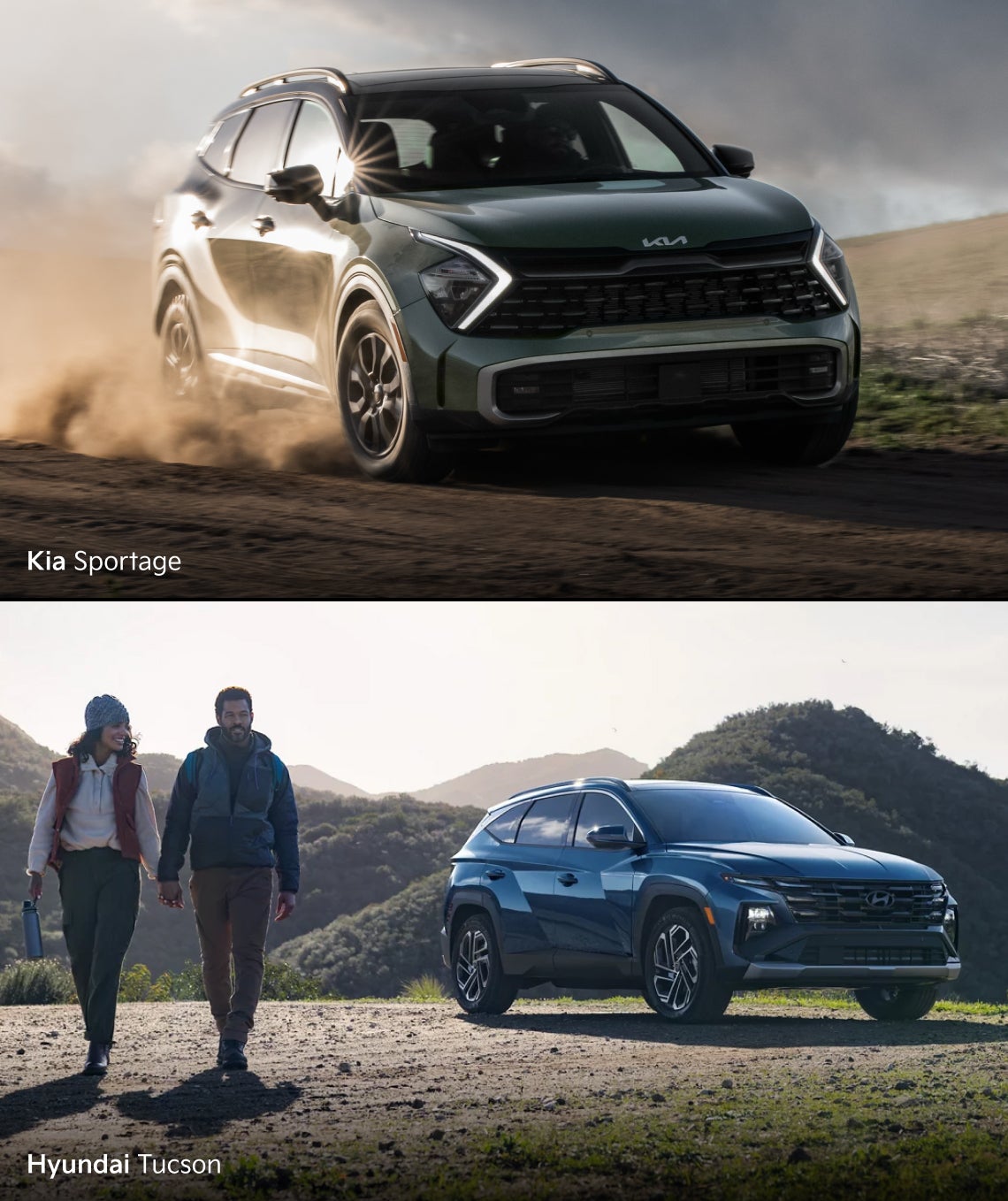
Picture a Sunday morning—snack bags half-open, kids negotiating over music volume, and someone declaring, “We’ll be there in five minutes.” Now ask a playful question: What if your next family road trip could feel effortless without sacrificing the fun? That’s the real tension in the 2025 Hyundai Tucson vs. Kia Sportage conversation. These two compact SUVs don’t just share the same general family-friendly orbit; they’re built on a similar platform philosophy—one that aims for stability, comfort, and practicality. But here’s the potential challenge: when two vehicles feel close in everyday life, choosing the “better” one becomes less about obvious differences and more about the subtle ways each SUV reacts to your routines.
Let’s walk through the comparison like a careful itinerary—seat by seat, button by button, and mile by mile—so the decision doesn’t depend on guesswork.
Same-Platform Energy: Why It Matters for Families
When vehicles come from the same platform design mindset, they tend to share a family resemblance in how they handle weight distribution, ride refinement, and interior packaging. For parents, this is more than trivia—it’s the difference between a composed drive and a jittery one when the road turns chaotic. A shared platform approach can also mean similar engineering priorities: efficient use of space, predictable dynamics, and a comfortable stance that helps reduce fatigue on longer commutes.
But don’t confuse similarity with sameness. Even with common architectural DNA, manufacturers tune steering feel, suspension calibration, and sound insulation differently. That means you may notice distinct personalities at low speeds, in parking-lot maneuvers, or when accelerating out of a school-zone traffic jam.

Cabin Reality Check: Room for Backpacks, Not Just People
Families don’t travel in theoretical ways. You don’t just carry “one bag.” You carry water bottles, a crumpled blanket, a jacket you’ll regret not bringing, and that one item no one can locate until it’s desperately needed. Both the 2025 Tucson and 2025 Sportage are designed to handle this daily circus with an arrangement that feels intuitive rather than clutter-prone.
Think about what matters most: second-row comfort for carpool rotations, seat usability for grandparents with “mystery stiffness,” and the width of cargo access for stroller folding gymnastics. Pay attention to how doors open, how easy it is to slide items in and out, and whether the trunk opening feels supportive when you’re juggling one-handed tasks.
Even if both SUVs use similar platform thinking, interior ergonomics can diverge. One model may feel more “reach-friendly” while the other may prioritize a slightly more wraparound driver position. Try the seating routine: adjust the driver’s seat, set a route on the infotainment, then practice grabbing common items—phone, snacks, the spare sunglasses case. Small comfort cues matter.
Ride Comfort and Handling: Smoothness vs. Spark
Here’s where the shared platform can create an interesting plot twist. The Tucson and Sportage both aim for a calm ride, especially over everyday pavement. Yet one may feel a touch more serene when the road surface becomes coarse, while the other might offer more steering immediacy—subtle responsiveness that feels like confidence.
For families, ride quality isn’t luxury fluff. It’s how you keep kids asleep and reduce the “why does this feel bumpy?” commentary from the back seat. Look for how each SUV absorbs speed bumps, how it behaves when you take a corner with a full trunk, and how stable it feels when changing lanes during evening traffic.
The challenge: decide what your household prioritizes when the road gets unpredictable. Do you want a velvety glide for long hauls, or a lightly more alert feel for spirited escapes on the weekend?
Powertrain Choices and Drive Character
Compact SUVs often blend practicality with a desire for lively response. In the 2025 Tucson vs. Sportage comparison, powertrain options and tuning determine how each vehicle performs when you’re merging, passing, or simply trying to avoid being the last car at the green light.
How does the engine feel at low speeds? Does it hesitate during throttle requests, or does it respond like a well-trained assistant? How does it behave when you’re carrying passengers and luggage at once? These are the moments when families feel the difference most.
Also consider long-term usability. A drive that feels “quick enough” on a test drive may feel strained later if it requires frequent pedal adjustments. Conversely, a smoother, steadier delivery might be more aligned with daily life—even if it’s not aggressively sporty.
Infotainment and Tech: The Battle for Peace Inside the Car
Every family understands the truth: the car is a moving command center. The touchscreen interface becomes the quarterback, the audio system becomes the referee, and the charging ports become the lifelines. When tech is unintuitive, it steals attention at exactly the wrong time.
Compare both vehicles on responsiveness, menu structure, and how easily you can pair a phone while driving. Look at whether the system supports the features your family actually uses—navigation that’s quick to set, media control that doesn’t require repeated taps, and connectivity that behaves reliably when signal conditions shift.
Then consider the back seat’s experience. If the rear passengers can easily access media controls or charge devices, you reduce the odds of the “I’m bored” spiral. Tech isn’t just entertainment—it’s atmosphere management.
Safety and Driver Assistance: Comfort Can’t Come Without Confidence
Safety features are the non-negotiable language of family vehicles. The question is not only which systems exist, but how they work together—how seamless the alerts are, whether the adaptive functions feel predictable, and how reassuring the driver-assist suite becomes in real-world traffic.
Look for capabilities like collision warning, automatic emergency braking behavior, lane support, and blind-spot awareness. But don’t treat these as checkboxes. Test the feel: do warnings arrive with appropriate timing? Does lane guidance assist gently or aggressively? In family life, you want calm assistance, not nervous interruptions.
Here’s the challenge again, framed differently: the best safety system is the one you trust after a few days, not just the one with the longest feature list on paper.
Storage and Versatility: The Art of Staying Organized
The “family SUV” stereotype often means large cargo space—but versatility is the real prize. Think about how you manage trips with varying supplies: grocery runs, school outings, sports gear, and those last-minute changes when someone decides they need a different shoe size.
Compare cargo capacity, rear seat folding usefulness, and whether the trunk loading height feels manageable. Watch how cargo ties down or how easy it is to secure items so they don’t become bouncing projectiles during sudden stops.
Also evaluate the smaller storage ecosystem: cup holders, door bins, center console layout, and whether the compartment openings are practical when you’re half distracted. A well-organized interior reduces friction—and friction is the enemy of a pleasant day.
Style and Ownership Feel: Which Personality Fits Your Family?
Even with shared platform sensibilities, these SUVs can deliver different emotional textures. One might project a more confident, sculpted presence; the other could feel more streamlined and understated. That matters because the vehicle becomes part of your routine identity—something you’ll see every morning and use in every season.
Consider visibility too. Families rely on clear sightlines for parking, school drop-offs, and quick lane checks. Evaluate how the hood line feels, how the mirrors perform, and how easy it is to judge distances at slow speeds.
Finally, think about ownership comfort: build quality impressions, ease of cleaning, and whether the cabin materials feel resilient against everyday life—spills, crumbs, and the kind of smudges that appear without asking permission.
So, Which One Wins for Families?
The truthful answer is that both the 2025 Hyundai Tucson and Kia Sportage can be excellent family partners because their shared platform approach aims for a predictable, confidence-building foundation. Yet the better choice depends on which vehicle aligns with your household’s rhythm—how you load the car, how you drive in stop-and-go traffic, and how you manage comfort when plans evolve.
If you prioritize a calm, smooth demeanor and a tech experience that feels frictionless, one SUV may feel like a natural fit. If you want slightly sharper steering personality or a different cabin layout that supports your day-to-day workflow, the other may win your loyalty.
Endgame: A Playful Decision, Made Practical
So, here’s the final playful question: Are you choosing the SUV that looks right—or the one that fits right? In the 2025 Hyundai Tucson vs. Kia Sportage face-off, the platform similarity makes it tempting to assume the decision is easy. It isn’t. But with a focused test drive—load the trunk like it’s a real trip, pair your phone, sit in the back row, and practice daily maneuvers—you’ll uncover the winner that suits your family’s actual life.
Choose the SUV that turns everyday errands into manageable moments. When that happens, the “same platform” story becomes less of a similarity and more of a shared starting point—while your preferences decide the destination.