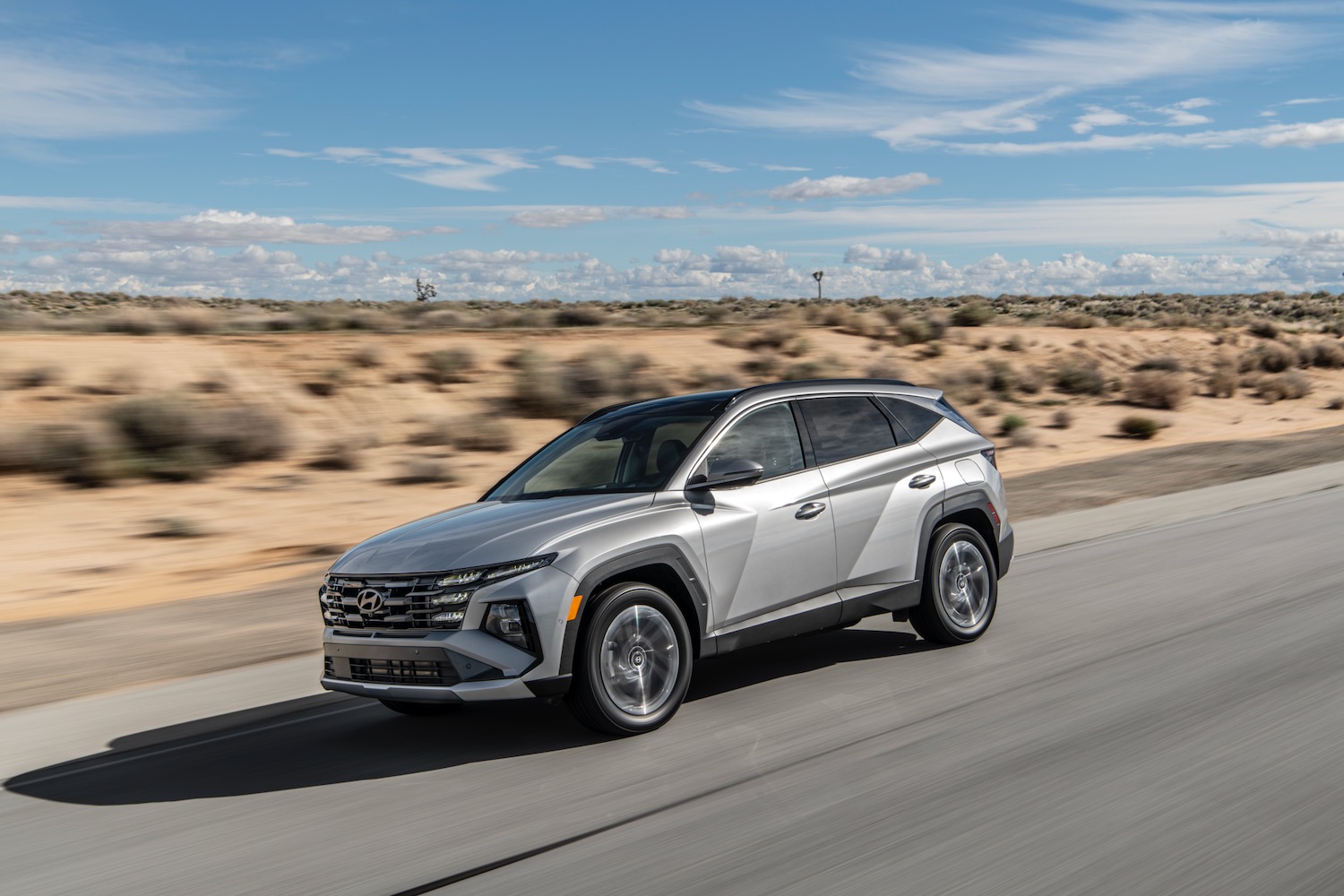
The 2025 Hyundai Tucson Plug‑In Hybrid arrives with a familiar promise—two modes of propulsion, one cohesive driving personality—but it also asks a more pointed question: How far can it truly go on electrons when the road turns real? The EV Range Test is where assumptions dissolve. It’s where a plug‑in hybrid reveals its engineering intent, its energy-management discipline, and its willingness to meet day-to-day life without drama. Over the course of this review, the Tucson becomes less of a brochure idea and more of a traveling experiment—part commuter appliance, part efficiency instrument, part road-trip companion that hedges with a gasoline safety net.
What follows is a structured look at the EV range experience: how the test is staged, what conditions matter, and how driver behavior tangles with battery performance. Expect details on practical usability, charging realities, temperature effects, and the subtle differences between “range on paper” and range you can actually schedule around. Along the way, the Tucson’s character—quiet when it needs to be and composed when it must switch gears—stays the central narrative thread.
Setting the Stage for an EV Range Test
An EV range test isn’t just about driving until the battery fades. It’s about controlling variables enough to make the results meaningful while still capturing the messy authenticity of real usage. For the Tucson, the objective is to measure electric capability across common scenarios: steady suburban pacing, intermittent stop-and-go traffic, and stretches where throttle inputs encourage higher motor demand.
That means paying attention to more than speed. Traction conditions, acceleration cadence, HVAC workload, and even elevation changes influence the battery’s willingness to supply energy. A plug‑in hybrid also brings an added twist: regeneration isn’t merely a feature, it’s a behavioral contract. How aggressively the driver lifts the accelerator can be the difference between an efficient glide and a needless expenditure of stored charge.
In the real world, this translates into what drivers care about most—whether the Tucson can cover errands, school runs, and commuting loops without triggering the engine at inconvenient moments.

First Impressions: Electric Motion and Energy Discipline
When the Tucson begins in electric mode, it doesn’t feel like a compromise—it feels like intention. The response is smooth, the cabin quiet, and the vehicle’s mass seems to glide rather than shove forward. That matters because calm inputs tend to preserve energy, and energy preservation is the invisible ruler that measures the EV range outcome.
Still, “smooth” doesn’t mean “static.” The Tucson’s power delivery invites modest throttle use. In a test environment, gentle acceleration helps the battery avoid unnecessary peaks, while abrupt surges can force the vehicle to request more current than a driver expects, translating into faster depletion.
Electric drivetrains are honest about demand. Even if the Tucson can still move briskly, the battery will record the cost of enthusiasm in the form of reduced remaining electric miles.
Range Results: What the Battery Actually Lets You Do
The most important part of an EV Range Test is the moment the electric-only glide gives way to the hybrid system. That transition is not a dramatic event, but it’s a measurable one: the point where the engine becomes a participant rather than a spectator.
On conservative routes with moderate speeds and light HVAC usage, the Tucson’s EV capability behaves like a dependable tool. It’s the kind of efficiency that makes an early-morning commute feel frictionless. But when roads accelerate into faster cruising—especially in cooler or windier conditions—the battery’s usable window narrows. Not because the vehicle fails, but because physics refuses to negotiate.
Temperatures are frequently underestimated. In cold weather, cabin heating can consume energy quickly, and battery chemistry becomes less willing to deliver current. In mild weather, the Tucson’s efficiency feels more expansive, with range holding up better during longer stretches.
In other words, the Tucson’s EV range is less about a single magic number and more about a pattern: how quickly conditions push the battery toward its limits, and how skillfully the driver stays within an energy-friendly rhythm.
Driving Style: The Hidden Variable in Every Mile
Some vehicles are tolerant. The Tucson rewards awareness. Its electric efficiency responds keenly to how the accelerator is used and how often the brakes are engaged. Smooth pedal transitions encourage regenerative braking to capture energy rather than shed it as heat.
Short trips pose their own challenge. Frequent stops can improve the opportunity for regeneration, but they also raise HVAC and accessory usage per mile. That creates a tradeoff: a city loop can be efficient at the right tempo, yet punishing if the cabin stays heavily heated or if the drive includes repeated “hard accelerations” that leave little chance for recovery.
What emerges is a practical insight: the Tucson’s EV range becomes predictable when driving habits become deliberate. It’s not restrictive; it’s communicative.
Regeneration and Brake Feel: Capturing Energy Without Anxiety
Regenerative braking is where the Tucson’s plug‑in hybrid identity becomes tangible. The sensation of deceleration is smooth enough to remain comfortable, yet assertive enough to encourage energy return. The key is modulation—using deceleration as a strategy rather than as an accident.
During the EV Range Test, regen helped stretch electric miles on routes with frequent traffic signals. However, in scenarios with fewer braking opportunities—long, steady stretches—regen has fewer chances to compensate for acceleration demand. This is why two drivers can experience different “real-world” ranges even on similar routes.
The Tucson’s brake behavior stays coherent, with regen doing the quiet work most of the time and the friction brakes stepping in when the situation demands urgency. This balance keeps the ride confident and the energy story consistent.
HVAC, Accessories, and the Energy Tax
If there’s a villain in an EV range test, it’s often not speed—it’s comfort equipment. Cabin heating in cold weather and intense cooling in hot weather can siphon battery energy before the drive even truly begins. Fans, defrosters, and high-demand climate settings can shorten the electric window noticeably.
Yet the Tucson’s system is capable of adaptation. Preconditioning (when available and scheduled) can reduce the energy penalty during departure, allowing the battery to focus on propulsion rather than immediate thermal recovery.
For readers, the takeaway is straightforward: treat HVAC as an adjustable dial. Mild climate settings tend to protect electric range. Aggressive comfort modes may deliver a pleasant cabin, but they can quickly compress the EV portion of the trip.
Charging Reality: Home Convenience vs. Public Availability
The EV range test is only half the story; the other half is what happens after. Plug‑in hybrids live or die by charging friction. If charging is effortless, the EV experience becomes seamless—short trips stay electric, errands remain quiet, and the gasoline engine becomes the occasional backup rather than a daily crutch.
Home charging typically makes the Tucson’s plug‑in promise feel real. With consistent overnight top-ups, drivers can align electric mode with their schedule. Public charging adds variability: availability, queue times, charger performance, and session management all influence whether the plug‑in plan remains confident or becomes stressful.
A thoughtful rhythm is the most effective strategy. Drivers who charge predictably tend to experience a broader electric coverage. Drivers who postpone until the battery feels depleted often end up relying on hybrid mode more frequently than they expected.
Comfort, Cabin Quietness, and the Subjective Mile
Efficiency is measurable, but driving satisfaction is experiential. The Tucson’s electric operation delivers a low-noise environment that makes everyday travel feel less strained. At low speeds, the cabin’s calm tone encourages patience and smoother inputs—ironically improving range simply by making the ride feel easier.
Road noise and tire behavior become more noticeable at higher speeds, and that’s where the EV window naturally becomes harder to defend. Still, the overall refinement remains an asset. The hybrid system’s integration is designed to avoid abrupt transitions, helping the driver stay focused rather than distracted.
This is where the review becomes narrative rather than purely technical. The Tucson makes electric driving feel livable, not merely optimized.

How It Performs When the Battery Runs Low
The strength of a plug‑in hybrid is not only its electrified talent—it’s what happens after the battery’s electric portion concludes. Once charge depletes toward the hybrid threshold, the Tucson continues to operate with a blend of systems, aiming to preserve efficiency while restoring momentum.
In practice, the shift is typically seamless. The engine provides additional power while the vehicle manages energy flow. The key is that the driver doesn’t feel like they’re losing the plot; the Tucson adapts and continues moving with composure.
This matters for planning. An EV range test can make drivers anxious, but the Tucson’s hybrid capability offers reassurance. The vehicle can still complete trips even if the EV portion doesn’t cover every mile—an important psychological benefit for real life, not just lab work.
Best Use Cases: Who This EV Range Experience Fits
The Tucson Plug‑In Hybrid is most persuasive for drivers whose routes naturally align with electric travel. People with predictable commuting patterns, frequent short errands, and home charging access are in the sweet spot. In those contexts, the electric miles are not occasional luxuries—they become routine.
Conversely, drivers with highly variable schedules, limited charging access, or long highway-heavy routes may find the EV range window more constrained. That doesn’t make the Tucson wrong; it makes it contextual. The vehicle still delivers hybrid efficiency, but the plug‑in advantage becomes less dominant.
The best strategy is matching expectations to reality. When the home charger exists and daily distances remain reasonable, the Tucson’s electric performance turns from “test result” into daily habit.
Final Take: The Tucson’s EV Range, Interpreted
The 2025 Hyundai Tucson Plug‑In Hybrid doesn’t just offer an EV option. It offers a framework for energy-conscious driving that can fit real schedules without turning life into a logistics problem. The EV Range Test reveals an electrified personality that shines under moderate conditions, responds strongly to driving behavior, and reflects the undeniable influence of temperature and climate demand.
When the electric phase runs out, the Tucson transitions with restraint rather than upheaval, maintaining confidence and continuity. That blend—electric competence paired with hybrid resilience—is the essence of why plug‑in hybrids remain compelling.
For readers planning their days around charge, the Tucson feels like a practical partner. For those who treat efficiency as a craft, it becomes even more rewarding. Either way, the EV Range Test ends with a clear conclusion: the Tucson is at its best when plugged in—then driven with intention.