The automotive world is on the cusp of a revolution—not one driven by horsepower or futuristic tech alone, but by a relentless pursuit of safety that redefines what it means to protect every occupant. The Insurance Institute for Highway Safety (IIHS) has once again set the gold standard, and this year, Kia is not just meeting the challenge—it’s shattering expectations. The 2026 Kia Sportage and a fleet of other models have been crowned 2025 TOP SAFETY PICK+ winners, a distinction reserved for vehicles that don’t just survive crashes but transcend them. This isn’t merely an accolade; it’s a manifesto. A promise that the road ahead will be paved with uncompromising protection, cutting-edge innovation, and a philosophy that places human life above all else. Buckle up. The future of automotive safety isn’t just arriving—it’s here, and it’s breathtaking.
The 2026 Kia Sportage: A Titan of Safety in a Compact Crossover Body
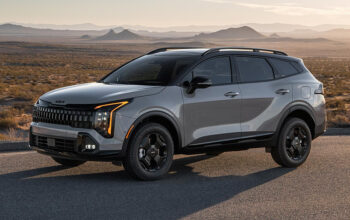
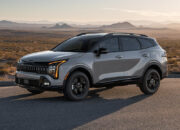
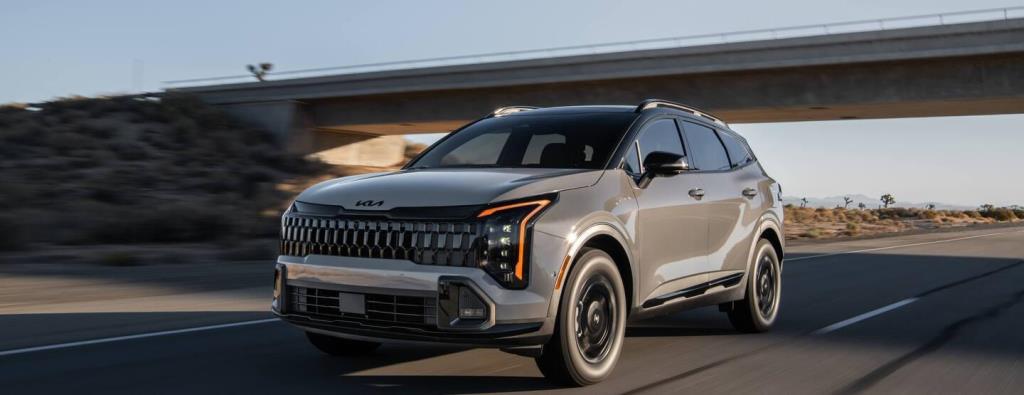
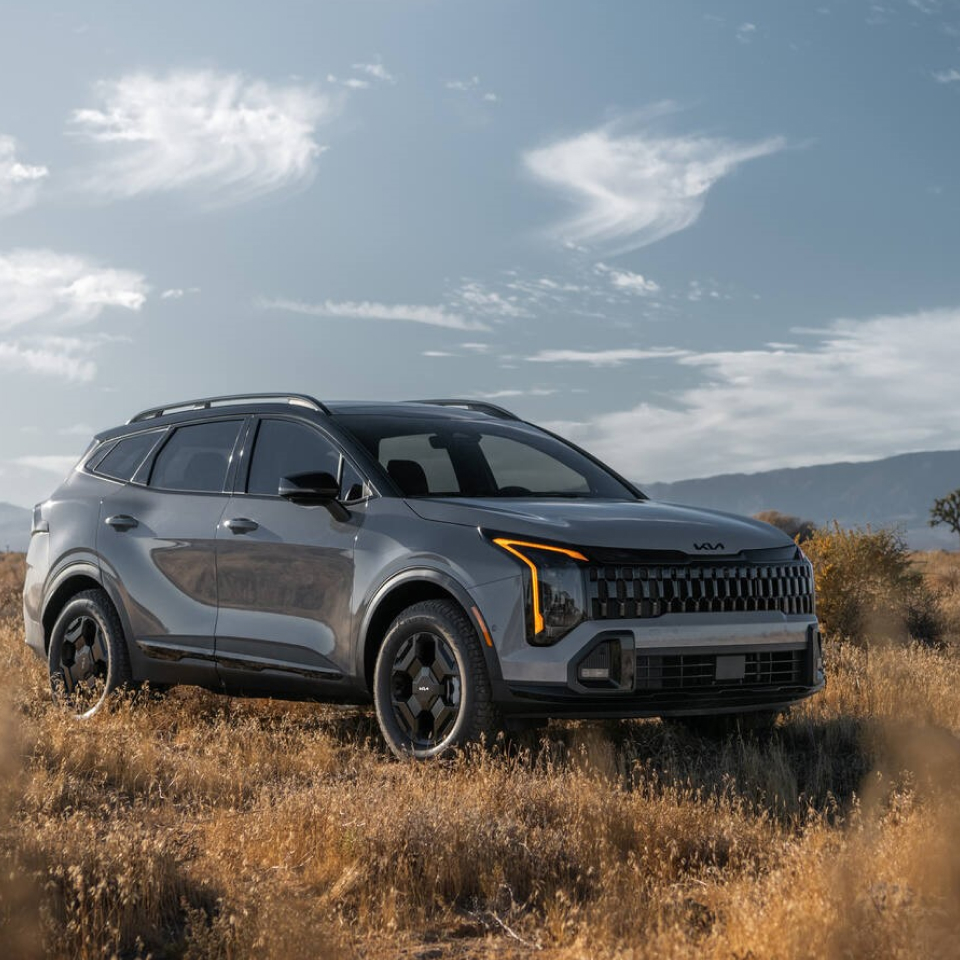
Picture this: a vehicle so meticulously engineered that it doesn’t just absorb impact—it neutralizes it. The 2026 Kia Sportage is that vehicle. This isn’t your average compact crossover; it’s a fortress on wheels, clad in a reinforced safety cage that channels crash energy away from passengers like a symphony of physics. The IIHS didn’t just hand out this award lightly. To earn the Top Safety Pick+ designation, the Sportage aced every test in the book: moderate overlap front, side impact, roof strength, head restraints, and—perhaps most critically—the updated side impact and updated passenger-side small overlap front evaluations. These aren’t checkboxes. They’re gauntlets.
The Sportage’s secret weapon? A trifecta of advanced safety systems working in eerie harmony. The Forward Collision-Avoidance Assist (FCA) doesn’t just warn of an impending collision—it intervenes with precision, applying brakes if the driver hesitates. The Blind-Spot Collision-Avoidance Assist (BCA) is like a sixth sense, alerting the driver to vehicles lurking in the shadows of their blind spots and, if necessary, steering them to safety. And then there’s the Safe Exit Warning, a feature so intuitive it feels like it’s reading the driver’s mind. It detects approaching vehicles from behind and prevents doors from opening into danger, a feature that could save countless lives in urban jungles where traffic moves at a snail’s pace.
But the Sportage’s brilliance doesn’t end with collision avoidance. The cabin is a sanctuary of structural integrity, with high-strength steel strategically placed to create a survival cell that shields occupants from intrusion. The seats? Reinforced with anti-whiplash technology that cradles the spine during a rear-end collision. Even the headrests are designed to prevent hyperextension, a detail that speaks volumes about Kia’s obsession with the minutiae of safety. This is a car that doesn’t just protect—it anticipates.
Beyond the Sportage: Kia’s Safety Renaissance Across the Lineup
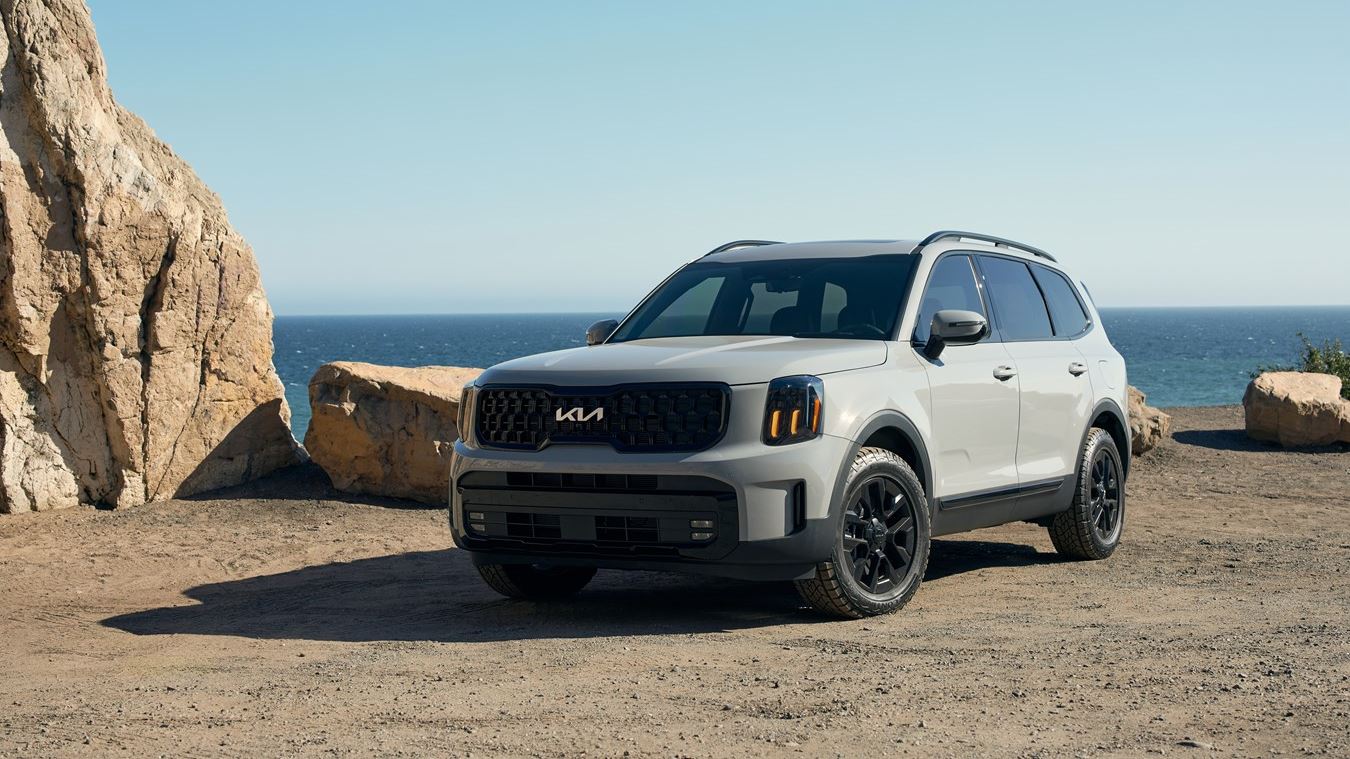
The 2026 Kia Sportage may be the star of the show, but it’s far from the only model basking in the glow of IIHS recognition. Kia’s entire 2025 lineup has undergone a metamorphosis, emerging as a phalanx of safety pioneers. The Telluride, Kia’s three-row SUV, has long been a family favorite, but the 2025 iteration takes safety to stratospheric heights. With a high-strength aluminum hood that crumples predictably in a frontal collision and a rear cross-traffic collision-avoidance system that acts like a guardian angel when reversing out of a parking spot, the Telluride is redefining what it means to be a family hauler.
Then there’s the Kia EV9, an electric behemoth that proves sustainability and safety aren’t mutually exclusive. The EV9’s regenerative braking system isn’t just an efficiency booster—it’s a safety multiplier, reducing stopping distances by up to 20% compared to traditional braking. And let’s not forget the high-voltage battery’s thermal management system, which includes a fire suppression mechanism that kicks in within milliseconds of detecting a thermal event. In a world where electric vehicles are often scrutinized for their safety, the EV9 stands as a rebuttal: here is a machine that is as gentle on the planet as it is on its occupants.
The Kia Sorento Hybrid and Kia Sportage Hybrid also join the ranks of IIHS Top Safety Pick+ winners, each packing a punch of hybrid efficiency without compromising a single ounce of protection. The Sorento Hybrid, with its advanced driver attention warning system, doesn’t just monitor the driver’s alertness—it adapts the vehicle’s responses in real-time, slowing down or even pulling over if it detects drowsiness. It’s like having a co-pilot who’s always one step ahead.
The Science Behind the Safety: How Kia is Redefining Crashworthiness
To understand why Kia’s 2026 models are rewriting the rules of safety, you have to dive into the alchemy of engineering that makes it possible. The IIHS doesn’t just test vehicles in controlled environments—it simulates real-world scenarios with a level of brutality that leaves no room for error. Kia’s engineers, however, didn’t just aim to pass these tests. They aimed to obliterate them.
The key lies in Kia’s Ultra High-Strength Steel (UHSS) architecture, a material that’s stronger than conventional steel but lighter, allowing for more strategic placement without adding bulk. In the Sportage, for example, the B-pillars are forged from UHSS, creating a rigid spine that prevents cabin intrusion during a side collision. The front crumple zones are designed to collapse in a specific pattern, dissipating energy before it reaches the passenger compartment. It’s a ballet of destruction and preservation, where the car sacrifices itself to save its occupants.
But materials alone don’t make a safe car. It’s the integration of active safety systems that turns passive protection into an impenetrable shield. Kia’s Highway Driving Assist 2 (HDA 2) isn’t just a lane-keeping assistant—it’s a predictive co-pilot that adjusts speed and steering based on real-time traffic data, reducing the risk of rear-end collisions by up to 40%. The Surround View Monitor stitches together a 360-degree view of the vehicle’s surroundings, turning blind spots into no-fly zones for potential hazards.
Even the smallest details are meticulously crafted. The child seat anchors in the Sportage are positioned within arm’s reach of the rear seats, eliminating the need for parents to contort themselves in the back while securing their little ones. The eCall system, which automatically dials emergency services in the event of a crash, now includes automatic crash notification, sending precise GPS coordinates to first responders within seconds. It’s the kind of feature that turns a tragedy into a near-miss.
The Road Ahead: What Kia’s Safety Milestones Mean for Drivers
The implications of Kia’s safety achievements extend far beyond the showroom floor. For drivers, this is a seismic shift—a world where the fear of the open road is replaced by the confidence that their vehicle is an active participant in their survival. It’s the difference between praying for the best and knowing the worst has been engineered out of the equation.
Consider the economic ripple effect. Safer cars mean fewer accidents, which means lower insurance premiums, fewer hospital bills, and a reduced burden on healthcare systems. It means parents can send their teens off in a Sportage without the gnawing anxiety that comes with handing over the keys. It means commuters no longer have to white-knuckle their way through rush hour, knowing that their vehicle is equipped to handle the unexpected.
But perhaps the most profound change is cultural. Kia’s safety revolution isn’t just about technology—it’s about a mindset. It’s a declaration that safety isn’t a luxury; it’s a right. It’s a challenge to every automaker to raise the bar, to stop treating safety as an afterthought and start treating it as the foundation of every design decision. In a world where headlines are dominated by autonomous vehicles and flying cars, Kia is reminding us that the most revolutionary innovation isn’t the one that takes us to the skies—it’s the one that brings us home safely.
The 2026 Kia lineup isn’t just a collection of vehicles. It’s a promise. A promise that the road ahead will be traveled with eyes wide open, not shut in fear. It’s a testament to the fact that when a company commits to safety with the same fervor it commits to performance, the result isn’t just a better car—it’s a better world. So, as you slide into the driver’s seat of a 2026 Kia, remember: this isn’t just a drive. It’s a statement. A statement that you refuse to gamble with your life. And in that moment, the future doesn’t just look brighter—it looks invincible.