
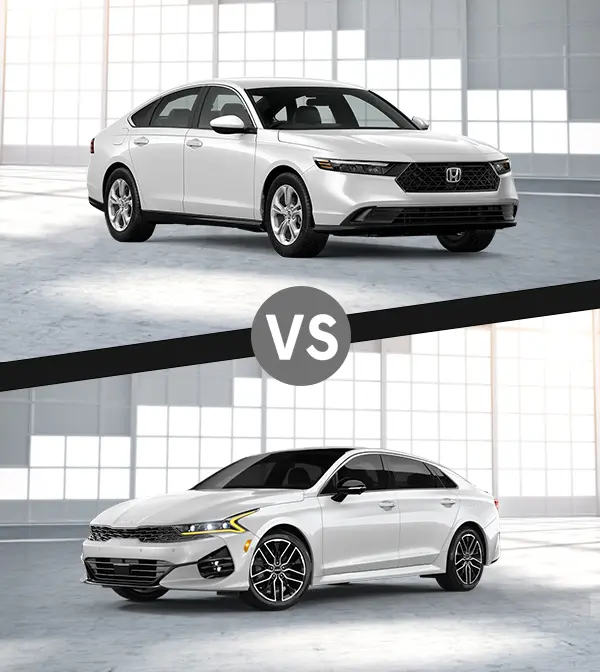
The midsize sedan segment is a battleground where refinement meets innovation, and nowhere is this clash more evident than in the rivalry between the Kia K5 and the Honda Accord. These two sedans represent the pinnacle of modern automotive design, each offering a distinct blend of style, performance, and value. The Kia K5, with its bold, coupe-like silhouette and tech-laden cabin, caters to drivers who crave a dynamic presence on the road. Meanwhile, the Honda Accord, a stalwart of the segment, delivers a serene, driver-focused experience backed by decades of engineering prowess. Whether you prioritize cutting-edge aesthetics or time-tested reliability, this comparison will illuminate the strengths and quirks of each contender, helping you navigate the decision with confidence.
Beyond their exteriors, these sedans diverge in their approach to comfort, technology, and driving dynamics. The K5 leans into a sportier persona, with sharp handling and a cabin that feels plucked from a futuristic cockpit. The Accord, on the other hand, exudes a quiet confidence, offering a plush ride and intuitive controls that make every journey feel effortless. But which one truly deserves a spot in your driveway? Let’s dissect their key attributes—from powertrains to interior ambiance—to uncover the nuances that set them apart.
The Art of Exterior Design: Where Bold Meets Timeless
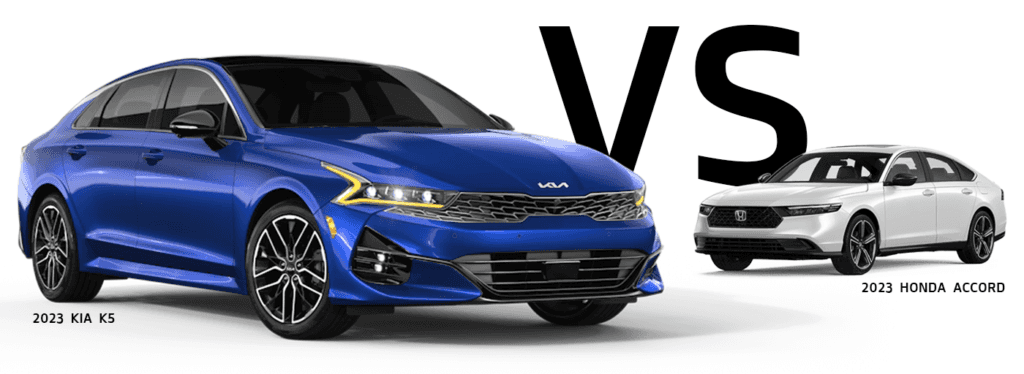
The first impression is everything, and both the Kia K5 and Honda Accord understand this axiom implicitly. The K5’s design philosophy is unapologetically audacious, borrowing cues from the sports sedan playbook. Its fastback roofline and sweeping character lines create an illusion of motion even when parked, while the tiger-nose grille—a signature of Kia’s recent design language—commands attention. LED lighting accents, including the available pixel-style taillights, add a touch of high-tech flair. The Accord, in stark contrast, embraces a more understated elegance. Its proportions are balanced, with a long hood and a short rear deck that harkens back to classic sedan proportions. The front fascia is dominated by Honda’s signature grille, flanked by sleek, angular headlights that lend an air of sophistication. The Accord’s design may not turn heads as aggressively as the K5’s, but it radiates a timeless appeal that ages gracefully.
Color palettes further highlight their contrasting personalities. The K5 offers vibrant hues like Runway Red and Silk Blue, catering to those who want their car to make a statement. The Accord, meanwhile, favors sophisticated tones like Deep Ocean Blue and Radiant Red Metallic, appealing to drivers who prefer subtlety over spectacle. Wheel designs also play a pivotal role: the K5’s available 19-inch alloy wheels feature a multi-spoke design that enhances its sporty stance, while the Accord’s 17-inch wheels (standard on lower trims) emphasize smooth, unobtrusive elegance.
Cabin Comfort: Craftsmanship Meets Cutting-Edge Utility
Step inside, and the differences between these sedans become even more pronounced. The K5’s interior is a symphony of modernity, with a driver-centric layout that prioritizes accessibility and engagement. The dashboard curves gracefully toward the windshield, creating an immersive cockpit feel. High-quality materials—soft-touch plastics, aluminum accents, and available Nappa leather—clothe the cabin in a premium ambiance. The centerpiece is the 10.25-inch curved dual-screen display, which houses the infotainment system and digital instrument cluster. This setup not only looks futuristic but also reduces driver distraction by consolidating critical controls within arm’s reach.
The Accord’s cabin, while equally refined, takes a more traditional approach. Its layout is intuitive, with a horizontal center console that houses the infotainment controls and a physical volume knob—a nod to Honda’s user-friendly philosophy. Materials are equally impressive, with soft-touch surfaces and available leather-trimmed seats that exude warmth. The 7-inch or 12.3-inch touchscreen (depending on trim) is responsive and paired with a 10.2-inch digital instrument cluster, offering a clean, uncluttered interface. Where the K5 feels like a tech hub, the Accord feels like a well-crafted living room—comfortable, familiar, and effortlessly livable.
Powertrain Prowess: Performance That Matches the Persona
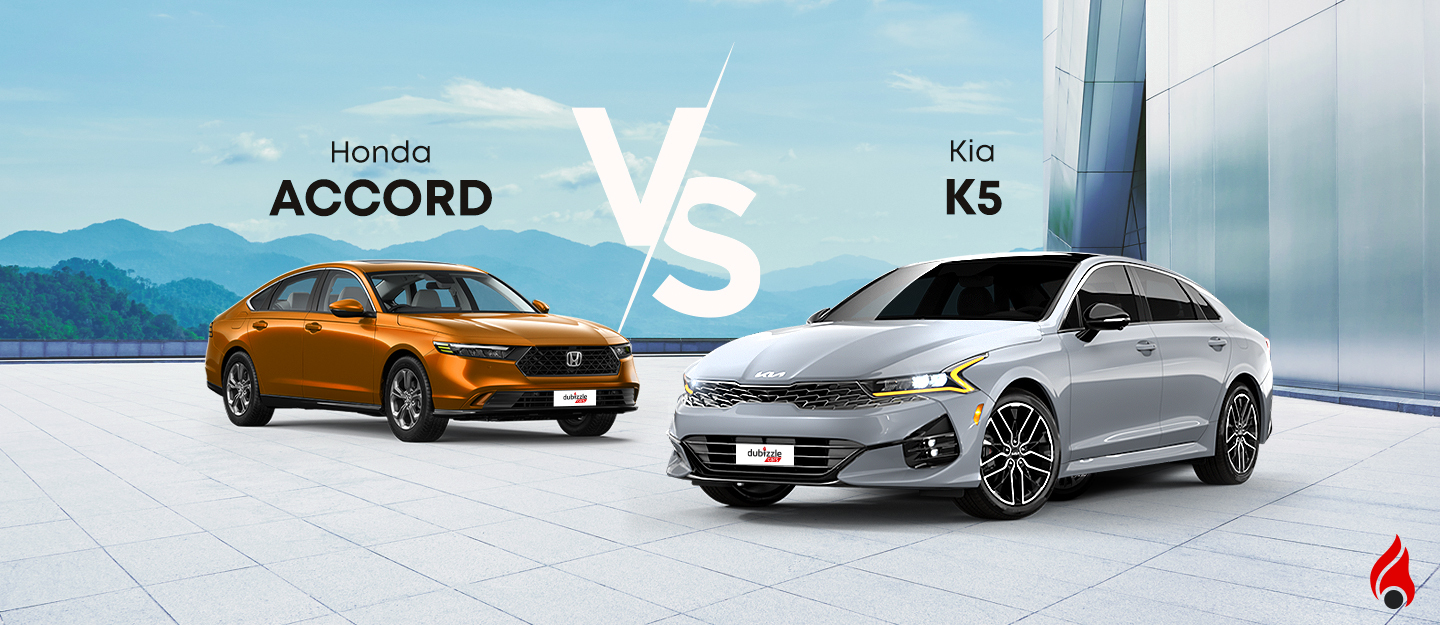
Under the hood, the K5 and Accord offer distinct driving experiences, each tailored to different expectations. The K5’s standard powertrain is a 1.6-liter turbocharged inline-4 engine paired with a 7-speed dual-clutch transmission, churning out 191 horsepower and 195 lb-ft of torque. This setup delivers brisk acceleration and a responsive throttle, though enthusiasts might crave more low-end grunt. Opt for the available 2.5-liter turbocharged engine, and the K5 transforms into a true performance-oriented sedan, with 290 horsepower and 311 lb-ft of torque at its disposal. This powerhouse propels the K5 from 0-60 mph in just 5.2 seconds, making it a standout in its class.
The Accord, on the other hand, offers a more measured approach. Its standard 1.5-liter turbocharged engine (paired with a continuously variable transmission) produces 192 horsepower and 192 lb-ft of torque, providing adequate power for daily commuting. For those seeking more vigor, the Accord Hybrid pairs a 2.0-liter inline-4 with two electric motors, generating a combined 204 horsepower while sipping fuel. The Accord’s strength lies in its smooth power delivery and refined NVH (noise, vibration, harshness) levels, ensuring a serene ride even at highway speeds. The K5 may have the edge in straight-line speed, but the Accord’s composure and efficiency make it a master of all trades.
Technology and Safety: The Digital and Defensive Shields
In an era where connectivity and safety are non-negotiable, both sedans rise to the occasion with an array of advanced features. The K5’s tech suite is headlined by the Kia Connect system, which offers remote start, vehicle status monitoring, and even a 360-degree camera for parking assistance. The dual-screen infotainment system supports Apple CarPlay and Android Auto, and the available Highway Driving Assist 2 (HDA 2) combines adaptive cruise control and lane-keeping assist for semi-autonomous driving on highways. Additional safety tech includes Blind-Spot Collision-Avoidance Assist and Forward Collision-Avoidance Assist, ensuring peace of mind in dense traffic.
The Accord counters with Honda Sensing, a comprehensive suite of driver-assistance technologies that includes Collision Mitigation Braking System, Road Departure Mitigation System, and Adaptive Cruise Control. The infotainment system is equally robust, with wireless Apple CarPlay and Android Auto integration, and a 12.3-inch touchscreen that responds with precision. The Accord also offers a Blind Spot Information System and Rear Cross-Traffic Monitor, making it a fortress of safety. Where the K5 leans into futuristic innovation, the Accord prioritizes reliability and ease of use, ensuring that technology enhances rather than complicates the driving experience.
Fuel Efficiency and Cost of Ownership: The Long-Term Ledger
Fuel economy and ownership costs are critical factors in any car-buying decision. The K5’s base 1.6T engine delivers an EPA-estimated 25 city / 34 highway / 29 combined mpg, while the 2.5T engine sees a slight dip to 22 city / 30 highway / 25 combined. The Accord’s 1.5T engine fares slightly better, with ratings of 29 city / 37 highway / 32 combined, making it one of the most efficient non-hybrid sedans in its class. The Accord Hybrid takes efficiency to another level, achieving an impressive 51 city / 44 highway / 48 combined mpg.
When it comes to ownership costs, the K5 holds a slight advantage in base pricing, with the 2024 model starting around $26,000. The Accord begins at approximately $28,000, though its hybrid variant commands a premium. Maintenance costs for both are competitive, with Kia offering a 5-year/60,000-mile basic warranty and a 10-year/100,000-mile powertrain warranty, while Honda provides a 3-year/36,000-mile bumper-to-bumper warranty and a 5-year/60,000-mile powertrain warranty. Resale value is another consideration: the Accord typically holds its value better over time, thanks to its reputation for longevity and reliability.
Final Verdict: Which Sedan Wins the Battle?
The choice between the Kia K5 and Honda Accord ultimately hinges on what you value most in a midsize sedan. If you’re drawn to a car that makes a bold statement—both on the road and in the driveway—the K5 is the clear winner. Its striking design, engaging driving dynamics, and cutting-edge tech make it a standout for those who crave excitement and innovation. The Accord, however, is the ideal companion for drivers who prioritize refinement, efficiency, and a time-tested reputation for reliability. Its composed ride, user-friendly interface, and hybrid option make it a versatile choice for families and commuters alike.
Consider your priorities: Do you want a car that feels like an extension of your personality, or one that blends seamlessly into your daily routine? The K5 and Accord each excel in their respective domains, proving that the midsize sedan segment is far from one-dimensional. Whichever you choose, you’re investing in a vehicle that promises to elevate every journey—whether it’s a spirited drive down a winding road or a quiet evening commute home.


