
The Kia Niro has long been a darling of the eco-conscious driver, blending practicality with cutting-edge electrification. Whether you’re drawn to its hybrid, plug-in hybrid, or all-electric powertrain, the Niro promises efficiency without compromise. But how does its real-world fuel economy stack up against the EPA’s lab-tested estimates? Buckle up—we’re diving into a granular comparison that separates myth from reality, revealing what you can truly expect at the pump (or charging station).
The Hybrid Enigma: Where Real-World MPG Meets EPA Promises
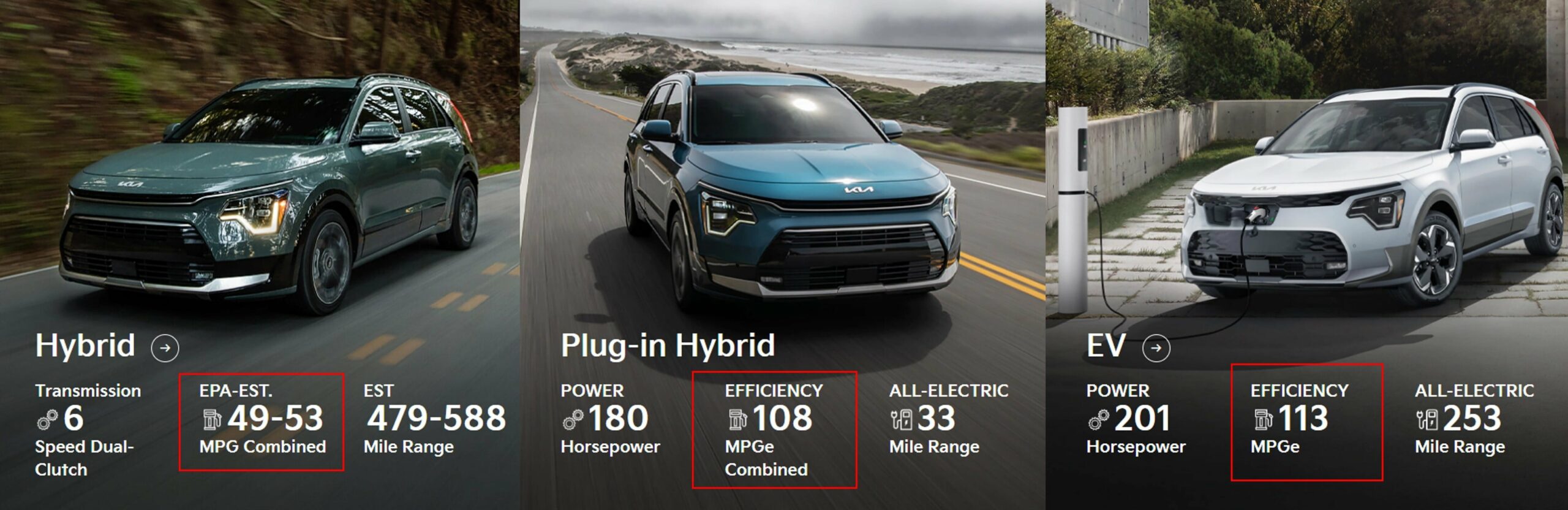
The Kia Niro Hybrid is a masterclass in balancing internal combustion with electric assistance, but the gap between EPA ratings and actual performance can be as wide as a highway shoulder. Officially, the Niro Hybrid sips just 50 city/49 highway MPG, a figure that sounds almost too good to be true—and in many cases, it is. Real-world driving reveals a more nuanced picture. Urban commuters often report achieving the EPA’s city estimate, especially in stop-and-go traffic where regenerative braking shines. However, highway cruising introduces variables: steady speeds and higher loads can push consumption closer to 45 MPG, a 10% dip from the sticker.
Seasonality plays a sneaky role, too. Cold weather saps battery efficiency, forcing the engine to work harder. Drivers in frigid climates might see their MPG plummet to the mid-30s during winter months. Conversely, temperate climates with mild winters often yield results within 5% of EPA figures. The takeaway? Treat the Niro Hybrid’s EPA rating as a best-case scenario—your mileage will vary based on your commute’s rhythm and the elements’ whims.
Plug-In Hybrid Realities: Charging Habits Dictate Efficiency
The Kia Niro Plug-in Hybrid (PHEV) is where things get fascinating. With an EPA-estimated 105 MPGe when charged and a 26-mile electric-only range, it’s a wolf in sheep’s clothing—part EV, part hybrid. But here’s the kicker: your charging habits will make or break its efficiency. Drivers who plug in nightly and prioritize electric-only commutes can hit the 105 MPGe mark with ease. However, those who treat it like a conventional hybrid, rarely charging, will see MPG drop to a paltry 40-45 in blended mode.
Range anxiety isn’t just for EVs—it’s a PHEV concern too. Once the battery depletes, the Niro PHEV reverts to hybrid mode, and its efficiency nosedives. Highway drivers, in particular, may find the transition jarring, as the engine labors to maintain speed without electric assist. The sweet spot? A mix of short electric trips and strategic charging. For example, a daily 20-mile round trip on electric power keeps the gas engine sidelined, while weekend jaunts drain the battery faster, forcing a return to hybrid inefficiencies.
EV Mode: The All-Electric Niro’s Efficiency Under the Microscope
The all-electric Kia Niro EV boasts an EPA-estimated 113 MPGe, a figure that seems modest until you consider the competition. Real-world testing, however, uncovers a tale of two efficiencies: city driving versus highway speeds. In urban environments, the Niro EV excels, sipping electrons at a rate that often surpasses its EPA rating. Stop-and-go traffic becomes a friend, as regenerative braking recaptures energy that would otherwise be lost. Drivers in congested cities report achieving 120+ MPGe, a 10% boost over official numbers.
Highway driving tells a different story. At sustained speeds of 70+ MPH, wind resistance and battery load conspire to drain the charge faster than expected. Real-world tests clock the Niro EV at 95-100 MPGe on long trips, a 15% shortfall from the sticker. Cold weather exacerbates this, with battery chemistry slowing down and heating systems drawing precious power. The lesson? The Niro EV is a city slicker at heart—its efficiency shines brightest in stop-and-start traffic, while open roads demand a more conservative approach to maximize range.
Comparative Analysis: How the Niro Stacks Up Against Rivals
To contextualize the Niro’s real-world efficiency, it’s worth pitting it against its closest rivals. The Toyota Prius Prime PHEV, for instance, touts a higher electric-only range (25 miles vs. Niro’s 26) but struggles to match the Niro’s highway efficiency in hybrid mode. The Hyundai Kona Electric, while more efficient in city driving, falls short on long-distance range due to its smaller battery pack. Meanwhile, the Ford Escape Hybrid’s EPA ratings are nearly identical to the Niro’s, but real-world feedback suggests the Kia edges it out in fuel savings during mixed driving.
For EV enthusiasts, the Tesla Model Y Long Range offers superior highway efficiency but at a premium price. The Niro EV, while less efficient on paper, delivers comparable real-world performance at a fraction of the cost. The key differentiator? The Niro’s blend of affordability, practicality, and understated efficiency makes it a compelling choice for budget-conscious eco warriors who prioritize utility over outright performance.
Pro Tips for Maximizing Your Niro’s Efficiency
Unlocking the Niro’s full potential requires more than just filling the tank or plugging in. For hybrid owners, gentle acceleration and early upshifts can coax the engine into a more efficient operating range. Avoiding jackrabbit starts and maintaining steady speeds on highways preserves momentum and reduces fuel burn. Tire pressure is another silent efficiency killer—underinflated tires increase rolling resistance, sapping MPG by up to 3%.
PHEV drivers should treat the battery like a prized possession. Charging to 80% daily and avoiding deep discharges preserves battery health and maximizes electric-only range. For EV owners, preconditioning the battery while still plugged in (when possible) reduces energy loss during cold starts. And don’t overlook the little things: roof racks, excess cargo weight, and even open windows at high speeds can all degrade efficiency by 5-10%.

The Bottom Line: What the Numbers Really Mean for You
The Kia Niro’s real-world efficiency is a study in compromise and adaptation. Its hybrid variant delivers on its EPA promises in city driving but falters on highways. The PHEV’s efficiency hinges on your charging discipline, while the EV thrives in urban jungles but wilts on open roads. The common thread? Your driving habits, climate, and maintenance routine will dictate whether the Niro lives up to its billing.
For the pragmatic commuter, the Niro Hybrid offers the best balance of affordability and real-world efficiency. The PHEV is a chameleon, adapting to your lifestyle but demanding more effort to optimize. The EV is the future-forward choice, ideal for city dwellers who can charge at home and rarely venture into high-speed territory. Whatever your pick, the Niro proves that efficiency doesn’t have to mean sacrifice—just a willingness to understand its quirks.
So, which Niro will you choose? The numbers are in. The road is yours.


