In the realm of mid-size SUVs, the Kia Sorento has carved a niche for itself as a versatile family hauler, blending comfort, space, and capability. But beneath its sleek exterior lies a hidden powerhouse—its towing capacity. Whether you’re planning a cross-country road trip with a camper in tow or simply need to haul a boat to the lake, understanding the Sorento’s towing prowess is essential. Over the years, this SUV has evolved, and so has its ability to pull weight. From the early 2000s models that barely whispered at towing to the more recent iterations that roar with confidence, the Sorento’s journey is one of quiet transformation. Let’s dive into the nitty-gritty of its towing capacity, exploring what each generation brings to the table and how it stacks up against rivals. Buckle up—this is going to be an enlightening ride.
The Evolution of Towing: Sorento’s Journey Through the Years
The Kia Sorento’s towing capacity has undergone a remarkable metamorphosis since its debut in the early 2000s. Initially, the first-generation models (2003-2009) were more about space and comfort than brute towing force. With a modest payload capacity of around 1,300 to 1,500 pounds and a towing limit of just 2,000 pounds, these early Sorentos were better suited for light trailers or a small camper. The powertrain options were limited, with the base 3.5L V6 engine producing 195 horsepower—a far cry from today’s performance figures. These models relied on a four-speed automatic transmission, which struggled under heavy loads, often leading to sluggish acceleration and increased fuel consumption when towing.
Fast-forward to the second generation (2010-2015), and Kia began flexing its engineering muscles. The introduction of a more robust 3.5L V6 engine, now churning out 276 horsepower, marked a turning point. Towing capacity jumped to a respectable 3,500 pounds, making the Sorento a viable option for those needing to haul small to mid-sized trailers. The addition of a six-speed automatic transmission improved efficiency and responsiveness, while available towing packages included upgraded cooling systems and trailer sway control. This generation also saw the debut of a turbocharged four-cylinder engine (2.4L), though its towing capabilities remained modest at 2,000 pounds. The Sorento was no longer just a people-mover; it was becoming a capable workhorse.
Modern Might: The Sorento’s Towing Prowess in Recent Models
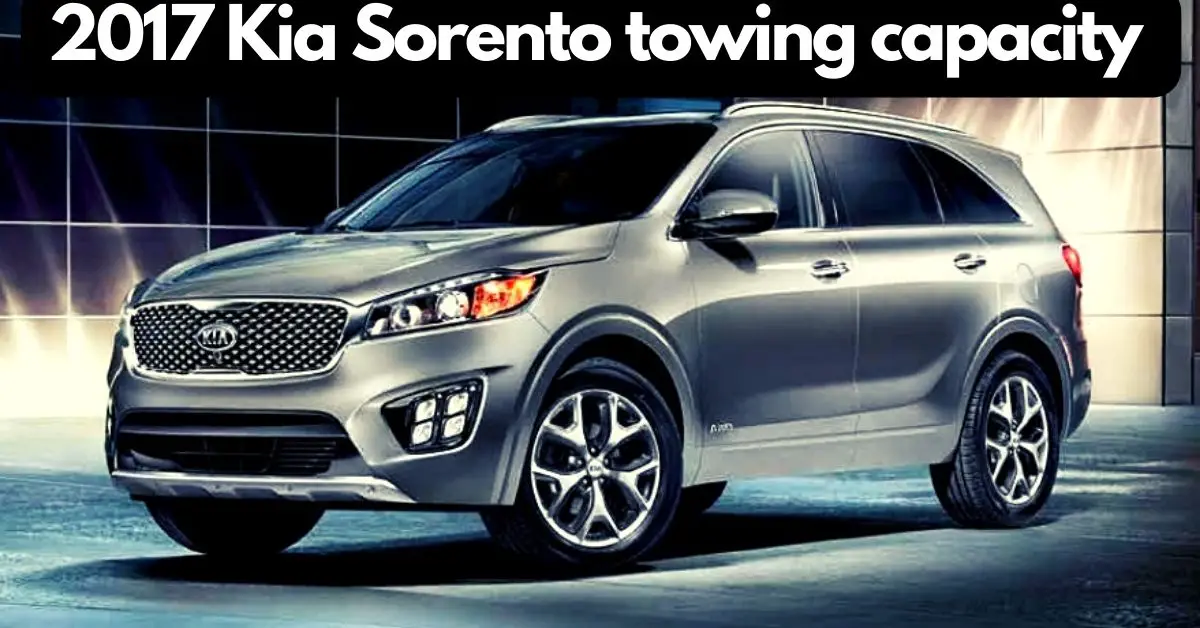
The third generation (2016-2020) and its successors have elevated the Sorento’s towing game to new heights. With a redesigned chassis and more advanced powertrains, these models boast towing capacities that rival some full-size SUVs. The base 2.4L four-cylinder engine, while efficient, still tops out at 2,000 pounds, but the real stars are the V6 options. The 3.3L Lambda II V6, introduced in 2016, delivers 290 horsepower and a towing capacity of 3,500 pounds when properly equipped. For those craving even more muscle, the 3.5L V6 (shared with the Telluride) cranks out 290 horsepower and can tow up to 3,500 pounds with the right setup.
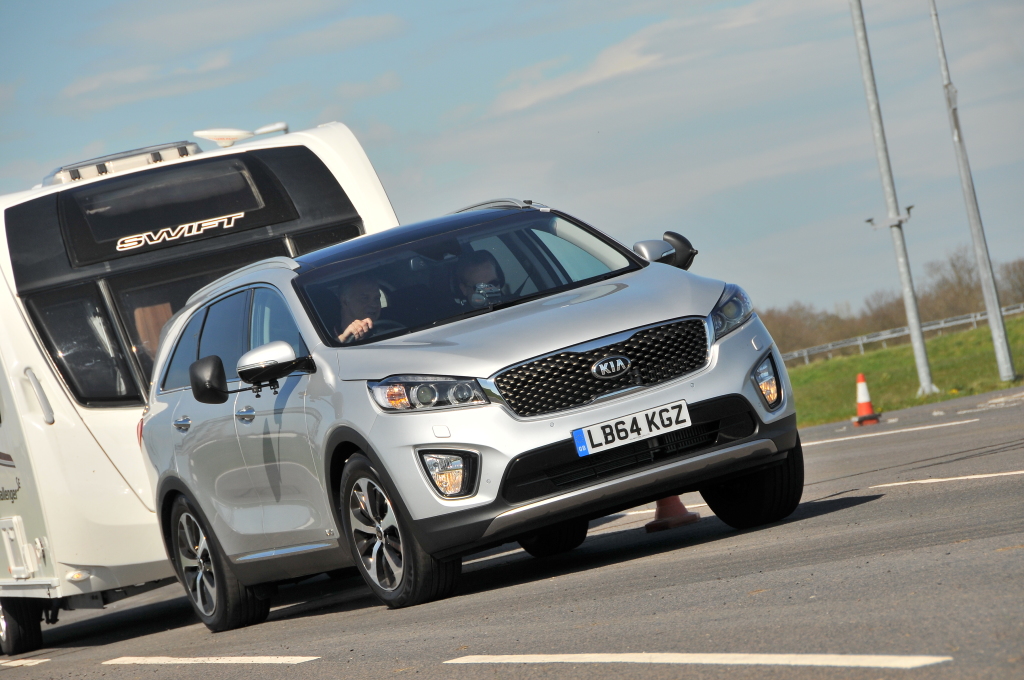
What sets these modern Sorentos apart is their integration of advanced towing technologies. Available features like trailer stability assist, integrated trailer brake controllers, and rearview cameras with dynamic guidelines make hitching up and maneuvering a breeze. The eight-speed automatic transmission (introduced in later models) ensures smooth power delivery, even when hauling heavy loads up steep inclines. Additionally, the Sorento’s independent rear suspension and reinforced frame contribute to better weight distribution and stability, reducing the risk of sway or loss of control. These enhancements make the Sorento not just capable, but confident—whether you’re towing a jet ski, a small RV, or a utility trailer laden with landscaping equipment.
Real-World Towing: What Can You Actually Pull?
Understanding the Sorento’s towing capacity is one thing; knowing what that translates to in real-world scenarios is another. At the lower end of the spectrum, a 2,000-pound limit means you can tow small pop-up campers, lightweight fishing boats, or utility trailers without breaking a sweat. Think of models like the Coleman Lantern LT or a modest aluminum fishing boat—these are well within the Sorento’s comfort zone. For those eyeing mid-size trailers, the 3,500-pound threshold opens up a world of possibilities. A 20-foot travel trailer, such as the Jayco Jay Flight, or a pontoon boat like the Lowe SS 180, becomes a feasible option. Even small horse trailers or enclosed cargo trailers fall within this range, provided they’re not overloaded.
However, it’s crucial to remember that towing capacity isn’t just about the trailer’s weight—it’s about the total loaded weight, including passengers, cargo, and fuel. The Sorento’s payload capacity (typically around 1,200 to 1,500 pounds) must also be considered. Overloading the vehicle can strain the engine, transmission, and braking systems, leading to premature wear or even failure. Always consult the owner’s manual or the vehicle’s door jamb sticker for the exact towing and payload ratings specific to your model year. And don’t forget to factor in the weight of any aftermarket accessories, roof racks, or additional passengers, as these can eat into your available capacity.
Towing Packages and Upgrades: Maximizing Your Sorento’s Potential
To unlock the full towing potential of your Kia Sorento, investing in the right package and upgrades is non-negotiable. Most modern Sorentos offer an optional towing package, which typically includes a heavy-duty radiator, an auxiliary transmission cooler, a trailer hitch receiver, and a wiring harness for trailer lights and brakes. These components work in tandem to dissipate heat, maintain transmission temperatures, and ensure your trailer’s lights and brakes function seamlessly. Without these upgrades, you risk overheating the engine or transmission, especially when towing in hot climates or over long distances.
Beyond the factory offerings, aftermarket enhancements can further bolster your Sorento’s towing chops. Upgraded suspension components, such as heavy-duty shocks or airbags, can improve ride quality and load-bearing capacity. A weight distribution hitch is a game-changer for larger trailers, as it redistributes the load more evenly across all four wheels, reducing sag and improving stability. For those frequently towing heavy loads, a transmission cooler is a wise investment, as it helps maintain optimal fluid temperatures and extends the life of your transmission. Additionally, upgrading to a higher-capacity brake system or adding trailer brakes can significantly enhance stopping power, which is critical when hauling substantial weight.
Fuel Efficiency vs. Towing: Striking the Right Balance
One of the most common misconceptions about towing is that it’s an all-or-nothing endeavor—either you’re towing, or you’re not. In reality, many Sorento owners use their vehicles for a mix of daily commuting and occasional towing. This dual-purpose nature raises an important question: How does towing impact fuel efficiency, and is it worth the trade-off? The short answer is that towing will always reduce your fuel economy, but the extent depends on several factors. A lightly loaded Sorento with a four-cylinder engine might return 22-25 mpg on the highway, while the same vehicle towing 3,500 pounds could see that drop to 14-16 mpg. The V6 models fare slightly better, with highway efficiency hovering around 18-20 mpg when towing.
To mitigate the fuel penalty, consider the following strategies. First, drive at moderate speeds—wind resistance increases exponentially at higher velocities, so keeping your speed in check can improve efficiency. Second, use cruise control on flat terrain to maintain a consistent speed and reduce unnecessary acceleration. Third, ensure your tires are properly inflated and aligned, as underinflated or misaligned tires can increase rolling resistance and reduce fuel economy. Finally, consider using a fuel-efficient engine for daily driving and reserving the V6 for towing. The Sorento’s turbocharged four-cylinder, for example, offers a good balance of power and efficiency for light-duty tasks, while the V6 steps in when the going gets tough.
Safety First: Towing Tips for the Kia Sorento
Towing isn’t just about power—it’s about control, visibility, and preparation. The Kia Sorento is equipped with a suite of safety features designed to make towing safer and more manageable, but they’re only effective if used correctly. Start by ensuring your trailer is properly loaded, with 60% of the weight in the front half to maintain stability. Distribute the load evenly from side to side to prevent sway, and secure everything tightly to avoid shifting during transit. Before hitting the road, perform a thorough pre-trip inspection of your Sorento and trailer. Check tire pressures, brake lights, turn signals, and coupling mechanisms. Ensure your hitch is rated for your trailer’s weight and that the safety chains are crossed and secured.
On the road, practice defensive driving. Leave extra space between your Sorento and other vehicles, as stopping distances increase significantly when towing. Use your mirrors to monitor the trailer, and be mindful of crosswinds or passing trucks, which can cause sway. If you feel the trailer pulling your Sorento off course, resist the urge to overcorrect—instead, ease off the accelerator and steer gently in the direction you want to go. Modern Sorentos come with features like trailer stability assist, which automatically applies the brakes to individual wheels to counteract sway, but these systems are not a substitute for attentive driving. Finally, plan your route carefully, avoiding steep grades, sharp turns, and low-clearance obstacles that could pose challenges.

Comparing the Sorento to Its Rivals: How Does It Stack Up?
In the crowded mid-size SUV segment, the Kia Sorento faces stiff competition from rivals like the Toyota Highlander, Honda Pilot, and Ford Explorer. When it comes to towing, the Sorento holds its own, but its capabilities vary depending on the engine and configuration. The Toyota Highlander, for instance, maxes out at 3,500 pounds with its V6 engine, matching the Sorento’s top-tier towing capacity. However, the Highlander’s hybrid option, while more fuel-efficient, is limited to just 1,000 pounds of towing—far less than the Sorento’s base four-cylinder. The Honda Pilot, on the other hand, can tow up to 5,000 pounds with its 3.5L V6, giving it a clear advantage for those needing more muscle. The Ford Explorer, with its available 3.0L EcoBoost V6, also out-tows the Sorento, boasting a 5,600-pound capacity.
Where the Sorento shines is in its value proposition. Even with its top-tier towing capacity of 3,500 pounds, it often comes at a lower price point than its rivals, making it an attractive option for budget-conscious buyers. Additionally, Kia’s generous warranty coverage—including a 10-year/100,000-mile powertrain warranty—provides peace of mind that competitors can’t match. The Sorento also benefits from Kia’s focus on interior comfort and tech features, making it a well-rounded package for families who prioritize both capability and luxury. While it may not be the most powerful or the most fuel-efficient in its class, the Sorento offers a compelling blend of towing capacity, value, and versatility that few rivals can match.
The Kia Sorento’s towing capacity is a testament to its evolution from a modest family hauler to a capable adventure companion. Whether you’re hauling a small camper, a boat, or a utility trailer, the Sorento delivers the power, stability, and features needed to get the job done safely and efficiently. From its humble beginnings to its modern-day prowess, this SUV has proven that it’s more than just a people-mover—it’s a true workhorse. So, the next time you hit the road with a trailer in tow, take a moment to appreciate the engineering and innovation that make the Sorento a standout in its class. After all, the best adventures are the ones you can share with family and friends, and the Sorento is ready to make every journey unforgettable.