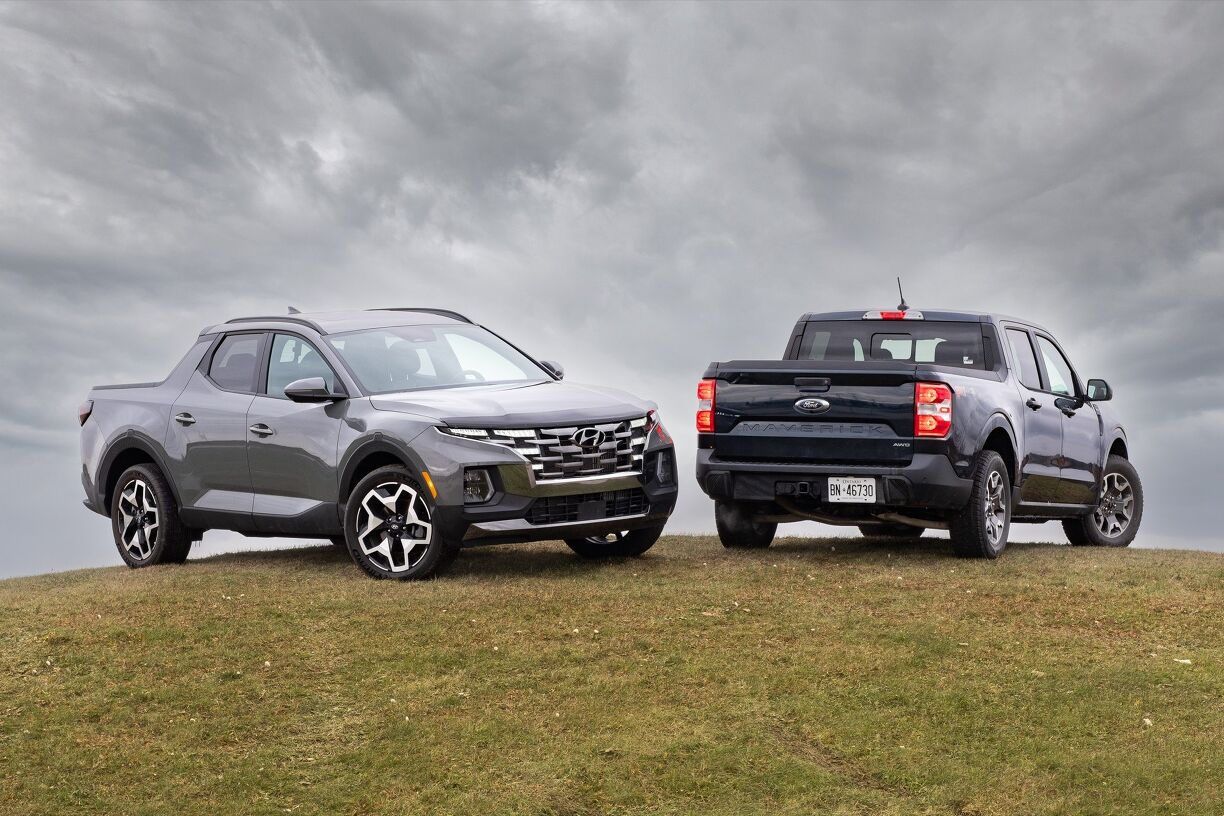
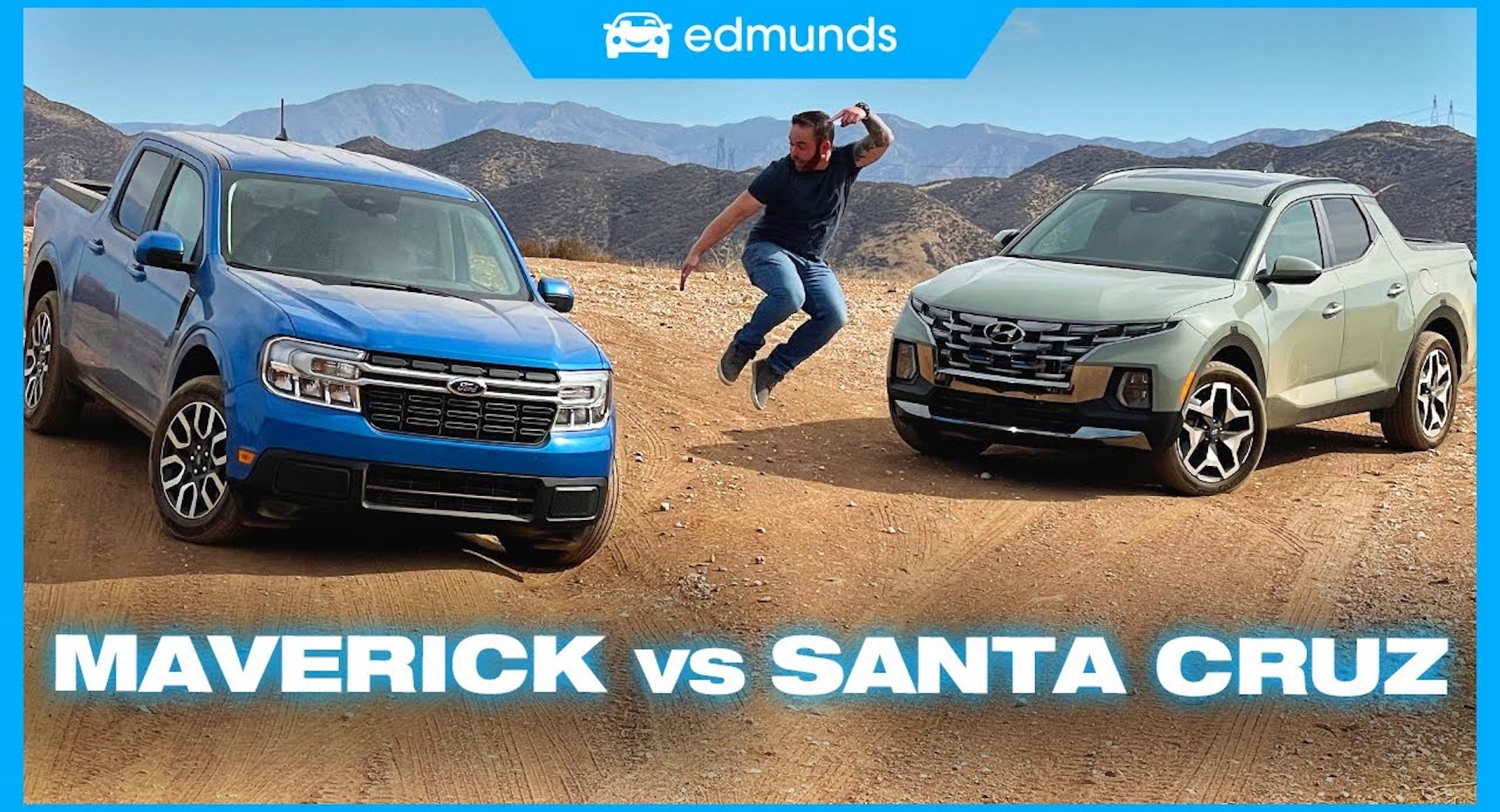
The battle for small truck supremacy is heating up as 2026 approaches, with the Hyundai Santa Cruz and Ford Maverick locked in a fierce duel that promises to redefine what drivers expect from a compact hauler. These aren’t your grandfather’s pickup trucks—these are nimble, fuel-efficient machines designed for urban adventurers and weekend warriors alike. But which one deserves a spot in your driveway? Let’s dive into the gritty details, from powertrain prowess to interior innovation, to uncover which small truck wears the crown.
The Powertrain Puzzle: Efficiency Meets Performance
At the heart of this rivalry lies a fundamental question: do you crave the thrill of a turbocharged engine or the frugality of a hybrid powertrain? The 2026 Ford Maverick leans into the latter with its standard hybrid setup, pairing a 2.5-liter four-cylinder engine with an electric motor to deliver an EPA-estimated 42 mpg in the city. That’s pickup truck efficiency that would make a Prius blush. But don’t mistake frugality for weakness—the Maverick’s hybrid system still churns out 191 horsepower, enough to tow up to 2,000 pounds when properly equipped.
The Hyundai Santa Cruz, meanwhile, takes a more conventional route with its turbocharged 2.5-liter inline-four, producing 281 horsepower and 311 lb-ft of torque. That’s a torque advantage of nearly 100 lb-ft over the Maverick, translating to brisk acceleration and confident passing power. Hyundai pairs this engine with an eight-speed dual-clutch transmission, a pairing that feels more European than typical American truck fare. While the Santa Cruz’s EPA ratings aren’t quite as stellar as the Maverick’s—expect around 24 mpg combined—the extra oomph makes every drive feel alive.
For those who prioritize raw capability, the Maverick’s hybrid system shines in stop-and-go traffic, where regenerative braking recaptures energy that would otherwise be lost. The Santa Cruz, with its traditional combustion engine, demands a more deliberate driving style to maximize efficiency. The choice here comes down to whether you value fuel savings or driving engagement.
Towing and Hauling: When the Rubber Meets the Road
Small trucks aren’t just about looking good in a parking lot—they need to earn their keep when the job calls for it. Here, the 2026 Maverick flexes its muscles with a maximum towing capacity of 4,000 pounds when equipped with the optional 2.0-liter EcoBoost engine. That’s enough to haul a modest camper or a pair of jet skis without breaking a sweat. The hybrid version, while less potent in the towing department, still manages 2,000 pounds, which is plenty for most daily duties.
The Santa Cruz counters with a maximum towing capacity of 3,500 pounds, a figure that’s competitive but slightly less impressive. Where Hyundai gains ground, however, is in payload capacity. The Santa Cruz can handle up to 1,560 pounds in its bed, compared to the Maverick’s 1,500-pound limit. That extra 60 pounds might not sound like much, but it could be the difference between loading up for a weekend getaway or leaving your gear behind.
Bed space is another critical factor. The Maverick stretches its bed to 4.5 feet in length, while the Santa Cruz offers a slightly longer 4.7 feet. Both trucks feature clever storage solutions beneath the bed floor, but the Santa Cruz’s available “Dual Action” tailgate—a feature that swings open or drops down—adds a layer of versatility that the Maverick can’t match. Need to load a refrigerator or a set of mountain bikes? The Santa Cruz makes it easier.
Interior Innovation: Where Tech Meets Comfort
Step inside either of these trucks, and you’ll find a blend of ruggedness and refinement that belies their compact dimensions. The 2026 Maverick’s interior is a study in Ford’s modern design language, with a 12-inch digital instrument cluster and an available 12-inch touchscreen infotainment system running Ford’s SYNC 4 software. Soft-touch materials and available leather-trimmed seats elevate the Maverick’s cabin from workhorse to luxury-lite, while ambient lighting adds a touch of sophistication.
The Santa Cruz, meanwhile, channels Hyundai’s penchant for futuristic design. The available 10.25-inch digital gauge cluster and 10.25-inch touchscreen infotainment system are housed in a sleek, curved display that looks like it belongs in a spaceship. Hyundai’s Bluelink connected services integrate seamlessly with smartphones, and the available dual-zone automatic climate control ensures every passenger stays comfortable. The Santa Cruz also offers more standard features than the Maverick, including a wireless charging pad and a 12-volt power outlet in the bed.
Noise, vibration, and harshness (NVH) levels are impressively low in both trucks, a testament to their car-like underpinnings. The Santa Cruz edges out the Maverick slightly in this department, with thicker sound insulation and a more refined suspension setup that soaks up road imperfections with ease. If you spend long hours behind the wheel, the Santa Cruz’s quieter cabin will feel like a sanctuary compared to the Maverick’s slightly more utilitarian vibe.
Driving Dynamics: Agility vs. Stability
Small trucks aren’t known for their cornering prowess, but the 2026 Santa Cruz and Maverick prove that you don’t have to sacrifice handling for utility. The Santa Cruz’s independent rear suspension—a rarity in the truck segment—gives it a ride quality that’s smoother and more composed than the Maverick’s. The Maverick, with its more traditional solid rear axle, leans into turns with a bit more body roll, but its steering feel is more direct and communicative.
On the highway, the Maverick’s hybrid powertrain feels more relaxed, with the electric motor providing instant torque for effortless acceleration. The Santa Cruz, with its turbocharged engine, requires a bit more throttle to get moving, but its eight-speed dual-clutch transmission shifts with the precision of a Swiss watch. Both trucks offer available all-wheel drive, but the Maverick’s system is more robust, with a locking rear differential that can help extract you from slippery situations.
Off-road enthusiasts will find plenty to love in both trucks. The Maverick’s higher ground clearance and available all-terrain tires make it a capable trail companion, while the Santa Cruz’s independent rear suspension allows it to tackle rough terrain with less body movement. Neither truck is a rock-crawling beast, but they’re both more than capable of handling fire roads or light off-pavement adventures.
Value Proposition: Bang for Your Buck
Pricing will be a deciding factor for many buyers, and here the 2026 Maverick holds a slight edge. Ford’s starting MSRP is expected to hover around $25,000, making it one of the most affordable new trucks on the market. The Santa Cruz, with its more premium features and turbocharged engine, is likely to start closer to $30,000. That’s a significant gap, but Hyundai’s generous warranty coverage—including a 10-year/100,000-mile powertrain warranty—helps level the playing field.
Both trucks offer a range of trims and options, from basic work-ready models to fully loaded adventurers. The Maverick’s hybrid powertrain is a standout value, offering exceptional fuel economy without breaking the bank. The Santa Cruz’s turbocharged engine and more refined interior justify its higher price tag, but shoppers on a budget may find the Maverick’s savings hard to ignore.
Resale value is another consideration. Ford’s trucks have long held their value better than most competitors, and the Maverick is expected to follow suit. Hyundai’s reputation for reliability and strong resale performance in recent years suggests the Santa Cruz will also hold its worth, but the Maverick’s first-mover advantage in the hybrid truck segment could give it an edge.
The Verdict: Which Small Truck Wins?
The choice between the 2026 Hyundai Santa Cruz and Ford Maverick ultimately comes down to what you value most in a small truck. If fuel efficiency, affordability, and a hybrid powertrain top your list, the Maverick is the clear winner. Its impressive MPG figures, towing capability, and budget-friendly pricing make it a compelling choice for urban commuters and budget-conscious buyers.
On the other hand, if you crave more power, a quieter cabin, and a more premium interior, the Santa Cruz is the truck for you. Its turbocharged engine delivers exhilarating acceleration, while its independent rear suspension and refined ride quality make it feel more like a luxury crossover than a pickup. The Santa Cruz’s higher starting price is justified by its upscale features and driving dynamics, but it may not be the best fit for those prioritizing fuel savings.
Both trucks prove that small trucks don’t have to be compromises. They offer the utility and capability of a full-size pickup in a package that’s easier to park, more fuel-efficient, and more fun to drive. Whether you choose the Maverick’s hybrid efficiency or the Santa Cruz’s turbocharged punch, you’re getting a vehicle that’s ready for adventure—no matter how big or small.
As the small truck segment continues to evolve, one thing is clear: the 2026 Maverick and Santa Cruz are raising the bar for what a compact hauler can be. The battle for supremacy is far from over, but for drivers, the real victory is having two such impressive options to choose from.