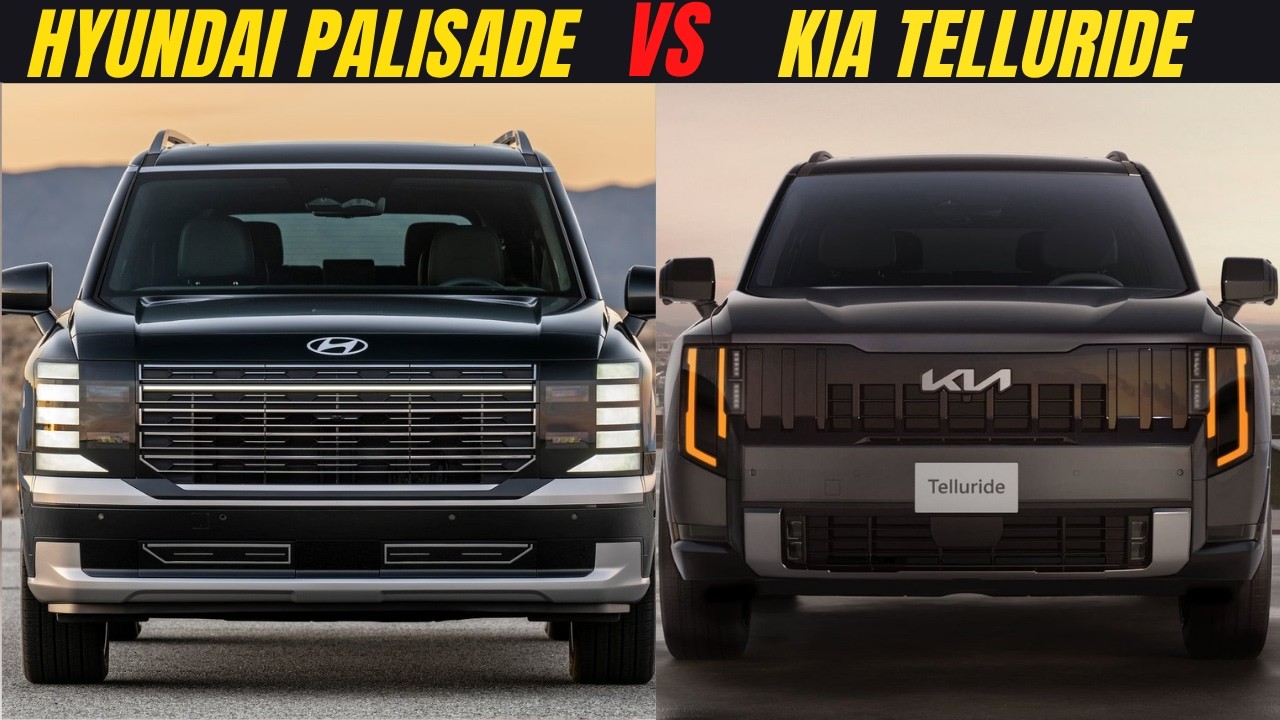
The automotive world is on the cusp of a tectonic shift in the midsize three-row SUV segment. As 2026 looms on the horizon, two titans prepare to collide—Hyundai’s Palisade and Kia’s Telluride. These aren’t mere updates; they’re reinventions. They promise to redefine what families expect from a flagship crossover, blending bold design with cutting-edge technology and uncompromising practicality. This isn’t just a comparison—it’s a narrative of evolution, where tradition meets innovation, and comfort clashes with capability. Buckle up, because the battle for SUV supremacy is about to get electrifying.
The Grand Entrance: Exterior Design That Demands Attention
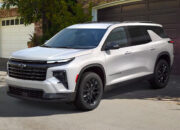
Gone are the days when three-row SUVs played it safe with boxy silhouettes and cautious styling. The 2026 Hyundai Palisade strides in with a sculpted, almost athletic stance, its cascading grille flanked by razor-sharp LED lighting that feels like a futuristic reinterpretation of the family hauler. The body lines are dynamic, flowing from the hood’s aggressive dip to the taut rear haunches, giving it the presence of a vehicle that refuses to be ignored.
Across the aisle, the 2026 Kia Telluride makes its statement with a bolder, more sculptural approach. The “Tiger Face” grille—now more pronounced and angular—commands attention, while the LED lighting signature adopts a more geometric precision. The side profile tells a story of motion, with character lines that carve through the sheet metal like the wake of a ship cutting through water. Both SUVs reject anonymity, but they do so in distinctly different languages—Hyundai with fluid elegance, Kia with raw intensity.

Yet, subtlety isn’t entirely absent. The Palisade’s XRT Pro trim, in particular, softens the aggression with matte black accents and aero enhancements, whispering of performance pedigree beneath its family-friendly facade. Meanwhile, the Telluride’s SX Prestige trim dials up the luxury with premium finishes and a panoramic sunroof that turns the cabin into a glass cathedral. These are vehicles that understand the power of first impressions—and they’re not afraid to wield it.
Cabin Couture: Where Luxury Meets Utility
Step inside, and the battle shifts from the road to the senses. The 2026 Palisade’s interior is a masterclass in ergonomic harmony, where every surface feels intentional. The dual 12.3-inch curved displays—one for the driver, one for the front passenger—float seamlessly above the dashboard, their minimalist bezels creating an uninterrupted visual flow. The materials are a tactile feast: soft-touch surfaces, genuine wood trim, and metallic accents that elevate the space without overwhelming it.
But it’s the Telluride that truly steals the show in the luxury department. The cabin is a symphony of space and sophistication, with a 12.3-inch digital gauge cluster and a dual-screen infotainment system that rivals luxury sedans. The seats—available in Nappa leather with quilted patterns—are not just comfortable; they’re cocooning, designed to cradle occupants in a cocoon of quiet refinement. Even the smallest details, like the ambient lighting that bathes the cabin in a soft glow, speak to a level of craftsmanship that feels almost indulgent.

Yet, practicality remains king. Both SUVs offer three rows of seating, but the Telluride’s second-row legroom is particularly generous, with captain’s chairs that slide and recline independently. The Palisade counters with a more traditional bench, but its third row is easier to access, thanks to a cleverly designed sliding second row. Neither SUV compromises on cargo space, either—both offer over 20 cubic feet behind the third row, with the Telluride’s fold-flat seats creating a near-flat load floor. It’s a reminder that even in the pursuit of luxury, these vehicles never forget their primary duty: hauling people and things.
Powertrain Paradox: Performance Meets Efficiency
The heart of any SUV is its powertrain, and here, the 2026 Palisade and Telluride take divergent paths. Hyundai opts for a turbocharged 2.5-liter inline-four paired with an eight-speed dual-clutch transmission, delivering a spirited 290 horsepower and 311 lb-ft of torque. It’s a setup that prioritizes responsiveness and fuel efficiency, with estimates hovering around 24 mpg combined. The Palisade’s handling is nimble for its size, thanks to a well-tuned suspension that absorbs bumps without sacrificing composure.
Kia, meanwhile, doubles down on its hybrid strategy with a turbocharged 1.6-liter four-cylinder paired with an electric motor and a six-speed dual-clutch transmission. The result? A combined 227 horsepower and an EPA-estimated 38 mpg in the city—numbers that would make a compact sedan blush. The Telluride Hybrid isn’t just efficient; it’s eerily quiet, with the electric motor seamlessly taking over at low speeds. For those craving more oomph, a turbocharged 3.5-liter V6 option is available, churning out 311 horsepower and 333 lb-ft of torque, paired with an eight-speed automatic transmission.
But here’s where the narrative twists: the Palisade’s conventional setup feels more planted and predictable, while the Telluride Hybrid offers a futuristic driving experience that’s both thrilling and efficient. It’s a choice between tradition and innovation, between the roar of a gasoline engine and the whisper of electrification.
Tech Odyssey: The Digital Cockpit Revolution
The 2026 Palisade’s tech suite is a study in user-centric design. The dual 12.3-inch displays are not just screens; they’re gateways to a world of connectivity. Hyundai’s Bluelink system offers over-the-air updates, remote start, and a suite of safety features that can be controlled via voice commands or the touch of a button. The augmented reality navigation system projects directional arrows onto live camera feeds, making lane changes and turns feel like a video game come to life.
The Telluride counters with Kia Connect+, a platform that’s equally impressive but with a stronger emphasis on personalization. The dual-screen infotainment system allows for split-screen functionality, letting drivers and passengers multitask without missing a beat. The digital key system enables smartphone-based entry and ignition, while the available head-up display projects critical information onto the windshield, reducing the need to glance away from the road. Both SUVs offer wireless Apple CarPlay and Android Auto, but the Telluride’s system feels more intuitive, with fewer lag spikes and smoother transitions.
Yet, the real game-changer is the Palisade’s advanced driver-assistance systems (ADAS). Features like Highway Driving Assist 2, which combines adaptive cruise control with lane-centering, and Remote Smart Parking Assist, which lets the SUV park itself without a driver inside, push the boundaries of what’s possible in a three-row SUV. The Telluride isn’t far behind, with its Highway Driving Assist and Surround-View Monitor offering a 360-degree bird’s-eye view of the vehicle, but the Palisade’s suite feels more cohesive and forward-thinking.
Safety: The Unseen Battleground
In the realm of safety, both SUVs are equipped with a suite of advanced features, but the Palisade’s NHTSA and IIHS ratings give it a slight edge. Standard across both trims are forward collision warning, automatic emergency braking, blind-spot monitoring, and rear cross-traffic alert. However, the Palisade’s Highway Driving Assist 2 and Blind-Spot View Monitor, which uses cameras to display the blind spot on the instrument cluster when a turn signal is activated, set it apart.
The Telluride counters with its own safety innovations, including Kia’s first-ever Highway Driving Assist 2 system, which offers improved lane-keeping and adaptive cruise control. The SUV also features a robust suite of child safety features, such as rear door child locks and a child seat reminder system. Both vehicles earn top marks in crash tests, but the Palisade’s slightly higher safety ratings and more comprehensive suite of standard features give it a narrow victory.
Yet, safety isn’t just about crash avoidance—it’s about peace of mind. The Telluride’s available Safe Exit Warning system, which alerts passengers to oncoming traffic when exiting the vehicle, and the Palisade’s available Surround-View Monitor, which provides a 360-degree view of the vehicle’s surroundings, both offer a level of reassurance that’s invaluable for families. In the end, the choice may come down to which features resonate most with your driving habits and priorities.
The Verdict: Which SUV Wins the Family Crown?
Choosing between the 2026 Hyundai Palisade and the Kia Telluride isn’t just about picking a vehicle—it’s about aligning with a philosophy. The Palisade is for those who crave a blend of futuristic design, cutting-edge technology, and a driving experience that feels both exhilarating and refined. It’s a vehicle that doesn’t just transport you; it elevates your journey.
The Telluride, on the other hand, is for the driver who values luxury, efficiency, and a level of personalization that feels tailor-made. It’s a vehicle that understands the importance of comfort, both for the driver and the passengers, and it delivers that comfort in spades. The hybrid option alone makes it a compelling choice for eco-conscious families who refuse to compromise on performance.
Ultimately, the winner depends on what you prioritize. If you’re drawn to a more conventional powertrain, a sleeker design, and a tech suite that feels like it’s from the future, the Palisade is your chariot. If you prefer a hybrid option, a more luxurious cabin, and a driving experience that’s both efficient and engaging, the Telluride will steal your heart.
One thing is certain: the 2026 three-row SUV segment has never been more exciting. These aren’t just vehicles; they’re statements. And in a world where family haulers often blend into the background, that’s a revolution worth celebrating.