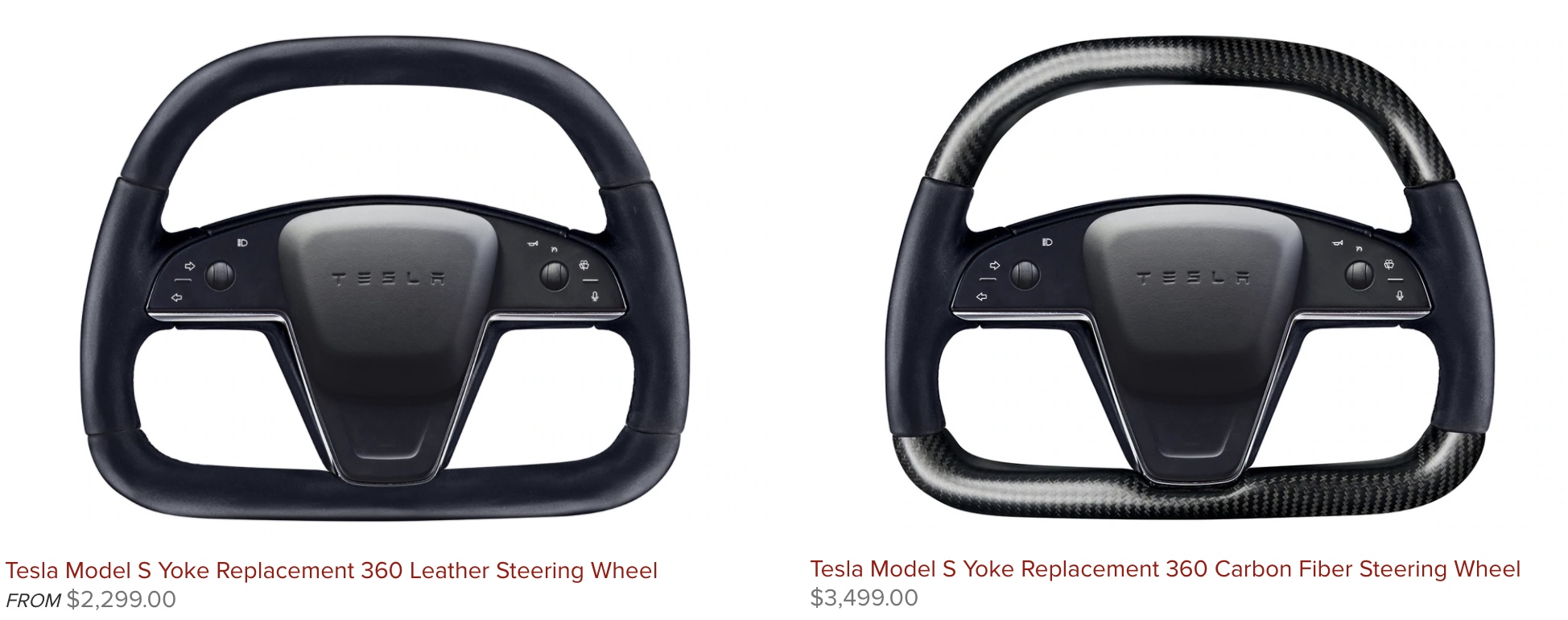
The Tesla Model S has long been a canvas for automotive innovation, where form and function engage in a silent dialogue. Among its most polarizing yet intriguing features is the yoke steering wheel—a radical departure from the familiar round wheel that has dominated for over a century. This isn’t merely a redesign; it’s a reimagining of the driver’s relationship with the machine. As the steering wheel evolves from a circular emblem of control into a geometric statement of precision, the Tesla Model S interior becomes a stage for a new kind of automotive poetry. The yoke, with its sharp angles and minimalist silhouette, doesn’t just hold the wheel—it holds a promise: a future where driving feels less like a chore and more like a choreographed dance between human and machine.
The Yoke: A Steering Wheel Reborn
Imagine gripping the reins of a thoroughbred, not a plow horse. The yoke steering wheel is Tesla’s bold assertion that tradition need not dictate innovation. Unlike its round predecessor, the yoke is a vertical, open-topped rectangle, its edges crisp and unapologetic. It strips away the unnecessary bulk of a full circle, replacing it with a design that feels surgical in its efficiency. The absence of the lower half isn’t a flaw—it’s a feature. It eliminates the visual clutter that once obscured the dashboard, creating an unobstructed view of the digital cockpit. The yoke doesn’t just steer; it breathes, expanding and contracting with the driver’s intent, as if the wheel itself is alive.
This isn’t a wheel for the hesitant. It demands confidence. The yoke’s geometry forces a different kind of engagement—one where the driver’s hands are positioned higher, closer to the center of the vehicle’s axis. It’s a posture that feels almost regal, as though the driver is not just operating the car but commanding it. The tactile feedback is immediate, the resistance precise. There’s no ambiguity in the yoke’s touch; it’s a language of angles and edges, where every degree of turn is met with a corresponding shift in the driver’s grip.
Round Wheels: The Comfort of the Familiar
Yet, for all its avant-garde allure, the yoke is not without its detractors. The round steering wheel is a relic of a time when driving was as much about ritual as it was about destination. It’s a shape etched into the collective consciousness, a symbol of continuity and control. To slide your hands over its smooth circumference is to touch history—a tactile echo of every road ever traveled. The round wheel doesn’t just guide; it cradles. Its curves invite a relaxed grip, a casual ease that feels almost meditative. In an era of relentless innovation, there’s a quiet rebellion in the simplicity of a circle.
There’s also the matter of muscle memory. For generations, drivers have internalized the muscle movements required to navigate a round wheel. The yoke disrupts that instinct, forcing a recalibration of reflexes. It’s a disorienting experience at first, like learning to write with your non-dominant hand. But comfort, too, has its place. The round wheel doesn’t ask for adaptation; it offers sanctuary. It’s the difference between a virtuoso performance and a lullaby—one demands precision, the other, peace.
The Interior as a Canvas of Contrasts
The Tesla Model S interior is a study in contrasts, where the yoke and the round wheel become metaphors for broader themes of modernity and tradition. The yoke, with its angular precision, aligns seamlessly with the car’s minimalist aesthetic. The dashboard, a vast expanse of glass and touch-sensitive controls, feels like the bridge of a starship. The yoke is its natural extension—a tool for a driver who sees the road as a frontier to be conquered. The materials, too, reflect this ethos: sleek, unadorned, and uncompromising. There’s no woodgrain, no stitching—just the raw elegance of brushed aluminum and synthetic leather, cool to the touch and unyielding in its purpose.
Contrast that with the warmth of a round wheel in a more conventionally appointed interior. The leather-wrapped circumference, the subtle stitching, the way the grain of the wood paneling catches the light—it’s a sensory embrace. The interior becomes a cocoon, a space where technology serves comfort rather than dominance. The round wheel doesn’t just steer; it soothes. It’s the difference between a minimalist loft and a plush library, between a tool and a sanctuary. The Tesla Model S, in its most traditional guise, can still whisper rather than shout.
Driving Dynamics: The Yoke’s Advantage
The yoke isn’t just a stylistic choice; it’s a functional revolution. Its open-top design eliminates the visual and physical obstruction of the lower half of a round wheel, granting the driver an unobstructed view of the instrument cluster and the road ahead. This isn’t mere aesthetics—it’s ergonomics. The yoke’s compact footprint allows for a more centralized seating position, where the driver feels more connected to the vehicle’s center of gravity. The result is a sense of intimacy, as though the car and driver are fused into a single, fluid entity.
Moreover, the yoke’s geometry lends itself to sharper, more responsive steering. The lack of a full circle reduces rotational inertia, allowing for quicker turns with less effort. It’s a wheel built for agility, for the kind of precision that makes a Tesla feel like an extension of the driver’s will. In autonomous driving mode, the yoke’s design even facilitates easier ingress and egress, a subtle nod to the future where the driver might not always be in control. It’s a wheel that doesn’t just adapt to the road—it anticipates it.
The Round Wheel’s Enduring Appeal
Yet, the round wheel persists for reasons that transcend nostalgia. It’s a shape that distributes force evenly, reducing fatigue on long drives. The familiar grip reduces cognitive load, allowing the driver to focus on the journey rather than the mechanics of steering. There’s a democratic quality to the round wheel—it doesn’t demand mastery; it offers accessibility. In a world where technology often feels alienating, the round wheel is a familiar face, a reminder that progress doesn’t always require a complete erasure of the past.
There’s also the matter of versatility. A round wheel can accommodate a wider range of hand sizes and grip styles. It’s a one-size-fits-all solution, whereas the yoke, with its fixed geometry, can feel restrictive to some. The round wheel is the automotive equivalent of a well-worn pair of jeans—comfortable, reliable, and unpretentious. It doesn’t seek to impress; it simply works.
The Future of Steering: A Dialogue Between Old and New
The Tesla Model S, with its yoke and round wheel options, embodies a pivotal moment in automotive design. It’s a car caught between two eras, where the past and future engage in a silent debate. The yoke represents the audacity of innovation, a willingness to discard the old in favor of the radical. The round wheel, meanwhile, stands as a testament to the enduring power of tradition, a reminder that comfort and familiarity are not to be dismissed lightly.
Perhaps the most intriguing aspect of this dichotomy is that it doesn’t have to be a choice. Tesla’s willingness to offer both options suggests a future where personalization reigns supreme. Drivers can select the wheel that aligns with their temperament—whether they crave the precision of the yoke or the comfort of the round. It’s a future where the interior of a car is not just a space to travel in, but a space to express identity.
The Tesla Model S, in all its contradictions, is a mirror held up to the modern driver. It asks: Do you want to command the road, or do you want the road to embrace you? The answer, it seems, is both.
The Tesla Model S doesn’t just drive forward—it pulls us into a future where the act of steering is as much about artistry as it is about utility. Whether through the yoke’s sharp angles or the round wheel’s gentle curves, the interior becomes a stage for a new kind of automotive storytelling. One where every turn of the wheel is a brushstroke on the canvas of motion, and every drive is a journey into the heart of what it means to be at the helm.