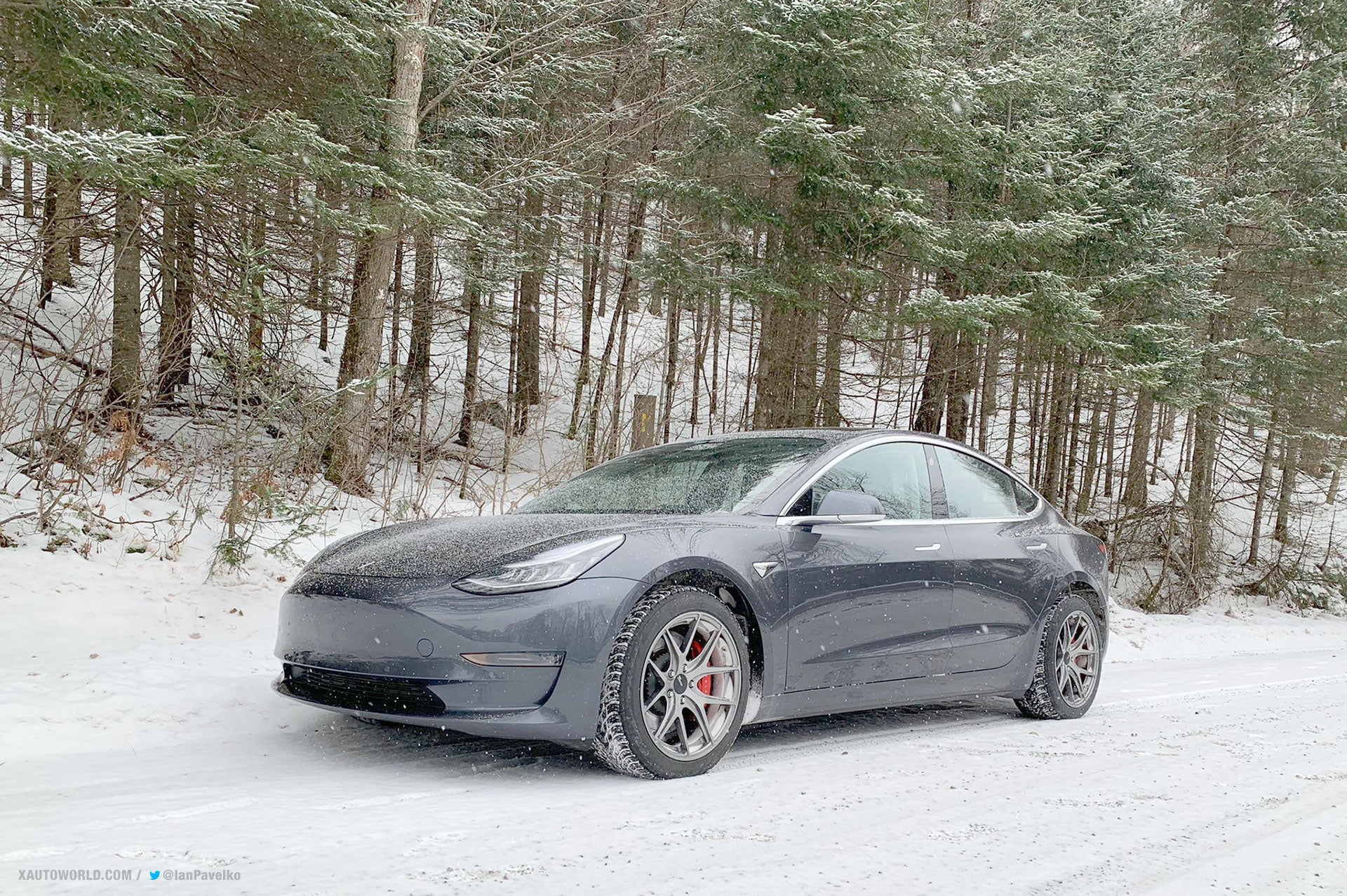
Winter roads are unforgiving. They demand more than just caution—they demand a vehicle engineered to defy their harshest conditions. For Tesla enthusiasts in snow-prone states, the question isn’t just about choosing a car; it’s about selecting a machine that transforms winter driving from a gamble into a guarantee. The Tesla lineup, particularly the AWD variants, paired with the right winter tires, offers a paradigm shift in how we navigate the coldest months. This isn’t just about staying safe; it’s about redefining what’s possible when the world outside is a frozen expanse.
The Tesla AWD Advantage: Traction Without Compromise
All-wheel drive (AWD) in Tesla vehicles isn’t an afterthought—it’s a cornerstone of their winter performance. Unlike traditional AWD systems that rely on clutches or viscous couplings, Tesla’s dual-motor setup delivers instantaneous torque to all four wheels, ensuring that no single wheel spins helplessly in the snow. The Model Y and Model 3 Performance, in particular, leverage this architecture to maintain grip even when the asphalt is disguised as a sheet of ice. The absence of a transmission means there’s no lag in power delivery, a critical factor when every millisecond counts on a slippery slope.
But AWD alone isn’t enough. Tesla’s regenerative braking system, when paired with winter tires, becomes a tool for precision rather than a liability. The ability to modulate deceleration without locking wheels is a game-changer, allowing drivers to shed speed smoothly while retaining control. This synergy between hardware and software creates a driving experience that feels almost supernatural in its predictability.


Winter Tires: The Unsung Heroes of Tesla Performance
All-season tires are a compromise, and in winter conditions, they’re a dangerous one. The rubber compounds in true winter tires remain pliable in sub-freezing temperatures, unlike their all-season counterparts, which harden and lose grip. For Tesla owners, this isn’t just about avoiding skids—it’s about unlocking the full potential of the AWD system. Winter tires enhance the vehicle’s ability to translate torque into forward motion, reducing the strain on the drivetrain and extending the life of critical components.
Consider the studless winter tires like the Nokian Hakkapeliitta R5 SUV or the Michelin X-Ice Snow, which are engineered for Tesla’s weight distribution and torque delivery. These tires feature deep, aggressive tread patterns that channel slush and water away from the contact patch, while their specialized rubber compounds ensure maximum adhesion. The result? A Tesla that doesn’t just cope with winter—it dominates it.
Installation is straightforward, but the benefits are profound. Drivers report a noticeable reduction in range anxiety, as winter tires minimize energy-sapping wheel spin. The quieter ride, too, is a revelation—something rarely associated with winter driving. This is Tesla’s winter package: silent, efficient, and relentlessly capable.
Range Realities: How Winter Tires Impact Efficiency
Range is the Achilles’ heel of electric vehicles in cold weather, but winter tires can mitigate the losses. The energy saved by avoiding wheel spin and maintaining consistent traction translates directly into extended range. Tesla’s Battery Management System (BMS) also plays a role, optimizing power delivery based on tire grip levels. When paired with winter tires, the BMS can be more aggressive in regen, recapturing energy that would otherwise be lost to slippage.
Still, expect some reduction in range—typically 10-20% in extreme cold. The key is preparation. Pre-conditioning the battery while the car is still plugged in, using seat warmers instead of cabin heat, and planning routes with charging stops can all help bridge the gap. The trade-off? A Tesla that’s not just drivable in winter, but enjoyable.
Beyond the Basics: Advanced Winter Driving Features
Tesla’s suite of advanced driver-assistance systems (ADAS) becomes even more valuable in winter conditions. Features like Autopilot’s Traffic-Aware Cruise Control and Automatic Emergency Braking are calibrated to detect icy patches and sudden stops, providing an extra layer of safety. The Tesla Vision cameras, which rely on neural networks trained on diverse driving conditions, excel at identifying hazards that human eyes might miss in a blizzard.
For those who crave even more control, Tesla’s Track Mode—usually reserved for performance driving—can be repurposed for winter testing. By locking the drivetrain into a specific gear ratio, drivers can fine-tune throttle response and regen levels, turning the car into a precision instrument for navigating snow-covered roads. It’s an unconventional use, but one that underscores Tesla’s versatility.

The Human Factor: Adapting to Winter Driving
No amount of technology can replace good judgment. Winter driving demands a shift in mindset—one that prioritizes anticipation over reaction. Tesla’s low center of gravity, courtesy of the battery pack’s placement, reduces the risk of rollovers, but it doesn’t eliminate the need for smooth inputs. Gentle acceleration, early braking, and wide steering arcs are the hallmarks of a winter-savvy driver.
It’s also worth noting that Tesla’s regenerative braking can be adjusted in the settings menu. For winter conditions, reducing regen to “Low” or “Standard” can prevent wheel lockup during sudden stops, giving the driver more control. Pair this with winter tires, and the result is a car that feels planted, predictable, and—dare we say—fun to drive in the snow.
Making the Switch: A Step-by-Step Guide
Transitioning to winter tires is simpler than many assume. Start by purchasing a set of tires rated for Tesla’s wheel sizes (typically 19″ or 20″ for the Model Y and Model 3). Many Tesla service centers offer winter tire packages, including mounting, balancing, and storage for your all-season tires. If you prefer the DIY route, ensure the tires are speed-rated for your vehicle’s top speed and that the load index meets or exceeds Tesla’s specifications.
Storage is another consideration. Keep your all-season tires in a cool, dry place, away from direct sunlight, to prevent dry rot. Many tire shops offer seasonal storage programs, often for a nominal fee. The investment is minimal compared to the peace of mind that comes with knowing your Tesla is prepared for whatever winter throws its way.
The Future of Winter Tesla Driving
As Tesla continues to refine its software and hardware, the gap between summer and winter performance will only narrow. Rumors of heated tire technology and advanced traction control algorithms hint at a future where cold-weather driving is indistinguishable from warm-weather cruising. For now, the combination of AWD, winter tires, and Tesla’s engineering prowess offers a compelling solution for those who refuse to let snow dictate their driving experience.
Winter doesn’t have to be a season of compromise. With the right Tesla and the right tires, it can be a season of exhilaration—a time when the road’s challenges become the ultimate proving ground for innovation. The question isn’t whether your Tesla can handle the snow. It’s whether you’re ready to let it.