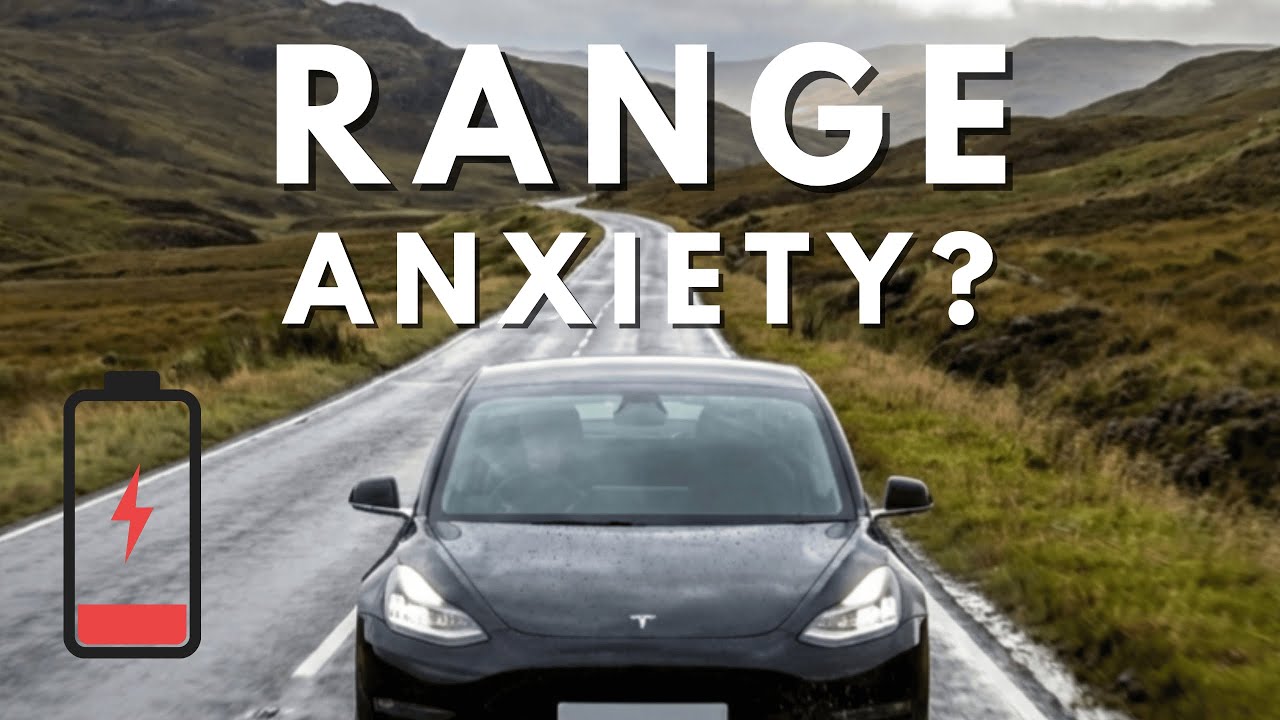
Range anxiety has long been the specter haunting electric vehicle adoption, a psychological barrier that transforms a simple road trip into a calculated gamble. To demystify this phenomenon, we conducted an extensive real-world driver survey, probing the lived experiences of Tesla owners across diverse driving conditions. The insights reveal not just the prevalence of range anxiety but its nuanced manifestations—from urban commuters to cross-country adventurers. What emerges is a tapestry of concerns, solutions, and unexpected revelations that challenge conventional wisdom about EV range limitations. This article dissects those findings, offering a granular look at how Tesla drivers navigate, mitigate, and sometimes conquer the specter of dwindling battery life.
The Urban Commuter’s Dilemma: Range Anxiety in Stop-and-Go Traffic
For city dwellers, the battle against range anxiety begins the moment the accelerator is pressed. Stop-and-go traffic, with its relentless braking and acceleration, saps battery life at an alarming rate, turning what should be a 300-mile range into a 200-mile gamble. Survey respondents reported that aggressive driving in congested corridors—especially during rush hour—could shave off as much as 20% of their vehicle’s nominal range. The psychological toll is palpable: drivers confessed to preemptively rerouting to avoid traffic hotspots or, in extreme cases, opting for public transit when battery levels dipped below 50%. One respondent, a Chicago-based rideshare driver, noted that winter temperatures exacerbated the issue, with cabin heating demands reducing range by an additional 15%. The urban commuter’s plight is not just about distance; it’s about the tyranny of time and the unpredictability of traffic patterns.
Yet, not all is bleak. Many Tesla owners have adopted a ritualistic approach to energy management, treating their vehicle’s battery like a high-stakes investment portfolio. They meticulously plan charging stops during off-peak hours, leveraging apps that predict traffic patterns and adjust route planning in real time. Some have even resorted to hypermiling techniques—coasting to a stop, minimizing HVAC usage, and exploiting regenerative braking—to eke out every last mile. The urban commuter’s story is one of adaptation, where technology and human ingenuity collide to turn a perceived weakness into a learned skill.
The Road Warrior’s Reality: Long-Distance Travel and the Charging Marathon
For those who traverse vast distances, range anxiety morphs into a logistical marathon. The survey uncovered a stark divide between short-haul drivers and long-distance travelers. While the former group could rely on home charging or workplace stations, the latter faced a gauntlet of planning, patience, and occasional despair. A Tesla owner who regularly drives from Los Angeles to Las Vegas described the journey as a “chess match against the sun,” where every mile counted and every Supercharger stop required strategic foresight. Delays at charging stations—whether due to queueing or technical glitches—could stretch a two-hour trip into a four-hour odyssey, testing even the most stoic driver’s resolve.
The psychological impact of long-distance travel cannot be overstated. Drivers recounted stories of near-miss scenarios where a miscalculated charge left them stranded in the middle of nowhere, or where the anxiety of finding an available charger in a remote area led to compulsive battery monitoring. Yet, the data also revealed a counterintuitive trend: seasoned road warriors often reported lower anxiety levels than urban commuters. Why? Because they had developed a sixth sense for energy management, treating charging stops as mandatory pit stops rather than chores. They knew the location of every Supercharger, the fastest charging speeds at each station, and the optimal times to avoid crowds. For them, range anxiety was not a fear but a challenge to be mastered.
The Winter Warrior’s Struggle: Cold Weather and the Vanishing Range
Cold weather is the silent assassin of EV range, and Tesla drivers in northern climates face a unique set of challenges. The survey highlighted how sub-zero temperatures could reduce a vehicle’s range by up to 40%, turning a 300-mile trip into a 180-mile gamble. Drivers in Minnesota and North Dakota described the ritual of preconditioning their vehicles—plugging in while still at home to warm the battery before departure—as a non-negotiable step. Others spoke of the dreaded “range cliff,” where a battery that appeared healthy at 70% could plummet to 30% within minutes of exposure to sub-freezing temperatures. The psychological toll was evident in the number of respondents who admitted to postponing trips or canceling plans altogether when winter forecasts predicted extreme cold.
Yet, innovation has not stood idle. Many Tesla owners have embraced auxiliary heating solutions, such as heated seats and steering wheels, to reduce cabin heating demands. Some have even invested in battery thermal management systems or portable heaters to mitigate the worst effects of the cold. The winter warrior’s experience is a testament to human adaptability, where necessity becomes the mother of invention. It also underscores the importance of education—drivers who understood their vehicle’s thermal management systems reported significantly lower anxiety levels than those who treated their Tesla like a conventional car.
The Tech-Savvy Optimist: How Software and Apps Mitigate Range Anxiety
Tesla’s ecosystem of software and third-party applications has become a powerful tool in the fight against range anxiety. Drivers reported using a variety of apps to monitor battery health, predict range under different conditions, and locate charging stations in real time. Tools like TeslaFi, A Better Routeplanner (ABRP), and PlugShare have transformed the way owners plan their journeys, turning what was once a guessing game into a data-driven exercise. One respondent, a software engineer from Seattle, described how he had automated his charging schedule using Tesla’s API, ensuring his vehicle was always topped up before long trips. For him, the anxiety had been replaced by confidence—a shift from fear to control.
The role of over-the-air updates cannot be overstated. Tesla’s continuous improvement of battery management systems and range estimation algorithms has given drivers a sense of security that was absent in earlier EV models. Drivers recounted how updates had improved their vehicle’s range prediction accuracy, reducing the likelihood of unexpected low-battery scenarios. The tech-savvy optimist’s story is one of empowerment, where data and software converge to create a seamless driving experience.
The Psychological Paradox: Why Some Drivers Never Worry About Range
Perhaps the most surprising finding of the survey was the existence of a subset of drivers who reported virtually no range anxiety. These individuals, often long-time Tesla owners or those with extensive EV experience, had developed an almost Zen-like acceptance of their vehicle’s limitations. They treated range as a feature to be managed rather than a flaw to be feared. One respondent, a retired engineer from Colorado, described his approach as “trusting the system.” He had driven his Tesla over 100,000 miles without a single range-related incident, attributing his calm demeanor to a deep understanding of his vehicle’s capabilities and the Supercharger network’s reliability.
The psychological paradox here is striking. For some, range anxiety is a self-fulfilling prophecy—fear leads to inefficient driving, which in turn reduces range. For others, it’s a non-issue, a minor inconvenience in an otherwise seamless experience. The difference often boiled down to mindset. Drivers who viewed their Tesla as a tool rather than a toy were more likely to adopt proactive strategies, whether that meant meticulous planning or embracing the vehicle’s advanced features. The lesson is clear: range anxiety is as much about perception as it is about reality.
The Future of Range Anxiety: What’s Next for Tesla Drivers?
The survey also offered a glimpse into the future, with drivers speculating about the next frontier in range anxiety mitigation. Many expressed hope for faster charging technology, with some citing rumors of Tesla’s 350 kW Supercharger V4 as a potential game-changer. Others dreamed of solid-state batteries that could eliminate range concerns entirely. A few even joked about the possibility of wireless charging roads, where vehicles could replenish their batteries while in motion—a concept that, while still speculative, highlights the boundless optimism of the EV community.
Yet, the most immediate solution may lie in education. The survey revealed a direct correlation between a driver’s understanding of their vehicle’s features and their level of range anxiety. Those who had taken the time to learn about battery thermal management, regenerative braking, and energy-saving modes reported significantly lower stress levels. The future of range anxiety, then, may not be technological but educational—a shift from fear to mastery.
As the electric vehicle revolution accelerates, the stories of Tesla drivers offer a roadmap for what’s to come. They remind us that range anxiety is not a fixed obstacle but a dynamic challenge, one that can be overcome with the right tools, mindset, and a dash of ingenuity. The journey is far from over, but for those who have embraced the challenge, the destination is already within sight.