In the ever-evolving landscape of automotive innovation, Tesla’s Over-the-Air (OTA) updates have emerged as a paradigm-shifting force, redefining the very essence of what it means to own a vehicle. By 2026, these updates will have transcended their initial novelty, evolving into a sophisticated ecosystem that not only enhances functionality but also reshapes consumer expectations. The fascination with Tesla’s OTA updates lies not merely in their convenience but in their ability to transform a static asset into a dynamic, perpetually evolving machine. This deep dive explores the intricate mechanics, psychological underpinnings, and future implications of Tesla’s OTA updates, offering a comprehensive understanding of why they captivate both enthusiasts and industry observers alike.
The Alchemy of Instant Transformation: How OTA Updates Work
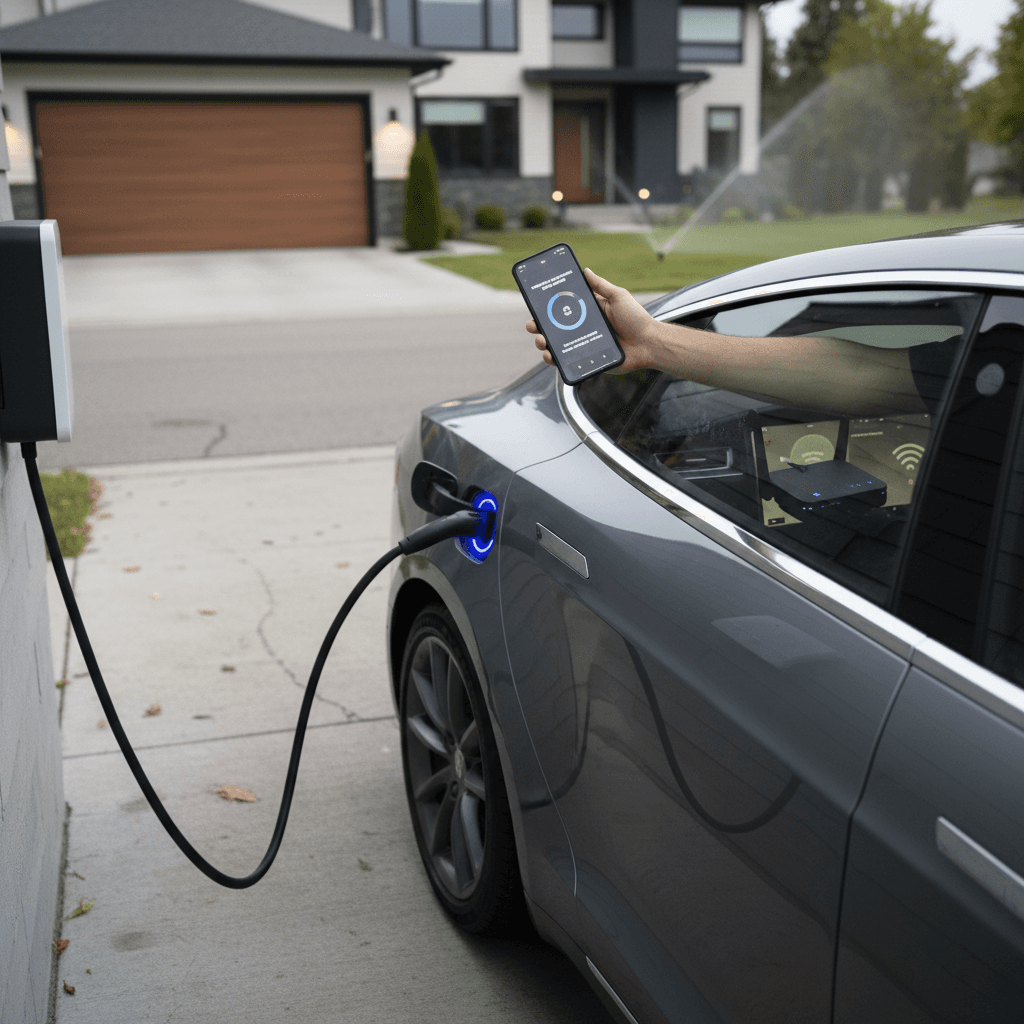
At the heart of Tesla’s OTA updates is a symphony of cloud infrastructure, cryptographic security, and vehicular architecture. When a Tesla vehicle connects to Wi-Fi or cellular networks, it initiates a silent handshake with Tesla’s servers, verifying its identity through a series of encrypted tokens. The update package, often compressed to minimize bandwidth, is then transmitted in fragments, ensuring minimal disruption to the vehicle’s operations. Once received, the car’s onboard computer—a high-performance unit running a custom Linux-based OS—validates the integrity of the update using checksums and digital signatures before installation. This process, which unfolds in the background, epitomizes the seamless fusion of software and hardware, where a few lines of code can redefine the driving experience.
The brilliance of this system lies in its redundancy. Tesla employs a staged rollout strategy, where updates are first deployed to a small cohort of beta testers before cascading to the broader fleet. This phased approach mitigates risks, allowing engineers to monitor for anomalies in real-world conditions. By 2026, advancements in edge computing will further refine this process, enabling vehicles to pre-validate updates against local driving conditions, such as terrain or climate, before committing to installation. The result is an automotive experience that feels less like a purchase and more like a subscription to perpetual improvement.

The Psychological Allure: Why We’re Hooked on Perpetual Upgrades
Human psychology is wired to crave novelty, and Tesla’s OTA updates exploit this instinct with surgical precision. The dopamine hit of receiving a notification—“New software update available”—triggers a Pavlovian response, reinforcing the idea that ownership is an active, ongoing engagement rather than a static transaction. This phenomenon, known as the “endowment effect,” is amplified by Tesla’s gamification of updates. Features like “Easter eggs” hidden in code, or the ability to customize vehicle behavior through software, create a sense of personalization that traditional car ownership lacks. The vehicle becomes an extension of the owner’s identity, a canvas for continuous self-expression.
Moreover, the fear of obsolescence is assuaged by the knowledge that one’s Tesla will never truly “age.” In an era where smartphones and laptops degrade in performance within years, a Tesla that receives weekly updates feels perpetually modern. This psychological comfort is not trivial; it fosters brand loyalty that transcends mere product satisfaction. By 2026, Tesla’s OTA updates will likely incorporate predictive analytics, suggesting updates based on a driver’s habits or even mood, further deepening this emotional connection.
The Unseen Infrastructure: The Backbone of OTA Updates
Behind the curtain of Tesla’s OTA updates lies a sprawling, invisible infrastructure that rivals the complexity of the updates themselves. Tesla’s data centers, distributed across multiple continents, operate as the neural network of this system, handling millions of update requests simultaneously. These centers leverage machine learning to optimize update delivery, predicting network congestion and prioritizing critical patches. The vehicles themselves are equipped with redundant communication modules—cellular, Wi-Fi, and even satellite connectivity in some markets—to ensure no Tesla is ever stranded without access to updates.
Security is another cornerstone of this infrastructure. Tesla employs a multi-layered defense strategy, including hardware security modules (HSMs) that store cryptographic keys in tamper-resistant environments. Updates are signed using elliptic curve cryptography, a method resistant to quantum computing threats that may emerge by 2026. Additionally, Tesla’s bug bounty program incentivizes white-hat hackers to identify vulnerabilities, ensuring that the OTA system remains impervious to exploitation. This relentless focus on security not only protects user data but also reinforces the trust that owners place in Tesla’s ecosystem.
Beyond the Dashboard: The Ripple Effects on the Automotive Industry
The implications of Tesla’s OTA updates extend far beyond the confines of its own vehicles, sending shockwaves through the entire automotive industry. Traditional manufacturers, long accustomed to treating cars as one-time purchases, are now scrambling to retrofit their fleets with similar capabilities. The pressure is mounting: consumers, now conditioned to expect perpetual upgrades, are increasingly reluctant to buy vehicles from brands that lag in OTA innovation. This shift has forced legacy automakers to rethink their business models, with some exploring partnerships with tech firms to develop proprietary update systems.
Regulatory bodies are also taking notice. By 2026, governments may mandate standardized OTA protocols to ensure safety and interoperability across brands. Tesla’s open approach—where updates are shared transparently with regulators—sets a precedent, but it also invites scrutiny. Questions about data privacy, cybersecurity, and even liability in the event of an update-induced malfunction will dominate policy discussions. The automotive landscape is no longer just about horsepower or fuel efficiency; it’s about the invisible code that powers the driving experience.
The Future Unfolded: What’s Next for Tesla’s OTA Updates
As we peer into the horizon of 2026, Tesla’s OTA updates are poised to evolve into something even more transformative. One of the most anticipated advancements is the integration of artificial intelligence, where updates will dynamically adapt to a driver’s preferences in real time. Imagine a vehicle that learns your commute patterns, adjusts suspension settings for potholes before you hit them, or even suggests optimal charging routes based on traffic and weather—all delivered seamlessly via OTA. This level of personalization will blur the line between driver and machine, creating a symbiotic relationship where the car anticipates needs before they’re articulated.
Another frontier is the expansion of OTA updates into hardware-adjacent domains. Tesla’s Full Self-Driving (FSD) suite, for instance, could receive incremental improvements that enhance sensor fusion or neural network efficiency without requiring physical hardware changes. By 2026, we may see OTA updates that enable new features in existing sensors, effectively turning a 2023 Model Y into a 2026 model with the same hardware. This concept, known as “software-defined hardware,” challenges the traditional notion of obsolescence, where a vehicle’s capabilities are limited by its initial design.
The environmental impact of OTA updates is another area ripe for innovation. Tesla could leverage updates to optimize battery usage, reducing energy consumption during charging or improving regenerative braking efficiency. Over time, these incremental gains could translate into significant reductions in a vehicle’s carbon footprint, aligning with Tesla’s broader sustainability goals. The idea that a simple software update can contribute to environmental stewardship underscores the multifaceted potential of OTA technology.
The journey of Tesla’s OTA updates is a testament to the power of software in redefining hardware. What began as a novel feature has grown into a cultural phenomenon, reshaping how we perceive ownership, innovation, and even the act of driving itself. By 2026, these updates will no longer be a novelty but a baseline expectation, a silent revolution that has already rewritten the rules of the automotive industry. The fascination with Tesla’s OTA updates is not just about the technology; it’s about the promise they embody—a future where the vehicles we drive are as dynamic as the lives we lead, constantly evolving, constantly improving, and forever on the cusp of something greater.