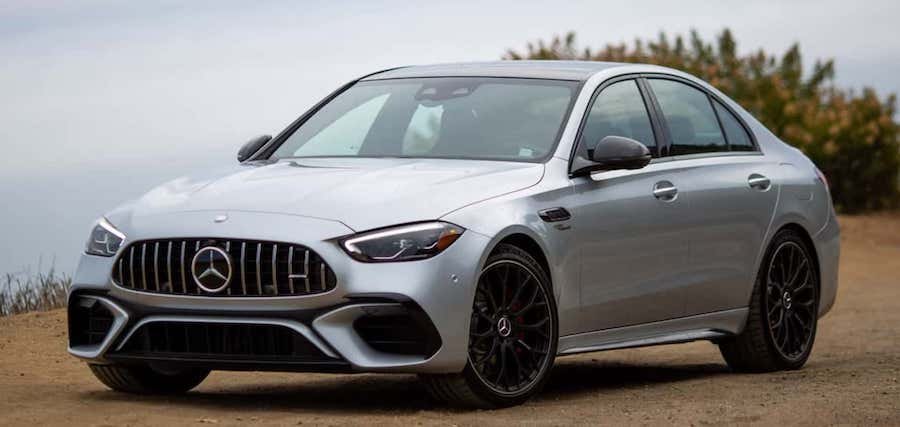
There’s a particular kind of anticipation that builds when the calendar turns toward a new performance chapter. The nameplate is legendary, the spotlight is unforgiving, and the expectations are nothing short of thermonuclear. For the 2026 Mercedes-AMG C63, that pressure has been amplified by one crucial variable: the move toward a plug-in hybrid powertrain. The result is a machine that invites a different kind of scrutiny—not just how fast it looks on paper, but how it behaves when the tarmac demands truth.
In this article, the focus is unapologetically practical: the 0–60 mph sprint and the quarter-mile test, viewed through the lens of PHEV dynamics. Readers can expect a narrative journey through traction, torque delivery, launch strategy, and repeatability. Along the way, you’ll also find guidance on what to look for during a real-world acceleration run—because the stopwatch is only one storyteller.
Why a PHEV Changes the Rules of Acceleration
On a traditional high-performance combustion setup, acceleration is often framed as a symphony of revs: horsepower climbing as engine speed rises, torque arriving with a familiar rhythm. A plug-in hybrid, however, rearranges the choreography. Instant electric torque can spike the first milliseconds, while the combustion engine contributes as the system transitions through its power bands.
That means a PHEV C63 won’t be judged solely by peak output. The more important question becomes: how smoothly does the system blend torque at launch? The best launches typically feature a tightly governed transition—where the electric motor provides initial propulsion, and the engine joins without a perceptible stumble. Even subtle latency, traction control strategy, or drivetrain mapping can affect the early gap that later becomes difficult to claw back over a quarter-mile.
In performance testing, the initial 20 to 40 feet are often the most decisive. With a PHEV, that zone can feel startlingly immediate. Then, as vehicle mass settles and the battery’s contribution begins to evolve, the car’s ability to sustain acceleration becomes the central theme.
0–60 mph Test: Launch Physics, Not Just Power
The 0–60 mph run is where launch control, tire behavior, and torque management meet the hard wall of physics. In a PHEV AMG, electric assist can reduce the “dead air” that sometimes exists before an internal-combustion engine fully responds. This can compress the reaction-to-movement window, especially when traction conditions are favorable.
Still, fast times aren’t simply about being strongest. They’re about being strongest at the exact moment grip is available. The driver’s job is less about raw throttle and more about trust—trust that the stability system won’t over-intervene, trust that the drivetrain won’t overspin, and trust that the torque split will remain coherent under load.

During a serious 0–60 evaluation, there are a few technical tells worth watching. If the car bogs for a fraction of a second, you’ll feel it as hesitation—an acceleration plateau where speed should be climbing. If the car spins or chirps and then corrects, you’ll see it in the acceleration curve as an early loss that the rest of the run might not fully erase.
However, the most compelling PHEV behavior often comes from torque shaping. Electric motors can deliver a controlled ramp that helps the tires stay planted. If the C63’s launch strategy leans into that capability, the 0–60 time can land in territory that feels almost unfair—like the car is already moving before the driver finishes the pedal’s first thought.
Traction Control and Tire Temperatures: The Silent Co-Authors
Every performance headline wants to celebrate horsepower. But the stopwatch is often influenced by tire temperature, sidewall compliance, and the traction system’s sensitivity. In a hybrid, the torque available at launch is frequently higher than what a pure engine-only setup can instantly deliver. That makes traction control calibration more consequential.
For the 0–60 test, the ideal scenario is predictable: warmed tires, consistent surface texture, and a stability system that prioritizes forward progress over politeness. Overly conservative calibration may “depower” the launch prematurely, sanding away potential time. Too aggressive a strategy, meanwhile, risks wheelspin and a chaotic transition that wastes the electrified head start.
Quarter-mile testing adds another variable: tire wear and heat soak. A car that nails 0–60 might still struggle if the tires degrade over the run, reducing grip just as the car begins to fight sustained acceleration forces. That’s why test results should ideally come from multiple pulls, not a single heroic run under perfect circumstances.
Quarter Mile: Sustaining Power, Managing Weight, and Timing the Surge
The quarter-mile doesn’t merely reward launch speed—it rewards the ability to keep accelerating when enthusiasm starts to fade. In practical terms, it’s the test of sustained torque, gearing effectiveness, and how the hybrid system manages its energy flow across time.
A PHEV has an energy reserve in its battery, but it isn’t infinite. During a quarter-mile, the system must decide how much electric contribution to provide upfront and how much to save for later. The goal is to avoid a situation where the car feels ferocious early and then runs out of momentum mid-track.
In the best-case scenario, the 2026 Mercedes-AMG C63’s hybrid architecture would exhibit an intelligent “power cadence”—electric torque filling gaps while the combustion system maintains a strong pull. Turbocharged systems add another layer: boost response characteristics and how quickly the car reaches and holds the target pressure under load.
Quarter-mile performance can also reveal drivetrain character. Strong launches are dramatic, but sustained acceleration demands stability in the transmission strategy. Smooth gear engagement reduces time lost to drivetrain hunting or torque interruptions. Even a brief fraction of a second of mismatch between motor torque and gear timing can echo across the full length of the track.
Energy Deployment: How the Battery and Engine Coordinate
Think of the hybrid system as a conductor with two instruments: electric torque for sharp entries and the combustion engine for long, weighted notes. The quarter-mile often becomes a story of coordination. If the system manages energy well, it will feel like a continuous surge rather than a two-phase sprint that hands off from electric to engine.
There’s also the question of regenerative braking and how the car prepares for the next pull. In repeated testing sessions, battery state-of-charge can shift, subtly changing performance. A car that runs consistently is more impressive than one that posts a single breathtaking time after a perfect preconditioning cycle.
Readers should be aware that test timing can differ based on battery starting charge, ambient temperature, and traction conditions. In a PHEV, these variables can be magnified because the electric contribution is more sensitive to energy availability.
What Drivers Usually Feel During 0–60 and the Quarter Mile
Acceleration is not only measured—it’s experienced. In many performance PHEVs, the initial shove can feel instantaneous, almost velvet-like in its immediacy. The car might surge forward with a sense of “no waiting,” then evolve into a deeper, more urgent pull as the combustion system joins.
In the 0–60, that sensation can be described as a brief, intense lunge—like a slingshot releasing with perfect timing. The driver may feel the chassis settle quickly, with steering remaining composed instead of overwhelmed by traction drama.
In the quarter-mile, the feel becomes more theatrical. The acceleration doesn’t end at the speedometer’s midpoint; it continues as a growing commitment. The most impressive runs are those where the car remains eager without becoming noisy in a chaotic way. The soundscape may shift as boost and hybrid blending change, but the physical thrust should stay cohesive.
Repeatability: The True Measure of Performance
A headline time is exciting, but a performance profile is what convinces. For the 0–60 and quarter-mile tests, repeatability depends on tire condition, temperature, battery state, and system learning behavior—especially in advanced traction and torque management strategies.
If the C63 can deliver similar times across multiple runs, it indicates robust control logic and stable mechanical behavior. If performance drops sharply after one pull, it suggests that tire grip, thermal management, or energy allocation is less forgiving than the marketing brochure implied.
One should also consider driver technique. In hybrid performance testing, throttle application and launch strategy matter because torque availability is immediate. A split-second of extra torque request at the wrong moment can provoke traction correction that slightly erases the time gained at launch. Over a quarter-mile, small differences can compound.
Takeaways for Performance Readers and Test-Day Spectators
If you’re watching a 0–60 and quarter-mile test unfold—either in person or through recorded runs—keep your attention on the details that shape the numbers. Watch how the car launches without drama. Listen for whether it struggles for grip or transitions cleanly. Notice whether the acceleration curve looks smooth or staged.
In a PHEV C63, electric assist can create a powerful early advantage, but the quarter-mile will reveal whether the system can sustain that advantage through continuous power delivery. The final verdict isn’t just the fastest time; it’s the impression of cohesion—how confidently the car keeps pulling when the clock is no longer forgiving.
Conclusion: The C63 as a New Kind of Fast
The 2026 Mercedes-AMG C63—now expected to arrive with a PHEV performance focus—represents more than an evolution of technology. It’s a reframing of what acceleration means. The 0–60 mph sprint becomes an argument about instant torque, traction intelligence, and launch stability. The quarter-mile becomes a test of endurance under speed: energy deployment, turbo behavior, gearing coherence, and the car’s ability to stay composed while the demand intensifies.
In the end, the most impressive version of speed is the one that feels inevitable. If the C63 can combine electric immediacy with sustained pull, the stopwatch will do more than record a time—it will capture a narrative of control.