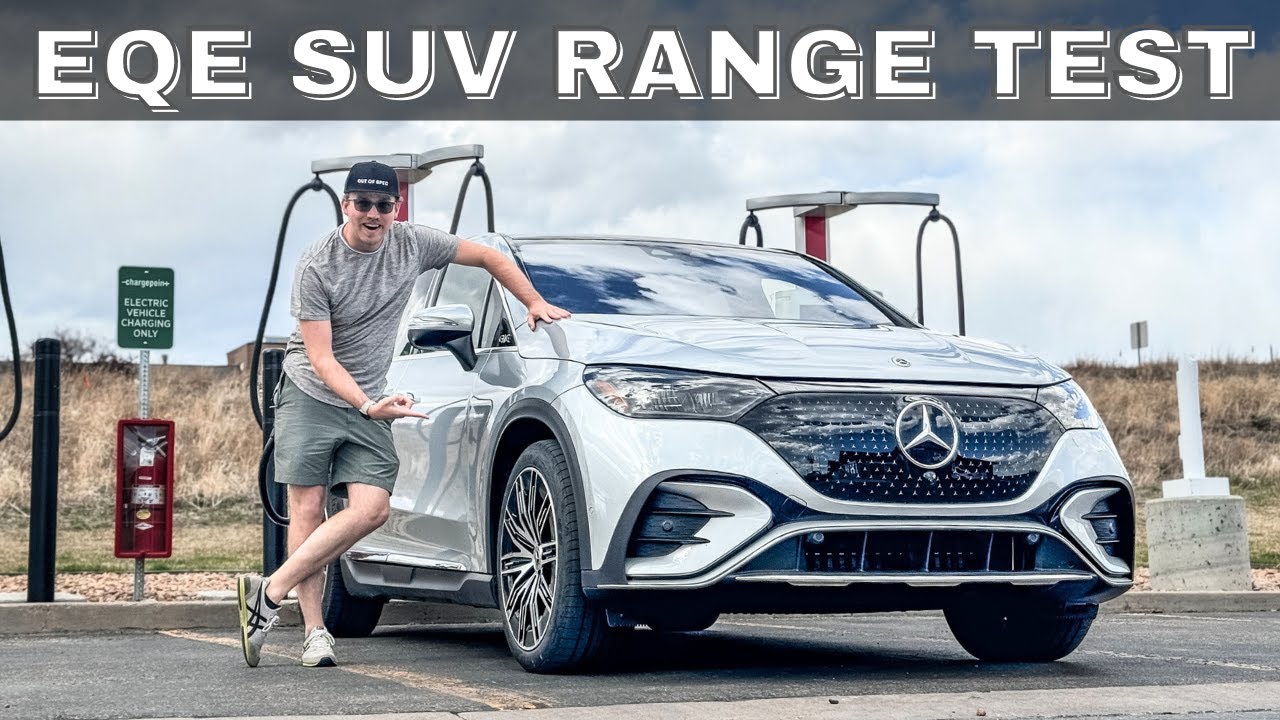
The moment the road stretches flat and the skyline thins into a ribbon of light, a certain question starts gnawing at the mind. Not “How fast?” Not “How sleek?”—but “How far, when life gets ordinary?” The 2026 Mercedes-Benz EQE steps into that gap between marketing poetry and the hard arithmetic of distance. This real-world highway range test at 70 mph isn’t a laboratory ritual. It’s a provocation: a shift in perspective from showroom optimism to the practical calm of miles counted mile by mile.
At 70 mph, efficiency becomes less of a slogan and more of a sensory experience. The air presses against the bodywork. Wind resistance grows teeth. Energy use stops being abstract and starts behaving like weather—predictable, relentless, and strangely personal. In this test, the EQE is asked to remain composed while the world outside refuses to slow down.
The Setup: Why 70 mph Changes Everything
Highway range tests are often treated like a formality. But 70 mph is a psychological threshold as much as a physical one. Many vehicles feel “fine” at lower speeds, where efficiency losses are easier to ignore. At 70 mph, the drivetrain is forced to translate ambition into constant propulsion. The result is a more honest accounting of how the vehicle breathes—battery, thermal management, aerodynamics, and rolling resistance all joining the same conversation.
In that sense, this test becomes a narrative of cause and effect. The EQE’s aerodynamic intent is no longer decorative. It works like an invisible co-pilot, shaving drag when the air becomes impatient. Every acceleration and every steady stretch teaches something. The highway isn’t just where miles happen—it’s where the truth reveals itself.
Aerodynamics, Not Just Acceleration
The EQE’s exterior is sculpted with a particular kind of restraint. It avoids unnecessary turbulence, aiming to keep airflow attached and orderly. This matters because at 70 mph, energy spent fighting the atmosphere can quietly dominate the range equation. The difference between “aerodynamic enough” and “aerodynamically disciplined” may not sound dramatic at first. Then the test numbers arrive, and the story sharpens.
What’s intriguing is how the EQE manages to feel composed while doing work that’s anything but gentle. The highway hum becomes a controlled backdrop rather than a noisy negotiation. That perceived refinement often correlates with stable energy usage—at least in the rhythm of steady-state cruising.
Cabin Climate: The Comfort Tax
Real-world range isn’t purely about the motor. It’s also about what the driver demands from the cabin. Climate control is a silent partner in the energy equation, and at highway speeds, it can become a surprisingly meaningful variable. On long stretches, even small adjustments to HVAC intensity can change how quickly the battery’s charge converts into motion.
Here, the EQE has an opportunity to prove its character: can it deliver comfort without behaving like an energy-hungry heat engine? The best systems don’t eliminate climate usage—they optimize it. They maintain temperature stability efficiently, avoiding the “overcompensation spiral” that sometimes occurs after throttle adjustments or sun exposure.
In this test, the goal is not austerity. The goal is credibility. The cabin remains inviting, but the battery still has to pay for every degree of comfort.
Driving Rhythm: Steady Throttle vs. Human Instinct
There’s a romance in driving fast. Yet range tests demand patience, a kind of disciplined monotony that feels almost theatrical. The EQE, however, rewards steadiness. At 70 mph, the drivetrain’s cadence becomes predictable. The vehicle settles into an efficient groove, where the motor’s output doesn’t swing wildly between surges and coast.
Still, humans are not robots. Lane changes happen. Speed corrections happen. The question becomes: how resilient is the EQE when the driving script isn’t perfectly scripted? A capable highway car doesn’t just perform well in a vacuum; it absorbs the small imperfections of ordinary travel.
What makes this part fascinating is that the “range story” becomes less about one moment and more about patterns. The test reveals whether the EQE can maintain its composure when the driver’s instincts tug against the arithmetic of conservation.
Energy Flow and Thermal Management
Electric vehicles often get discussed as if they were simple: charge in, motion out. But the EQE is a system—an orchestration of high-voltage components, control algorithms, and thermal logic. Sustained highway speeds generate heat in predictable ways, and the battery’s temperature management becomes a quiet guardian of performance.
Thermal systems can either be stingy or supportive. Stingy can preserve efficiency in the short term but may risk longer-term stability. Supportive can protect components but might draw additional energy. The real-world test is where these trade-offs stop being theoretical. The EQE must decide how to balance longevity, consistency, and efficiency as the miles accumulate.
That balancing act is often invisible to the driver. Yet it leaves fingerprints on the final range. A car that keeps efficiency stable over time feels less “tired” as the drive progresses, even if the battery state-of-charge continues its inevitable decline.
What “Real-World” Actually Means on a Highway
A highway is a living thing. Wind changes. Road grades appear like plot twists. Traffic influences spacing, and spacing influences energy consumption. Even the best-designed test cannot remove everything that makes real travel unpredictable.
So the result isn’t just a single number. It’s a window into behavior: how the EQE handles minor variations without collapsing into efficiency volatility. A strong highway range outcome is one thing. A consistent outcome—where performance doesn’t become erratic—is something else entirely.
This test is a reminder that range is less like a static figure and more like a narrative arc. The early miles may feel easy. The middle may feel routine. Then the last stretch arrives, when the battery’s optimism fades into arithmetic clarity.
Expectations: Where the EQE Challenges the Conventional Wisdom
It’s easy to assume that a luxury EV must sacrifice something for comfort. Either range suffers, or performance feels constrained, or the charging experience becomes the main storyline. The EQE disrupts that assumption by focusing on efficiency through design discipline rather than by forcing drivers into deprivation.
At 70 mph, conventional wisdom says energy use climbs, and range shrinks faster than drivers want. That’s true. Yet the curiosity here is whether the EQE “shrinks” gracefully or abruptly. How quickly does it convert remaining charge into diminishing distance? Does it maintain an orderly relationship between speed and energy draw? Those answers reshape how the car is viewed long after the test ends.
How to Interpret the Result: Beyond the Final Miles
Even a successful range test can be misread if the number is treated like destiny. Range depends on terrain, temperature, tire pressure, and driving style. The most useful outcome is not only what the EQE achieves, but what it teaches about predictability.
Think of the result like a compass, not a calendar. It helps estimate what kind of planning makes sense for real trips. It also clarifies how aggressively one can rely on highway cruising without constantly hovering over the remaining battery percentage like a nervous metronome.
The EQE’s highway performance becomes a tool for decision-making: whether a stop should be assumed, delayed, or reconsidered based on one’s route and weather.
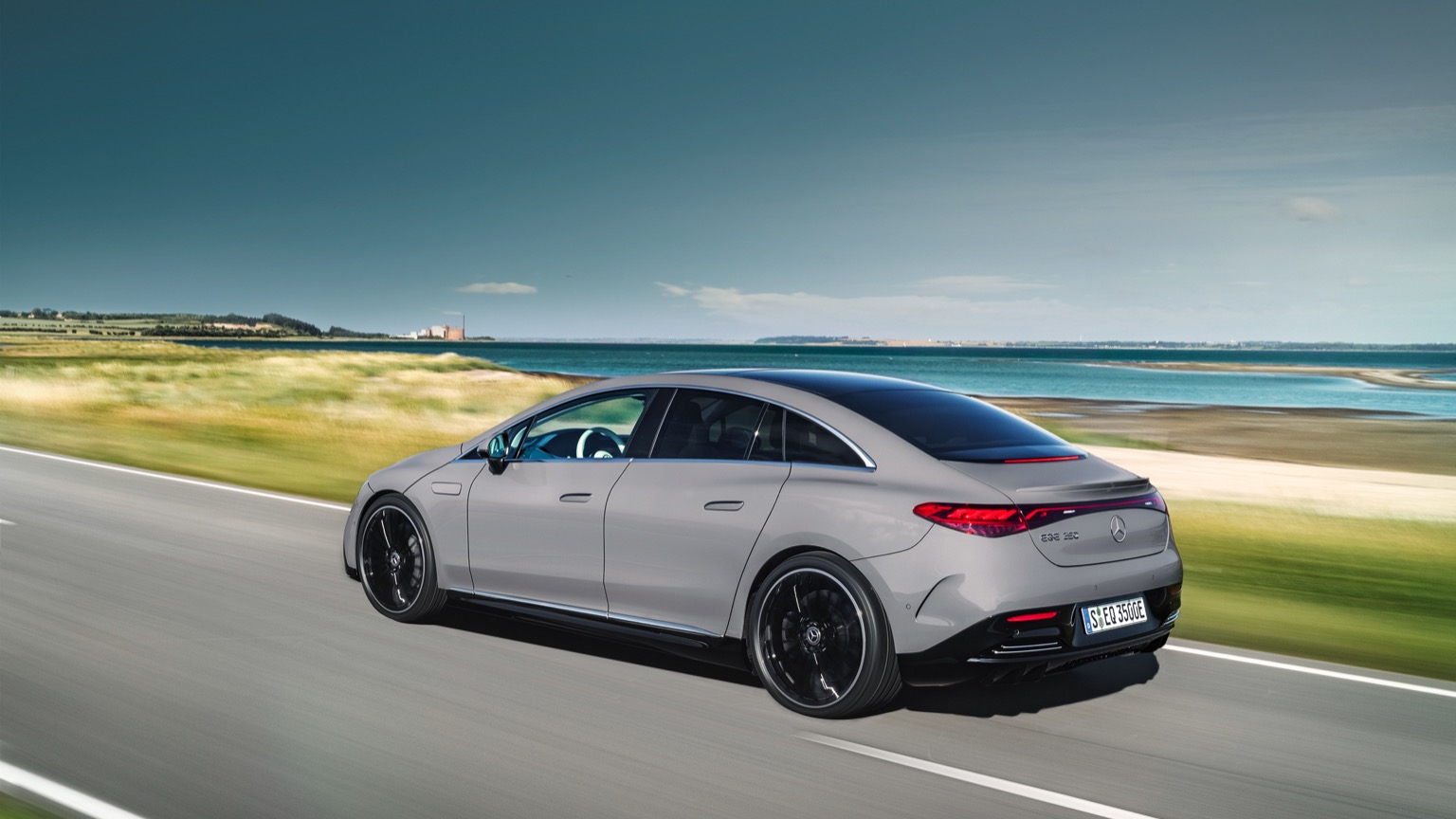
Imagery of Motion: The EQE on the Open Road
On a drive like this, images aren’t souvenirs—they’re echoes of the experience. The EQE’s highway demeanor is a blend of poise and quiet strength, designed to glide rather than lunge. Even when the road refuses to be generous, the vehicle appears to keep its composure.

What Changes After the Test: A New Kind of Confidence
The real-world highway range test at 70 mph does more than measure distance. It alters perception. Before the test, range can feel like an argument—one side quoting optimistic figures, the other side insisting reality always punishes expectations. After the test, the EQE becomes something more actionable: a known quantity within a specific scenario.
Confidence here isn’t blind faith. It’s informed certainty, earned by sustained cruising and the relentless neutrality of steady speed. The EQE earns that confidence if it delivers not only a respectable number, but also a stable, believable pattern of efficiency.
In the end, that’s what matters on the highway: not the drama of speed, but the calm assurance that the next city is not a gamble. The 2026 Mercedes-Benz EQE invites drivers to trade assumption for evidence—one mile at a time.
When the car finally slows and the test concludes, the question quietly returns: how often do our expectations get challenged by the road itself? This is where the EQE’s story becomes more than a headline. It becomes a lesson in perspective, and a promise—tested at real speed—that range can be both practical and refined.