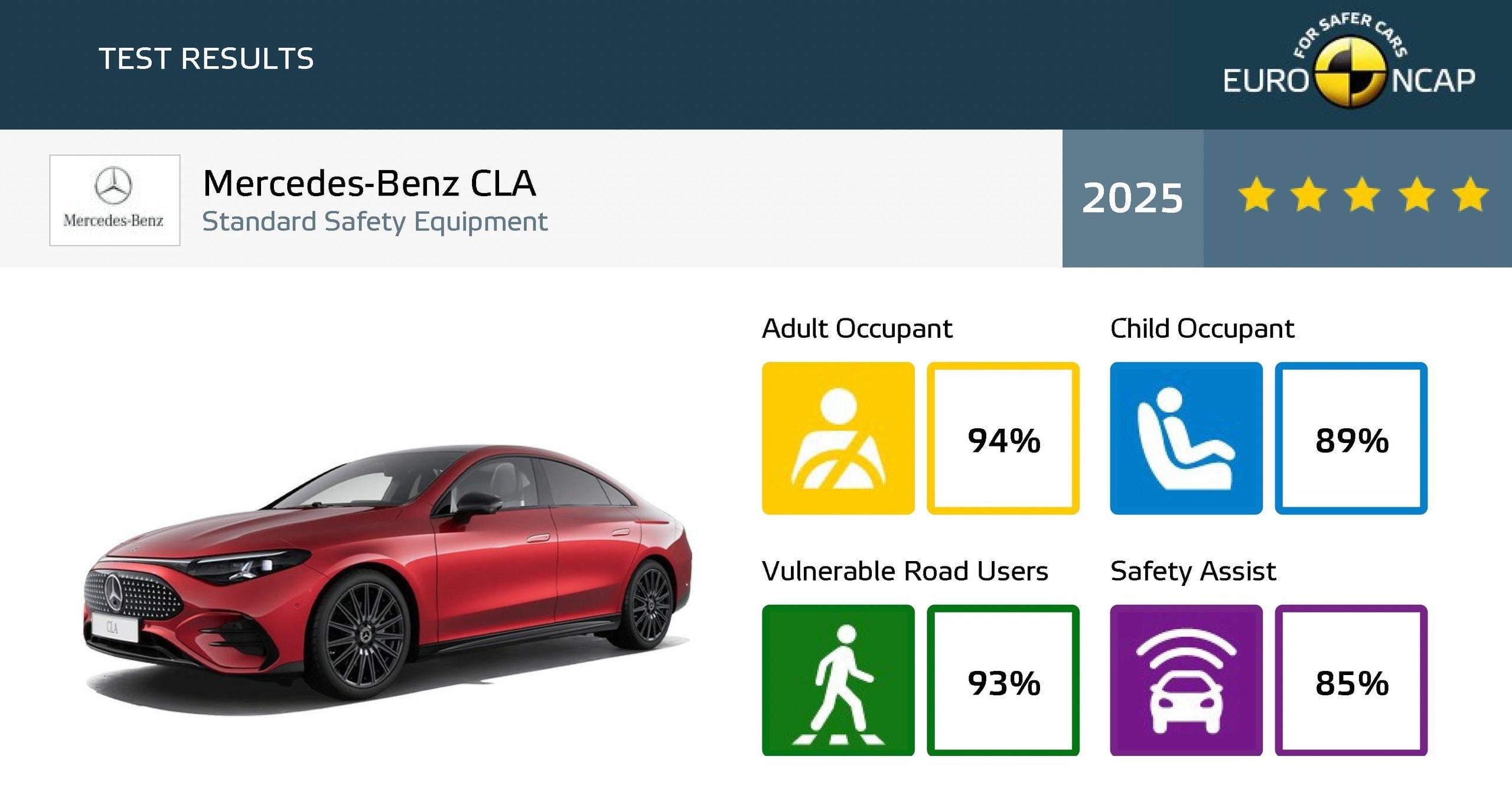
People tend to think of “safety” as a single number—an emblem on the window sticker, a tidy score on a dashboard, the sort of thing that can be interpreted in a glance. Yet the most protective vehicles are rarely simple. They are ecosystems of engineering decisions: sensing, restraint geometry, structural harmonics, and crash-avoidance logic working in concert. When the conversation turns to the safest 2026 Mercedes-Benz vehicles, the intrigue deepens. Why do these cars so often land near the top of IIHS and NHTSA conversations? Part of it is performance. Another part is a fascination with “predictive” protection—systems designed to anticipate harm rather than merely survive it.
In 2026, Mercedes-Benz continues to refine its approach, pairing high-strength architecture with sophisticated driver-assistance suites and occupant-focused restraint strategies. The result is a blend of measurable outcomes and a design philosophy that feels, to many drivers, almost quietly obsessive. Not loud safety. Not theatrical safety. Just safety that seems to have been built into the car’s posture.
Why IIHS and NHTSA results can feel deceptively similar—and why they aren’t
A common observation is that both IIHS and NHTSA “rate safety,” so the numbers should tell the same story. In practice, they often do overlap, but the emphasis shifts. IIHS is known for specific, scenario-driven evaluations that highlight how well a vehicle performs under distinct crash conditions. It can reward a design that reduces injury risk through better crash structure behavior, head restraint effectiveness, and restraint coordination.
NHTSA, by contrast, delivers a broader scoring framework and places a spotlight on overall crash protection for different vehicle categories and occupant types. The meaning is still deeply practical, but the pathway to a high score can vary.
This difference is one reason the Mercedes-Benz conversation can feel almost mesmerizing. A vehicle may excel where IIHS is especially discerning, and it may also post strong NHTSA outcomes because the foundational architecture supports both kinds of testing. The fascination comes from seeing how consistent engineering intent translates across different measurement languages.
Mercedes-Benz’s safety foundation: structure, restraint, and the choreography of forces
Crash protection is not only about surviving impact; it’s about controlling how impact energy is distributed and how the passenger compartment behaves in the final moments before stopping. Mercedes-Benz safety strategies frequently emphasize a robust passenger cell and carefully tuned deformation zones. The goal is to manage structural harmonics—how the structure flexes, crumples, and redirects loads—so that the cabin remains survivable.
Equally important is the restraint system. Modern Mercedes-Benz vehicles often integrate multi-stage airbags, smart belt pretensioning, and advanced sensor mapping. The technology’s “feel” to occupants can be subtle: a sudden crunch of deceleration, then stabilization—like the car briefly becomes a tuned instrument, delivering force in a way that reduces injurious motion.
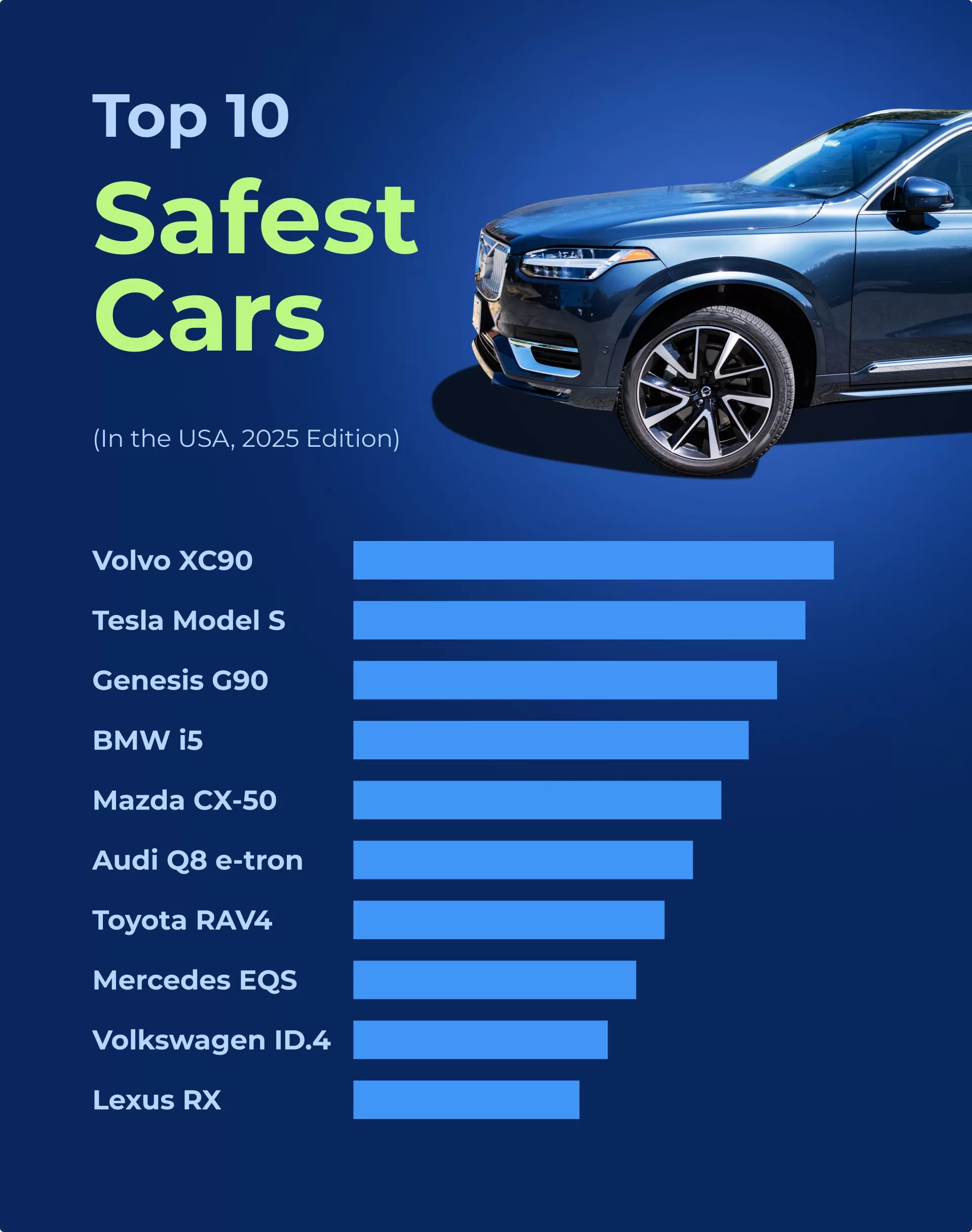
When you see consistently high IIHS and NHTSA performances across models, it’s usually because these components were engineered as a system, not as a checklist. That systems approach is a deeper reason for the fascination: safety becomes a multi-layered contract between design intent and real-world physics.
Front crash protection: the hidden work of head restraints and airbag sequencing
Many drivers notice safety scores, but they rarely imagine what happens to a neck in a moderate-to-severe frontal event. IIHS evaluations often scrutinize how well a vehicle manages head and neck exposure, especially in dynamic scenarios involving crash pulse severity.
Mercedes-Benz typically addresses this through restraint calibration and head restraint geometry. The best outcomes come not from one feature, but from interaction: seat height, head restraint positioning, the timing of airbags, and how seat belts limit forward excursion. In other words, it’s a choreography problem.
A well-tuned system can reduce whiplash risk by minimizing the relative motion between head and torso. This is where luxury brand engineering can be surprisingly practical. Comfort features—seat design, adjustability, occupant fit—become safety assets because they improve contact timing and body posture at the moment of impact.
Side crash protection: building a cage that behaves intelligently
Side impacts can be particularly punishing because the time window is short and the lateral space is limited. IIHS side-impact testing often rewards vehicles that protect occupants with structural integrity and effective energy management.
Mercedes-Benz has long treated side crash performance as a core requirement, using reinforced pillars and strategically placed side-impact structures. Beyond metal, the sensing and restraint logic matter: occupant detection, airbag deployment strategies, and the ability to maintain effective protection for varied body sizes.
Here, the fascination turns from “score watching” into “design recognition.” High-performing side crash systems often reflect meticulous simulation work and validation cycles. The vehicle doesn’t just endure a blow—it distributes force in a way that preserves the shape of protection.
Rear crash and whiplash mitigation: why safety extends beyond the forward collision
Rear-end impacts are common, yet they’re sometimes treated as secondary in casual discussions. Modern safety testing acknowledges that even lower-speed crashes can produce meaningful injury risk, particularly through whiplash dynamics.
IIHS-style approaches often value seat and head restraint geometry that reduces head lag and improves posture control. Mercedes-Benz vehicles typically aim for restraint systems that respond to occupant position and optimize energy absorption. The deeper reason for why enthusiasts keep returning to Mercedes-Benz safety talk is that rear crash performance is not merely an afterthought—it’s engineered as a full scenario.
Crash avoidance technology: the elegance of “prevent-first” engineering
Crash ratings measure outcomes after impact. But the best safety strategies also try to prevent the impact from happening in the first place. Mercedes-Benz driver assistance features—such as adaptive cruise control, steering assist, lane guidance, and emergency braking—work together to reduce the odds of a collision.
These systems rely on sensor fusion: cameras, radar, and sometimes lidar-like approaches depending on the configuration. The goal isn’t to replace a driver’s judgment; it’s to extend it. When the vehicle detects a potential hazard, it can warn, prepare restraints, or intervene with braking and steering corrections.
That preventive layer adds an almost cinematic layer of reassurance. Safety becomes dynamic rather than purely reactive, and that shift can feel like a hidden upgrade—even when the official test results are already strong.
NHTSA ratings: understanding the practical meaning behind overall scores
NHTSA ratings provide an accessible way to compare crashworthiness across vehicles. But the most meaningful interpretation goes beyond the overall star count. It includes consideration of how the vehicle performs for different occupant areas and crash types, and how those results align with restraint and structural behavior.
For 2026 Mercedes-Benz models that repeatedly demonstrate strong performance, the pattern usually indicates consistency in foundational safety engineering: structural integrity, restraint logic, and systems integration. A high NHTSA rating often signals that a vehicle’s design tolerates real-world crash variability—different impact angles, severities, and occupant positions—without losing its protective priorities.
The deeper fascination here is psychological as well as technical. Drivers crave predictability, and a high rating provides a sense of engineered inevitability: the car will respond in the way it was built to respond.
Which 2026 Mercedes-Benz vehicles are often discussed for top safety?
Rather than treating safety as a single-model story, it helps to think in terms of design families. In many cases, Mercedes-Benz vehicles that share platform technology, restraint engineering philosophies, and advanced driver-assistance calibration tend to cluster around the most reputable safety outcomes.
Among the models that frequently enter the conversation are midsize sedans, luxury SUVs, and certain compact crossovers equipped with the most comprehensive driver-assistance packages. The exact equipment level matters. A vehicle with a sophisticated safety suite and properly equipped restraint systems may perform dramatically better than a minimally configured sibling—because testing results reflect what’s installed and how it’s calibrated.

So when someone asks, “Which Mercedes-Benz is the safest in 2026?” the real answer is: the safest one is usually the one configured with the most complete safety technology and the most optimized restraint behavior for its occupant class.
A final word on fascination: safety that feels quietly inevitable
Mercedes-Benz’s 2026 safety narrative is compelling because it refuses to be one-dimensional. IIHS and NHTSA outcomes reward different testing philosophies, but the vehicles that tend to rank highly often share the same deeper traits: structural discipline, restraint choreography, and the refusal to treat driver assistance as decorative.
That’s why the discussion keeps evolving. People start with the numbers. Then they notice the details—how seats and restraints shape motion, how sensors and systems coordinate, how the cabin is engineered to remain a protective environment rather than a crash space.
In the end, the safest 2026 Mercedes-Benz vehicles don’t simply earn top marks. They cultivate a particular kind of trust: the sense that, even when physics becomes chaotic, the car has been designed to remain calm on your behalf.