What happens when the old-world gravitas of a 5 Series quietly turns electric, yet refuses to lose its composure? The answer is BMW i5—an electric interpretation of the familiar executive sedan formula, aiming to deliver the same sense of poised momentum, only with a different heartbeat. It’s not merely a powertrain swap. It’s a re-tuning of everything you expect: acceleration, silence, responsiveness, and even the way you think about range and charging. But before you settle into that smooth, futuristic reverie, here’s a playful question to keep you honest: are you ready to plan your drives a little differently—without feeling like you’ve lost your spontaneity?
That’s the potential challenge sitting just beyond the showroom shine. Electric capability is often presented as a clean, linear upgrade. Reality is a bit more theatrical. Weather, route topology, speed choices, and charging logistics can all tug the performance and range dial. And still, the i5 is designed to make those variables feel manageable—sometimes even invisible—if you’re willing to meet it halfway.
From 5 Series Familiarity to Electric Character
The BMW 5 Series has always carried a certain kind of authority. It’s a sedan that feels engineered for long conversations—between you and the road, between passengers and comfort, between driving styles and feedback. With the i5, that tradition is preserved, but the emotional tone shifts. Electric drive delivers torque instantly, so the car tends to move with a confident, almost effortless urgency. Short bursts feel sharper than you might expect from a large sedan. There’s no waiting for revs to climb. Instead, the car responds the moment you ask.
Yet the i5 also brings a new kind of sensation: silence. That hush isn’t just the absence of engine noise; it changes how you perceive speed, wind, and tire texture. Some drivers find it calming. Others find it a little too perfect, like a room that’s been soundproofed. Either way, it’s a signature trait of the electric experience.
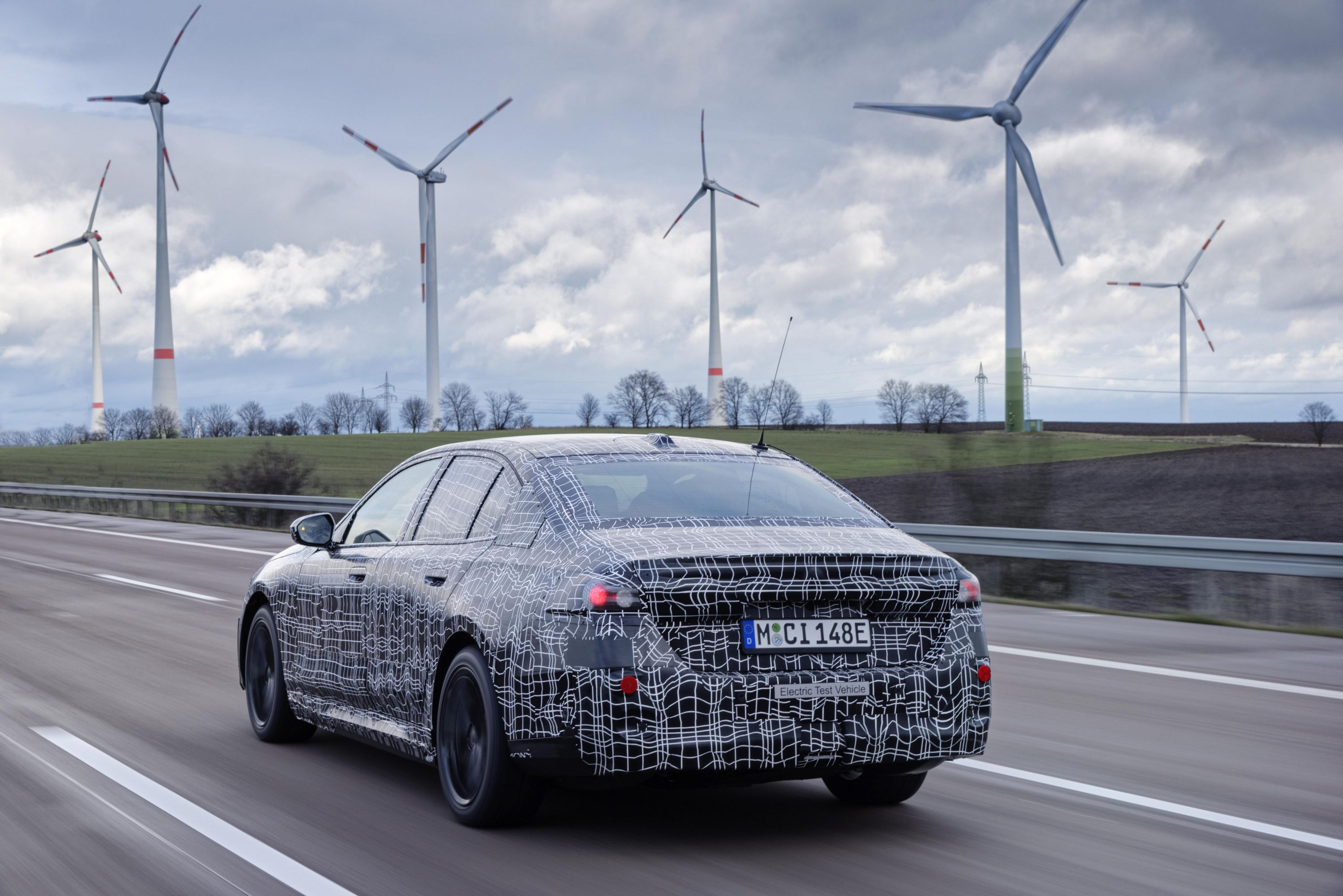
Design Details That Hint at Tomorrow
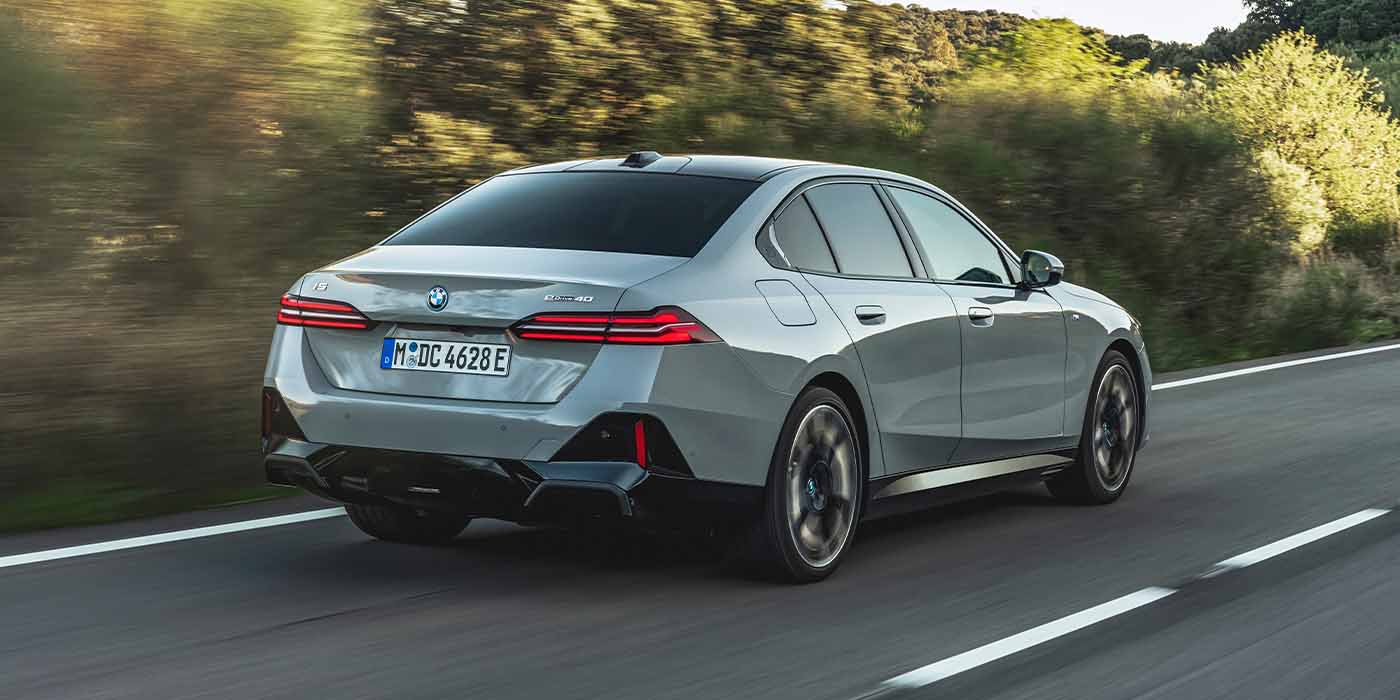
Electric cars can be either boldly futuristic or cleverly restrained. The i5 belongs to the latter category—an evolution rather than a costume change. Its proportions maintain the 5 Series silhouette, but the presence feels more aerodynamic and purposeful. Lines flow with a quieter confidence. Surfaces appear sculpted for efficiency, not just aesthetics.
The front end communicates intent without shouting. The lighting signatures, the grille treatment, and the overall stance all suggest a car that expects to be noticed, yet prefers to let the driving speak for itself. In many ways, it’s a stealthy kind of charisma—an automotive equivalent of a well-tailored suit: elegant, capable, and quietly expensive-looking.
Powertrain Philosophy: Instant Torque, Calm Control
Where the i5 truly differentiates itself is in how the drive power is delivered. Electric motors offer strong torque from a standstill, which means city maneuvering can feel oddly satisfying—smooth starts, quick adjustments, and a “connected” sensation to the road. It’s not just about speed. It’s about traction management and how delicately the car can modulate effort.
On the highway, the i5’s character becomes more about composure. The car can sustain pace with a steadiness that encourages relaxed driving. Long stretches feel less demanding, partly because the power is always ready. That readiness can create a subtle temptation: you may find yourself pressing forward more often, since the car doesn’t “think” before responding.
But here’s the playful challenge tucked inside that temptation. Electric efficiency can be sensitive to habits. If you develop a taste for relentless acceleration and high cruising speeds, range won’t behave like a generous rumor. It will behave like physics—predictable, stubborn, and occasionally disappointing.
Battery and Range: The Numbers Are Only Half the Story
Range is the headline conversation, but it’s not the entire plot. The i5 invites drivers to consider how they’ll use it. Urban trips with frequent acceleration may consume energy differently than long, steady highway runs. Cold weather can reduce effective range. Wind and elevation can introduce extra demand, especially when the route involves climbs or frequent speed changes.
What helps is that modern electric systems can be integrated into the driving experience. Regenerative braking can reclaim energy and, when used well, turns deceleration into a kind of active recovery. This isn’t just a technical detail; it influences driving style. Lift off the accelerator more deliberately and you may feel the car “help you” without even thinking about it.
Still, the earlier question remains. Are you ready to become a little more aware of your route and driving rhythm? If you can accept that trade—less convenience in planning, more reward in daily performance—the i5 becomes easier to love.
Charging: Comfort, Logistics, and the Art of Timing
Charging is where the electric promise either becomes effortless or feels like a chore. The i5 is built for real life, which means it’s best understood through routine. Home charging can transform ownership into something close to invisible. Plug in overnight, wake up ready. That pattern turns range anxiety into range reassurance.
Public charging adds another layer. It can be convenient, but it introduces variables—charger availability, connection speed, and the timing of your stops. Think of it like reserving a table at a restaurant during peak hours: possible, but not always frictionless. However, the payoff is freedom. Instead of limiting your life to where refueling is effortless, you expand your options—especially on well-traveled corridors where charging infrastructure is improving.
If there’s a potential obstacle, it’s this: learning your “charging etiquette.” Arriving too early, lingering too long, or waiting until the battery is nearly empty can turn a simple stop into a frustrating detour. Plan, but don’t overplan. The sweet spot is where convenience meets control.
Interior Experience: Executive Comfort Meets Tech Clarity
Step inside and the i5 attempts to feel like a 5 Series first, electric second. That means emphasis on comfort, ergonomics, and the kind of cabin calm that supports both daily commutes and longer journeys. Materials and fit aim for a premium tone. Controls are arranged to minimize distraction. The driving position is designed to feel natural, not like you’ve stepped into a gadget.
Technology takes its place in the background until you need it. Navigation, energy estimates, and driving information can guide you without turning the cabin into a cockpit. The most successful modern interfaces have one goal: to make complexity feel optional.
And yet, the i5 invites a different kind of attention. You may find yourself watching efficiency rather than just speed. It’s a subtle shift, but it can be surprisingly satisfying—like learning a new instrument and realizing your hands already know the rhythm.
Driving Dynamics and Handling: Familiar Confidence, Electric Precision
Electric weight distribution and instant torque can change how a sedan feels in corners. BMW’s challenge has always been balancing stability with steering feedback, and the i5 aims to deliver confidence without theatrical overstatement. The suspension behavior and traction management attempt to keep body motion controlled, especially during quick lane changes or spirited exits from roundabouts.
For many drivers, the most memorable moment will be the combination of smoothness and certainty. The car accelerates without drama, but it still feels capable. That’s the paradox of the best electric sedans: they can be potent while remaining civil. It’s an attitude that makes everyday driving feel slightly elevated.
Safety, Assistance, and Everyday Practicality
A 5 Series is expected to do more than impress on a clean road. It must handle stop-and-go traffic, highway monotony, parking maneuvers, and unpredictable conditions. The i5’s driver assistance technologies aim to support those realities—helping maintain lane awareness, managing distance, and reducing workload when the road becomes demanding.
This matters because electric driving tends to come with additional mental tasks: monitoring range, optimizing efficiency, and thinking ahead about charging. Good assistance systems reduce cognitive load. In effect, they act like a co-pilot that allows you to focus on what you actually enjoy—staying engaged with the drive instead of managing logistics.
Who the BMW i5 Is For
The BMW i5 is for drivers who want electrification without abandoning the executive sedan experience. It suits those who value refinement, enjoy confident performance, and are willing to embrace a more deliberate relationship with charging and energy use. It’s also for families and commuters who benefit from daily predictability—especially if home charging is available.
But it might not be for everyone who expects electric ownership to be identical to gasoline ownership. If your life is built around last-minute detours with no thought to charging, you may find the challenge more frequent than expected. The i5 doesn’t punish you, but it does demand a little foresight.
So, Are You Ready for the Electric 5 Series Challenge?
BMW i5 delivers a compelling evolution: electric torque, executive comfort, and a design that feels familiar yet newly refined. The big question isn’t whether it can move you—it clearly can. The real question is whether you want to shift your mindset. Can you plan a charging stop as part of the journey rather than an interruption? Can you treat range as a tool, not a threat?
If you can, the i5 becomes more than a car. It becomes a new routine—quiet, responsive, and strangely rewarding. If you can’t, the temptation is to judge the electric experience by its most inconvenient moments. That’s where the i5’s success depends on you as much as it depends on technology.
Either way, the BMW i5 is an electric chapter of the 5 Series story—one that asks a playful question and challenges your habits in return. And perhaps that’s the point: the future arrives not with a lecture, but with a drive you’ll remember.