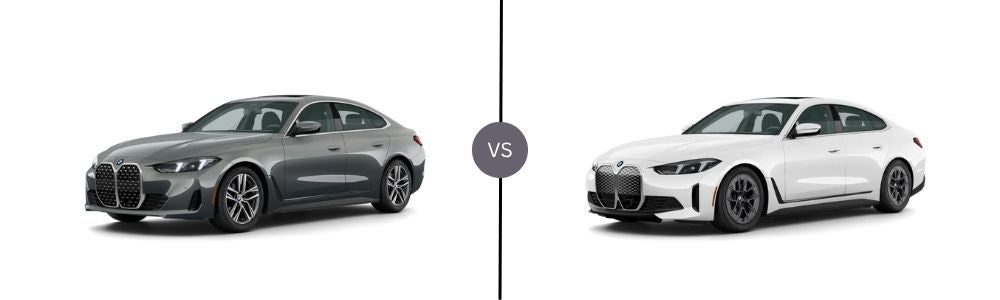
What if your next BMW could quietly decide your budget for you—without you noticing the vote? Picture this: one twin badge, two very different powertrains. The BMW 3 Series, fueled by gasoline, and the BMW i4, running on electricity, both promise driving pleasure. But when the receipts arrive, the story can change faster than a light turning green. Ready for a friendly little challenge? Try to predict which one actually saves you money—gas or electricity—without checking your local prices, your charging habits, and your driving pattern. It’s surprisingly easy to be wrong.
Let’s take a practical, narrative tour through the numbers that matter most. We’ll compare the BMW 3 Series versus the BMW i4 using the same lens: fuel/energy costs, maintenance and wear, efficiency, charging realities, incentives, and the often-overlooked “hidden variables.” Buckle up. This isn’t a spreadsheet masquerading as an article. It’s a budget safari.
Gas vs Electric: The First Expense Isn’t Always the Real Expense
The gasoline BMW 3 Series spends money on every mile in a straightforward way. You pay for fuel at a pump, and the cost typically rises and falls with fuel prices and your engine’s efficiency. It’s simple to understand—until it isn’t.
With the BMW i4, the energy bill is split between charging opportunities and electricity rates. Charging at home can turn electricity into a predictable utility expense. Charging away from home, however, can be a different creature entirely, especially if you rely on fast charging. Electricity is not always cheaper than gasoline on an “apples-to-apples” basis. The trick is conversion: how much energy you actually use to move your car compared to the cost of acquiring that energy.

Fuel Economy vs Efficiency: Two Words, One Question
Gasoline efficiency is often discussed using miles per gallon, but real-world outcomes depend on traffic, temperature, driving style, and even how fast you accelerate away from stoplights. A 3 Series can be efficient when driven gently. It can also become less charming to your bank account when you ask for repeated full-throttle sprints.
Electric efficiency is usually expressed as miles per kilowatt-hour (or similar metrics), and it often behaves more consistently. Regenerative braking can reclaim energy during deceleration, which helps in stop-and-go commutes. Yet the i4 is not immune to the usual villains: cold weather reduces battery efficiency, high speeds increase aerodynamic losses, and heavy use of heat/AC can nibble at range.
The punchline? Electricity can be cheaper per mile, but only if you’re feeding the car at a favorable rate and matching its efficiency sweet spot. If you drive like a conductor in a hurry, you may still pay more than you expected.
Charging Reality Check: Home, Work, Public—Choose Your Adventure
Let’s make the budget game interactive. Suppose you have home charging. Your electricity price is likely tied to a utility rate you can predict. Add charging during off-peak hours, and the BMW i4 can feel like it’s running on efficient, domesticated energy.
Now suppose you don’t have home charging. Then the BMW i4 becomes dependent on public charging—fast chargers, paid networks, and variable pricing. This is where the “saves you money” claim can wobble. Fast charging is convenient, but it often costs more per mile than slow or home charging.
Here’s a useful mental model: cheap charging is a marathon strategy; expensive charging is a sprint strategy. You can still travel far, but your wallet might start sprinting too.
Maintenance and Wear: Who Pays for the Gradual Inevitable?
Maintenance costs don’t always headline the comparison, but they can add up like background music—present, persistent, and easy to underestimate. The BMW 3 Series uses an internal combustion engine, which typically means more routine servicing items over time: oil changes, filters, spark-related wear components, and the ongoing complexity of an engine that must burn fuel and manage emissions.
The BMW i4 eliminates many engine-related service requirements. No oil changes for the motor. Fewer moving parts in the powertrain. And regenerative braking can reduce brake wear compared with a traditional setup, because braking becomes partly “energy recovery” rather than purely friction-based stopping.
However, electric cars still have maintenance needs: tires, brake systems (eventually), cabin air filters, coolant service for thermal management, and battery health monitoring. Efficiency doesn’t mean neglect. It means a different maintenance rhythm.
Over the ownership span, the question becomes: do the i4’s savings in routine service offset the potential premium in tires (often due to torque delivery) and other scheduled items? In many cases, yes. But the final answer depends on your driving style and local pricing for parts and labor.
Depreciation and Incentives: The Budget Curveball
Fuel and charging costs are the daily drama. Depreciation is the plot twist. Even if you find that the BMW i4 costs less per mile, your long-term cost of ownership also depends on resale value, market demand, and how quickly battery-related technology evolves.
Incentives can tilt the balance. Depending on your location, purchase rebates, tax credits, and charging subsidies may apply. These benefits can reduce your upfront cost, which effectively changes the “break-even point” for energy savings.
Consider this: gasoline costs are ongoing. Incentives are often immediate. When the incentive is significant, the i4 can start with a head start—meaning it needs fewer months of lower energy spending to catch up to the 3 Series.
Driving Patterns: The Mileage Myth and the Commute Math
It’s tempting to assume that electric is always cheaper. But your life is not a generic benchmark test cycle. Your commute, your route structure, and your driving tempo can move the needle more than you think.
High mileage drivers often benefit more from electrification because they accumulate more “cheap miles” over time. Meanwhile, short-trip drivers may experience less dramatic savings if the car spends extra energy preheating or if frequent acceleration erodes efficiency. The i4 can still be compelling, but the cost-per-mile advantage may take longer to materialize.
Try a challenge of your own: pick one month of your driving. Estimate miles. Then estimate charging access and average electricity rate. Compare that to your typical gas price and MPG behavior. The winner might surprise you.
Weather and Speed: The Uninvited Variables
Cold weather can reduce range and efficiency, and it can influence charging schedules and costs. Heated seats are your friend; cabin heat that runs constantly is less friendly. Similarly, highway speeds increase air drag, and drag is unforgiving in the budget sense. The i4 can handle fast travel, but the faster you go, the more energy you consume.
The 3 Series faces its own weather taxes—cold starts can reduce efficiency, and idling can be costly. If your driving includes many short trips and frequent stops, the gasoline model may spend more fuel in less efficient conditions.
In both cases, your “typical day” matters. Electricity and gasoline are both sensitive to real-world conditions. The car that looks cheaper on paper is rarely the car you’ll feed with your actual life.
Risk and Flexibility: What Happens When Plans Change?
Life is not always predictable. Charging access might vary. Electricity rates can change with demand. Fuel prices can spike too. The point isn’t to find a perfect answer. It’s to evaluate how resilient your plan is.
If home charging is reliable, the i4 offers budget stability. If you must rely on public charging, you’re essentially placing your energy costs into the hands of network pricing and charger availability. That can still work. But it changes the risk profile.
With the 3 Series, you’re usually less exposed to charging infrastructure constraints. Gas stations are widespread, and refueling is quick. Yet you’re also more exposed to fuel price volatility, especially during geopolitical or market swings.
So… Which Saves You Money: 3 Series Gas or i4 Electric?
Here’s the most honest answer: the i4 often saves money per mile when you can charge at favorable home (or work) rates and you drive in a way that respects efficiency. The 3 Series can still be cost-effective, particularly if electricity prices are high, charging access is limited, or your driving style pushes energy consumption upward.
Think of the BMW i4 as a budgeting instrument with controllable inputs—charging rate, charging frequency, and driving behavior. Think of the BMW 3 Series as a budgeting instrument with more uniformly predictable access—refuel anywhere—yet fluctuating energy pricing tied to gasoline markets.
If you want the punchline without the drama: for many drivers, the i4 becomes a money saver over time. But for some, especially where charging is expensive or inconvenient, the advantage shrinks or vanishes.
Outro: Your Wallet Deserves the Final Word
At the end of the day, the BMW 3 Series and the i4 are both brilliant machines. The difference is that one turns your daily route into a fuel bill, while the other turns it into an energy bill—shaped by charging rates and habits. The “saves you money” outcome isn’t a universal law. It’s a personalized calculation dressed as everyday driving.
So, take up the challenge one more time. Look up your electricity rate, estimate your charging costs, compare them with your current fuel costs, and project a few months forward. Then ask yourself a playful question: which one is actually cheaper for your life—gas, or electricity?
Because in the end, the best BMW for your budget is the one that matches your reality, not just your assumptions.