Picture this: a crisp morning, the rear gate yawning open, and your plans stacked neatly behind the wheel—boats, bicycles, a camper, or the kind of weekend gear that mysteriously multiplies between Friday and Sunday. Now the question sneaks in like a well-trained hitch: which 2026 BMW is truly best for towing— the X5 or the X7?
It sounds straightforward until you consider the tricky part. Towing isn’t only about raw muscle. It’s about balance, stability, weight distribution, receiver geometry, and how confidently the vehicle manages the “extra” without turning your drive into a negotiation. So let’s step into that challenge—playfully, but with rigor—and map how the X5 and X7 compare when you’re shopping for a trailer hitch setup.
Start with the towing mindset: what “best” actually means
Before choosing between the 2026 BMW X5 and X7, it helps to define “best” in towing terms. Many drivers focus on maximum towing capacity and stop there. Capacity is only one pillar. The second pillar is how the vehicle behaves while towing—steering feel, brake confidence, thermal management, and how the drivetrain orchestrates power at lower speeds.
BMW’s engineering usually delivers a refined experience, but refinement has different flavors. The X5 leans toward agile composure, while the X7 tends to feel more like a confident stage manager—calm, roomy, and ready for longer hauls. That difference becomes tangible once a trailer is attached and the vehicle’s mass distribution changes.
2026 BMW X5 for towing: athletic confidence with fewer frills
The X5’s towing personality is often described as “ready to move.” It’s sporty, responsive, and generally easier to maneuver in tighter parking lots, trailheads, and campground turns. If you’re the type who frequently tows and then needs to slip into daily life without fuss, that athletic baseline can be a genuine advantage.
When paired with a trailer hitch receiver, the X5’s stance typically remains planted. That matters because towing amplifies every input: potholes feel harsher, crosswinds become more noticeable, and steering corrections can become more frequent. The X5’s size strikes a sweet spot—substantial enough to handle heavy duty tasks, yet not so bulky that every reverse maneuver turns into a precision dance.
There’s also the matter of practicality. The X5’s cargo area and rear access tend to be straightforward. Loading equipment—coolers, tool kits, recovery straps—feels less like a logistical puzzle and more like a workflow. Add in the right towing kit, and you’re not just towing; you’re towing efficiently.

2026 BMW X7 for towing: a composed powerhouse with a roomier rhythm
The X7 is where towing takes on a more ceremonial tone. It’s not simply “bigger.” It’s about stability, presence, and the subtle reassurance that comes from extra length and mass. That’s why many drivers who tow for road trips, multi-day trips, or recurring hauling choose the X7—because it feels less hurried, more methodical.
With a trailer hitch receiver and towing kit, the X7 typically provides a calmer ride. Larger vehicles often manage trailer-induced sway more gracefully because the overall platform resists abrupt pitch and yaw changes. It isn’t magic, but geometry and chassis behavior work in your favor.
Another advantage is the towing-friendly interior experience. Longer drives mean longer time inside the cabin. The X7’s cabin layout usually supports comfort and crew-friendly trips—useful if you’re towing with passengers, transporting gear for extended vacations, or heading to events where everyone wants a say in the soundtrack.
Then there’s the “challenge” factor: if you do frequent towing while also needing day-to-day convenience, the X7 can still manage it—yet the bigger footprint demands extra attention in tight spaces. That’s not a flaw; it’s a trade. You gain composure on the road and accept a little extra mindfulness during parking.
Trailer hitch receivers: stealth styling vs straightforward utility
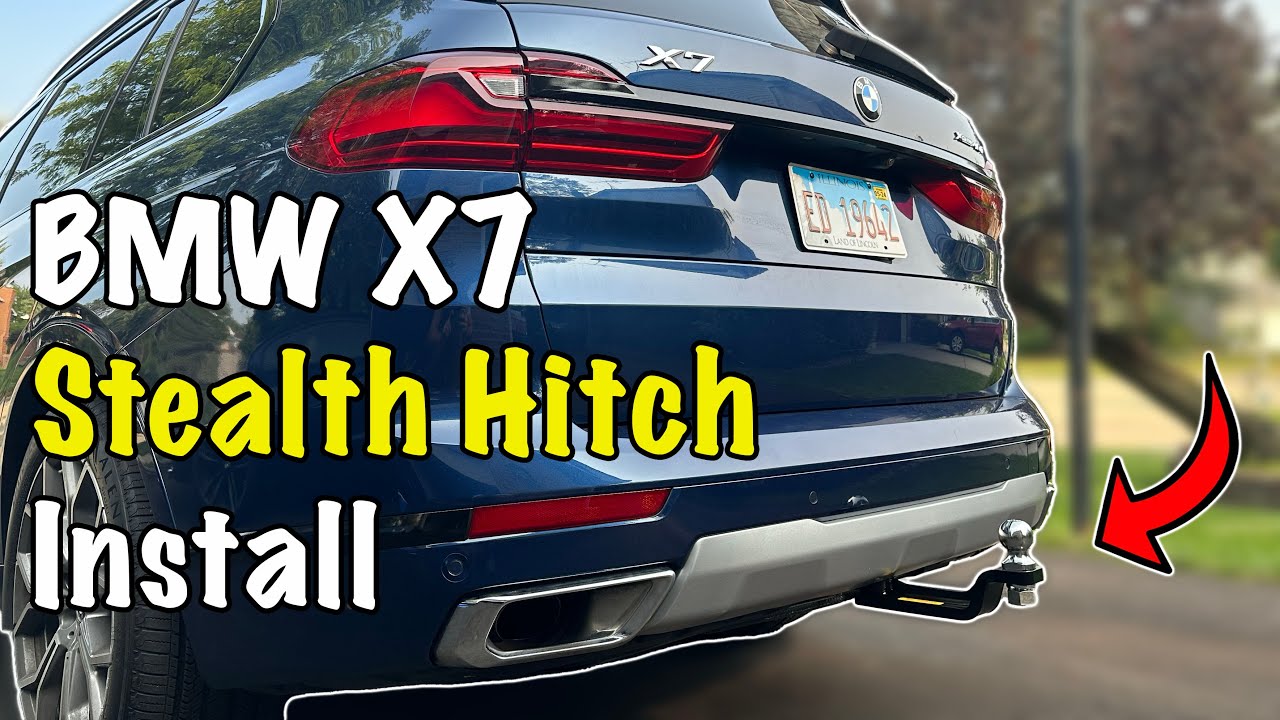
Let’s talk hitch philosophy. A trailer hitch is functional by definition, but it also shapes your ownership experience. Some owners prioritize stealth—clean lines, hidden receivers, and an uncluttered rear view when you’re not towing. Others prefer straightforward utility—simple access, easy inspection, and clear attachment points.
For either the X5 or X7, compatibility matters. A hitch installation should align with the vehicle’s structural design, maintain proper clearance, and support secure mounting. Many drivers seek a concealed or “hidden” receiver look because it keeps the rear end visually clean while still offering towing capability when needed.
Whether you choose an X5 or X7, installation quality is the stealthiest feature of all. A properly fitted hitch reduces annoying movement, ensures consistent alignment, and helps you tow with less mental overhead.

Towing kit essentials: wiring harnesses, adapters, and brake readiness
A trailer hitch receiver is only the backbone. The rest of the kit is what makes towing legally smoother and practically safer. Wiring harnesses are a major consideration. Trailer lighting—brake lights, turn signals, and running lights—should function reliably, especially in wet conditions and after long drives.
Brake setups are another crucial topic. If your trailer requires electric brakes, the system should be integrated properly and tuned to your towing behavior. A confident braking response reduces stress and makes downhill driving feel less like a gamble.
Then there are adapters and accessories. You’ll want the right ball mount or hitch adapter, the correct trailer hitch size, and compatible sway control components if recommended. Not every towing scenario demands the same gear. The “best” towing BMW often depends on what you actually pull, not just what the brochure promises.
Weight distribution and stability: where the X5 vs X7 decision becomes real
Here’s the moment where a playful question becomes serious: what happens when your trailer is fully loaded—when the tongue weight is correct, but the overall combination is heavier than your daily habits?
For many drivers, the X7’s extra mass and longer wheelbase can improve perceived stability. It can feel more resistant to trailer-induced oscillation, particularly at highway speeds. Meanwhile, the X5 often feels nimble and easier to place during turns, which can help when you’re navigating curving entrances to campgrounds or loading zones.
However, stability isn’t only about platform. It’s also about technique: smooth acceleration, appropriate speed, and gentle steering inputs. Your towing success is a partnership between vehicle, trailer, and driving habits.
Braking and thermal management: confidence at the end of the descent
When you tow, brakes work harder. That means brake performance and heat handling matter more than you might expect. A well-suited towing configuration can help maintain consistent stopping power and reduce fade.
The X5 and X7 are both capable, but the towing experience can feel different under sustained use. If you regularly tow in hilly terrain, pay attention to how the vehicle’s systems manage repeated braking events. The best setup is one that keeps your confidence intact when the road tilts downward and the trailer follows your line like a shadow.
Practical ownership: hitch access, cargo flow, and daily usability
Some towing buyers forget the afterlife of the hitch. You’ll tow, then you’ll detach, then you’ll drive. If the process is cumbersome, you’ll start postponing trips or leaving gear behind—sometimes without realizing it.
The X5’s more compact proportions can make maneuvering easier after towing. The X7’s spacious interior and rear flexibility can make the “living with a trailer” period feel more comfortable—especially for families or frequently traveling crews.
So consider your routine. If towing is occasional and day-to-day agility matters, the X5 may fit like a glove. If towing is frequent, long-distance, or carried out with heavier trailers, the X7 often feels like a steadier companion.
Which is the best 2026 BMW for towing? A decision that matches your habits
Here’s the clean answer, wrapped in practical nuance. Choose the 2026 BMW X5 for towing if you want athletic control, easier maneuverability, and a streamlined feel when your trailer is not attached. Choose the 2026 BMW X7 if you prioritize a composed ride, confident stability for longer journeys, and a roomier, more comfort-forward towing experience.
But the real twist is that the “best” choice can hinge on the hitch and towing kit you install. Receiver fitment, wiring integrity, brake compatibility, and trailer-specific accessories can elevate either vehicle from “capable” to “effortless.”
Playful challenge: test your towing setup before the big trip
Before your first major haul, run a mini rehearsal. Attach the trailer in a safe space. Confirm lighting. Check alignment. Perform a gentle stop-and-go routine. Practice a controlled turn and a short reverse. It’s not dramatic—it’s preventive medicine for the nervous system.
Then, bring your trailer to the road with intention. Towing is not only about horsepower; it’s about calm competence. And once you experience that, you’ll find the X5 or X7 becomes more than a vehicle—it becomes the dependable partner in your travel stories.
So, X5 or X7? The answer is less about which one is louder on paper and more about which one matches your towing rhythm. Pick the one that feels right when the trailer is attached, and you’ll enjoy the drive long after the last strap is tucked away.