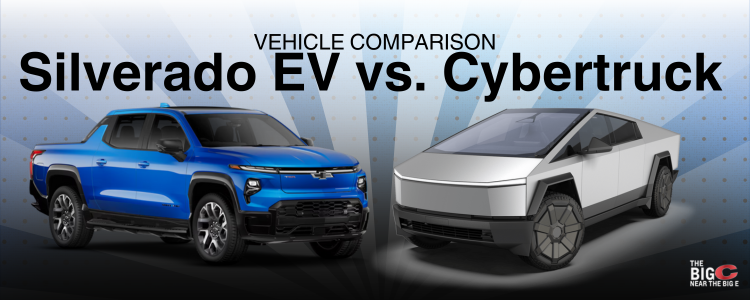
The electric truck era is no longer a rumor—it’s a collision of ambitions, engineering philosophies, and the relentless pull of modern practicality. In one corner, the 2026 Chevrolet Silverado EV arrives with the confidence of a familiar nameplate, reimagined as an electrified workhorse. In the other, the Tesla Cybertruck stands like a geometric monolith from the future—sharp-edged, unapologetic, and engineered to look like it doesn’t belong to the same century as asphalt.
Put them side by side and the conversation shifts. This isn’t just “range versus range” or “power versus power.” It’s about identity. It’s about how each vehicle translates torque into confidence, how each design language tells a different story, and how each one courts the driver who needs capability but also wants spectacle. Think of it as a high-voltage duel where the weapons are software, battery architecture, and the everyday rituals of towing, hauling, and heading out before the forecast changes its mind.
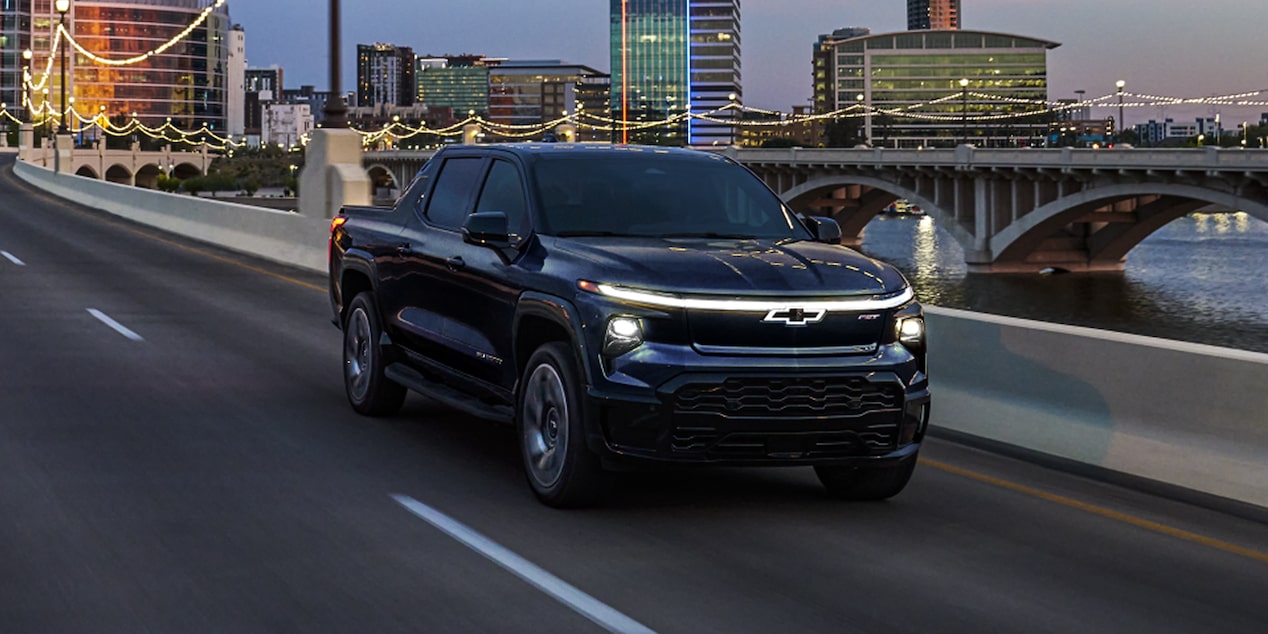
Two Dominant Personas: Traditional Familiarity vs Futuristic Edge
The Silverado EV and Cybertruck don’t merely differ in styling—they feel like they belong to different mythologies. The Silverado EV carries a sense of continuity. It reads as a truck you can recognize instantly, then it rewards a closer look with the quiet confidence of electrification: cleaner surfaces, purposeful proportions, and a stance built for everyday utility.
The Cybertruck, by contrast, is a design manifesto. Its angular geometry is less “vehicle” and more “statement.” It’s the sort of presence that makes onlookers slow down—not because it’s subtle, but because it refuses to be. Where the Silverado EV is a well-tuned orchestra, the Cybertruck is percussion: bold, immediate, and hard to ignore.
Metaphorically, choosing between them is like choosing between a seasoned storyteller and a avant-garde filmmaker. Both can entertain, both can move you, but the experience is different at every beat.
Power Delivery and Driving Character: Torque as a Language
Electric trucks speak fluent torque. The question is how each one translates that torque into driver confidence. The Silverado EV is designed to deliver a composed, work-focused feel—responsive without feeling twitchy, with power that shows up when you ask for it and stays controlled when the road demands restraint.
The Cybertruck, famously direct in its personality, tends to feel like it’s always ready to lunge—an “instant-on” sensibility. It can create the sensation that the road is something you push against rather than something you navigate through. That difference matters most when you’re merging under pressure, climbing a grade, or leaving a job site where your mind is still in the tools, even as your feet are on the accelerator.
In the electric realm, character is everything. One truck may feel like a hydraulic handshake; the other like a lightning strike—both powerful, but with distinct emotional temperatures.
Towing and Hauling: The Practical Trial by Fire
A showdown becomes meaningful only when the contenders enter the terrain that owners actually care about. Towing is the proving ground where myths lose steam and physics writes the final verdict. Electric drivetrains can be remarkably well-suited to hauling because torque is delivered instantly and traction control can be fine-tuned with precision.
In real-world scenarios, the Silverado EV’s appeal often centers on how naturally it integrates into a towing lifestyle. It’s built to feel familiar even as the underlying technology changes. That continuity helps drivers focus on weight distribution, brake planning, and route pacing—rather than constantly second-guessing the electric learning curve.
The Cybertruck’s towing story carries its own aura. Its mass and traction-focused engineering aim to deliver confidence even as the vehicle’s unconventional shape challenges the expectations of traditional truck buyers. Owners who prioritize engineering audacity may feel the Cybertruck is the more daring choice—like choosing a specialized instrument built for high-performance passages.

Battery and Efficiency: Range Anxiety vs Range Confidence
Electric trucks live or die by their battery experience. The best strategy isn’t only maximizing range—it’s making the range feel manageable, predictable, and usable. The Silverado EV emphasizes a driver-centric approach: charging practicality, energy management, and a design that aims to help owners maintain momentum instead of constantly interrogating the dashboard.
The Cybertruck, meanwhile, embodies the idea that the future should be embraced even when it challenges convenience. Its approach to energy utilization is part of its identity. For drivers who enjoy technology as much as they enjoy capability, the Cybertruck can feel like a smart device with tires—a machine that’s always learning, optimizing, and responding.
Both trucks require attention to planning. Yet the difference is emotional: the Silverado EV aims for calm assurance, while the Cybertruck offers a sense of liberated audacity—like casting a wider net and trusting it will catch what you need.
Charging Experience: From Chore to Habit
Charging is where ownership either feels frictionless or becomes a recurring interruption. A compelling electric truck doesn’t just promise range—it choreographs the route ahead of time. The Silverado EV’s charging appeal often leans into predictability. With an emphasis on usable real-world range and practical energy management, it’s positioned as a vehicle that can live inside a busy schedule.
The Cybertruck leans into modern convenience, with a tech-forward experience that feels designed for drivers who want their vehicle to act like a system rather than a simple appliance. That can translate into an ownership experience where planning is integrated into the journey rather than bolted on after the fact.
Think of charging as the difference between stopping for fuel and stepping into a cockpit with guidance. One truck offers a steady routine; the other offers a futuristic rhythm.
Interior and Infotainment: Comfort as a Competitive Advantage
Trucks spend a surprising amount of time parked in driveways, idling in lots, and working through long days. That makes interior usability more than a luxury—it’s a productivity tool. The Silverado EV’s cabin is designed to feel coherent and purposeful. The experience is geared toward drivers who treat their vehicle as a mobile headquarters: controls that make sense quickly, a layout that supports long shifts, and a familiar ergonomic logic that reduces fatigue.
The Cybertruck’s interior experience tends to be more unconventional—bold choices, a tech-centric vibe, and a sense of minimalism that can feel either empowering or polarizing. For some, that stark futurism is precisely the point. For others, the desire is for something that blends into the rhythm of daily life with fewer interpretive steps.
In both cases, the question is the same: how quickly can you forget about the screen and focus on the road, the job, and the people waiting at the end of the drive?
Safety, Driver Assistance, and Road Confidence
Modern electric trucks carry a promise beyond performance: a safer journey powered by advanced sensing and driver assistance. The Silverado EV’s approach often emphasizes balanced confidence—systems designed to support situational awareness without overwhelming the driver with unnecessary complexity.
The Cybertruck’s platform is built with a futuristic mentality, and its safety features are part of that larger design culture. The experience may feel different from conventional trucks because the vehicle itself is different. Yet the real measure is how it behaves when visibility drops, road conditions shift, and the driver needs clarity more than charisma.
Safety is the silent co-pilot. It’s not the loudest feature at a car meet, but it’s the one you appreciate when the day turns wet and unpredictable.
Design Legacy and Brand Magnetism: What Each Truck Promises Emotionally
Brand identity matters in trucks because owners don’t just buy hardware—they buy a narrative. The Silverado EV speaks to buyers who want electric capability without losing the cultural weight of a classic American truck brand. It promises practicality, heritage, and the comfort of knowing the vehicle is built to handle real tasks.
The Cybertruck promises something else: a future-forward ownership experience with a design that dares the world to react. It appeals to drivers who want their truck to look like it arrived early from the tomorrow they’ve been thinking about. Its magnetism is visual first, but its tech and performance ambitions back up the spectacle.
In this electric showdown, the rivalry is not only mechanical. It’s also psychological. The Silverado EV can feel like a trusted tool refined for the grid; the Cybertruck feels like a blueprint given wheels.
Which One Wins the Showdown?
“Winning” depends on the driver’s definition of success. The 2026 Chevrolet Silverado EV is compelling for those who want an electrified truck that fits naturally into existing routines—towing, hauling, charging habits, and everyday comfort. It’s the steady hand on the wheel of a new powertrain era.
The Tesla Cybertruck wins hearts among drivers who crave futuristic audacity, want a distinct driving aura, and are excited by a technology-forward approach that treats the vehicle as a living system. It’s for the buyer who sees the truck not just as transportation, but as a signal.
Ultimately, both trucks embody the same transformation: the internal combustion soundtrack is fading, and a new tone—electric, instantaneous, and sharply defined—is taking over. Choose the Silverado EV if you want electrified reliability dressed in familiar form. Choose the Cybertruck if you want an electric revolution wrapped in angular certainty.
Final Thoughts: The Electric Truck Future, Now
The 2026 Silverado EV vs Tesla Cybertruck showdown isn’t merely a comparison. It’s a preview of the ways electric trucks will carve their space in the world—through utility or through iconography, through composure or through spectacle. One truck aims to keep you working. The other aims to make the future visible.
Either way, the electric truck era has arrived with a thrum you can almost feel in your chest. And when you’re ready to move—whether to a job site, a weekend campsite, or somewhere in between—these machines are no longer hypothetical. They’re here, charged with possibility, waiting for the next destination to call.