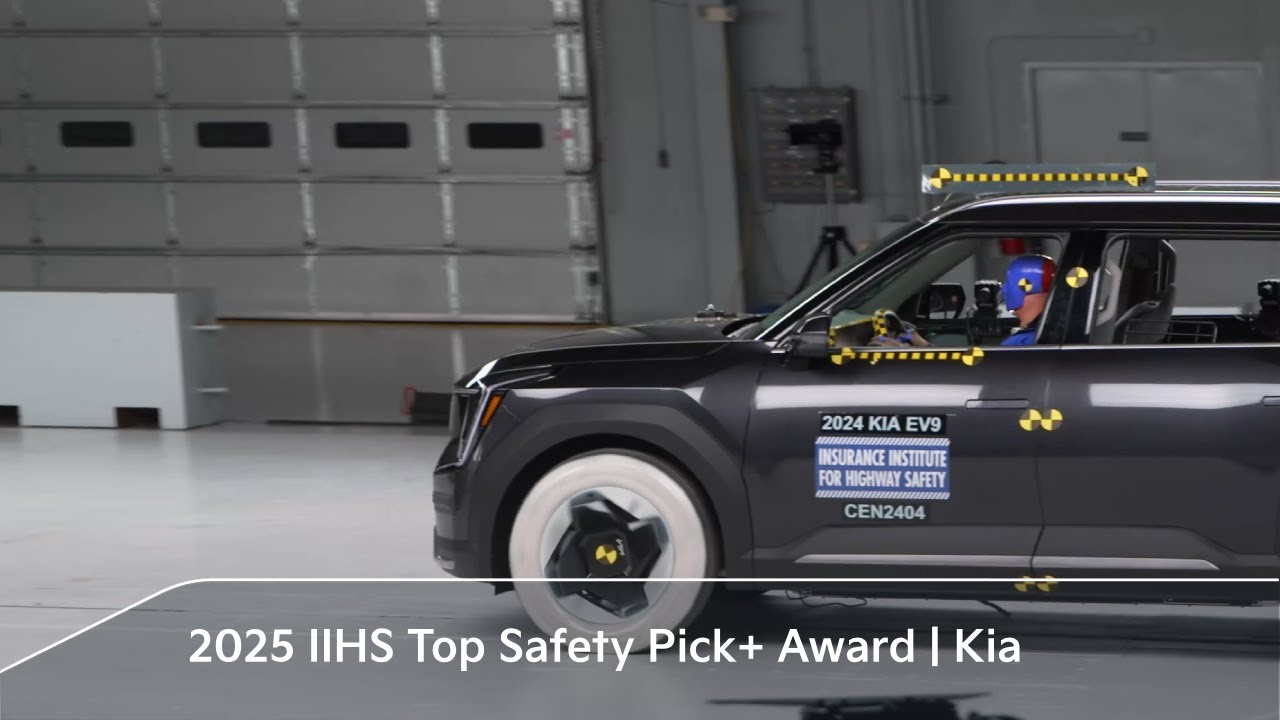
Safety has a peculiar magic to it. It doesn’t shout; it quietly rehearses. While most features beg for attention—screens, trims, horsepower—safety works like an invisible stage crew, tightening rigging before the spotlight ever hits. In 2026, that backstage craft is easier to recognize, because the Insurance Institute for Highway Safety (IIHS) continues to elevate vehicles that can earn the coveted Top Safety Pick+ designation. For Chevrolet drivers, that means certain 2026 models carry a distinctive kind of confidence: not the bravado of speed, but the calm assurance of engineering that has been tested, scored, and refined.
Below is a guided look at the Safest 2026 Chevrolet models—models that stand out for their IIHS Top Safety Pick+ credentials. Think of these vehicles as well-tuned fortresses. Their metal is only the visible shell. The real strength lives in the layers: collision avoidance systems, crashworthiness design, and the subtle precision of driver-assistance that aims to intercept trouble before it becomes a story you have to live through.
What IIHS Top Safety Pick+ Really Means (and Why It Matters in Everyday Life)
Top Safety Pick+ isn’t a decorative badge. It’s a composite verdict, built from multiple tests that probe how a vehicle behaves in realistic, high-stakes moments. The process evaluates crash protection for occupants, the effectiveness of crash-avoidance technologies, and—crucially—the vehicle’s ability to mitigate consequences when impacts can’t be fully prevented.
Imagine safety as a set of doors in a hallway. Some doors slow the intruder. Others divert them. The best systems don’t merely stop the danger; they reduce the damage at every checkpoint. A Top Safety Pick+ vehicle demonstrates performance across those checkpoints, suggesting a consistent design philosophy rather than a lucky outcome.

The 2026 Chevrolet Approach to Safety: From Rigid Skeleton to Intelligent Senses
Chevrolet’s safest 2026 models reflect an ecosystem mindset. A vehicle is not a single invention; it’s a collaboration between materials, geometry, electronics, sensors, and control algorithms. The goal is orchestration. When systems work harmoniously, reactions feel seamless—like a duet rather than a set of solo performances.
On one level, crashworthiness depends on a credible structure: zones that manage energy, a cabin designed to preserve space, and reinforcements where forces are most likely to concentrate. On another level, advanced driver assistance systems act like attentive guardians. They monitor the environment and react with millisecond discipline, offering braking support, steering assistance, and warnings that are designed to be understandable rather than overwhelming.
In 2026, the most compelling part is the “translation layer”—how technology turns sensor data into human-relevant action. A warning that arrives too late is just noise. A warning that arrives at the right moment can be a pivot point. The safest Chevrolet models aim for that pivot, that fraction-of-a-second where the outcome changes.
Chevrolet’s Safest 2026 Sedans: Quiet Confidence for Long Miles
Sedans often become the default vehicles for commuting, road trips, and daily logistics. They are the workhorses of routine. Yet the safest sedans aren’t simply comfortable—they’re composed. Their appeal is less about spectacle and more about steadiness.
When a 2026 Chevrolet sedan earns IIHS Top Safety Pick+, it suggests a refined balance between protective architecture and collision-avoidance capability. The vehicle’s front-end design and structural integrity work together to handle impact forces. Meanwhile, the advanced safety suite aims to reduce the likelihood of certain crashes through proactive interventions.
Consider the daily scenario: a sudden lane drift, a late braking moment, an unexpected intersection event. A Top Safety Pick+ sedan is designed for these ordinary unpredictabilities—the kind of surprises that don’t make headlines but can reshape a day in an instant.
Chevrolet’s Safest 2026 Crossovers and SUVs: The Fortress Feel Without the Bulk
Crossovers and SUVs carry a particular cultural weight. They feel capable. They look ready. But capability isn’t just clearance—it’s control. The safest 2026 Chevrolet CUVs and SUVs bring together a commanding driving position with the kind of safety performance that doesn’t rely on size alone.
In IIHS terms, these vehicles tend to stand out when their crash protection, front crash prevention features, and headlight performance align. That alignment is important. Safety is not a single beam; it’s the structure holding up the entire framework of risk reduction. When headlight effectiveness is strong, night driving becomes less of a gamble. When front crash prevention performs well, the moments before a collision are treated like a decision point rather than an inevitability.
Metaphorically, these SUVs behave like bouncers at the door of chaos. The best ones recognize the “bad pattern” early—vehicles, pedestrians, and trajectories—and attempt to defuse conflict before it turns into impact.
Lighting That Performs: The Headlight Factor in Top Safety Pick+
Few drivers think about headlights until they’re confronted with a dark road and a bright glare. Yet IIHS evaluations include headlight performance as a significant element. This means that a Top Safety Pick+ Chevrolet does more than illuminate the surface of the road—it enhances visibility quality and reduces uncertainty.
In practical terms, better lighting extends confidence into the night. It helps drivers perceive hazards sooner, improves the clarity of road edges and signage, and can reduce the stress that comes from “guessing” what’s just around the curve. The safest vehicles understand that night visibility is not merely convenience; it’s a risk-control mechanism.

Driver-Assistance Tech: When Warnings Become Actions
Some safety systems warn. Others intervene. The most effective ones do both, but with restraint. Overly aggressive interventions can be distracting. Passive alerts can be ignored. The hallmark of high-performing systems is judicious behavior: they communicate clearly, then act decisively when the situation demands it.
Look for capabilities often associated with IIHS excellence—forward collision mitigation, lane support features, and improved detection. The goal is not to replace driver judgment. Instead, the vehicle should act like an extra set of eyes and a measured second brain.
That second brain is particularly valuable in monotonous driving. Long stretches of highway can dull attention. A Top Safety Pick+ vehicle aims to protect those moments when focus naturally softens.
Crashworthiness and Occupant Protection: Preserving the Human Space
Crashworthiness is where safety becomes physical. It’s the part you can’t fully feel until a test or an actual event. But the outcomes are measurable: how well the vehicle protects occupants, how structure channels forces, and how well restraint systems function.
For 2026 Chevrolet models earning Top Safety Pick+, the implication is that the vehicle’s architecture respects the cabin. It tries to preserve survivable space, managing deformation and deploying protection mechanisms designed to reduce injury risks.
This is the quiet difference between feeling safe and being safe. Feeling safe is emotion. Being safe is geometry plus engineering plus tested performance.
Choosing the Right Trim and Configuration: Safety Isn’t One-Size-Fits-All
Even within a model line, the safety profile can change depending on trim level and equipment packages. IIHS recognitions can be tied to specific configurations, including the availability of advanced features and the performance of components like headlights.
That’s why the “safest Chevrolet” isn’t just a name—it’s also a spec sheet. For buyers, it’s worth verifying the exact setup, confirming that the intended safety features are present and matched appropriately.
In the buying process, treat trim selection like choosing a suit for a critical event. The right fit matters. The right materials matter. The performance matters.
Who These Safest 2026 Chevrolet Models Are For
The most compelling owners are often the ones who value consistency. Families coordinating schedules. Professionals driving long commutes. Drivers planning road trips that stretch beyond familiar routes.
Top Safety Pick+ vehicles appeal to people who see safety as an investment rather than an afterthought. They want a vehicle that behaves predictably under pressure—during sudden braking, unexpected lane changes, and low-visibility conditions.
They’re also for drivers who prefer “calm power.” Not the loud kind. The kind that helps reduce the probability of disaster, then mitigates the aftermath if danger still arrives.
Outlook: 2026 Chevrolet Safety as a Promise Kept in Metal
In a world full of promises, safety is one of the few that can be measured, tested, and verified. The safest 2026 Chevrolet models—those aligned with IIHS Top Safety Pick+—represent a specific philosophy: protect the human first, then enhance the driving experience with intelligent systems that support rather than intrude.
When you choose one of these vehicles, you’re not just buying transportation. You’re selecting a moving safety envelope: a well-engineered structure, alert senses, and a set of decisions made in advance by designers who understood that the road is unpredictable.
Drive with confidence. Not the flashy kind—the earned kind. The kind that arrives quietly, like a seatbelt clicking into place, and stays with you on every mile.