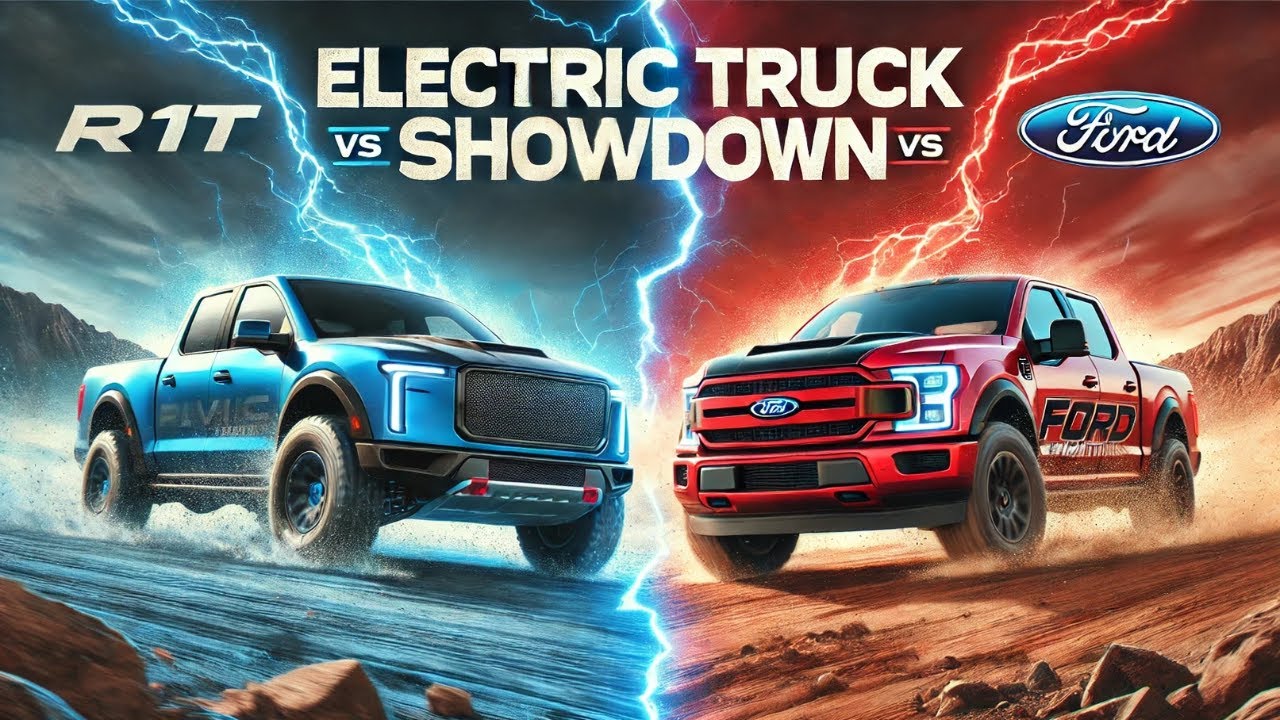
The electric truck revolution is here, and two titans stand at the forefront—Ford’s F-150 Lightning and Rivian’s R1T. These aren’t just vehicles; they’re rolling manifestos of what the future of transportation could be. One hails from the heartland of American manufacturing, a legacy brand with a truck-shaped crown. The other emerges from the wild, untamed spirit of adventure, a Silicon Valley-born disruptor that feels like it rolled straight out of a tech demo. Together, they represent the collision of tradition and innovation, of grit and grace, of workhorse pragmatism and eco-conscious audacity. This isn’t just a comparison—it’s a showdown between two philosophies of electric mobility, each vying to redefine what a pickup truck can be in the 21st century.
Imagine, if you will, a duel not of swords and shields, but of batteries and torque, of charging ports and payload capacities. The Ford F-150 Lightning is the seasoned gladiator—familiar, dependable, built on a foundation of over a century of truck lore. The Rivian R1T, by contrast, is the rogue knight, clad in rugged elegance, wielding innovation like a double-edged sword. Both promise to haul not just cargo, but a new era of driving experience. Both challenge the very notion of what a truck should do. So, which one emerges victorious in this electric coliseum? Let’s dive beneath the hoods, beyond the specs, and into the soul of each machine.
The Battle of the Builds: Where Form Meets Function
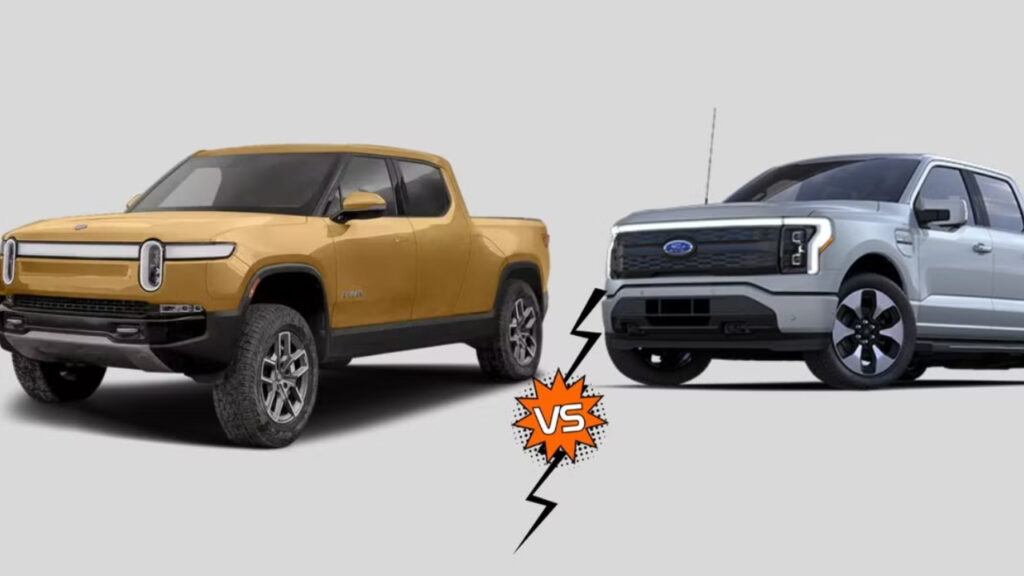
The Ford F-150 Lightning isn’t just a truck with a battery—it’s a masterclass in evolutionary design. It retains the muscular silhouette of its gasoline siblings, but with a subtle, futuristic sheen. The front grille is closed, a silent nod to its electric lineage, while the LED lighting strips beneath the bumper pulse with a cool, blue glow. It looks like a truck that’s been to the gym and come back stronger, its body sculpted not just for aerodynamics, but for the kind of rugged charm that turns heads at construction sites and suburban driveways alike.
Climb into the cabin, and you’re greeted by a minimalist dashboard dominated by a massive 15.5-inch touchscreen—Ford’s SYNC 4A infotainment system—paired with a 12-inch digital instrument cluster. The materials are a blend of soft-touch plastics and brushed aluminum, giving it a premium feel without sacrificing durability. The seating is supportive, the ride surprisingly quiet, and the overall ambiance feels like stepping into a tech-forward living room on wheels. It’s a truck that doesn’t just carry people—it carries the future, wrapped in the comfort of the familiar.
Now, step into the Rivian R1T, and you’re transported to another world entirely. This is a vehicle that feels like it was designed by explorers, for explorers. The exterior is a study in geometric precision—sharp creases, flush door handles, and a panoramic glass roof that bathes the interior in natural light. The front end is dominated by a sleek, almost alien grille, flanked by futuristic headlights that resemble something out of a sci-fi thriller. It’s not just a truck; it’s a statement.
Inside, the R1T’s cabin is a symphony of sustainable luxury. Recycled materials line the surfaces, from the door panels made of Econyl to the seat upholstery crafted from plant-based fibers. The centerpiece is a 16-inch touchscreen, flanked by a secondary 12-inch display for climate control. The seats are plush, the steering wheel wrapped in vegan leather, and the overall vibe is one of quiet sophistication. It’s a truck that whispers, “I’m here to adventure,” while the Lightning roars, “I’m here to conquer.”

Power Play: Torque, Towing, and the Art of Hauling
When it comes to raw power, both trucks flex their electric muscles with authority. The Ford F-150 Lightning starts with a dual-motor setup generating 452 horsepower and 775 lb-ft of torque in the standard range model, with the extended-range version pushing that to 580 horsepower and a jaw-dropping 775 lb-ft. That’s enough grunt to launch this 6,000-pound behemoth from 0 to 60 mph in just 3.5 seconds—faster than many sports cars. It can tow up to 10,000 pounds and haul 2,000 pounds in its bed, all while sipping electrons instead of gasoline.
But the Rivian R1T doesn’t play second fiddle. With quad-motor all-wheel drive, it delivers 835 horsepower and a mind-bending 908 lb-ft of torque. It can sprint to 60 mph in a scant 3.0 seconds, making it one of the quickest production trucks ever built. Its towing capacity clocks in at 11,000 pounds, and its bed can handle 1,760 pounds of cargo. The R1T isn’t just fast—it’s ferociously quick, a silent predator in the world of electric trucks.
Yet, power isn’t just about numbers. It’s about how that power feels in your hands. The Lightning’s acceleration is smooth, controlled, like a well-rehearsed symphony. The R1T’s thrust is more visceral, more immediate—like being catapulted forward by an invisible force. One truck whispers power; the other screams it. And in the end, which you prefer may come down to whether you want a gentle giant or a thunderous titan.
The Charging Conundrum: Range, Speed, and the Anxiety of Empty
Range anxiety is the ghost that haunts every electric vehicle, and both the F-150 Lightning and R1T have strategies to exorcise it. The Lightning, in its extended-range guise, boasts up to 320 miles of EPA-estimated range. It can juice up at a Ford-compatible fast-charging station, adding 54 miles of range in just 10 minutes. That’s enough to get you back on the road quickly, whether you’re hauling a trailer or just running errands.
The R1T, meanwhile, offers up to 314 miles of range in its Large Pack configuration. Rivian’s network of Adventure Network charging stations is designed specifically for its trucks, with 220 kW chargers that can replenish 80% of the battery in about 45 minutes. It’s a slower process than the Lightning’s lightning-fast top-ups, but Rivian’s charging stations are often located in scenic, remote areas—perfect for those who see road trips as part of the adventure.
So, which is better? If you’re a road warrior who values quick pit stops, the Lightning’s faster charging might win you over. But if you’re the type who sees every mile as part of the journey, the R1T’s charging network and rugged charm could be irresistible. It’s not just about how far you can go—it’s about where you want to go.
Tech, Innovation, and the Future of Trucking
Both trucks are technological marvels, but they approach innovation from different angles. The F-150 Lightning integrates seamlessly with Ford’s existing ecosystem, offering features like Pro Power Onboard—a built-in generator that turns the truck into a mobile power station. Need to run power tools at a job site? Plug in your tools. Hosting a tailgate party? The Lightning’s got you covered with up to 9.6 kW of exportable power. It’s a truck that doesn’t just drive—it adapts.
The R1T, on the other hand, is a playground for tech enthusiasts. Its Gear Tunnel—a 12-foot-long storage compartment hidden beneath the bed—is a masterstroke of utility. It’s perfect for storing skis, fishing rods, or even a surfboard. The truck also features a built-in air compressor, a camp kitchen with a sink and stove, and a system called Camp Mode that keeps the cabin climate-controlled while you sleep under the stars. It’s not just a truck; it’s a mobile basecamp.
Both trucks offer over-the-air updates, advanced driver-assistance systems, and connectivity features that make them feel like they’re always evolving. But while the Lightning feels like a tool refined by generations of craftsmanship, the R1T feels like a blank canvas waiting to be painted with your next adventure.
Price, Value, and the Bottom Line
Of course, no comparison is complete without talking about cost. The Ford F-150 Lightning starts at around $55,974, while the Rivian R1T begins at $73,000. That’s a significant gap, and it reflects not just the different positioning of the brands, but also the unique features each truck offers. The Lightning is aimed at the mass market, offering a compelling blend of performance and practicality at a more accessible price point. The R1T, with its premium materials, innovative storage solutions, and off-road prowess, caters to those who see their truck as an extension of their lifestyle.
But value isn’t just about the sticker price. It’s about what you get for your money. The Lightning offers a proven track record, a vast dealer network, and the kind of reliability that comes from decades of truck-building expertise. The R1T, meanwhile, offers exclusivity, innovation, and a sense of adventure that’s hard to quantify. Which is worth more to you? The answer may depend on whether you see your truck as a workhorse or a playhorse.
The Verdict: Which Truck Wins the Showdown?
So, which truck emerges victorious in this electric coliseum? The truth is, there is no clear winner—only a choice that reflects your priorities. If you value tradition, reliability, and a truck that can do it all without breaking the bank, the Ford F-150 Lightning is your champion. It’s a vehicle that respects the past while embracing the future, a workhorse with a heart of electric gold.
But if you’re drawn to the call of the wild, to the idea of a truck that’s as comfortable on a mountain trail as it is in a city parking lot, then the Rivian R1T is your steed. It’s a machine that doesn’t just transport you—it transports your soul, offering a blend of innovation, adventure, and sustainability that’s hard to resist.
In the end, the electric truck showdown isn’t just about specs and prices. It’s about what you want your truck to be. Do you want a legend in the making, or a pioneer of the new frontier? The choice is yours—and whichever you pick, you’ll be driving the future.