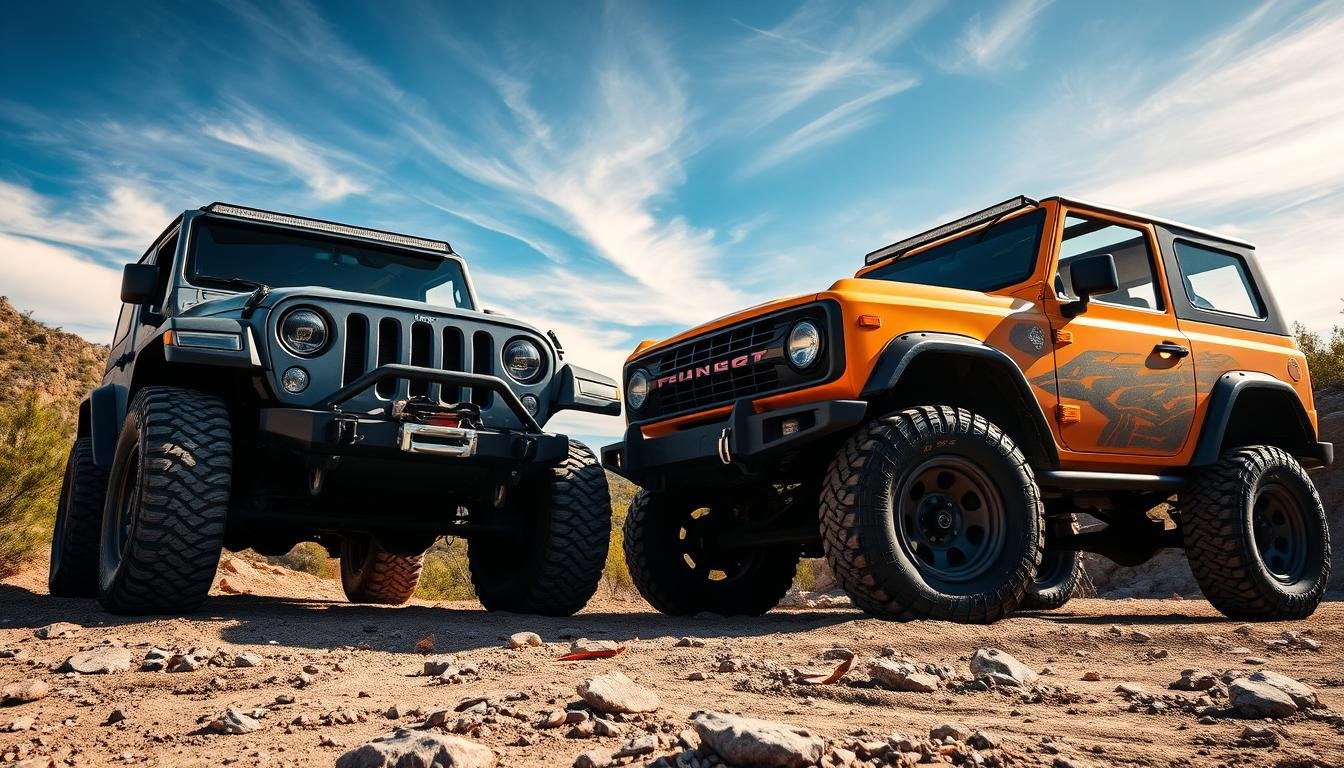
The Ford Bronco and Jeep Wrangler have long stood as titans of the off-road world, each carving its own legacy through rugged trails and urban jungles alike. These two icons don’t just traverse terrain—they redefine it, challenging drivers to push boundaries while offering unparalleled freedom. Whether you crave the Bronco’s modern versatility or the Wrangler’s storied heritage, this showdown dives deep into what sets them apart. Buckle up, because the battle for off-road supremacy is about to ignite.

The Battle of Legacies: Where History Meets the Trail
The Ford Bronco and Jeep Wrangler aren’t just vehicles—they’re legends. The Wrangler’s lineage stretches back to the original Willys MB of World War II, a machine born from military necessity and later reborn as the civilian Jeep CJ. Its DNA is woven into the fabric of off-roading, with a reputation for indomitable spirit and adaptability. The Bronco, on the other hand, debuted in 1966 as Ford’s answer to the Jeep, blending rugged capability with a touch of American muscle-car flair. While the Bronco faded into hiatus in 1996, its 2021 revival reignited the rivalry, infusing modern tech into its classic silhouette.
This clash of histories isn’t just nostalgia—it’s a testament to how these vehicles have evolved while staying true to their roots. The Wrangler clings to its utilitarian charm, with round headlights and a boxy frame that scream authenticity. The Bronco, though newer, channels retro vibes with its throwback design, buttressed by cutting-edge engineering. One thrives on heritage; the other marries tradition with innovation. Which path resonates with you?
Off-Road Prowess: Traction, Ground Clearance, and Articulation
When the trail turns treacherous, raw capability becomes non-negotiable. The Jeep Wrangler’s approach is brute-force simplicity: a solid front and rear axle, a commanding 8.6 inches of ground clearance, and a legendary Selec-Trac four-wheel-drive system that adapts to any surface. Its Rubicon trim takes it further, with electronic locking differentials and a disconnecting sway bar for unparalleled articulation. Crawl down a boulder-strewn path, and the Wrangler’s composure feels almost supernatural.
The Ford Bronco counters with a more nuanced strategy. Its independent front suspension, borrowed from the Ranger pickup, offers a smoother ride on pavement while still delivering impressive off-road chops. With up to 11.6 inches of ground clearance (in the Badlands trim) and a Terrain Management System that tailors throttle, steering, and traction to the terrain, the Bronco blends agility with authority. It’s less about brute force and more about finesse—though don’t mistake that for weakness. Both vehicles dominate in their own ways, but the Wrangler’s rock-crawling pedigree gives it an edge in the most extreme conditions.
Power and Performance: Engines That Roar and Whisper
Under the hood, these off-road titans cater to different appetites. The Jeep Wrangler’s base engine—a 3.6L Pentastar V6—delivers 285 horsepower and 260 lb-ft of torque, adequate for daily duties and light off-roading. But it’s the EcoDiesel V6 (3.0L, 260 hp, 442 lb-ft) and the 4xe plug-in hybrid (375 hp combined) that steal the spotlight, offering diesel efficiency or electrified torque on demand. The Wrangler’s transmission—a robust 8-speed automatic—shifts with authority, though its fuel economy remains a sore point.
The Ford Bronco, meanwhile, flexes its modern muscle with a standard 2.3L EcoBoost turbocharged four-cylinder (270 hp, 310 lb-ft) or a burly 2.7L EcoBoost V6 (310 hp, 400 lb-ft) in higher trims. For those craving thunder, the Bronco Raptor unleashes a 3.0L twin-turbo V6 with 418 hp and 440 lb-ft, paired to a 10-speed automatic. Fuel efficiency improves markedly over the Wrangler, especially in the base engine, though the Bronco’s on-road manners are often smoother. Power is abundant in both, but the Bronco’s turbocharged options offer a blend of efficiency and exhilaration that the Wrangler can’t quite match.
Interior Comfort and Tech: From Trail to Town
Off-roading isn’t just about where you go—it’s about how you get there. The Jeep Wrangler’s interior is a study in utilitarian charm, with upright seating, a straightforward dashboard, and materials that prioritize durability over luxury. The Sahara and Rubicon trims add creature comforts like leather seats, a 12-inch touchscreen, and available leather-wrapped steering wheel, but the overall ambiance remains rugged. The Wrangler’s removable top and doors are iconic, but they also mean wind noise and weather exposure at higher speeds.
The Ford Bronco, by contrast, leans into modern refinement. Its cabin is quieter, with better sound insulation and a more contemporary layout. The Badlands and Wildtrak trims feature premium materials, wireless Apple CarPlay/Android Auto, and available 12-inch digital gauges. The Bronco’s removable top is easier to stow, and its climate control system is more adept at taming extreme temperatures. If you split your time between city streets and backcountry trails, the Bronco’s interior might just sway your vote.
Customization and Aftermarket Appeal: Building Your Dream Machine
For off-road enthusiasts, the ability to personalize is paramount. The Jeep Wrangler’s aftermarket is a universe unto itself, with lift kits, armor, and performance upgrades available for nearly every component. Jeep’s Mopar brand offers official accessories, from snorkels to winches, ensuring your Wrangler is battle-ready straight from the dealership. The community is vast, with clubs, forums, and trail events celebrating the Wrangler’s adaptability.
The Ford Bronco’s aftermarket is younger but rapidly expanding. Ford’s Performance Parts division offers direct-fit upgrades, including lift kits, skid plates, and exhaust systems, while third-party brands like Icon 4×4 and Rough Country provide heavy-duty modifications. The Bronco’s modular design makes it easier to swap components, and its modern architecture allows for more advanced tuning. Whether you’re chasing rock-crawling dominance or overlanding luxury, both vehicles offer endless possibilities—but the Wrangler’s ecosystem is unmatched in sheer volume and variety.
Price and Value: What’s Your Budget Worth?
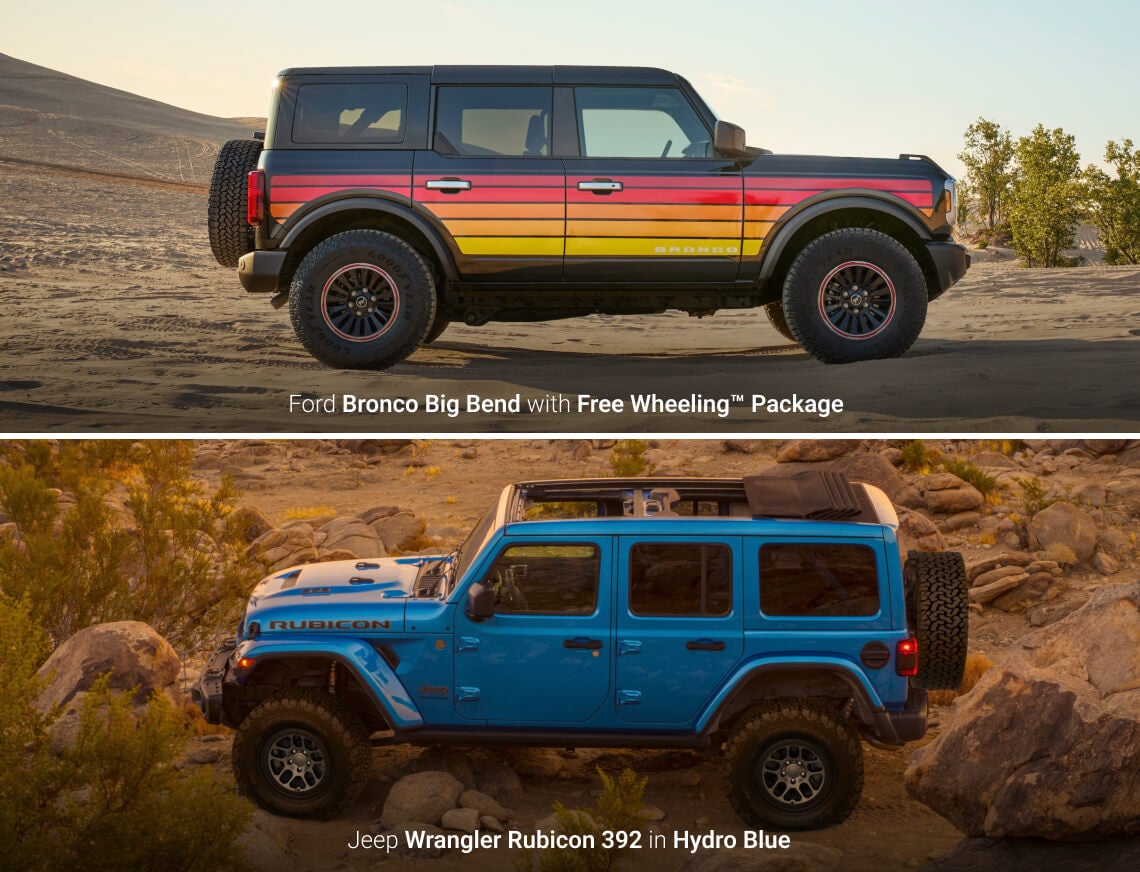
Budget is often the deciding factor in any vehicle purchase, and the Ford Bronco vs. Jeep Wrangler debate is no exception. The Wrangler starts at around $38,000 for the base Sport trim, with the Sahara and Rubicon climbing to $50,000–$60,000. The 4xe hybrid pushes past $60,000, while the Rubicon 392—with its 470-hp V8—can exceed $70,000. Jeep’s pricing reflects its premium positioning, especially in higher trims.
The Bronco’s starting price is slightly higher, beginning at $37,000 for the base model, but the Big Bend and Badlands trims hover around $45,000–$50,000. The Wildtrak and Raptor can soar to $60,000–$75,000, depending on options. Ford’s pricing is competitive, but the Bronco’s tech-heavy trims can add up quickly. Resale values for both are strong, though the Wrangler’s iconic status often gives it a slight edge in the used market. Ultimately, value depends on whether you prioritize heritage (Wrangler) or innovation (Bronco).
Which One Wins Your Heart?
The Ford Bronco and Jeep Wrangler are more than just vehicles—they’re symbols of adventure, freedom, and unyielding spirit. The Wrangler’s raw, unapologetic off-road prowess and storied history make it a timeless choice for purists who live for the trail. The Bronco, with its modern amenities and refined performance, appeals to those who want to blend capability with comfort.
If you crave the tactile feedback of a solid axle, the Wrangler’s rock-crawling dominance is hard to beat. But if you prefer a smoother ride, better fuel economy, and a cabin that doesn’t feel like a relic from the ‘80s, the Bronco might be your perfect partner. Both vehicles excel in their own ways, and the “better” choice ultimately depends on your driving style, budget, and what you value most in an off-road companion.
One thing is certain: whichever you choose, you’re not just buying a vehicle—you’re joining a legacy. The trail awaits, and the adventure of a lifetime is just around the bend.