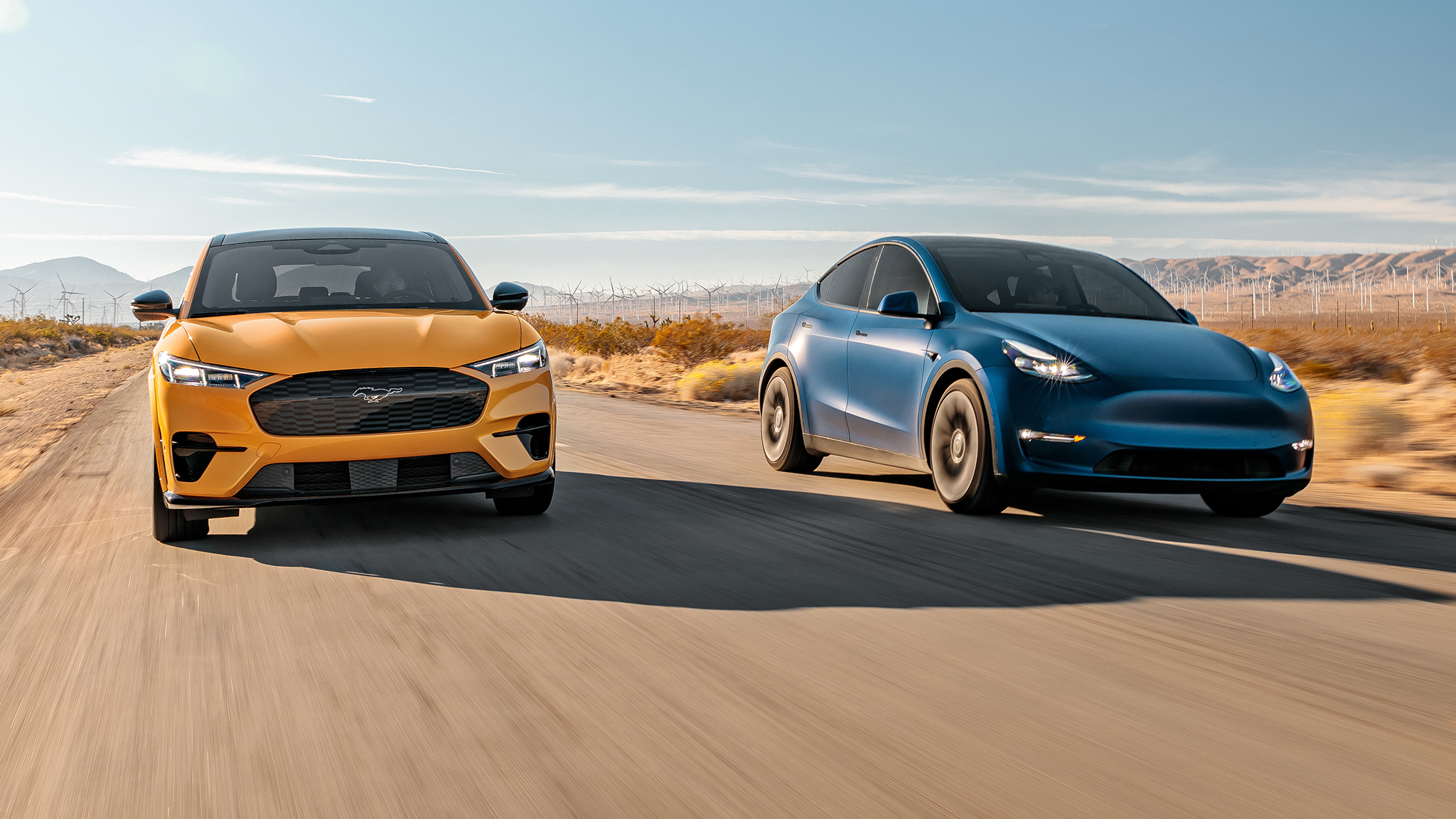
The electric vehicle revolution isn’t just about efficiency or sustainability—it’s about raw, unfiltered acceleration that pins you to your seat and leaves tire marks on the pavement. When the Ford Mustang Mach-E GT and Tesla Model Y Performance line up for a drag race, they’re not just competing for bragging rights; they’re showcasing two distinct philosophies of electric performance. One leans into the legacy of American muscle, while the other embodies Silicon Valley’s relentless pursuit of technological supremacy. But beneath the quarter-mile times and 0-60 sprints lies a deeper narrative—one that reveals how tradition and innovation collide in the modern EV landscape.
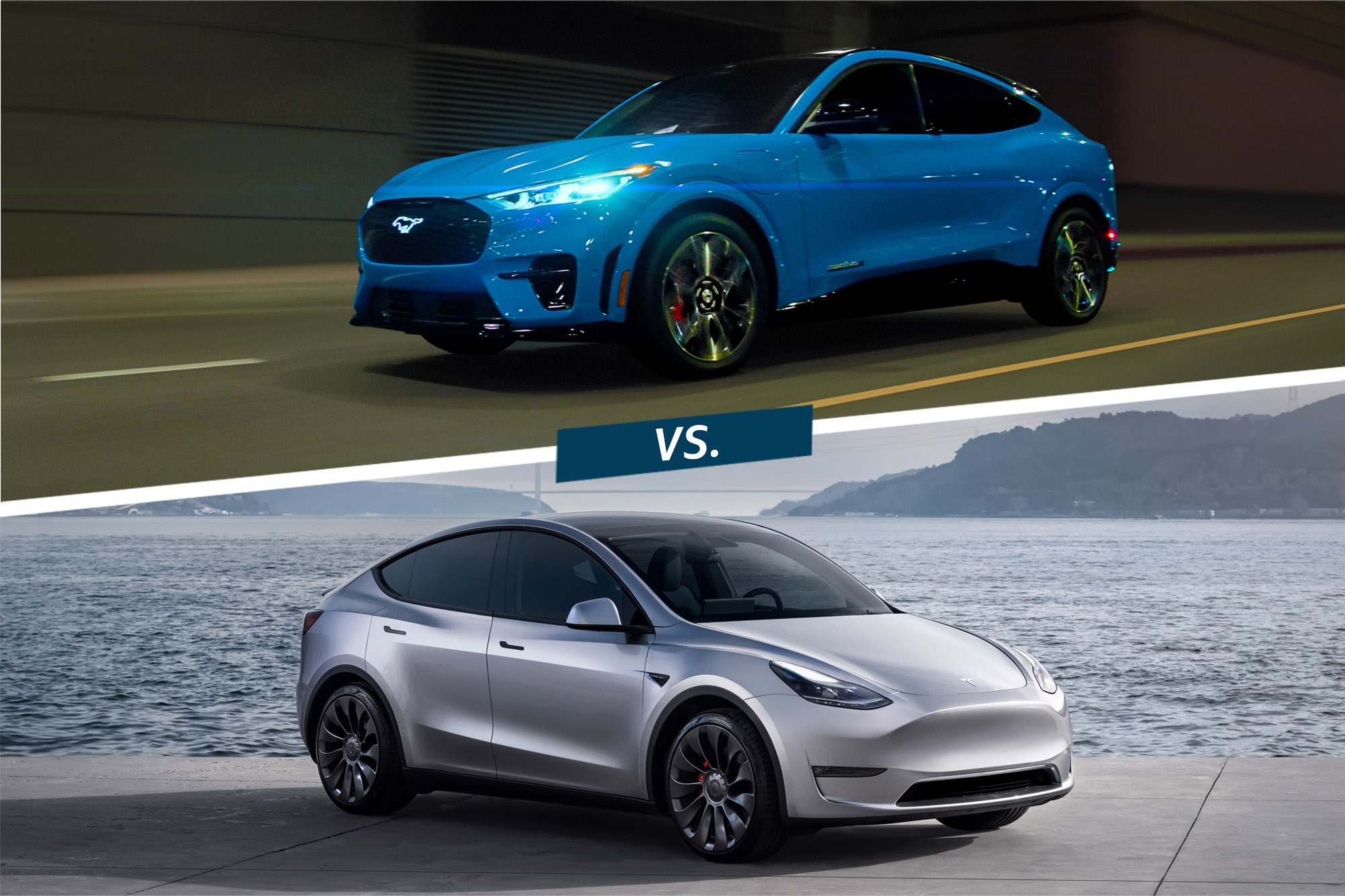
The Thunderous Heart of the Mustang Mach-E GT
Ford’s Mustang has long been the embodiment of raw, unapologetic power, and the Mach-E GT carries that torch into the electric era with a vengeance. Under its sleek, aerodynamic hood—or rather, beneath its floorpan—lies a dual-motor setup churning out 480 horsepower and 634 lb-ft of torque. That torque figure isn’t just impressive; it’s almost obscene in its immediacy. The moment you floor the accelerator, the Mach-E GT doesn’t just move—it *launches*, as if catapulted by an invisible force. The all-wheel-drive system ensures every ounce of that torque is distributed with surgical precision, minimizing wheelspin and maximizing forward thrust.
But power alone doesn’t make a legend. The Mach-E GT’s chassis tuning is a masterclass in balancing performance with comfort. The adaptive suspension soaks up imperfections in the road while keeping the body planted during aggressive launches. The steering, though not as razor-sharp as a sports sedan’s, offers a reassuring weight that invites confidence. And then there’s the sound—or rather, the lack of it. The Mach-E GT compensates for its silent electric motors with a carefully crafted artificial growl, a digital symphony that mimics the rumble of a V8. It’s a clever workaround, one that satisfies the soul while adhering to the laws of physics.
The Tesla Model Y Performance: A Silent Assassin
Where the Mustang Mach-E GT wears its muscle proudly, the Tesla Model Y Performance slinks into the drag strip like a shadow with a mission. Its dual-motor setup delivers 450 horsepower and 599 lb-ft of torque, numbers that are slightly lower on paper but no less devastating in practice. Tesla’s advantage lies in its weight distribution and instant torque vectoring. With the battery pack mounted low and centered, the Model Y boasts a near-perfect 50/50 weight balance, allowing it to rotate with balletic grace even at triple-digit speeds. The torque vectoring system doesn’t just send power to the wheels with precision—it anticipates weight transfer, adjusting split-second before you even feel the G-forces.
The Model Y’s advantage isn’t just mechanical; it’s digital. Tesla’s software is the unsung hero of its performance. Launch control is buttery smooth, with the car modulating torque delivery to avoid any hint of wheelspin. The regenerative braking is so seamless that it feels like the car is reading your mind, seamlessly transitioning between acceleration and deceleration. And then there’s the silence—a profound, almost eerie quiet that makes the acceleration feel like a supernatural force. There’s no artificial noise here, just the whisper of tires gripping asphalt and the hum of electrons in motion.

The Drag Strip Showdown: Who Wins?
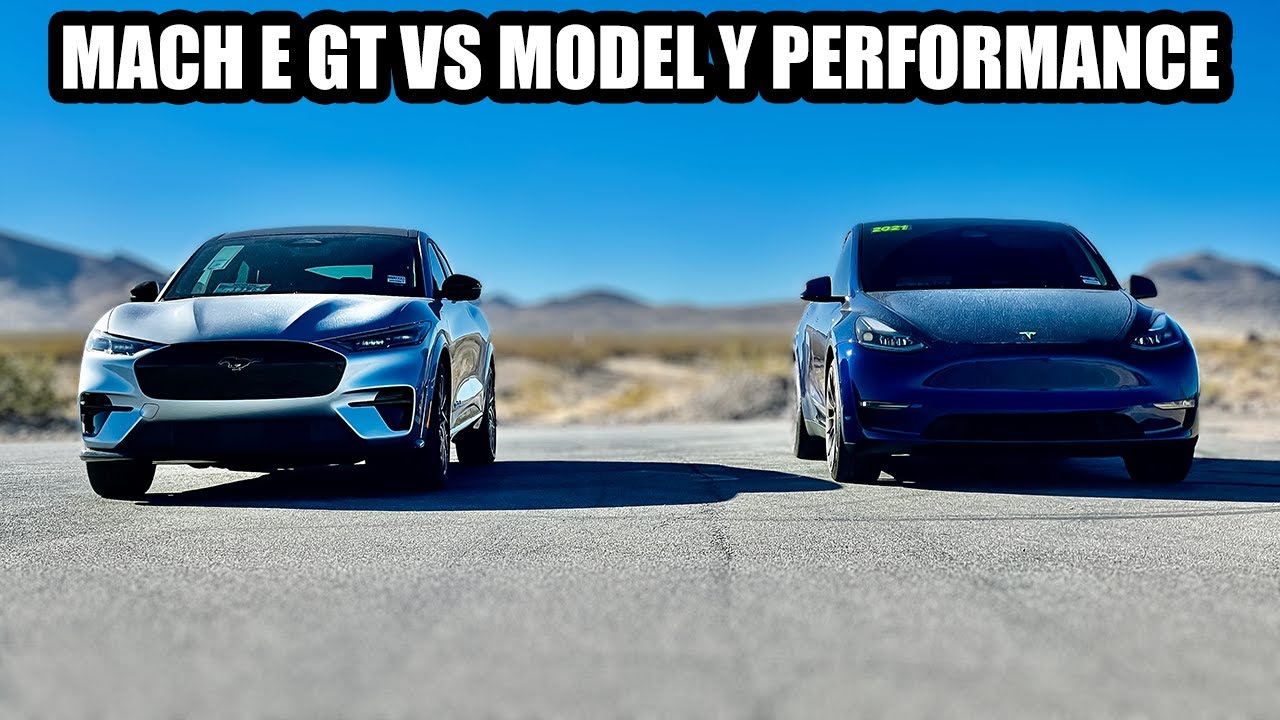
When these two titans face off, the results are as much about philosophy as they are about numbers. The Mustang Mach-E GT typically clocks a 0-60 mph time of 3.5 seconds, while the Model Y Performance edges it out with a 3.25-second sprint. But the real story unfolds in the quarter-mile. The Mach-E GT, with its brute-force torque and muscular demeanor, cuts through the traps in around 11.8 seconds at 115 mph. The Model Y, meanwhile, glides through in about 11.5 seconds at 118 mph, its efficiency and weight distribution giving it a slight edge.
Yet, the Mach-E GT’s trump card is its handling. On a twisty backroad, the Mustang’s adaptive suspension and sharper steering make it feel like a sports car in disguise. The Model Y, while stable and composed, can’t match the Mach-E’s agility. It’s a classic tale of muscle car versus sports sedan—one that prioritizes straight-line dominance, the other favoring all-around prowess.
The Deeper Fascination: Why We Care
What makes this rivalry so compelling isn’t just the specs or the times—it’s the clash of ideologies. The Mustang Mach-E GT represents the soul of American automotive culture, a bridge between the past and the future. It’s a car that refuses to let go of its heritage, even as it embraces electrification. The Model Y Performance, on the other hand, is the future incarnate—clean, efficient, and ruthlessly optimized. It doesn’t just move; it *evolves*.
This isn’t just a drag race. It’s a metaphor for the electric vehicle revolution itself. One side clings to tradition, the other to innovation. One roars with artificial thunder, the other hums with silent efficiency. And yet, both are united by a single, unrelenting pursuit: the thrill of speed.
The Human Element: What It Feels Like to Drive
Behind the wheel, the differences become visceral. In the Mach-E GT, every press of the accelerator is a visceral experience. The seat vibrates with the artificial growl, the steering wheel trembles with feedback, and the car’s weight shifts dramatically as it launches. It’s an in-your-face kind of performance, one that demands your attention and rewards you with adrenaline.
The Model Y, by contrast, is a study in precision. The acceleration is seamless, almost clinical in its efficiency. There’s no drama, no theatrics—just a relentless, linear surge of power that leaves you breathless. It’s the kind of performance that appeals to the engineer in all of us, the one who appreciates the art of optimization.
The Verdict: Which One Would You Choose?
If you crave the visceral thrill of a muscle car with the practicality of an SUV, the Mustang Mach-E GT is your steed. It’s loud, proud, and unapologetically American. But if you prefer a car that feels like it was designed by a team of rocket scientists, the Model Y Performance is the clear winner. It’s quieter, faster, and more efficient—everything you’d expect from a Tesla.
Ultimately, the choice comes down to what you value most. Do you want the roar of tradition or the hum of innovation? The brute force of a Mustang or the silent assassin of a Model Y? One thing’s for sure: in the world of electric drag racing, there are no losers—only two incredible ways to experience the future of speed.
The road ahead is electric. The question is, which path will you take?