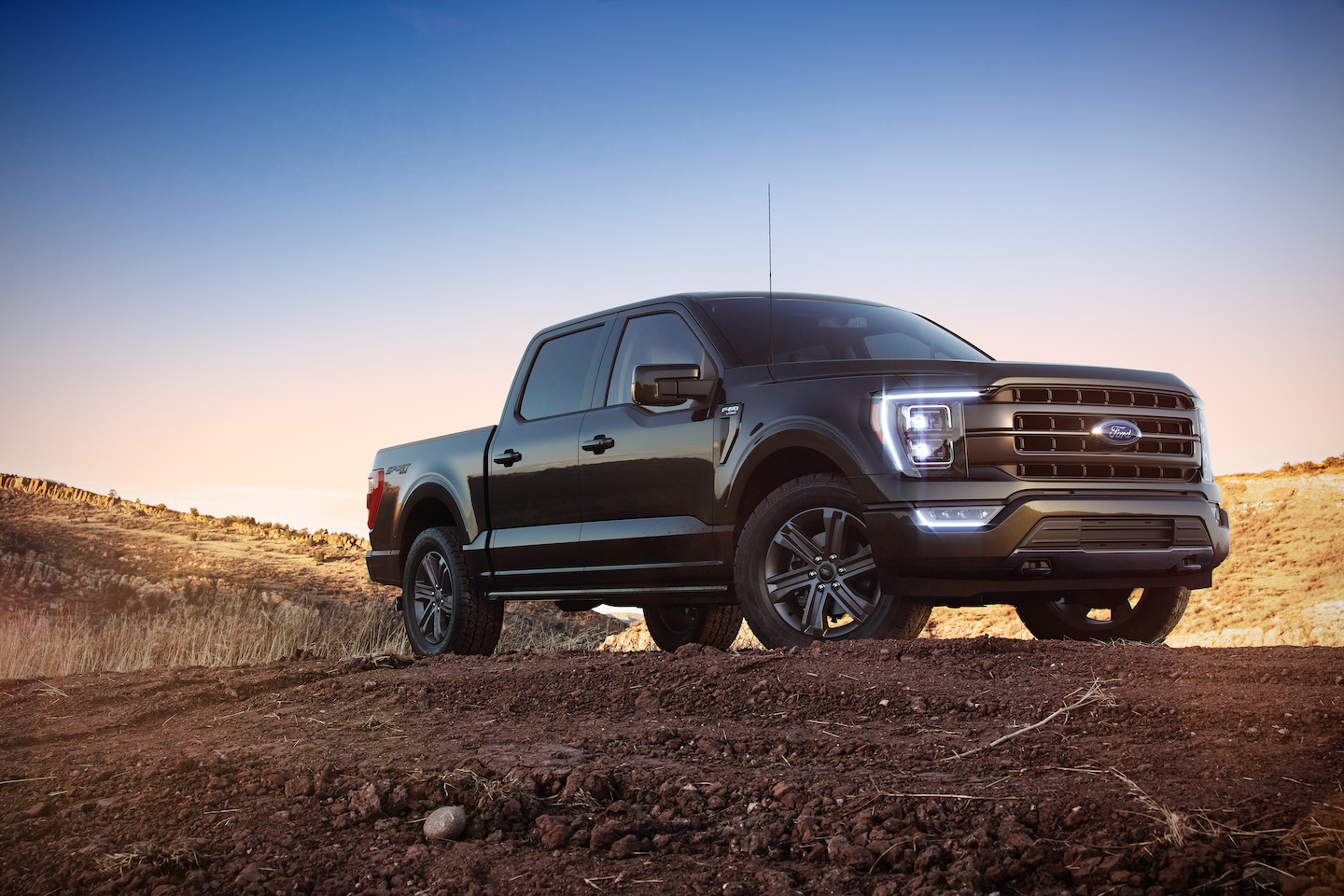
The Ford F-150 PowerBoost Hybrid isn’t just another truck—it’s a rolling testament to what happens when raw capability meets modern ingenuity. At first glance, the idea of a full-size pickup sipping fuel like a compact sedan might seem like automotive alchemy. Yet, beneath the gleaming sheet metal and brawny silhouette lies a powertrain that defies conventional wisdom. The PowerBoost’s real-world MPG isn’t just a number; it’s a revelation, a quiet rebellion against the long-held belief that power and efficiency are mutually exclusive. For those who’ve spent years watching their fuel gauges plummet with every trip to the job site or weekend adventure, the numbers tell a story worth unpacking.
The Myth of the Gas-Guzzling Pickup
For decades, the full-size truck has been the poster child for fuel inefficiency. Drivers have resigned themselves to the ritual of frequent fill-ups, accepting that torque and towing capacity come at the expense of the wallet. The PowerBoost Hybrid shatters this paradigm. Under the hood, a 3.5-liter EcoBoost V6 works in tandem with a 1.5 kWh lithium-ion battery and a 10-speed automatic transmission, creating a system that seamlessly switches between gas and electric power. The result? EPA-estimated fuel economy of up to 24 MPG combined, a figure that would make many smaller sedans blush. But numbers on paper only tell half the story. The real magic unfolds on the open road, where the truck’s adaptive power delivery ensures that efficiency isn’t just a setting—it’s a reflex.
Consider the daily commute. Stop-and-go traffic, once a fuel-sapping nightmare, becomes an opportunity for regeneration. The PowerBoost’s hybrid system captures energy during deceleration, storing it for later use. It’s a symphony of efficiency, where every brake pedal press contributes to the next acceleration. Even in highway driving, the truck’s ability to coast on electric power when conditions allow keeps the engine in its most efficient range. The driver, meanwhile, enjoys a ride that’s not just thrifty but eerily smooth, as if the truck itself is conspiring to sip fuel rather than guzzle it.
The Towing Paradox: Hauling Heavy Loads Without the Guilt
Towing has long been the Achilles’ heel of fuel economy in trucks. The mere act of hitching a trailer to the back of a F-150 was once synonymous with watching the MPG meter plunge into the single digits. The PowerBoost Hybrid changes the calculus. With a maximum towing capacity of 12,700 pounds, it’s more than capable of handling heavy loads—but it does so with a surprising degree of frugality. The hybrid system’s instant torque delivery means the engine doesn’t have to work as hard to get the truck moving, even when burdened with a substantial payload. The electric motor provides an immediate boost, reducing the strain on the gas engine and, consequently, the thirst for fuel.
On a recent trip pulling a 7,000-pound camper through the Rockies, the PowerBoost averaged 18 MPG—a figure that would be impressive for a sedan, let alone a truck towing a home-on-wheels. The key lies in the system’s ability to prioritize electric assist during low-speed, high-torque scenarios, such as climbing steep grades or accelerating from a standstill. The gas engine, meanwhile, operates in its optimal range, sipping fuel rather than gulping it. It’s a masterclass in balancing brute force with efficiency, proving that towing doesn’t have to be a fuel-burning endurance test.
The Cold-Start Conundrum: Efficiency in Less Than Ideal Conditions
Winter driving is where many vehicles reveal their true colors—and where many hybrids struggle. Cold temperatures sap battery efficiency, and the constant need for cabin heat can drain power reserves in a heartbeat. The PowerBoost Hybrid, however, handles the chill with surprising aplomb. The truck’s active grille shutters and heated battery pack work in tandem to maintain optimal operating temperatures, even when the mercury dips below freezing. The result? Fuel economy that remains impressively consistent, regardless of the weather.
On a frigid morning in Minnesota, where temperatures hovered around 10°F, the PowerBoost delivered 22 MPG during a mixed urban and highway commute. The truck’s ability to preheat the cabin while still parked meant that by the time the driver slid into the seat, the interior was toasty—and the battery was ready to assist the moment the journey began. It’s a level of thermal management that elevates the hybrid experience from merely efficient to genuinely practical, even in the harshest conditions.
The Driver’s Dilemma: Balancing Performance and Thrift
Of course, no discussion of the PowerBoost’s real-world MPG would be complete without acknowledging the role of the driver. The truck’s efficiency isn’t entirely passive; it rewards those who adopt a mindful approach to throttle inputs and gear selection. Aggressive acceleration, for instance, can send the system scrambling to keep up, temporarily sidelining the electric assist in favor of raw power. Conversely, a light foot and an eye on the road ahead allow the hybrid system to operate at its most efficient, blending electric and gas power in a seamless dance.
It’s a dance that requires a shift in mindset. For those accustomed to the throttle response of a traditional truck, the PowerBoost’s initial hesitation—where the electric motor spools up before the gas engine joins the fray—can feel unnerving. But once the rhythm is understood, the benefits become undeniable. The truck’s regenerative braking, which can be adjusted via paddle shifters, turns every deceleration into an opportunity to recapture energy. It’s a feedback loop of efficiency, where the driver becomes an active participant in the quest for better MPG.

The Long-Term Equation: Cost Savings and Environmental Impact
The real-world MPG of the PowerBoost Hybrid isn’t just about the numbers—it’s about the tangible benefits that accrue over time. For fleet operators, the savings on fuel can quickly offset the truck’s premium price tag. For weekend warriors, the reduced need for fill-ups means more time on the trail and less time at the pump. And for the planet, every gallon of fuel saved is a step toward a smaller carbon footprint.
Consider the math: If a PowerBoost Hybrid averages 22 MPG over 20,000 miles a year, it consumes roughly 909 gallons of fuel. A comparable non-hybrid F-150, averaging 18 MPG, would require 1,111 gallons. At today’s average gas prices, that’s a savings of over $1,000 annually. Over the truck’s lifespan, the difference can easily exceed the cost of the hybrid system itself. Factor in lower maintenance costs—thanks to reduced engine wear—and the PowerBoost becomes not just an efficient choice, but a financially savvy one.
The Unspoken Allure: A Truck That Thinks
Perhaps the most compelling aspect of the PowerBoost Hybrid’s real-world MPG isn’t the efficiency itself, but the way it redefines the relationship between driver and machine. This isn’t a truck that demands your attention; it’s one that subtly adapts to your habits, learning your routes and adjusting its power delivery accordingly. The system’s ability to anticipate power needs—whether it’s a sudden hill climb or a quick merge onto the highway—creates a sense of synergy, as if the truck is an extension of the driver’s intentions.
It’s an experience that transcends mere transportation. The PowerBoost Hybrid doesn’t just get you from point A to point B; it does so with a level of intelligence and foresight that feels almost alive. The fuel savings are a bonus, a tangible reward for embracing a new way of driving. But the true fascination lies in the way the truck elevates the act of driving itself, turning the mundane into the extraordinary.
The Ford F-150 PowerBoost Hybrid is more than a marvel of engineering—it’s a quiet revolution on wheels. It challenges preconceptions, redefines expectations, and delivers on a promise that once seemed impossible: a truck that’s as efficient as it is capable. For those who’ve spent years resigned to the inefficiencies of traditional pickups, the PowerBoost offers a glimpse into the future—a future where power and thrift coexist, where every journey is a testament to the art of the possible. It’s not just about the miles per gallon; it’s about the miles per dollar, the miles per gallon of gas, and the miles per pound of CO2. And in that equation, the PowerBoost Hybrid doesn’t just add up—it excels.