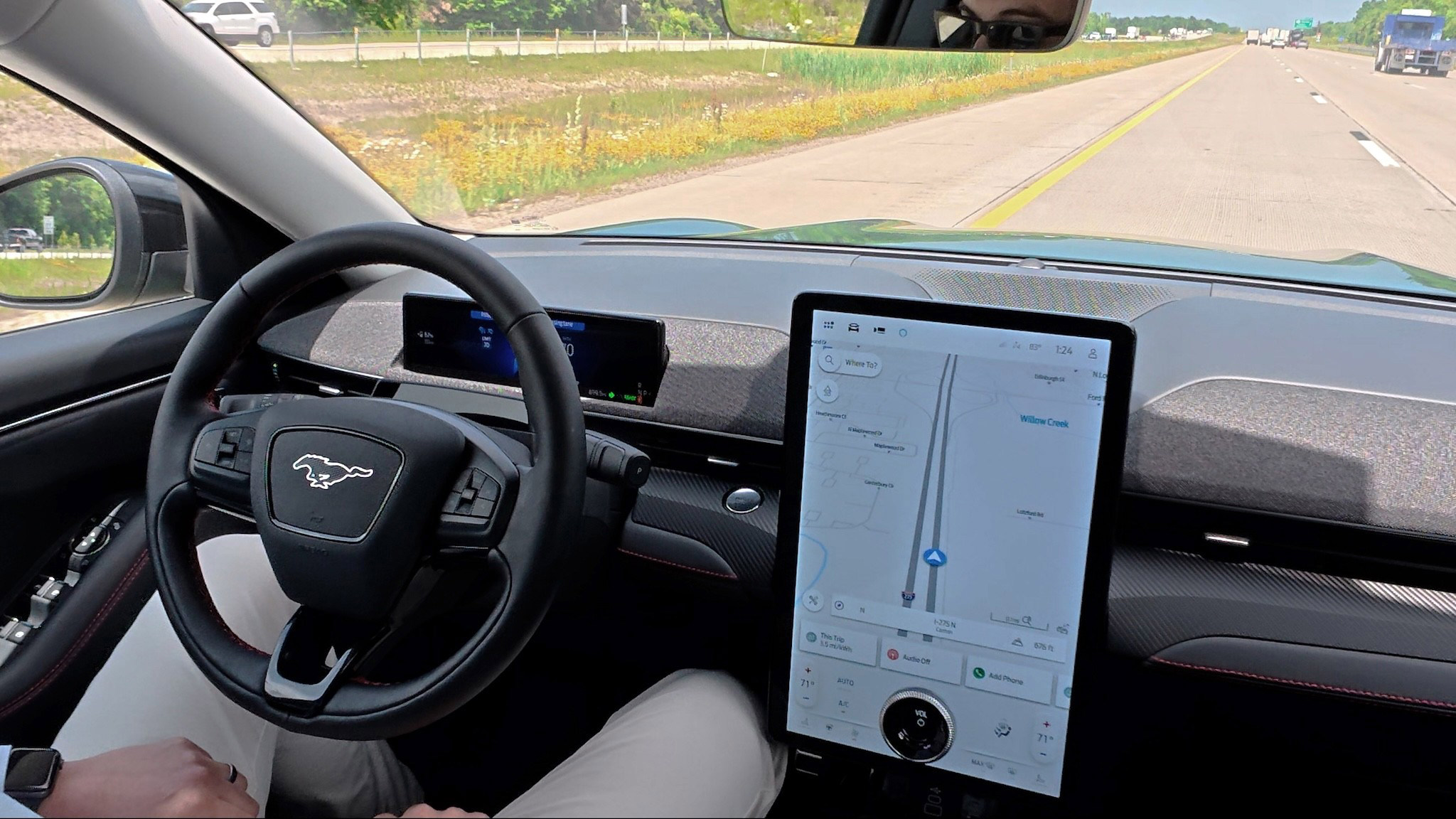
Imagine cruising down a sun-drenched highway, the hum of the engine a distant whisper, your hands resting lightly on the steering wheel—or not at all. The open road stretches ahead, a ribbon of possibility, while your mind wanders to the grocery list or the next chapter of that gripping novel you’ve been meaning to finish. This isn’t a scene from a sci-fi flick; it’s the reality of Ford BlueCruise, a hands-free driving system that’s redefining what it means to traverse the asphalt kingdom. But does it live up to the hype, or is it just another tech gimmick dressed in automotive glamour? Buckle up—we’re about to find out.
Picture this: You’re on a long, monotonous stretch of interstate, the kind that turns your commute into a mental endurance test. Traffic is light, the weather is cooperative, and your car—if it’s equipped with BlueCruise—is suddenly more than just a machine. It’s a co-pilot, a silent partner in your journey, allowing you to disengage from the mechanical ballet of acceleration, braking, and steering. The system, available on select Ford models, promises to let you take your hands off the wheel, your eyes off the road (well, mostly), and your mind off the mundane. But how does it actually perform when the rubber meets the road? Let’s dive into the nitty-gritty of this automotive marvel.
The Magic Behind the Hands-Free Experience
At its core, Ford BlueCruise is a Level 2 advanced driver-assistance system (ADAS), meaning it handles steering, acceleration, and braking under specific conditions—but with a twist. Unlike traditional adaptive cruise control or lane-keeping assist, BlueCruise is designed for hands-free operation on pre-approved highways. The system uses a combination of cameras, radar, and GPS mapping to monitor the road ahead, ensuring you stay centered in your lane while maintaining a safe distance from other vehicles.
The real innovation lies in its geofenced approach. Ford has meticulously mapped thousands of miles of divided highways in the U.S. and Canada where BlueCruise is approved for use. When your vehicle enters one of these zones, the system activates, and a subtle blue icon illuminates on the dashboard, signaling that you’re free to let go of the wheel. The steering wheel, however, remains vigilant—embedded sensors detect your grip, and if you fail to hold it, the system will gently remind you to take control. It’s a reassuring nudge, a digital pat on the back that says, “I’ve got this, but I need you to stay in the loop.”
But here’s where things get interesting. BlueCruise isn’t just about taking your hands off the wheel; it’s about reclaiming your attention. The system’s interface is intuitive, with a crisp display that shows your speed, the distance to the car ahead, and even a countdown to the next exit. It’s like having a backseat driver who’s actually helpful—no sarcasm, no backseat driving, just pure, unadulterated convenience.

The Road Test: Does It Deliver on Its Promises?
Enthusiasts and skeptics alike have put BlueCruise through its paces, and the consensus is cautiously optimistic. On a recent jaunt from Toronto to Montreal, I found myself in the driver’s seat of a Ford equipped with the system. The moment I merged onto the 401, the blue icon appeared, and I exhaled—a small act of trust in technology. The car maintained a steady 110 km/h, effortlessly adjusting to the flow of traffic. I took my hands off the wheel, and for a few blissful minutes, the world outside became a blur of motion while I sipped my coffee and scrolled through my phone.
But—and there’s always a but—BlueCruise isn’t without its quirks. The system’s responsiveness to lane changes is impressive, but it’s not infallible. In heavy traffic or during sudden merges, it can feel a tad hesitant, as if it’s second-guessing its own decisions. And while the hands-free experience is liberating, it’s not a license to nap. The system requires periodic attention, with gentle vibrations in the seat or a chime reminding you to glance at the road. It’s a reminder that even in the age of autonomy, the driver is still the captain of this ship.
One of the standout features is the system’s ability to handle curves and inclines with grace. Unlike some competitors that treat every bend like a white-knuckle rollercoaster, BlueCruise glides through turns with a smoothness that borders on elegant. It’s the kind of feature that makes you wonder why every car doesn’t have it.

The Fine Print: Limitations and Considerations
Of course, no technology is perfect, and BlueCruise is no exception. The system’s reliance on pre-mapped highways means it’s not a universal solution. If you veer off the beaten path—or worse, into a construction zone—you’ll be back in control mode, hands firmly on the wheel. It’s a limitation that highlights the system’s current scope, but one that Ford is likely to address as the technology evolves.
Another consideration is the subscription model. BlueCruise isn’t a one-time purchase; it requires an active subscription, which might rub some enthusiasts the wrong way. However, the cost is relatively modest compared to the convenience it offers, especially for those who spend hours on the road. Think of it as a toll for the privilege of hands-free cruising—a small price to pay for a glimpse into the future of driving.
Safety, as always, is paramount. Ford has equipped BlueCruise with redundant systems to ensure reliability, but it’s crucial to remember that this is an assistive technology, not a replacement for attentive driving. The system is designed to work in tandem with the driver, not in place of them. It’s a partnership, a digital handshake that says, “I’ll help, but you’re still in charge.”
The Future of Hands-Free Driving
As automotive technology hurtles forward, systems like BlueCruise are just the beginning. The dream of fully autonomous vehicles is still on the horizon, but in the meantime, partial autonomy is a game-changer. It’s a stepping stone, a bridge between the cars of today and the self-driving utopia of tomorrow. And Ford is leading the charge with a system that’s not just functional but genuinely enjoyable to use.
Imagine a world where rush hour is no longer a chore, where long road trips are a chance to relax instead of white-knuckle endurance tests. BlueCruise is a glimpse of that world—a world where the open road is less about the destination and more about the journey itself. It’s not perfect, but it’s a tantalizing taste of what’s to come.

So, does Ford BlueCruise live up to the hype? The answer is a resounding yes—with a few caveats. It’s not a magic bullet, but it’s a remarkable leap forward in automotive convenience. It’s the kind of technology that makes you wonder how you ever drove without it. And as the system continues to evolve, one thing is clear: the future of driving is not just about getting from point A to point B. It’s about enjoying the ride.
The open road has never felt so free. The question is, are you ready to let go?