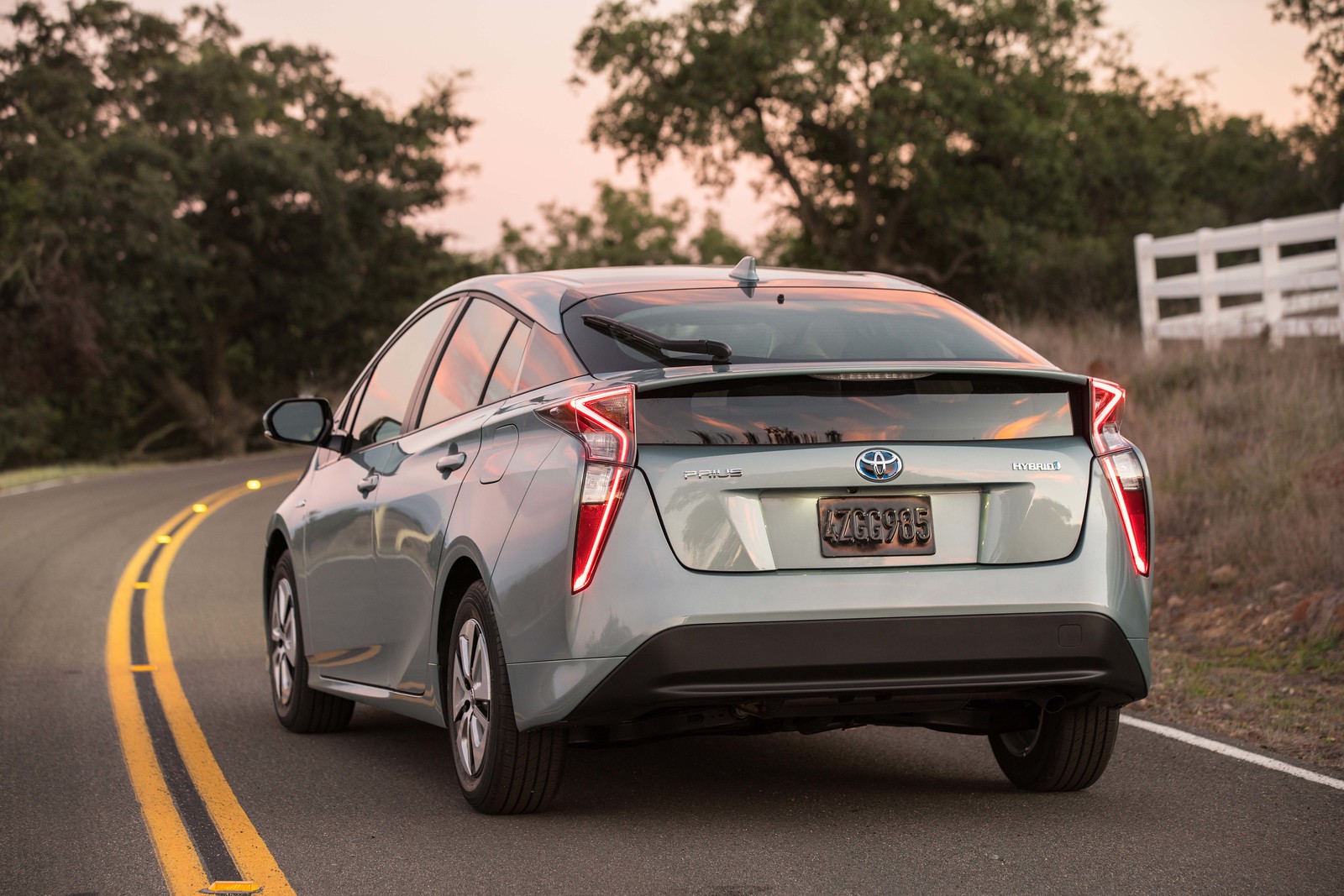
The Toyota Prius has long been the poster child of hybrid efficiency, a rolling testament to what happens when automotive ingenuity meets relentless pragmatism. But what if we told you that beneath its unassuming hatchback silhouette lies a machine capable of redefining cross-country endurance? Picture this: a stock Prius, fresh off the lot, embarking on a transcontinental odyssey not just to prove its mettle, but to shatter expectations. This isn’t just a road trip—it’s a gauntlet thrown down to the very notion of what a hybrid can achieve. Buckle up, because the journey ahead isn’t just about miles per gallon; it’s about rewriting the rules of the road.
The Prius Paradox: Efficiency Meets the Open Highway
At first glance, the Prius seems an unlikely candidate for a cross-country endurance test. Its reputation is built on city driving, where stop-and-go traffic and regenerative braking turn every red light into a fuel-saving opportunity. But venture beyond the urban sprawl, and the Prius faces a new challenge: the open road’s relentless demand for sustained power. Highway speeds, steady throttle, and the absence of frequent braking all conspire to test the limits of its hybrid system. Yet, it’s precisely this paradox that makes the Prius an intriguing contender. Can a car engineered for urban frugality adapt to the demands of a 3,000-mile cross-country trek without sacrificing its legendary efficiency?
The answer, as recent tests have shown, is a resounding yes. The Prius doesn’t just survive the highway; it thrives on it, leveraging its dual powertrain to maintain remarkable fuel economy even at sustained speeds. This isn’t just about saving a few extra miles per gallon—it’s about proving that hybrid technology isn’t confined to short hops or city limits. The Prius is rewriting the narrative, one mile at a time.

The Anatomy of a Record-Breaking Run
To understand how the Prius achieved this feat, we must dissect the mechanics of its record-breaking run. The journey began with a stock model, untouched by aftermarket modifications or aggressive tuning. This was a test of raw capability, not customization. The Prius’s hybrid synergy drive system, a marvel of engineering, seamlessly switches between its 1.8-liter Atkinson-cycle engine and electric motor, optimizing power delivery based on demand. On the highway, where steady speeds dominate, the engine takes the lead, but the electric motor remains poised to assist during acceleration or when additional power is needed.
The real magic, however, lies in the Prius’s ability to recapture energy. Every time the driver lifts off the throttle, the regenerative braking system springs into action, converting kinetic energy into electrical energy to recharge the battery. This isn’t just a fuel-saving trick—it’s a perpetual motion machine of sorts, where the act of slowing down becomes a source of power. On a cross-country trip, where long stretches of highway are punctuated by occasional stops, this system ensures that the Prius remains in a state of perpetual efficiency, sipping fuel while maximizing every opportunity to replenish its energy reserves.

The Human Element: Driver Technique and Route Mastery
No machine operates in a vacuum, and the Prius’s record-breaking run was as much about the driver as it was about the car. Mastering the art of hypermiling—the practice of maximizing fuel efficiency through driving techniques—became a critical component of the journey. Smooth acceleration, early gear shifts, and maintaining a steady speed were all essential to squeezing every last mile out of the tank. The driver’s role was not just to steer but to become a partner in the Prius’s quest for efficiency, anticipating traffic patterns and terrain to minimize energy waste.
The route itself played a pivotal role in the Prius’s success. A carefully planned itinerary avoided congested urban areas and favored highways with gentle gradients, reducing the need for aggressive acceleration or braking. The driver also leveraged the Prius’s eco-driving feedback system, which provides real-time data on fuel efficiency, encouraging adjustments in real time. This symbiotic relationship between man and machine turned the cross-country trip into a collaborative effort, where every decision was a step toward breaking records.
The Unseen Challenges: Weather, Terrain, and the Elements
Beneath the surface of the Prius’s triumphant narrative lie the unseen challenges that threatened to derail the journey. Weather, terrain, and the unpredictable nature of the open road all conspired to test the car’s resilience. Headwinds, for instance, can dramatically increase fuel consumption, forcing the Prius to work harder to maintain speed. Conversely, tailwinds can provide a free ride, allowing the car to coast effortlessly. The driver had to adapt to these variables, adjusting speed and route to capitalize on favorable conditions while mitigating the impact of adversity.
Terrain, too, played a crucial role. Mountainous stretches demanded more power from the engine, while flat plains allowed the Prius to glide with minimal resistance. The driver’s ability to anticipate these changes and adjust driving style accordingly was the difference between a record-breaking run and a mediocre one. Even the temperature played a role, as cold weather can reduce battery efficiency and increase fuel consumption. The Prius’s journey was not just a test of mechanical prowess but a masterclass in adaptability.
The Ripple Effect: What This Means for the Future of Hybrid Travel
The implications of the Prius’s cross-country achievement extend far beyond a single record. This is a watershed moment for hybrid technology, proving that these vehicles are not just urban runabouts but capable of tackling the most demanding of journeys. The Prius’s success challenges the notion that hybrids are limited to short trips or city driving, opening the door to a new era of long-distance hybrid travel. Imagine families embarking on cross-country vacations in hybrids, or adventurers exploring remote landscapes without the need for frequent fuel stops. The possibilities are as vast as the open road itself.
Moreover, the Prius’s feat underscores the importance of sustainable travel. In an era where climate change looms large, the ability to traverse vast distances with minimal environmental impact is nothing short of revolutionary. The Prius isn’t just breaking records—it’s breaking the mold, proving that efficiency and adventure are not mutually exclusive. This is a call to action for automakers and drivers alike, a reminder that the future of travel doesn’t have to be a compromise between performance and sustainability.

The Road Ahead: A New Standard for Hybrid Endurance
So, what’s next for the Prius and its ilk? The bar has been set, and the challenge now lies in raising it further. Future hybrid models will undoubtedly take cues from the Prius’s record-breaking run, incorporating advanced aerodynamics, more efficient battery systems, and smarter energy management to push the boundaries of what’s possible. The Prius has shown that the future isn’t just electric—it’s hybrid, and it’s here to stay.
For drivers, the message is clear: the open road is no longer the domain of gas-guzzling behemoths. The Prius has paved the way for a new generation of travelers who demand both adventure and efficiency. Whether it’s a weekend getaway or a cross-country odyssey, the Prius proves that you don’t have to sacrifice performance for sustainability. The journey ahead is not just about reaching a destination—it’s about redefining what it means to travel.
The Prius’s cross-country road trip wasn’t just a test of miles per gallon; it was a testament to the power of innovation, adaptability, and the unyielding spirit of exploration. It challenged our perceptions, shattered records, and, most importantly, inspired a new way of thinking about travel. The road ahead is wide open, and the Prius has shown us that the future of driving is not just efficient—it’s exhilarating.